How Renault's crossover line grew from the Clio-based Captur and a cheaper Duster-based twin to the Kadjar, a three-generation Koleos and the hybrid Austral.
Renault built its crossover range from the Captur concept of 2011 through the Captur, Kadjar, Koleos and Austral. The Captur used Clio and Duster platforms, the Kadjar shared the Qashqai's, the Koleos moved to a Geely base in 2024, and the Austral replaced the Kadjar in 2022 as a hybrid-only SUV.
Renault's newest Koleos, unveiled in June 2024, is heavily based on a Geely, the Xingyue L, and is built in Busan, South Korea. At the other end of the story sits a carbon-fibre Captur concept with butterfly doors and a removable roof, shown in 2011. Between them runs Renault's crossover line, a decade of shared platforms, rebadged cousins and markets from Seoul to Chennai.
The Captur, Kadjar, Koleos and Austral each took a different route. One was a Clio-based city SUV that spawned a cheaper Duster-based twin, one a Nissan Qashqai sibling, one a Korean-built flagship across three generations, and one a hybrid-only successor with two close relatives.
How did the Renault Captur begin?
The Captur began as a concept at the 2011 Geneva Motor Show, a mini SUV and the second of six concept cars previewing Renault's future design direction after the DeZir. Julio Lozano designed it under Laurens van den Acker, the company's design chief. The production Captur made its debut at the 2013 Geneva Motor Show and went on sale in France in April 2013.
The concept was wilder than anything that followed. It had a carbon-fibre body, butterfly doors, a removable roof and 22-inch wheels, and weighed 1,300 kg (2,866 lb). A twin-turbo 1.6-litre dCi Energy engine produced 158 bhp (118 kW; 160 PS) and 280 lb ft (380 N m), enough for 0-62 mph (100 km/h) in 8.0 seconds and a top speed of 130 mph (209.2 km/h), with CO2 at 99 g/km. It drove only the front wheels, using Renault's RX2 mechanical self-locking differential to send torque to whichever wheel had the grip.
The production car
The first production Captur, codenamed J87, was built from 2013 to 2019 on the B platform of the fourth-generation Clio. It used MacPherson struts at the front and a twist-beam axle at the rear, with front discs and rear drums. A large drawer-like glovebox replaced the conventional compartment in left-hand-drive cars. British trims started as Expression, Expression+, Dynamique Media Nav and Dynamique S Media Nav, with a Signature grade added in December 2013 and the sportier S-edition in 2018. A facelift in May 2017 revised the interior and exterior and added customisation options.
It earned five stars at the 2013 Euro NCAP tests, and What Car? named it Best Small SUV Less Than 16,000 pounds for 2014. The French Association of Automotive Press voted it Voiture de l'Annee 2013. Despite less than a full year on sale, it finished 2013 third among European small crossovers on just over 84,000 sales, trailing the Nissan Juke and the Dacia Duster, and it topped the class in the last three months. By the end of 2015 it ranked 14th among the 20 most sold cars in Europe, with 195,323 units.
South Korea got its own version, the Renault Samsung QM3, launched at the Seoul Motor Show in April 2013. It was officially released on 6 December 2013, and the initial 1,000 cars for South Korea were gone in seven minutes. It came with a single dCi 90 diesel and a dual-clutch gearbox, and was built in Valladolid, Spain. In 2015, 24,560 were registered, making it the best-selling import in South Korea, and the Seoul Motor Show of 2013 had already voted it Best Car.
A decade of shared platforms, rebadged cousins and markets from Seoul to Chennai.
What was the Captur Global Access?
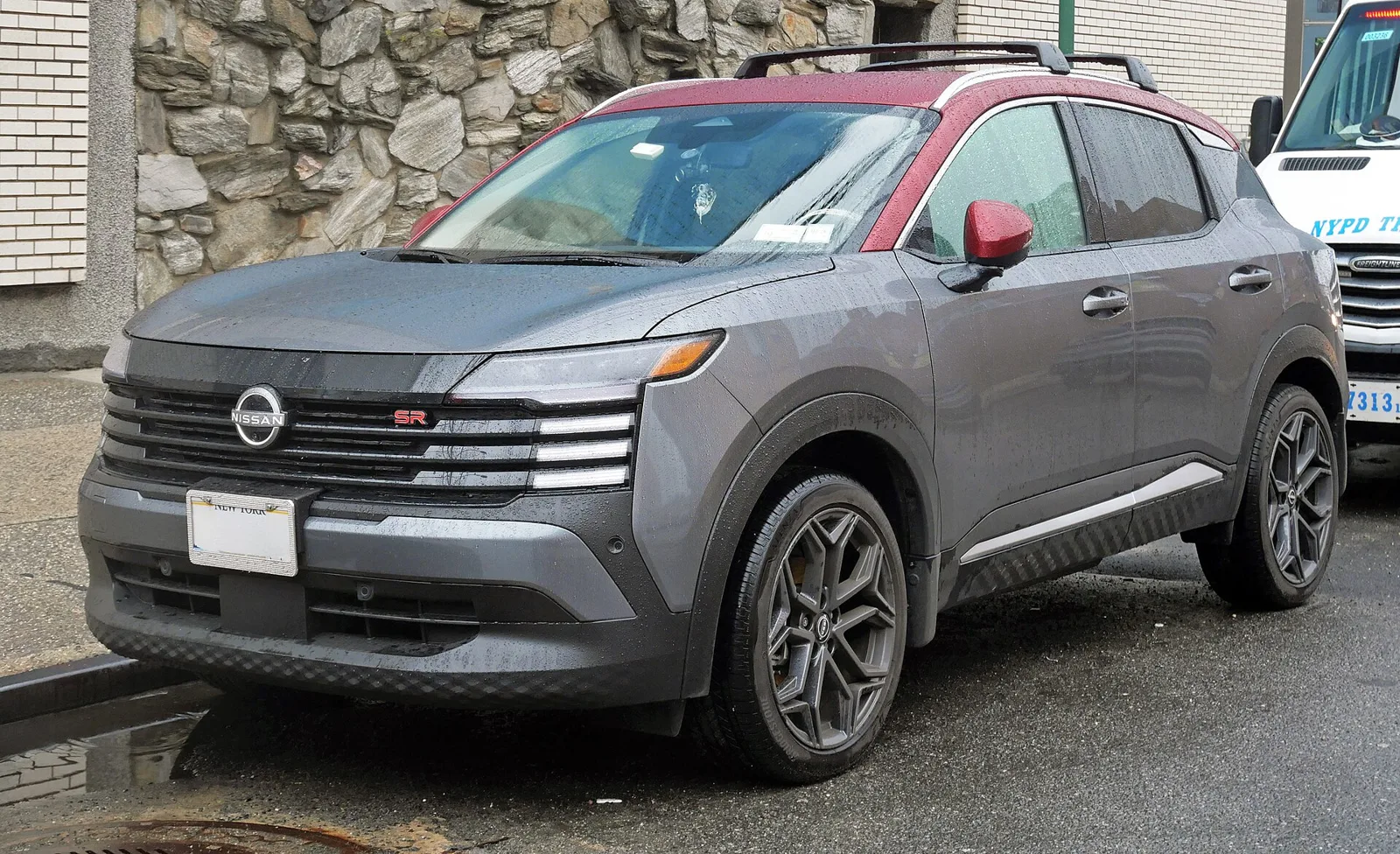
Under what Renault calls a strategy of the same skin with different specification, the company built a larger Captur on the low-cost B0 platform of the Duster. Known internally as the Captur Global Access, it kept the styling of the original with a longer wheelbase, more ground clearance and available all-wheel drive. It was cheaper to build than the Clio-based car because it used the first-generation Dacia Duster platform, and it offered more cabin space. Production began in 2016, and it was made in Russia, Brazil and India.
In Russia and its neighbours it was introduced in 2016 as the Renault Kaptur, a spelling Renault explained by the difficulty of pronouncing Captur in Russian. The front-drive car had a 1.6-litre engine with a manual gearbox or CVT, and all-wheel-drive versions used a 2.0-litre with a manual or four-speed automatic. Assembly began in Kazakhstan in 2021 through a partnership with the Allur Group. In May 2020 the Russian Kaptur moved to the B0+ platform, with more than 55 per cent of its components updated, electric power steering in place of hydraulic, and a 1.3-litre turbo petrol engine instead of the 2.0-litre.
Brazil and India
A Brazilian version arrived at the start of 2017 and was named Best Design by the Latin American press association Americar that year. Uruguay sold it from November 2017 as the Grand Captur to separate it from the European Captur, which had been on sale there since February 2016. A facelift with a 1.3-litre petrol engine reached Brazil in July 2021. After sanctions on Russia disrupted the supply of certain components, the Brazilian model was discontinued in late 2023. Latin NCAP gave the car 4 stars for adults and 3 for infants in 2017.
India took the car from September 2017, built in Chennai in the plant that Renault and Nissan jointly own, where it shared its platform with the Nissan Kicks (D15). A 1.5-litre diesel was offered until April 2020. Renault India's advertising drew criticism for citing awards won by the B-platform car. The Indian Captur was discontinued in 2020 after weak sales, with fewer than 7,000 units produced in four years.
What changed with the second-generation Captur?
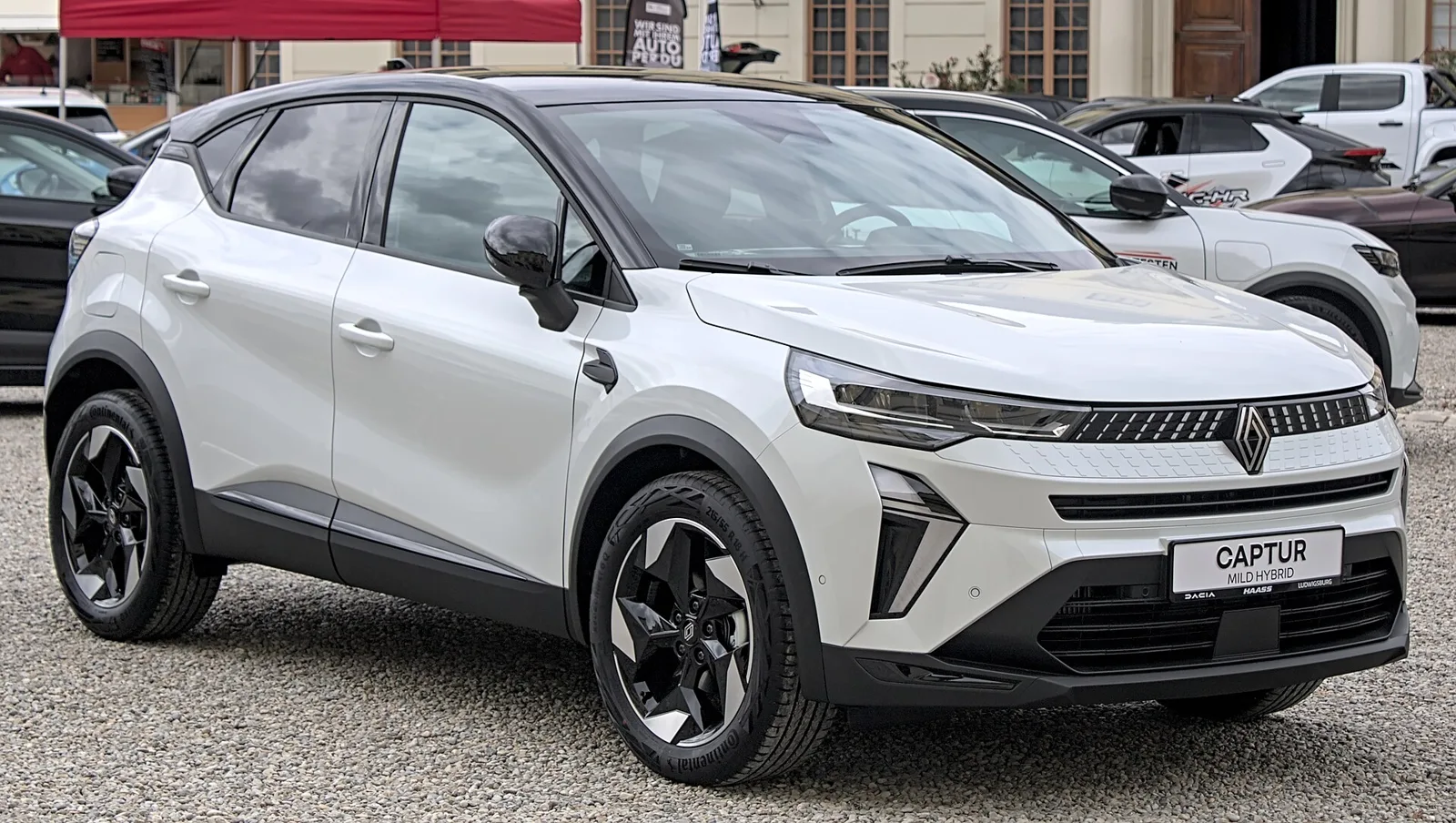
The second-generation Captur debuted in July 2019 on the CMF-B platform, which also underpins the Clio V, the second-generation Nissan Juke and the European Arkana. It is about 110 mm (4.3 in) longer than before, with a wheelbase 20 mm (0.8 in) longer. Renault launched it with 11 body colours, four contrasting roof colours and three customisation packs, giving 90 possible colour schemes in Europe.
Engines include 1.0-litre and 1.3-litre petrols from 100 to 155 PS (74 to 114 kW), the smaller one available with a dual-fuel LPG system, and a 1.5-litre dCi diesel in 95 PS and 115 PS forms. From 2020 an E-Tech plug-in hybrid became available with 45 km (28 mi) of pure electric range, and Renault says the technology involves over 150 new patents. Top versions have a 9.3-inch vertical touchscreen and a 10.2-inch digital instrument cluster called OpenR Link. In South Korea the car sold under its own name from 2020 instead of as the QM3.
A facelift was revealed on 4 April 2024 with a restyled front end, new tail-light graphics, the latest Renault logo and larger screens. Faux exhaust trim disappeared, recyclable materials replaced leather and chrome, and the Esprit Alpine became the flagship trim in place of the RS Line. A larger sister model, the Renault Symbioz, has been sold since 2024.
The Mitsubishi connection
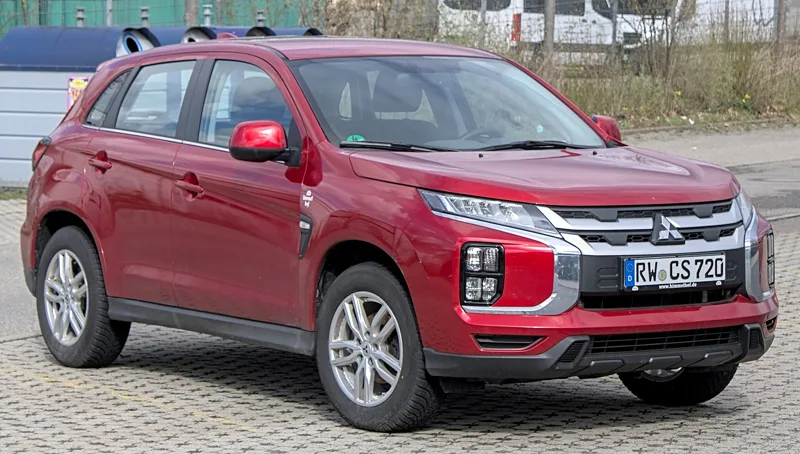
In September 2022 Mitsubishi released the second-generation ASX for Europe, a rebadged Captur. Sales began in March 2023 with five powertrains borrowed from the Captur, from petrol through mild and full hybrid to plug-in hybrid. A facelifted ASX was due to reach Australia in 2025, sold alongside the existing Captur.
What was the Renault Kadjar?
The Kadjar was Renault's compact C-segment crossover. Renault showed it at Geneva in 2015, with European sales starting that April and Chinese sales in 2016. It rode on the Renault-Nissan Common Module Family platform it shared with the Nissan Qashqai, which permitted front- and four-wheel drive, and it earned a five-star Euro NCAP rating in 2015.
Renault says the name combines Kad, inspired by quad to suggest a go-anywhere four-wheeler, with Jar, which recalls the French words agile and jaillir for agility and suddenly emerging. The name also echoes the Qajar dynasty, because Nasser ed-Din Shah wrote that name in French as Kadjar, and its link to the Qashqai has been noted in the press.
Equipment included R Link 2 infotainment with voice control, navigation and Bluetooth, engine stop-start, emergency brake assist, lane departure warning, traffic sign recognition, 360-degree sensors, a reversing camera and hands-free parking. A 2018 facelift brought four new engines, new exterior styling, more storage space and updated infotainment. The 1.3-litre direct-injection turbo petrol engine used a cylinder head designed by Daimler in a compact triangular Delta layout, with a bore spray coating and a particulate filter in the exhaust.
The diesels had a harder time. Germany's motor authority measured NOx emissions of approximately 1.5 g/km from the Kadjar's dCi 110 and dCi 130 engines of 2015 to 2018, almost twenty times the Euro 6 limit of 80 mg/km. Kadjar production stopped in mid-July 2022 after 685,261 cars at the Palencia and Wuhan plants.
How did the Koleos change over three generations?
| Generation | Introduced | Platform and base | Notes |
|---|---|---|---|
| First (HY) | Late 2007 in South Korea, 2008 elsewhere | Based on the Koleos and Egeus concepts | QM5 in Korea; production ended March 2015 |
| Second (HC) | 2016 Beijing Motor Show | CMF-CD, shared with Nissan X-Trail and Kadjar | QM6 in Korea; ended in most markets in April 2023 |
| Third (AR1) | 27 June 2024, Busan | Geely Compact Modular Architecture | Grand Koleos in Korea |
The Renault Koleos is a five-passenger crossover that moved from compact to mid-size over its three generations, and it is mainly built at Busan by Renault Korea, formerly Renault Samsung Motors. The first generation, the HY, was sold in South Korea as the Renault Samsung QM5. A Koleos concept appeared as early as February 2000, and the Koleos Concept was unveiled at the 2006 Paris Motor Show. The production model reached South Korea at the end of 2007 and other markets in 2008, facing rivals such as the Citroen C-Crosser and Peugeot 4007. ADAC gave it five stars in a crash test in August 2008.
A facelift was unveiled in July 2011 and shown at Frankfurt that September. India received the Koleos in September 2011 with a 2.0 dCi diesel making 150 PS at 4000 rpm and 320 N m at 2000 rpm. In the UK, the car was withdrawn in August 2010 after sales of under 2,600. Production ended in March 2015.
The second generation, HC
Carlos Ghosn introduced the second-generation Koleos at the 2016 Beijing Motor Show. Rumours had suggested the name Maxthon, but Renault reinstated Koleos. It uses the CMF-CD platform developed jointly by Renault and Nissan, shared with the third-generation Nissan X-Trail and the Kadjar. Some versions offered two-wheel drive, an adaptive four-wheel-drive mode that varied torque between axles, or a standard four-wheel-drive system. Euro NCAP gave it five stars.
Australia's sales began on 1 August 2016, and by mid-2017 the car had spread across most of Asia, Europe and South America. The UK dropped it in July 2020 because of sluggish sales, three years after its return and ten years after the first model left. Outside South Korea, the sixth-generation Espace replaced it in 2023, and production ceased in April 2023 except for South Korea, Australia, Africa and South America through to Mexico. In 2024 Renault Korea rebranded itself and put the new losange logo on the QM6, which from then on was called the Renault QM6 and used a 2.0-litre M5R engine running on petrol or LNG. Production of that car ended in November 2025.
The third generation, built on a Geely
Renault Korea introduced the third-generation Koleos on 27 June 2024 at the Busan International Mobility Show, calling it the Renault Grand Koleos in South Korea and the Koleos for export. It is heavily based on the Geely Xingyue L, also called the Monjaro, as part of the Renault-Geely partnership in South Korea, on the Compact Modular Architecture platform. Renault changed the front and rear fascias, added a borderless grille and reshaped the body panels.
The Grand Koleos was codenamed Aurora 1. It is the first time the Koleos name has been used in South Korea, where earlier generations were the QM5 and QM6. The design was shared between teams in France and Seoul, and production at Busan began in July 2024, supported by a claimed 200 local suppliers. The car is larger than its predecessor, and Renault claims class-leading rear legroom and up to 2,034 litres of boot space with the rear seats folded.
The dashboard comes from the Geely, with three 12.3-inch screens marketed as openR and running on Qualcomm's platform, a 10-speaker Bose system, a 25.6-inch augmented-reality head-up display and 5G connectivity. South Korean trims are Techno, Iconic and the four-wheel-drive Esprit Alpine. The petrol engine is a 2.0-litre direct-injection turbo producing 211 PS (208 hp; 155 kW) and 325 N m (240 lb ft), with a seven-speed dual-clutch gearbox, or an eight-speed automatic on the four-wheel-drive car with a BorgWarner system. The E-Tech Hybrid is a Geely-developed system combining a 1.64 kWh battery, a 1.5-litre turbo petrol engine and a multi-mode gearbox, with a peak output of 245 PS (242 hp; 180 kW), and it can drive on electric power alone for 75 per cent of an urban trip below 40 km/h (25 mph).
Where the new Koleos goes next
The new Koleos was unveiled in the Middle East on 12 May 2025 and shipped to Mexico and Colombia that month, and to Argentina in August 2025. Renault plans to market the Korean-assembled car further in Brazil, Uruguay, Panama, the Dominican Republic and several African countries.
What is the Renault Austral?
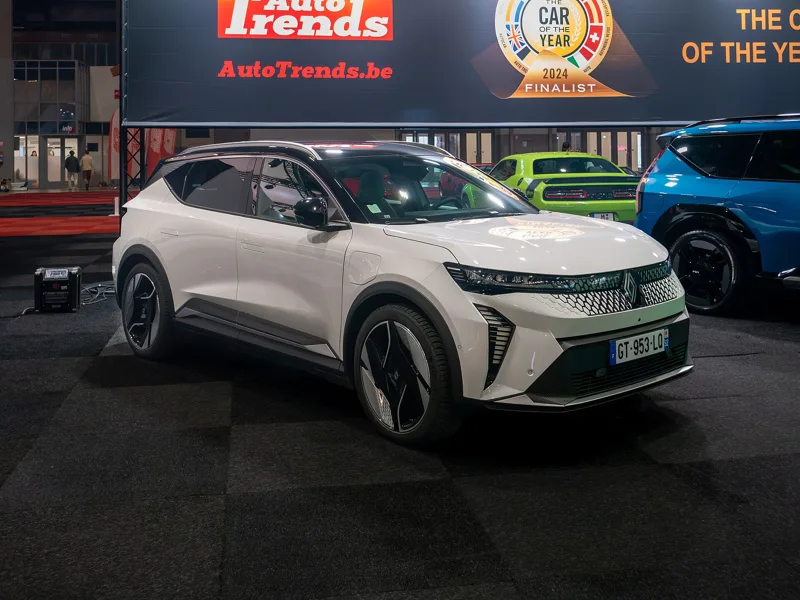
The Austral is a compact C-segment crossover that Renault unveiled in March 2022 as the Kadjar's successor, built on the third-generation CMF-CD platform. It was first seen in public at the 2022 Paris Motor Show, and production began in July 2022 at the Palencia plant in Spain. Buyers can choose only E-Tech mild-hybrid or full-hybrid petrol drivetrains.
The name comes from the Latin word australis, and Renault has held the trademark since 2005. The Austral carries the retro-inspired Renault logo that debuted on the Megane E-Tech, full-LED headlights with C-shaped daytime running lights and boomerang-shaped LED tail lights. The design is called Sensual Tech, and Agneta Dahlgren, Renault's design project director, described it as generous shapes, curved shoulders and projecting sides with subtle technical details such as high-tech headlamps. The dashboard, called OpenR, is largely inspired by the Megane E-Tech's, with a slightly revised layout. The Austral won the Autobest 2023 trophy from a jury of 31 European countries.
A facelifted Austral was revealed on 2 April 2025, with a front end like the Rafale's, new seats, a new bonnet, a new tailgate, new door seals and new rear lights. It reached Egypt on 23 December 2025.
Espace and Rafale
The Austral has two siblings, and the three share 75 per cent of their parts. The sixth-generation Espace was unveiled on 28 March 2023. It shares most of its body panels with the Austral, including the front end, on an extended wheelbase, and comes with five or seven seats. It is 140 mm (5.5 in) shorter than the previous Espace and 215kg lighter. Orders began in spring 2023, it is built at Palencia, and it is not offered in the UK.
The Rafale (codenamed DHN) is a coupe SUV that Renault revealed at the Paris Air Show at Le Bourget on 18 June 2023. Its body panels are unique, and it is the brand's first production vehicle designed wholly in the visual language of Gilles Vidal. Its name was taken from a 1934 monoplane, the C.460 Rafale, from the Caudron-Renault aviation company. Its plug-in hybrid powertrain delivers 300 hp (304 PS; 224 kW), with all-wheel drive through a rear electric motor.