A petrol engine family shared by Nissan and Renault, built in three bore sizes from 999 cc three-cylinders to a 1.8-litre hybrid unit.
The Nissan HR is a straight-three and straight-four petrol family built by Nissan and Renault in 72.2, 75.5 and 78 mm bore series. Its best-known member, the HR15DE, has 1.5 litres and 99 hp, and the family later produced e-Power and E-Tech hybrid units.
The Nissan HR is a family of petrol engines built in straight-three and straight-four layouts, with continuously variable valve timing. Developed by Nissan and Renault, and by Mercedes-Benz for one turbocharged unit, the family covers city cars, family hatchbacks, vans and e-Power hybrids. It is organised around three bore diameters, which group the engines into distinct generations.
What is the Nissan HR engine family?
The HR designation is shared by two manufacturers with different names for the same engine. Renault calls the family H, while Mercedes-Benz uses the M28x designation. Nissan's own HR badge sits across the whole range, from the naturally aspirated HR10DE to the 2025 HR18DDh hybrid unit.
The family uses two valve counts. The straight-three versions have 12 valves, and the straight-four versions have 16. Both layouts carry continuously variable valve timing, which allows the cam timing to change with engine speed and load.
Three bore sizes, one name and a family that ran from a 999 cc three-cylinder city car to an e-Power hybrid.
How did the three bore families differ?
There are three basic architectures, with bore diameters of 72.2 mm, 75.5 mm and 78 mm. Each group reflects a different stage of the family's development, and each has its own mix of injection systems, aspiration and cylinder counts.
The 78 mm series came first. It was introduced in September 2004 on the Nissan Tiida C11 in Japan, and it used three- and four-cylinder layouts. Most of its engines were naturally aspirated, with multi-point fuel injection, and the exceptions were a few supercharged or turbocharged units. Daimler had no involvement in this series.
The 72.2 mm series was designed for turbocharged applications, with thicker cylinder walls than the 78 mm engines. It was mostly developed for Renault and Mercedes-Benz cars, and it arrived in 2013 on Renault models. The 75.5 mm series followed in 2022 as a three-cylinder layout with direct injection, again on Renault cars.
What does the HR15DE do?
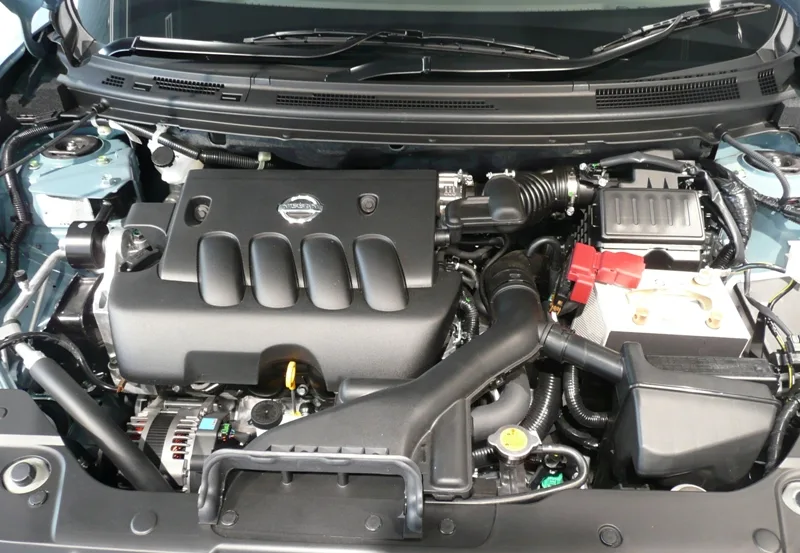
Among the 78 mm engines, the HR15DE was fitted most often. Its 1.5 L (1,498 cc) displacement comes from a 78 mm bore and a 78.4 mm stroke. Its 16-valve DOHC head uses EFI with variable valve timing, and peak output is 74 kW (99 hp; 101 PS) at 6000 rpm, with 134.4 Nm (99 lbf ft) at 4000 rpm.
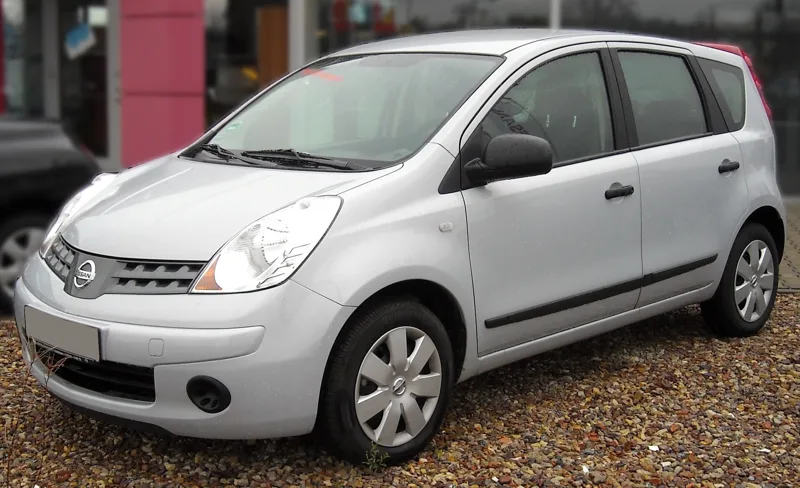
The engine served the Tiida C11 and the Note E11 from 2004 to 2012, and the Cube Z11 and Z12 from 2005 to 2008. The Bluebird Sylphy G11 used it from 2005 to 2012. It also powered the Micra and March K12, K13 and K14 from 2005 onwards, and the Almera, Latio and Sunny N17 and N18 from 2011.
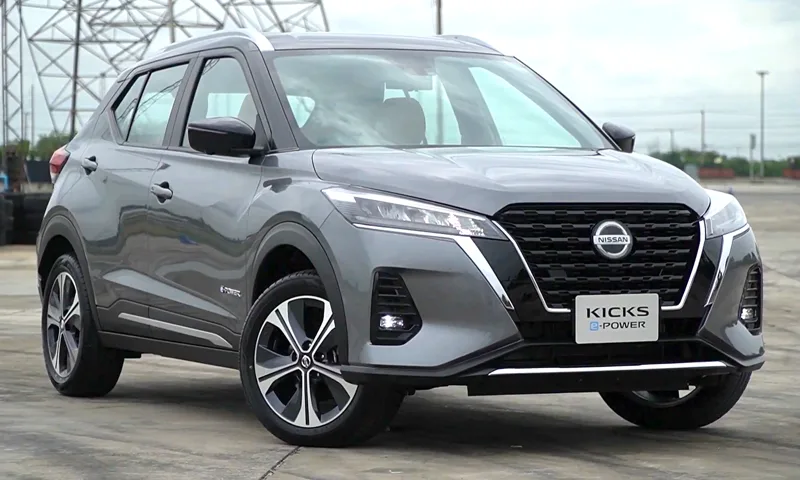
The HR15DE also appeared in the Juke F15 from 2010 to 2019 in Japan and Indonesia, the Kicks P15 from 2016 and the Kicks D15 for India from 2019. The Renault Captur GA used it from 2016. The engine was revised from 2006 with neutral idle control coordinated with the XTRONIC CVT, which first appeared in the Cube, Note, Tiida and Wingroad from 25 December 2006.
| Engine | Size | Headline output | Notable application |
|---|---|---|---|
| HR10DE | 1.0 L (999 cc) | 56.6 kW (77 PS; 76 hp) | 2015 Micra K13 in Brazil |
| HR12DE | 1.2 L (1,198 cc) | 59 kW (80 PS; 79 hp) | 2010 Micra |
| HR14DDe | 1.4 L (1,433 cc) | 72 kW (97 hp; 98 PS) at 5,600 rpm | Serena e-Power |
| HR15DE | 1.5 L (1,498 cc) | 74 kW (99 hp; 101 PS) at 6000 rpm | Micra, Tiida and Juke |
| HR16DE | 1.6 L (1,598 cc) | 77 to 88 kW (103 to 118 hp; 105 to 120 PS) | Qashqai and Juke |
| HR18DDh | About 1.8 L (1,798 cc) | 107 hp (80 kW; 109 PS) at 5,750 rpm | Captur E-tech |
What were the HR10DE and HR09DET engines?
The HR10DE is a 1.0 L (999 cc) naturally aspirated straight-three with a 78 mm bore and 69.7 mm stroke. It made 56.6 kW (77 PS; 76 hp), and its torque was 98 Nm (72 lbf ft), and it ran on gasoline blended with up to E100 ethanol.
Its applications were mainly small cars. The HR10DE powered the Twingo SCe 75 from 2014 to 2019 and the smart Fortwo and Forfour, which carried it as the Mercedes-Benz M281, over the same years. The 2017 Micra K14, the 2019 Twingo SCe 65 and Clio SCe, and the Dacia Logan III and Sandero III SCe 65 from 2021 followed on.
The HR09DET is a 0.9 L (898 cc) multi-point injected, turbocharged straight-three. It produces 66 kW (89 hp; 90 PS) at 5500 rpm and 135 to 140 Nm (100 to 103 lbf ft) at 2250 to 2500 rpm. A 110 hp version was built for the Twingo GT between 2016 and 2018, and the engine also served the Clio TCe 90 from 2012 to 2020 and the Dacia Sandero and Logan TCe 90 from 2013 to 2021.
What did the HR10DET and HR10DDT add?
The HR10DET is a 1.0 L (999 cc) turbocharged straight-three with a 72.2 mm bore and an 81.3 mm stroke. It produced 74 kW (100 PS; 99 hp) at 5000 rpm and 160 Nm (118 lbf ft) at 1750 rpm. An LPG version kept the same peak power but raised torque to 170 Nm at 2000 rpm.
Its fitments included the 2019 Almera N18, the 2019 Micra K14 IG-T 100, the 2019 Clio V TCe 100 and the 2020 Captur II. The Magnite, Kiger and Triber of 2021 also used it, along with the Jogger TCe 100 and ECO-G 100 in 2022.
The HR10DDT is a 1.0 L (999 cc) direct-injected turbo three. It makes 85 or 86 kW (114 or 115 hp; 116 or 117 PS) at 5000 or 5250 rpm, with 200 Nm (148 lbf ft) at 2750 rpm. The Juke II of 2019 used it, followed by the 2020 Megane sedan, and later the 2022 Jogger TCe 110 and the 2023 Sandero Stepway TCe 110.
How did the HR12 and HR14 engines serve e-Power?
The HR12DE and HR14DDe are the two units that most clearly show the family's hybrid role. The HR12DE displaces 1.2 L (1,198 cc) across three cylinders, with DOHC and variable valve timing. It produced 59 kW (80 PS; 79 hp) and 108 Nm (80 lbf ft) in its early form, and it reached the 2010 Micra, the 2012 Note and the 2016 Note e-Power.
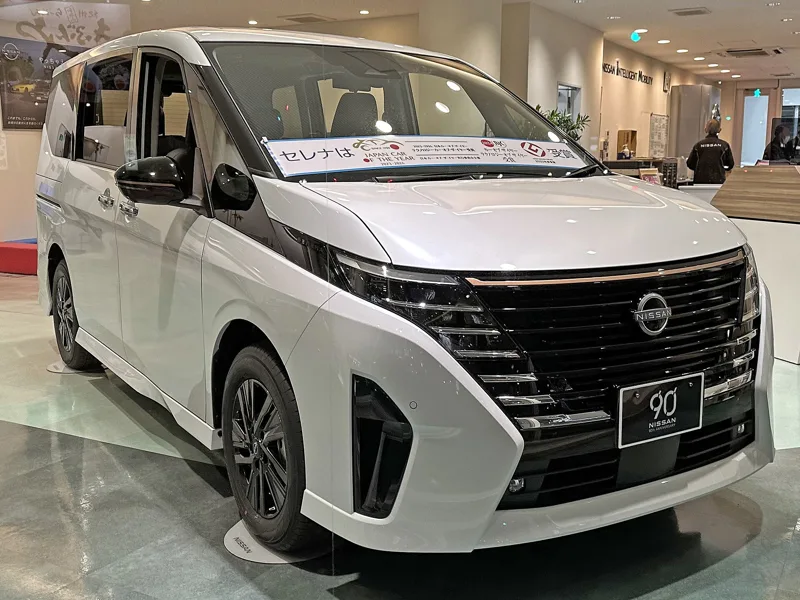
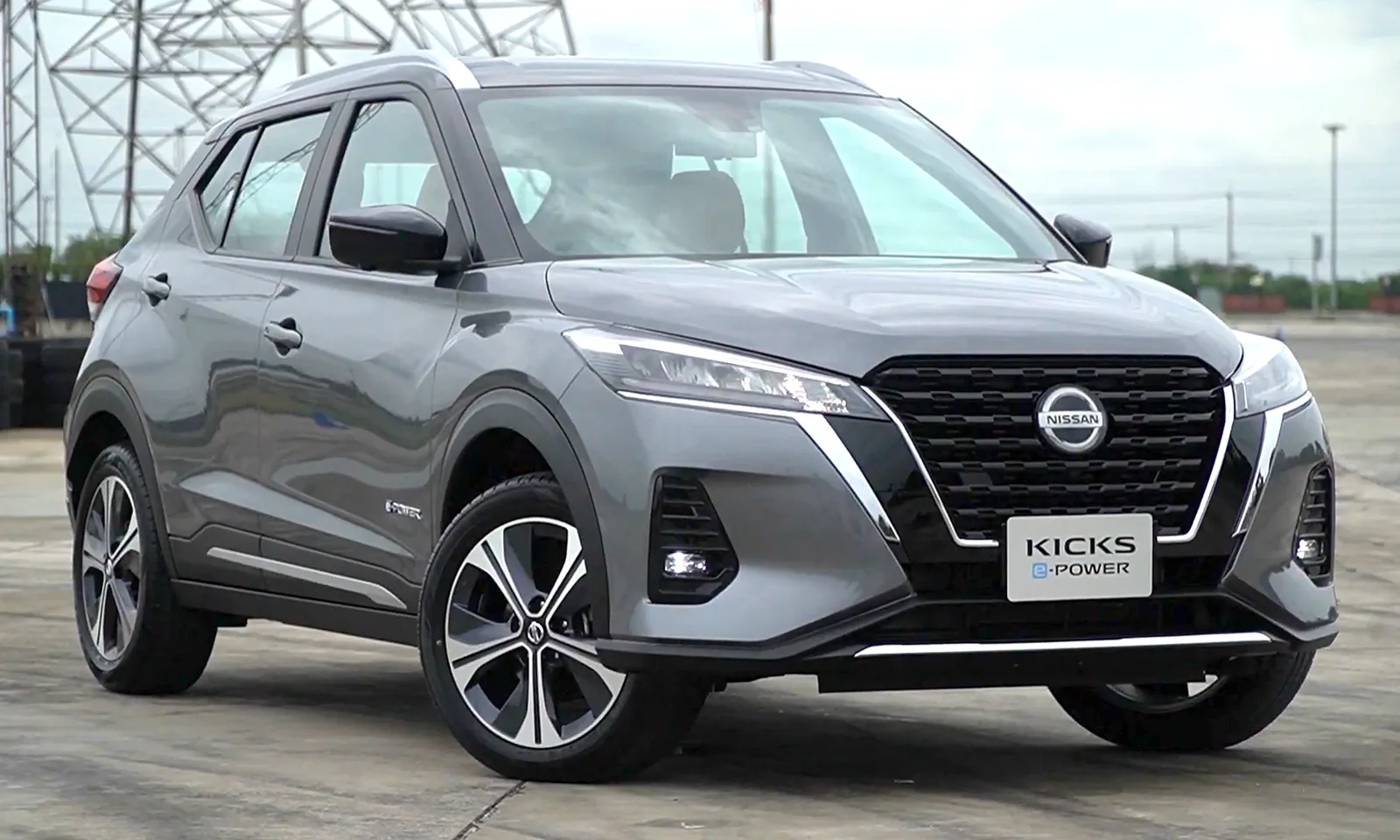
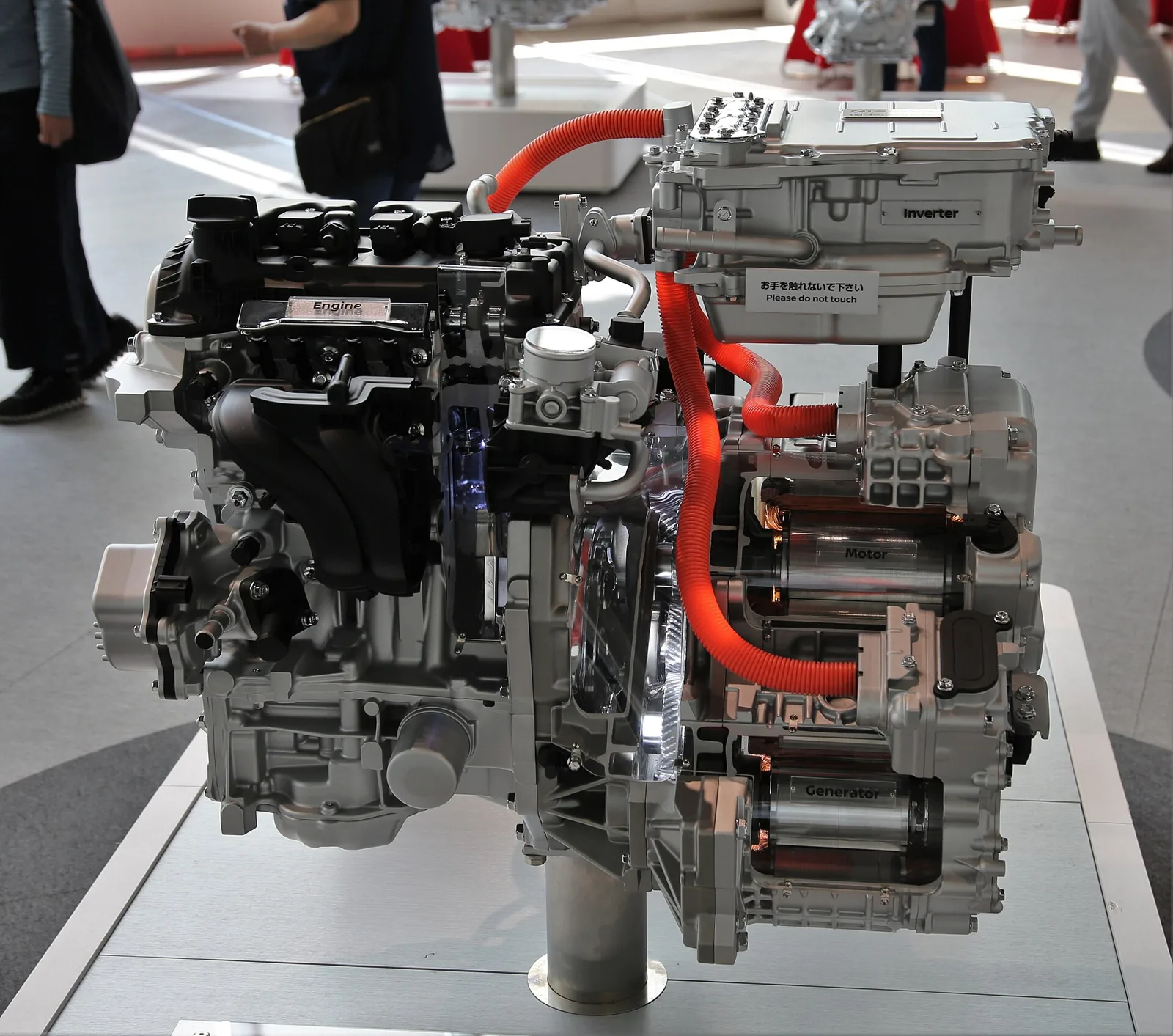
Direct injection is used on the HR14DDe, a 1.4 L (1,433 cc) unit made as a power generator for an electric motor. Its 100 mm stroke accompanies variable valve timing, and its 72 kW (97 hp; 98 PS) peak arrives at 5,600 rpm, and torque is 123 Nm (91 lbf ft). It powers the Serena e-Power from 2022 and the Kicks e-Power from 2026.
Earlier e-Power models used the HR12DE: the Serena from 2018, the Kicks from 2020, and the Sylphy in China from 2021. The Note e-power followed in the same year, which shows how far the HR12DE carried the hybrid concept across the range.
Which HR engines were supercharged or direct-injected?
The HR12DDR is the family's most unusual member. The unit is a supercharged straight-three of 1.2 L (1,198 cc), with direct injection and a timing chain. Peak output is 72 kW (98 PS; 97 hp), and torque sits at 143 Nm (105 lb ft).
The HR12DDR uses a compression ratio of 13.0:1 with the Miller cycle, along with continuously variable valve timing and direct gasoline injection. Its design includes a variable capacity oil pump, diamond-like carbon coated lifters and piston rings, and sodium-filled exhaust valves. It was fitted to the 2010 Micra and the 2012 Note.
The HR18DDh is the newest unit, first seen in 2025 and designed to be Euro7 compatible. It is based on the HR16DE it replaces, and it uses direct injection and an Atkinson cycle to improve thermal efficiency. Renault developed it for the second generation of its E-Tech Small hybrid system.
What makes the HR16DE stand out?
The HR16DE, a 1.6 L (1,598 cc) four-cylinder, uses two fuel injectors per cylinder to improve economy and cut emissions. Output runs from 77 kW to 88 kW, equal to 103 to 118 hp or 105 to 120 PS, with torque of 158 Nm (117 lbf ft) arriving at 4000 rpm.
A separate E-Tech hybrid version was developed for Renault hybrids, delivering 67 kW (90 hp; 91 PS) at 5600 rpm, and its 144 Nm (106 lbf ft) arrives at 3200 rpm. The HR16DE was fitted to a long list of models, including the Nissan Versa and Almera in the Americas, the Qashqai, the Juke and the Renault Megane MK3.
In 2016 Nissan's Autech division built a limited run of the March Bolero, called the A30, with an upgraded HR16DE. Autech camshafts, pistons, connecting rods and a new crankshaft were fitted, along with ported and polished intake ports and a re-tuned ECM. Only 30 examples were made to mark Autech's 30th anniversary, and the engine produced 148 hp (150 PS).
How did the 72.2 mm and 75.5 mm turbo engines develop?
The 72.2 mm turbo engines brought Renault's direct-injection and turbocharged technology into a family structure. The HR12DDT, sold as the H5Ft, is a 1.2 L (1,197 cc) four-cylinder with 85 kW (114 hp; 116 PS) and 190 Nm (140 lbf ft). A higher version produces 97 kW (130 hp; 132 PS), and its torque rises to 205 Nm (151 lbf ft), depending on the application.
The HR12DDT found its way into a wide spread of Renault and Nissan models. The Clio IV used it from 2012 to 2020, the Captur I from 2013 to 2018, the Megane III and Scenic III from 2013 to 2016, and the Nissan Qashqai II from 2013 to 2018. The Duster HM carried it from 2017 to 2019.
The HR13DDT, known as the H5Ht and as the Mercedes-Benz M282, has a 1.3 L (1,332 cc) displacement. Its three outputs run from 85 kW (114 hp; 116 PS) to 117 kW (157 hp; 159 PS), and its top torque reaches 270 Nm (199 lbf ft). The M282 variant adds cylinder deactivation, and the engine was tested to WLTP Euro 6c standards.
The 75.5 mm series brought the HR12DDV, a turbocharged 1.2 L (1,199 cc) three-cylinder with a 48V mild hybrid system. It produces 130 hp (96 kW) with 205 Nm in the E-Tech version and up to 150 hp (110 kW) with 230 Nm in other applications. It appeared in the 2022 Renault Austral and the 2025 Dacia Sandero, among others.