From Obadiah Elliott's 1804 springs and the 1901 Paris-to-Berlin race to hydropneumatic and active systems, how suspension keeps wheels on the road.
Engineers tune suspension to juggle two goals that conflict: keeping the tyres gripping and keeping the ride comfortable. Damping, camber and spring rates are the main levers they use, and each one shifts that balance in its own way. Each choice also trades off cost, space and handling.
Suspension links a vehicle to its wheels and lets them move relative to the body. Its job is to balance road holding against ride quality, two goals that pull against each other, so tuning a suspension is always a matter of finding the right compromise.
What does suspension do?
Suspension is the system of tyres, tyre air, springs, shock absorbers and linkages that connects a vehicle to its wheels. It has to support both road holding and handling and ride quality, which are at odds with each other, so the tuning is a constant compromise.
All the forces exerted on the vehicle by the road are transmitted through the tyres' contact patches. Suspension keeps that contact consistent, and it also protects the vehicle and its cargo or luggage from damage and wear. The front and rear suspension of a car may be designed differently.
Dependent and independent layouts are the main families, and each one trades cost, space and geometry control in its own way. The rest of this article looks at those choices and at the measurements engineers use to judge them.
Suspension is always a compromise between grip and comfort, and every design decision moves the balance one way or the other.
How did suspension develop?
Ox-drawn carts first used a suspension in which the platform hung from iron chains fixed to the wheeled frame. Leather straps called thoroughbraces replaced the chains by the 17th century, and no modern automobile has used that system. By about 1750 leaf springs were appearing on carriages such as the Landau.
Elliptical springs came into carriages in the middle of the 19th century, after their invention in 1804 by Obadiah Elliott. Elliott also registered the first patent for a spring-suspension vehicle, in which each wheel had two steel leaf springs on each side. Within a decade most British horse carriages were equipped with springs.
Automobiles began as self-propelled versions of horse-drawn vehicles. Those vehicles had been designed for relatively slow speeds, so their suspension was poorly suited to the higher speeds that the internal combustion engine allowed. Better metallurgy, which came with industrialisation, made durable springs practical.
Why did shock absorbers matter?
In 1901 Mors of Paris first fitted an automobile with shock absorbers, the same year as the Paris-to-Berlin race. Henri Fournier, with the damped suspension on his Mors Machine, won the Paris-to-Berlin race on 20 June 1901 in 11 hours 46 minutes and 10 seconds.
The race covered the route from Paris to Berlin, and Fournier's time beat that of Leonce Girardot in a Panhard, who took 12 hours, 15 minutes and 40 seconds. The result showed what a damped suspension could do over a long road race.
The first production car with coil springs arrived in 1906, the Brush Runabout from the Brush Motor Company. Coil springs are now fitted to most cars. Leyland Motors adopted torsion bars for one suspension design in 1920.
Independent front suspension was pioneered on the Lancia Lambda in 1922, and it became more common in mass-market cars from 1932. Most cars now have independent suspension on all four wheels.
How does rear suspension differ from front suspension?
For front-wheel drive cars the rear suspension has few constraints, so a variety of beam axles and independent layouts are used. For rear-wheel drive cars the rear suspension has many constraints, and the superior but more expensive independent layout has been hard to develop.
Henry Ford's Model T used a torque tube to restrain the axle's torque. The tube surrounded the driveshaft and transmitted the force to a ball joint at the rear of the transmission, while the differential was held by a lateral leaf spring and two narrow rods.
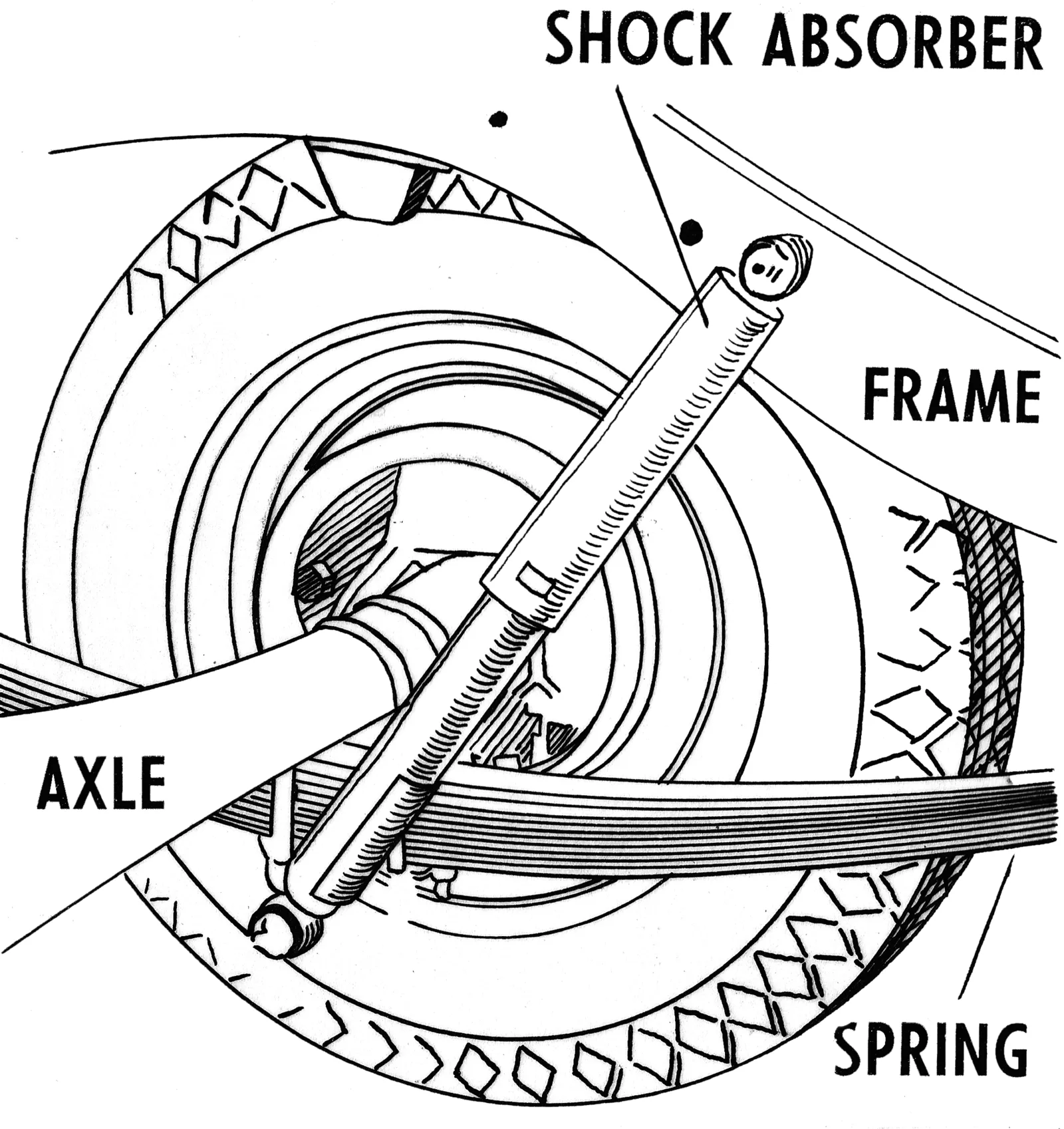
The Hotchkiss drive, invented by Albert Hotchkiss, was the most popular rear suspension in American cars from the 1930s to the 1970s. It uses longitudinal leaf springs attached forward and behind the differential of a live axle, and those springs transmit torque to the frame. Many European makers scorned it, but it was inexpensive to build.
The De Dion tube, invented by another Frenchman, is sometimes called semi-independent. It uses two universal joints from the centre of the differential to each wheel, but the wheels are tied by a yoke that goes around the differential. Today rear-wheel drive vehicles frequently use a fully independent multi-link suspension for secure location and decent ride quality.
What are spring rate and wheel rate?
Spring rate is the change in the force a spring exerts divided by the change in its deflection, and it helps set the vehicle's ride height and its position in the suspension stroke. Wheel rate is the effective spring rate measured at the wheel, and it is usually equal to or considerably less than the spring rate.
Wheel rate matters because springs are often mounted on control arms or swing arms. In one worked example a spring rate of 500 lbs/inch (87.5 N/mm) with a lever arm ratio of 0.75:1 gives a wheel rate of 281.25 lbs/inch (49.25 N/mm). The ratio is squared because it affects both the force and the distance travelled.
Springs that are too hard or too soft make the suspension ineffective, mostly because they fail to isolate the vehicle from the road. A racecar of 2,000 lb (1,000 kg) and a truck of 10,000 lb (5,000 kg) both run heavy springs, yet their rates differ hugely, and riding in an empty truck can be uncomfortable because of its high rate.
What is roll rate and how does weight transfer work?
Roll rate is the torque per degree of roll of the sprung mass. It is influenced by sprung mass, track width, centre of gravity height, spring and damper rates, roll centre heights, anti-roll bar stiffness and tyre pressure. The roll rate can differ between front and rear, which allows tuning for transient and steady-state handling.
Roll rate does not change the total weight transfer on the vehicle. It shifts how quickly and what share of weight transfers to a particular axle, and a higher roll rate on an axle generally means faster and higher weight transfer there. By 2021 some vehicles were offering dynamic roll control with air suspension and adaptive dampers.
The total amount of weight transfer depends on four factors: the distance between wheel centres, the height of the centre of gravity, the vehicle's mass and the acceleration experienced. Weight moved through springs, dampers and anti-roll bars is called elastic, while weight moved through rigid links such as A-arms is called geometric.
How do dampers and travel control the ride?
Damping is the control of motion or oscillation, seen in hydraulic gates and valves inside a shock absorber. Damping controls the travel speed and resistance of the suspension. An undamped car would oscillate up and down, while proper damping lets it settle back to a normal state in a short time.
Travel is the distance from the bottom of the suspension stroke to the top. Bottoming can cause serious control problems or direct damage, and it can happen when the suspension, tyres or body run out of space to move. Lifting a wheel is less severe when the spring reaches its unloaded shape than when travel is limited by contact between suspension members.
Desert racers use limiting straps to stop downward travel within safe limits for the linkages and shock absorbers. Bump-stops do the opposite job, protecting the suspension and occupants from violent bottoming. Factory vehicles often come with plain rubber nubs, while a desert race vehicle might use pneumatic or hydro-pneumatic bump-stops that absorb repeated, heavy impacts.
What is camber and why does it matter?
Camber is the tilt of a wheel from vertical. A tyre wears and brakes best at around -1 to -2 degrees of camber, although the best angle for grip can shift slightly with the tyre and the surface. Front and rear camber can each be nudged a little to tune handling.
Some racecars are tuned with -2 to -7 degrees of camber, depending on the handling wanted and the tyre construction. Too much camber, however, reduces braking performance because the contact patch shrinks, so the amount of camber change in bump is an important design target.
What types of suspension are there?
Suspension systems fall into dependent, independent and semi-dependent families. Each family has its own geometry and cost profile, and the table summarises them. The terms describe whether opposite wheels can move independently of each other, and the choice affects cost, space, handling and ride.
| Type | How it works | Examples |
|---|---|---|
| Dependent | A beam or live axle holds the wheels parallel, so one wheel's camber change mirrors the other | Live axle, beam axle, De Dion tube |
| Independent | Each wheel rises and falls without affecting the other, even with sway bars linking them | MacPherson strut, double wishbone, multi-link, swinging arm |
| Semi-dependent | One wheel's motion affects the other, but the wheels are not rigidly attached | Twist-beam rear suspension |
| Interconnected | Wheels on each side are linked by mechanical, hydraulic or pneumatic means | Anti-roll bars, Citroen 2CV, Hydrolastic and Hydragas |
Dependent suspension is most common where vehicles carry large loads relative to their weight, have soft springs and do not use active suspensions. Dependent front suspension now appears mainly on heavier commercial vehicles, while independent layouts give engineers more control over geometry.
How did interconnected and active suspension develop?
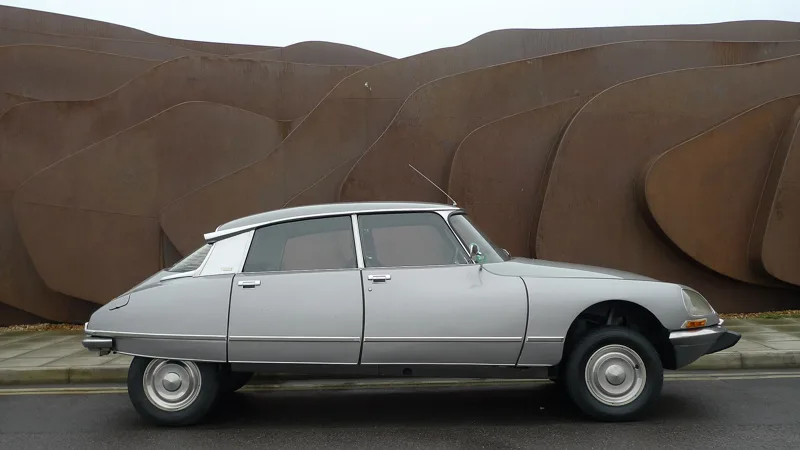
The Citroen 2CV, first built in 1948, was the first mass-production car with front-to-rear mechanical interconnected suspension. Its design brief was to be driven at speed over a ploughed field, and its front-wheel bump force pushed the rear wheel down on the same side, keeping the car level front to rear.
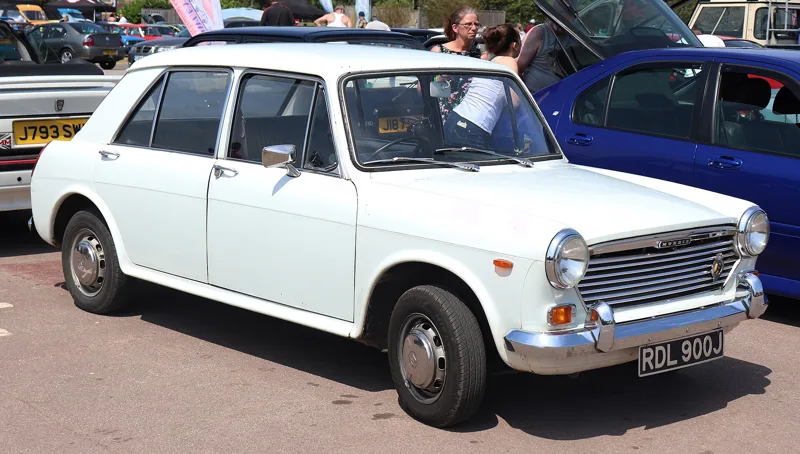
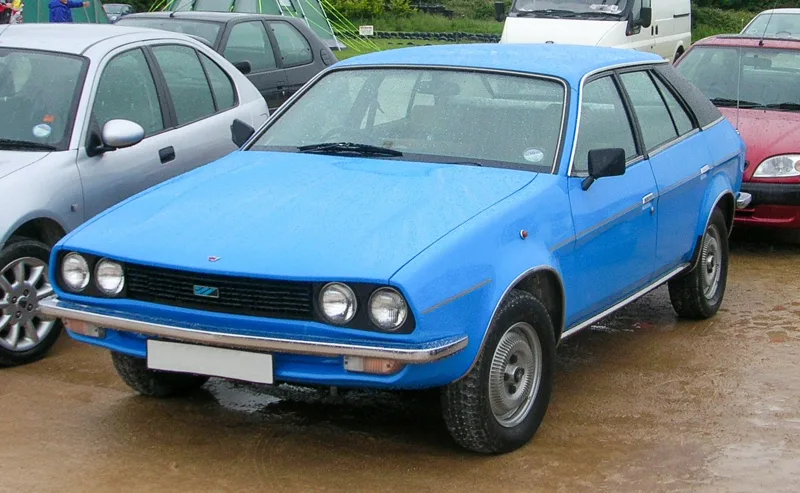
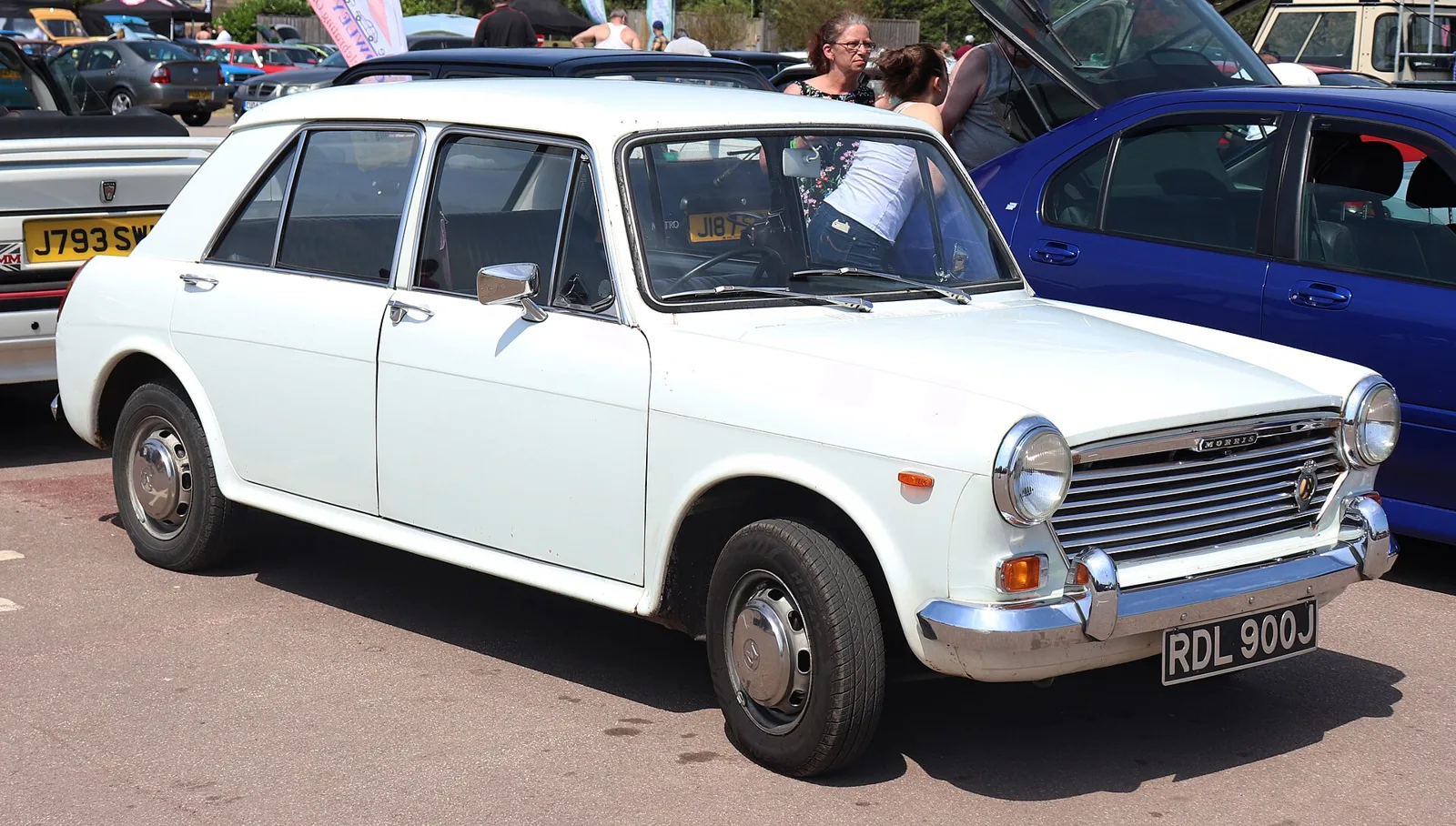
British Motor Corporation was also an early adopter. Hydrolastic was introduced in 1962 on the Morris 1100, using rubber cones first seen on the 1959 Mini, with fluid-filled pipes linking each side. Alex Moulton then developed Hydragas, which used metal spheres split by a rubber diaphragm, and it was introduced in 1973 on the Austin Allegro.
Hydragas was last used on the MG F in 2002. Its manufacturing line was over 40 years old when it was decommissioned in 2006.
Active systems followed. Toyota introduced switchable shock absorbers in the 1983 Soarer, and Delphi sells dampers filled with a magneto-rheological fluid whose viscosity changes electromagnetically. Nissan offered low-bandwidth active suspension around 1990 as an option that added 20% to the price of luxury models, and Mercedes introduced Active Body Control in the 1999 CL-Class.
Lotus developed active suspension prototypes from 1982 onward and introduced them to Formula One, where they were fairly effective before being banned. A Citroen hydropneumatic system adds about 1% to the cost of a car compared with passive steel springs.
What makes tank suspension different?
Military armoured vehicles have specialised suspension requirements. Some weigh more than seventy tons and must move quickly over rough or soft ground, while their suspension has to be protected from land mines and antitank weapons. Tracked vehicles can have as many as nine road wheels on each side.
The Christie suspension, developed in the 1930s, allowed coil springs inside the armoured hull by changing the direction of the force that deformed the spring with a bell crank. The T-34's suspension was directly descended from Christie designs. Torsion-bar suspension has been the dominant heavy armoured vehicle suspension since World War II.
The rocker-bogie arrangement, with trailing arms and idler wheels, is extremely flexible and suits very rough terrain. It was used in the Curiosity rover, and it shows that some suspension designs are chosen for the terrain rather than for comfort.