How Paul Mages' oil and nitrogen spheres gave Citroen cars a soft, self-levelling ride, and how the principle spread to Rolls-Royce, Mercedes-Benz and military vehicles.
Hydropneumatic suspension uses nitrogen-filled spheres and pressurised hydraulic fluid to cushion each wheel and hold the car level. Citroen's Paul Mages developed it, and the system first appeared on the 1954 Traction Avant before the 1955 DS used it on all four wheels. Later versions added electronic control under the Hydractive name.
Hydropneumatic suspension is a car suspension system that uses pressurised nitrogen gas and hydraulic fluid to cushion each wheel and keep the body at a set height. Invented by Paul Mages and produced by Citroen, it gave the company's cars a soft yet controlled ride, and other manufacturers licensed parts of it. The same principle now appears in tanks and large military vehicles.
How does hydropneumatic suspension work?
Each wheel is linked to a sphere split by a flexible membrane. Nitrogen gas sits in the upper half, and hydraulic fluid is pumped into the lower half, compressing the gas as the wheel rises. The gas absorbs the bumps, while the liquid carries the force between the wheel and the sphere.
The engine drives a high-pressure pump that feeds a shared hydraulic circuit. An accumulator sphere holds a reserve of pressure, and the same circuit powers the brakes and steering, and on some models the clutch and gear selector. The working part of the circuit runs between 150 and 180 bars, while each sphere's nitrogen is held at up to 75 bar.
Damping comes from a two-way leaf valve in the opening of each sphere, which forces fluid back and forth and resists movement. Height correction is handled by valves that admit fluid when the car sits low and return it to the reservoir when the car rises. These valves act with a deliberate delay so that they do not chase normal suspension movement.
Gas takes the shock and liquid carries the force, and that partnership gave Citroen a ride nobody else could copy.
Why was the system invented?
Citroen's engineers drew on aircraft landing gear, which used a gas spring partly filled with oil to lubricate it and stop the gas escaping. Citroen patented that aircraft arrangement in 1933, and the principle was later adapted for road cars by Paul Mages, an employee with no formal engineering training.
Mages is said to have developed the concept in secret during World War II. The aim was a suspension that combined a new level of softness with vehicle control and self-levelling. Hydropneumatic suspension has natural advantages over steel springs, although many people saw it as merely good for comfort.
The strength of the design lies in combining two principles. Hydraulics multiply torque without gears or levers, and because gas is compressible, the equipment is less prone to shock damage. Citroen also found that the arrangement helped handling and control, not just ride quality.
Which cars used the system first?
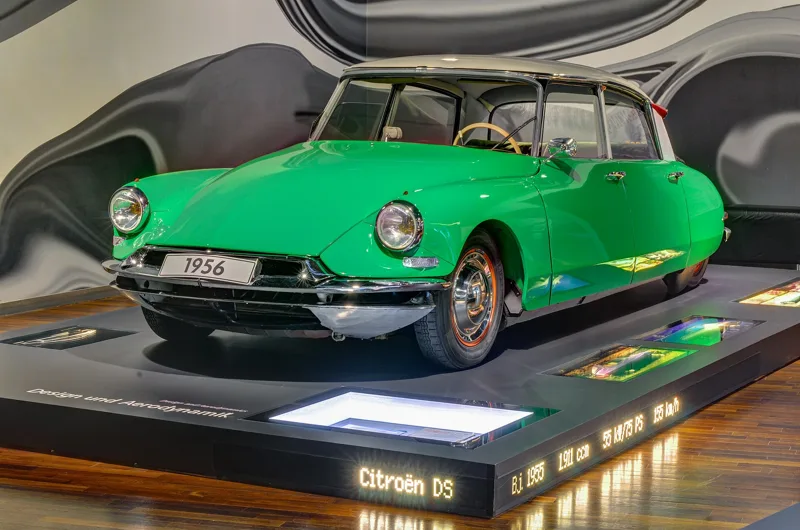
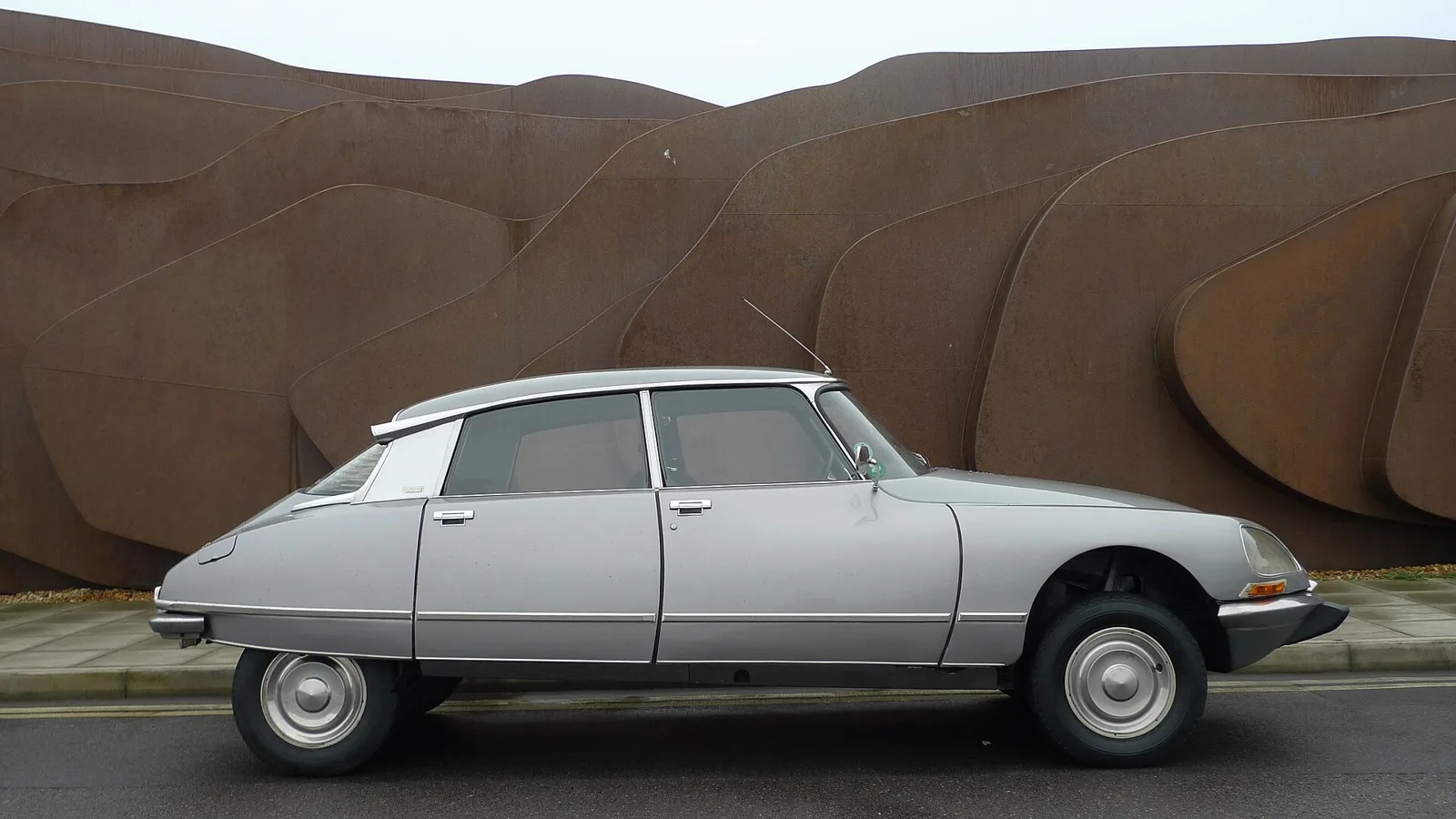
Citroen introduced the system on the rear suspension of the Traction Avant 15H in 1954. The DS followed in 1955 as the first car with hydropneumatic suspension at all four wheels, and it also ran its power steering, brakes and gearbox from the same high-pressure hydraulics.
A belt-driven seven-piston pump generated that pressure when the engine was running. Its size was similar to a power steering pump, and it kept the whole system supplied on the road. Because France's roads were in poor condition after World War II, the ride mattered a great deal, and the ID and DS were reported to give a smooth and stable ride there.
Which manufacturers licensed the technology?
Rolls-Royce licensed Citroen's technology for the Silver Shadow in 1965, and BMW, Maserati and Peugeot also used elements of the system. Mercedes-Benz used hydropneumatics on several cars, where it became known as Active Body Control, and the system was also fitted to Berliet trucks.
Not every maker wanted that complexity. Mercedes-Benz, British Leyland and Lincoln each sought simpler variants using compressed air or gas springs. British Leyland's Hydrolastic and Hydragas were among the best-known alternatives.
Citroen's own approach had a downside. Only garages with special tools and knowledge could work on these cars, which made them radically different from ordinary cars with common mechanicals. Owners were therefore dependent on specialist workshops, a point that counted against the system in some markets.
How did later Citroens refine the design?
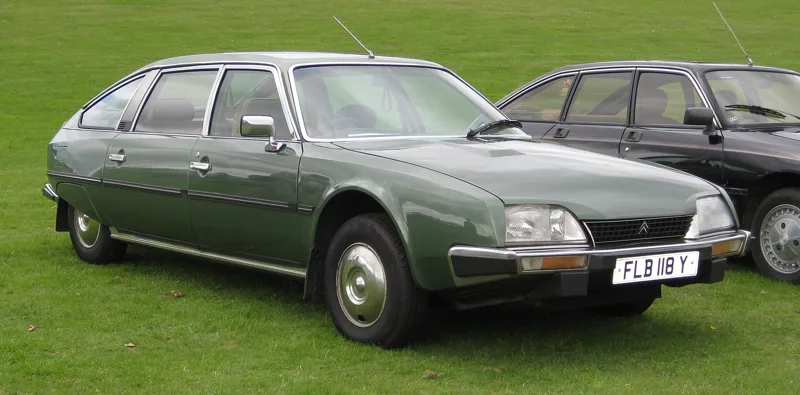
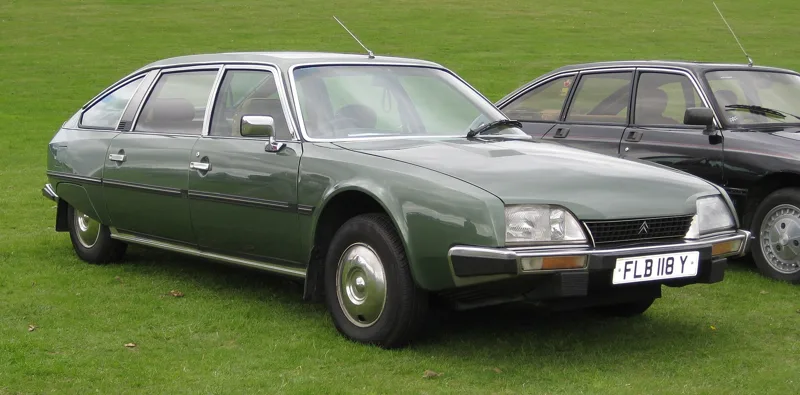
Citroen added steel anti-roll bars, variable firmness and active control of body roll over the years. The SM, CX, XM and Xantia each carried the idea forward, adding steering, damping and electronic features to the basic oil and gas arrangement.
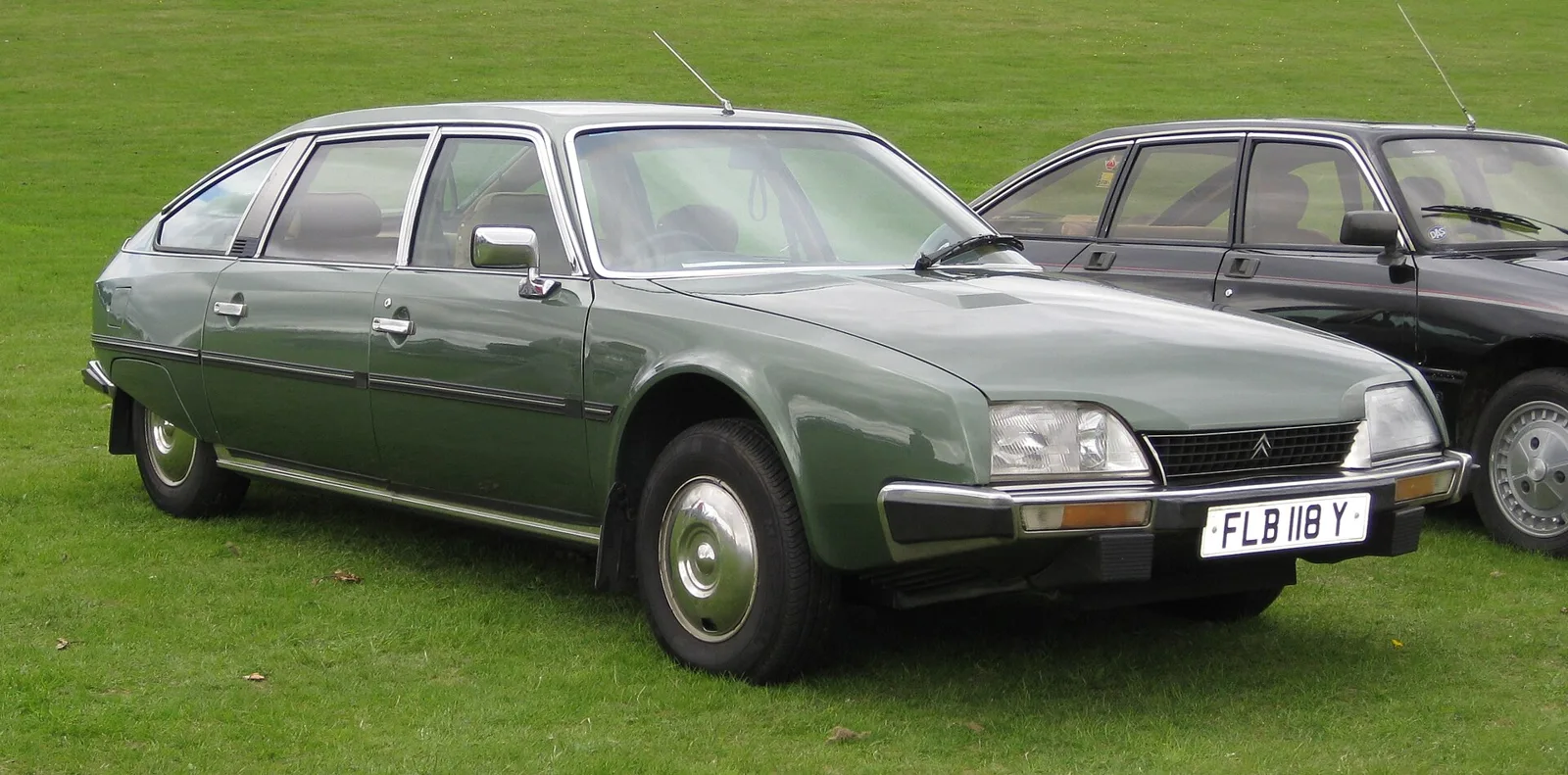
The CX combined the self-levelling suspension with speed-adjustable DIRAVI power steering, and its suspension sat on sub frames fitted through flexible mountings. The British magazine Car described the sensation as hovering over road irregularities, much like a ship crossing above the ocean floor.
The Xantia Activa's active anti-roll bars let it exceed one g of lateral acceleration in testing. It set a moose test speed of 85 km/h (53 mph), ahead of the Porsche 997 GT3 RS at 82 km/h (51 mph) in second place. The Activa also leaned one degree into turns, which Citroen itself acknowledged was a marketing gimmick, since zero lean was the optimum.
What is Hydractive?
Hydractive is Citroen's electronically managed development of the system, introduced in 1990 after a prototype appeared on the 1988 Activa concept. Sensors on the steering, brakes, suspension, throttle and gearbox feed an on-board computer, which engages extra spheres for either a supple ride or firmer cornering.
Early Hydractive cars offered Sport and Auto presets, with Auto stiffening the suspension when sensors detected a threshold in pedal movement, brake pressure or steering angle. Hydractive 2 renamed the presets Sport and Normal and lowered the thresholds, rather than locking the suspension in its firmest state.
Hydractive 3 on the 2001 Citroen C5 stays at normal ride height even when the engine is off, through electronics. Its motorway mode lowers the car 15 mm above 110 km/h, and its poor road mode raises it 13 mm below 70 km/h. Hydractive 3+ added a comfort or dynamic setting and extra spheres that a Sport button can engage.
Which hydraulic fluids did Citroen use?
The fluid is central to the system, and Citroen changed it more than once. Standard brake fluid was unsuited to high-pressure hydraulics, so the company developed a red fluid, LHS, which it used from 1954 to 1967. Its chief problem was that it absorbed moisture and dust, causing corrosion.
| Fluid | Period | Notes |
|---|---|---|
| LHS (red) | 1954 to 1967 | Absorbed moisture and dust, causing corrosion |
| LHM (green) | From 1967 | Hydrophobic mineral oil with corrosion inhibitors |
| LDS (orange) | Hydractive 3 era, from 2001 | Conforms to DIN 51524-3 for HVLP |
LHM replaced LHS because mineral oil is hydrophobic, so water vapour bubbles do not form in the lines. The fluids and their seals are not interchangeable, and using the wrong one means draining and rinsing the system before refilling with the correct fluid. Keeping the oil clean remains the most important maintenance task.
How long do the spheres last?
Spheres do not wear mechanically, but they lose pressure as nitrogen slowly diffuses through the membrane. Classic green and grey spheres typically last between 60,000 and 100,000 km, and they can be recharged far more cheaply than they can be replaced.
Recharging roughly every three years is vital, because a membrane run at low pressure can rupture. A ruptured sphere means suspension loss at that wheel, although ride height is unaffected. Hydractive 3 spheres use new nylon membranes that slow the diffusion, and they are recognisable by their grey colouring.
The metal and alloy parts rarely fail, even after very high mileage. The rubber and elastomer components, especially those exposed to air, are the usual failure points, because they can harden and leak over time.
Where is the principle used today?
Hydropneumatic principles appear in tanks and large military vehicles, in JCB Fastrac tractors, and in modern premium cars with electronic active control. The same thinking underlies aircraft oleo struts and gas-filled shock absorbers, which were first patented in the US in 1934.
Mercedes-Benz introduced Active Body Control on the 1999 CL and S-Class, and the 2019 450 GLE brought eActive Body Control to an SUV, discarding mechanical roll bars. In 2023, BYD introduced active hydropneumatic suspension on the Yangwang U8 SUV and U9 sportscar, which can drive on three wheels and stay level while jumping.
What did Citroen's 1969 and 1970 models add?
Citroen extended the system beyond its large cars in the late 1960s and early 1970s. The M35 coupe, derived from the Ami 8, paired a Wankel engine with hydropneumatic suspension, and the GS brought the system to a small car in 1970.
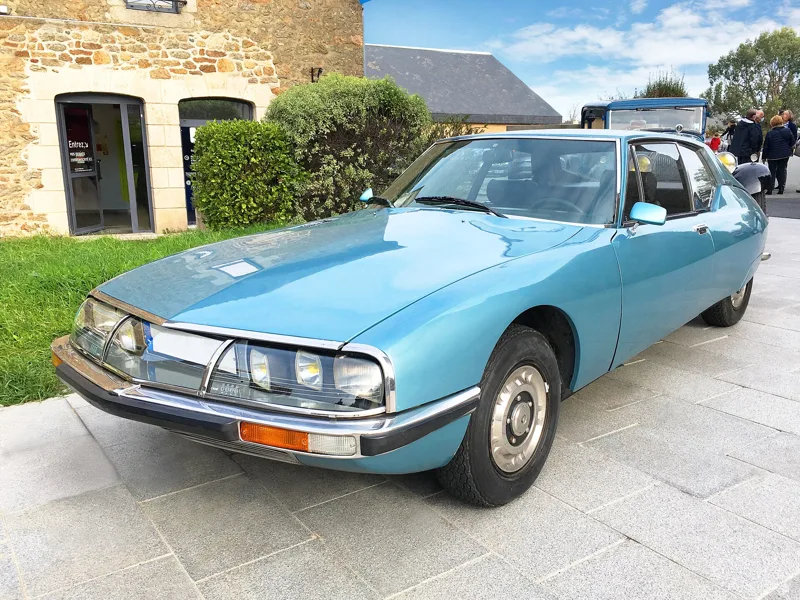
The SM, also from 1970, added variable speed auto-returning power steering called DIRAVI, along with hydraulically actuated directional high beams. The beams of all six headlights were kept parallel to the road surface by a separate hydraulic system, which used a glycerine-type fluid rather than the central system's mineral oil.
Bodies for the M35 were produced by the coachbuilder Heuliez from 1969 to 1971, so the coupe's coachwork was made outside Citroen.
How did US rules treat height-adjustable suspension?
US regulators legalised the LHM mineral fluid in 1969, but a 1974 National Highway Traffic Safety Administration ruling banned vehicles with height-adjustable suspension. That ban hit buyers of self-levelling cars in the United States, and it was repealed in 1981.
The ban shows how regulation can shape a suspension design. Self-levelling and driver-variable ride height were central to the hydropneumatic concept, so the restriction removed a key feature for American customers for several years.
How did BMW and Mercedes-Benz adapt the system?
BMW introduced optional hydropneumatic rear suspension on the E12 5-series in 1972, keeping coil springs that were softer than conventional ones. Mercedes-Benz adapted the system for the 450SEL 6.9 W116 in 1975, where the pump was driven by the engine's timing chain rather than an external belt.
BMW offered the rear system on most of its larger saloons and on the E30 Touring, until air suspension replaced it. The hydraulic circuit was separate from the power steering until late 1987, when the pump was changed to a parallel circuit that shared the steering fluid.
Mercedes-Benz used the hydropneumatic system on the W126 500SEL from 1980, and it later appeared on the 420SEL and 560SEL. On selected W124 E-Class models in 1984, the rear suspension used a hydraulic arrangement mixed with coil springs, and the W210 estate models followed the same approach in 1995.