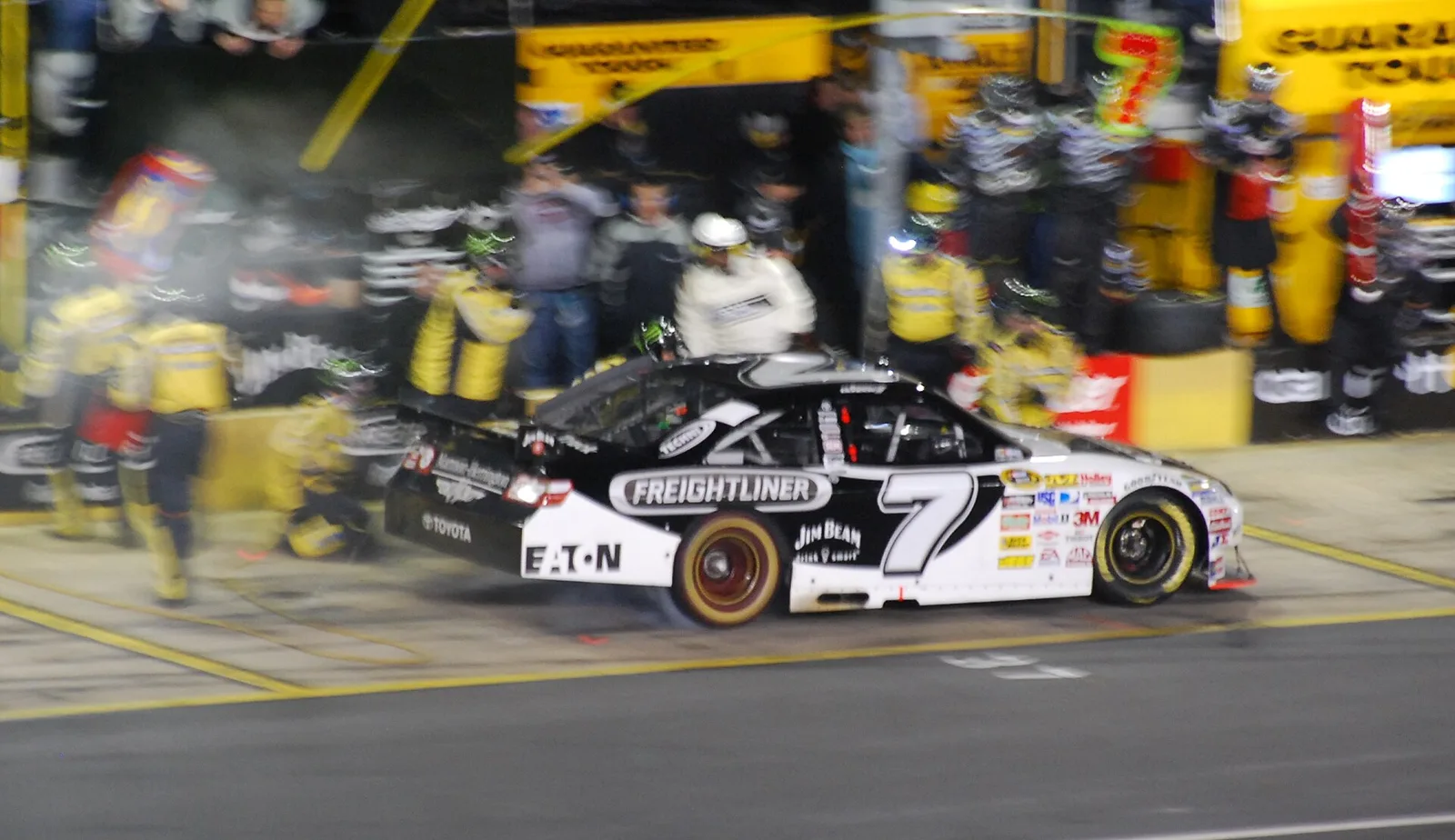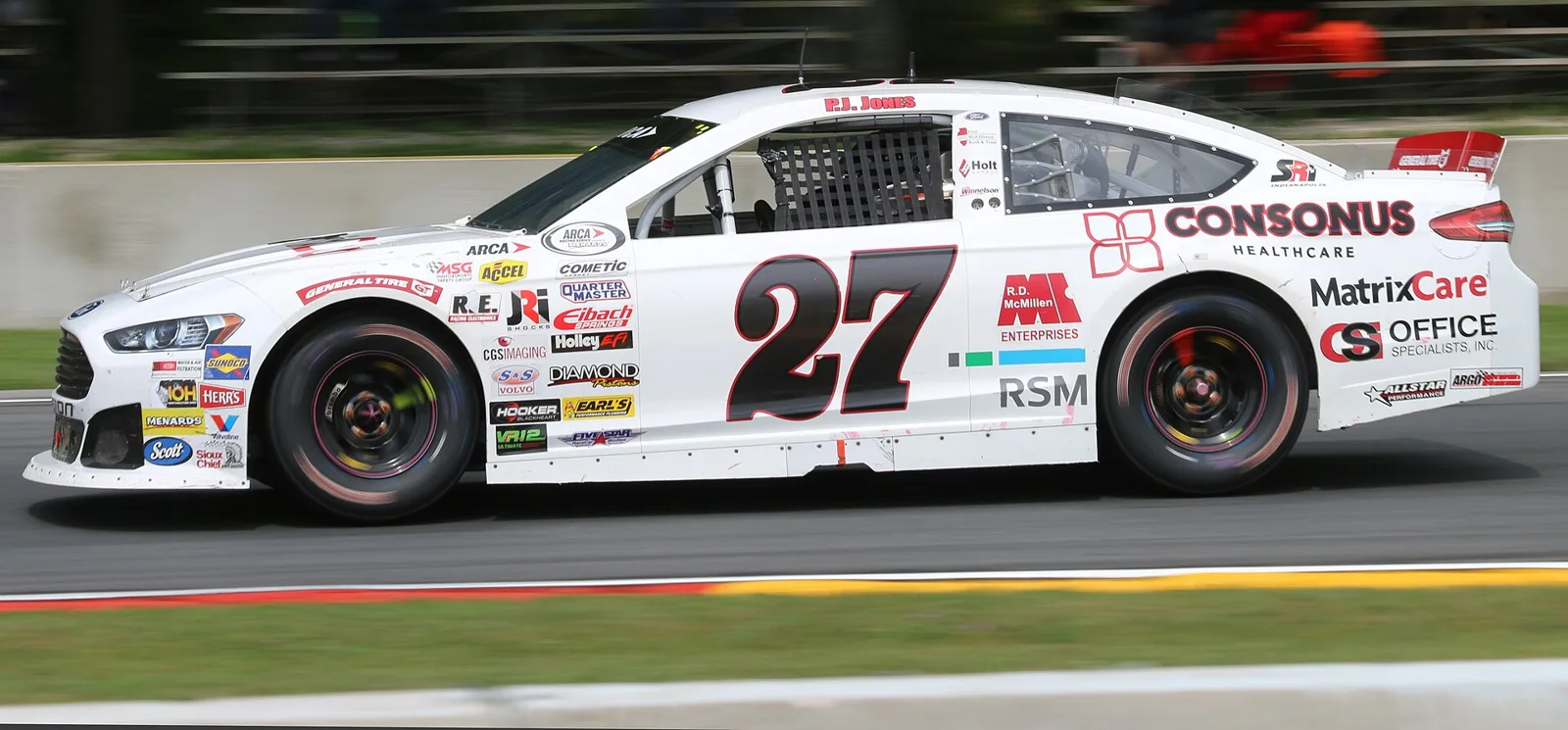
A driver who raced open-wheel cars, sports prototypes, NASCAR and off-road trucks, and who won the 1993 Daytona 24 Hours.
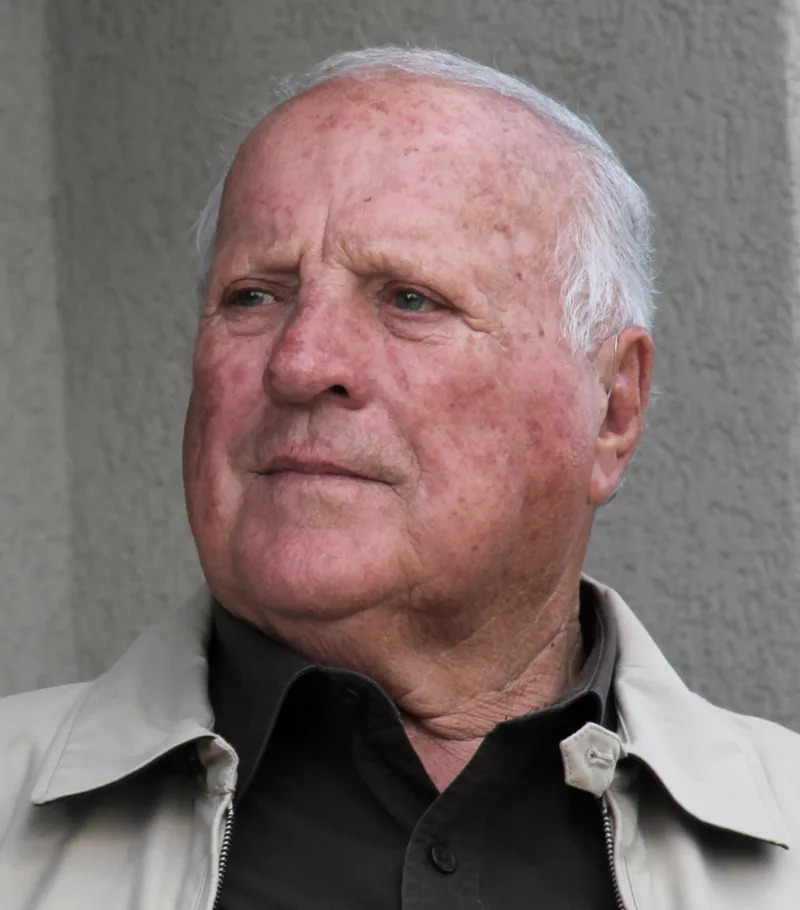
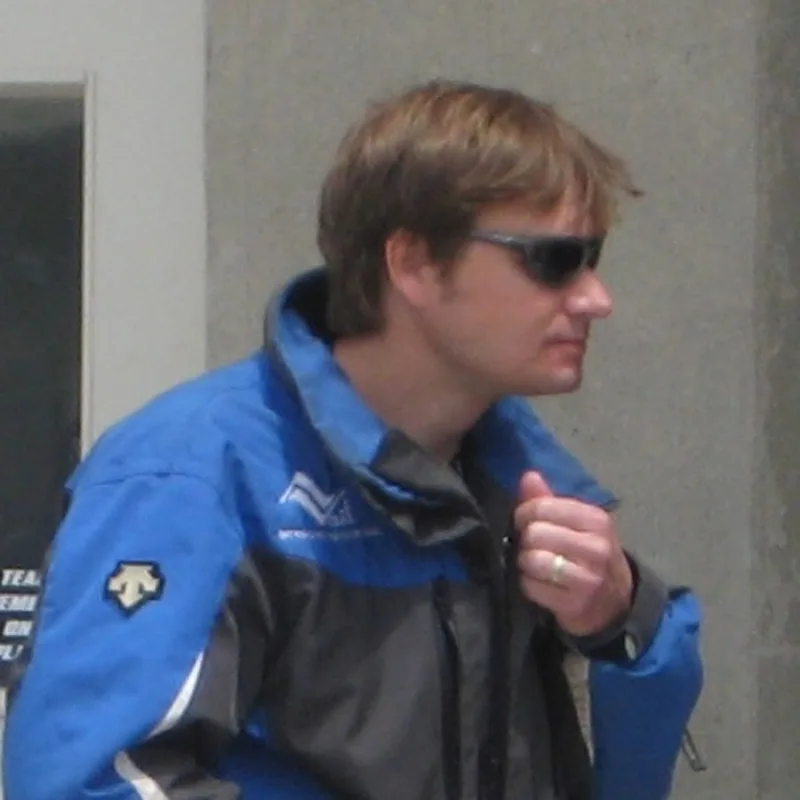
P. J. Jones is an American racing driver who competed in NASCAR, IndyCar, IMSA, the American Le Mans Series and Stadium Super Trucks. His most notable win came at the 1993 24 Hours of Daytona, and he is the son of Indianapolis 500 winner Parnelli Jones.
Parnell Velko 'P. J.' Jones is an American driver whose career spans open-wheel, sports car, stock car and off-road racing. He won the 1993 24 Hours of Daytona and later raced in Stadium Super Trucks. His father was the Indianapolis 500 winner Parnelli Jones.
How did Jones start in racing?
Jones began with go-karts before moving to oval racing at Ascot Park, following his father's path there decades earlier. He was also a skilled ice hockey player as a boy, scoring ninety-eight goals in thirty games for a California peewee team that won the state championship.
In 1986 he joined USAC's West Coast Midget category and was named rookie of the year. The step up gave him experience across a wider range of open-wheel divisions.
Jones then moved into sports car racing. With Clayton-Cunningham Racing he drove Mazda RX-7s in the IMSA GTO and GTU classes. He finished 14th in GTO and 27th in GTU, but in 1988 he scored a GTU podium and won a sprint car race in Auckland.
By the end of the decade he had moved to the American Racing Series, where Buick-powered cars carried him to a win at Mid-Ohio. That season ended sixth in the standings. The same year, USAC suspended him for thirty days after he deliberately collided with a rival.
A career that moved from Ascot Park midgets to Daytona prototypes, NASCAR road courses and Stadium Super Trucks.
What did the early 1990s bring in sports cars and open wheel?
In 1991 Jones ran a Toyota-powered Eagle HF90 at the 24 Hours of Daytona for Dan Gurney's All American Racers. That year in the American Racing Series he won twice, on street circuits in Toronto and Denver, and finished third in the standings. Late in 1991 he also took part in an ice race.
The 1992 season was his first full-time IMSA GTP campaign, in a new Eagle MkIII for the same team. He ended the year fourth in points after two wins, though his teammate Juan Manuel Fangio II took the title. The 1993 season went considerably better.
What was the 1993 season like?
In 1993 All American Racers swept the GTP championship and vice-championship, with Jones second behind Fangio. He won the season-opening 24 Hours of Daytona with Mark Dismore and Rocky Moran, and later set the lap record at Lime Rock Park with a time of 43.112 seconds.
That Lime Rock lap still stands as the fastest ever recorded at the track, and it came in a season when he was also testing other options.
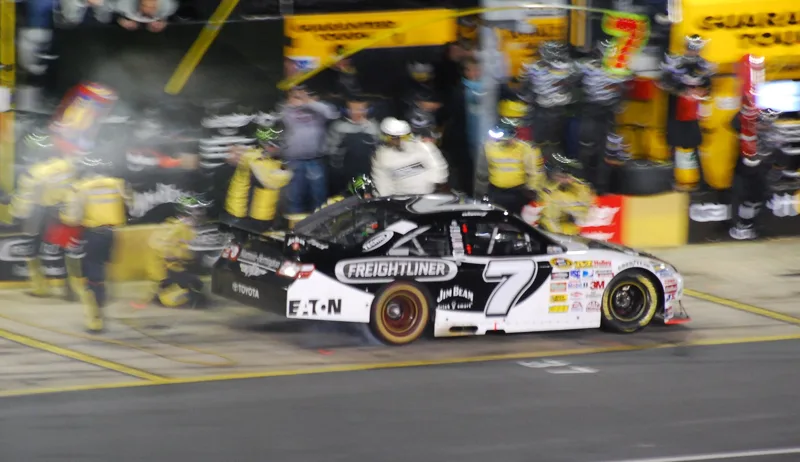
Jones also took part in NASCAR Winston Cup events when his sports car schedule allowed. He qualified for six of eleven starts, and his best result that year was a top ten at Watkins Glen, driving the No. 9 Ford for Melling Racing.
What happened on the short tracks and in trucks in the mid-1990s?
After a Winston West win at Phoenix International Raceway, Jones joined the new NASCAR SuperTruck exhibition races for Scoop Vessels in 1994 and 1995. He raced seven times for the team and won at Mesa Marin and Phoenix, with two second places and two thirds.
His 1995 Truck Series season was harder. He scored just two top-ten finishes in thirteen starts, and the team released him after the year. Racing in the Chili Bowl and in midget events in 1993 and 1994 kept him busy, often alongside his brother Page.
He then returned to open-wheel racing. In 1996 All American Racers ran a Toyota-powered Eagle MK-V in CART, and in his second CART start Jones finished ninth at Belle Isle. That result brought the first points for a Toyota-powered car in that series.
The season was abbreviated and began at the Milwaukee Mile, which set the tone for a difficult stretch with the team.
What happened in CART from 1996 to 1999?
Success was scarce between 1996 and 1998, and Jones scored points at only three other races in those seasons. In 1999 he moved to Patrick Racing, where four straight points finishes ran from Long Beach to Gateway. He also finished in the top ten at Toronto and Chicago that year.
The highlight of 1999 came at Nazareth Speedway, where he finished second, his best CART result. The Patrick team gave him better equipment than he had enjoyed at All American Racers, and the results followed. He had left Dan Gurney's operation for Pat Patrick's, swapping one motorsport legend for another.
Why did Jones move to NASCAR full-time in 2000?
Like Scott Pruett and Robby Gordon, Jones left open-wheel racing for stock cars. He focused on the Busch Series rather than the Cup division, although he made two Cup starts in 2000, one as a relief driver for Gordon while Gordon was in the Indianapolis 500. That start came in the No. 13 Burger King Ford at the Coca-Cola 600.
His 2000 Busch season opened with BACE Motorsports, but no result there was better than 24th after seven races, and he was released. David Ridling then signed him for the No. 19 car, and he improved to 17th at Loudon. That Busch season changed teams several times, which made consistency hard to find. His second Cup start that year came at Watkins Glen, where he substituted for Ted Musgrave at SABCO Racing and finished 21st.
In 2001 he joined Phoenix Racing and qualified third for the Daytona season opener. Jimmy Spencer took over the ride soon afterwards.
How did 2002 and 2003 go in Cup and Indy racing?
In 2002 Jones signed for Team Menard's Indianapolis 500 entry, but a neck injury in May practice ruled him out. Raul Boesel replaced him and started on the front row. The same year he finished fourth at Watkins Glen, his best Winston Cup result.
A. J. Foyt's No. 14 Conseco Pontiac failed to qualify at the Brickyard 400 with Jones at the wheel. In 2003 he was invited back for Sonoma, but he failed to qualify there as well, and that second miss frustrated Foyt enough that he was not asked back. Jones then drove a Pontiac for Morgan-McClure and finished 24th.
Back in the Truck Series, Jones scored a top ten at Homestead-Miami for Jim Smith in 2003. He returned in 2004 for the Fontana and Phoenix races and earned another top ten at Phoenix.
In 2004 he also drove five Winston Cup races in Don Arnold's Dodge. In 2005 he failed to qualify for ten of the fourteen races he entered for MACH 1 Motorsports.
How did his USAC Silver Crown races fit in?
His USAC Silver Crown results were among the strongest of his early career. At the IRP facility he started from pole and finished second behind Mike Bliss, who dominated that circuit at the time. He returned to the Silver Crown series in 2002, a series where he had found success earlier.
Those open-wheel results sat alongside his midget racing and his Chili Bowl appearances, a mix of disciplines that shaped the rest of his career.
How did his Indianapolis 500 debut go?
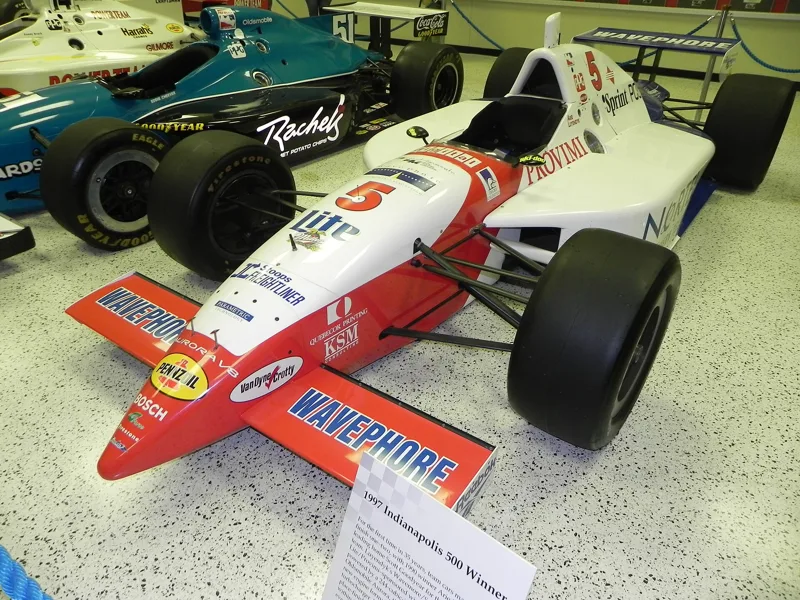
Jones made his Indianapolis 500 debut in May 2004, in the race his father had won in 1963. Rain shortened the event for every entrant, and Jones's day ended in a crash. He would not return to the race until 2006.
In 2006 Beck Motorsports entered him in the No. 98 Curb Records car. The Panoz chassis lacked the pace of the Dallaras that filled most of the field, and he qualified on the final row. A 19th-place finish was a respectable result given the equipment.
How did his NASCAR road course work go from 2006 to 2011?
Jones earned a reputation as a road course specialist. In 2006 his Morgan-McClure Chevrolet suffered rear end failure at Sonoma, and he did not return to the Cup Series that season. He retreated to the Busch division, where he raced for Mike Curb's team and made one start for Johnny Davis Motorsports at Watkins Glen.
In 2007 Richard Childress Racing gave him a Busch road course ride at the Mexico City race, and he later drove Michael Waltrip Racing's Toyota to 12th at Sonoma. Between 2009 and 2011 he was a start-and-park road course driver for Robby Gordon Motorsports. He was known as a road course ringer, brought in for races on twisting circuits.
What was his 2011 sports car season like?
In 2011 Jones joined Rocketsports Racing and drove a factory Jaguar XKR GT with Rocky Moran Jr. in the American Le Mans Series. The car was unreliable and frequently fell short of 70% of the class winner's distance, so no points were scored even in rounds with few entries.
Moran had indicated that the pair would race together again in 2012, but the team folded first and the programme ended there.
How did his off-road and stadium racing go?
Jones moved into the General Tire Trophylite off-road truck series in 2012, where he won at Henderson, Nevada, in his first season in that series. That result added another discipline to a record that was already varied. He also raced at the Chili Bowl in 2013, winning the seventh heat race on opening night before being eliminated from contention.
Stadium Super Trucks suited him as well. He finished fourth in the inaugural race at the University of Phoenix Stadium in 2013, and that season ended fourth in the standings with a Las Vegas win. From 2014 to 2017 he raced part-time, winning at St. Petersburg, the Sand Sports Super Show and Texas Motor Speedway.
In 2017 he also drove the Xfinity Series race at Watkins Glen for Chris Cockrum Racing in the No. 25 car.
Key results at a glance
| Year | Series | Result |
|---|---|---|
| 1993 | IMSA GTP | Won the 24 Hours of Daytona, runner-up in GTP |
| 1993 | Lime Rock Park | Track lap record, 43.112 seconds |
| 1999 | CART | Second at Nazareth Speedway |
| 2002 | Winston Cup | Fourth at Watkins Glen |
| 2006 | Indianapolis 500 | 19th place |
| 2013 | Stadium Super Trucks | Fourth in standings, Las Vegas win |
How is Jones involved in racing today?
He no longer races professionally. He runs PJ's Performance, a garage that caters to UTVs, and his family includes racers of their own, with son Jagger in the Mazda MX-5 Cup and brother Page also a former driver. In his late teens and early twenties he also took business courses at El Camino College.