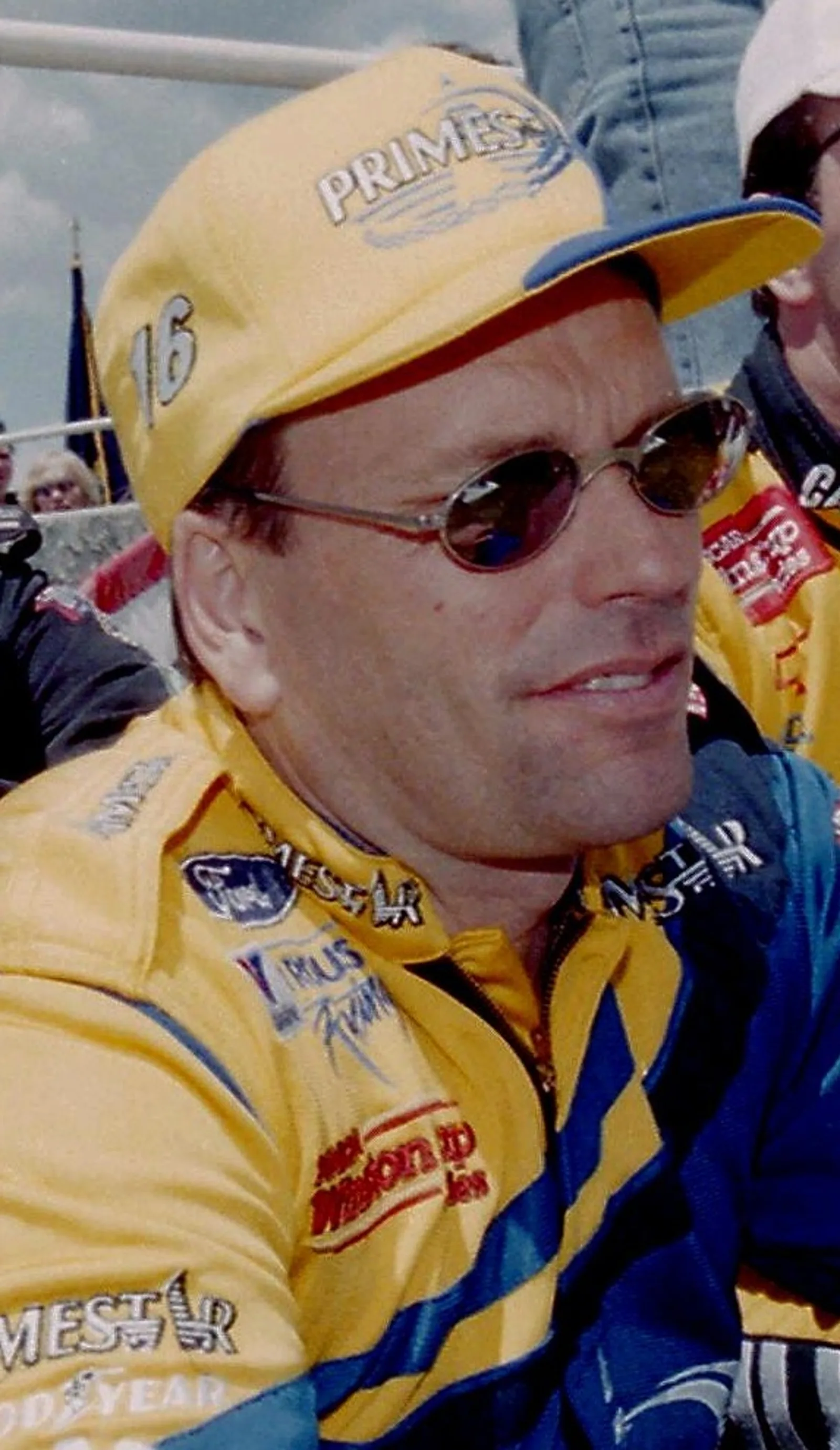
From Midwest short tracks to the Winston Cup, Busch and Truck series, ending with the 2005 Craftsman Truck championship.
Ted Musgrave is an American former stock car driver who raced in NASCAR's Winston Cup, Busch and Craftsman Truck series. He began racing on Midwest short tracks in 1977, won the Craftsman Truck Series championship in 2005, and was reported retired in March 2012.
Ted Musgrave worked his way from Midwest short tracks to the top three national stock car series in the United States. He drove for a string of Winston Cup teams, won several Craftsman Truck Series races and claimed the 2005 truck championship. A press release in March 2012 said he had retired from driving.
Who is Ted Musgrave?
Theodore David Musgrave Sr. was born on December 18, 1955, and is an American former stock car racing driver. He competed in the Winston Cup Series, the Busch Series and the Craftsman Truck Series, and he was chosen for the International Race of Champions in 2006. His early career was built on short tracks in Wisconsin and Illinois.
His father, Elmer, was a well-known short-track racer in the Midwest. Over 25 years he competed at Soldier Field, O'Hare, Waukegan and Wilmot, Wisconsin. Later he moved into asphalt late models in the ASA and ARCA series. Musgrave remembered sitting in the infield at Milwaukee and watching his father race against some of the best drivers of the day.
A Wisconsin short-track racer who went on to win a national truck championship and drive for some of NASCAR's best-known teams.
How did Musgrave start racing?
Musgrave began racing in 1977, at the age of 22, at Waukegan. He started in a 1967 Ford Galaxy that he inherited from his brother, rebuilt it into a Torino, and won the track's rookie of the year award. The next season he and his father built a Ford Mustang.
Dick Trickle offered some tips that helped shape the Mustang. The car was the first sign of the pattern that followed: a father and son working on their own equipment, and a young driver learning on tracks close to home.
How strong was his record on Wisconsin's short tracks?
Musgrave became a regular on the Central Wisconsin (CWRA) circuit by 1979, when he finished seventh in season points. He crossed the state line from Illinois so he could race five nights per week, and the 1980 season ended with him second in points at Wisconsin International Raceway.
The 1982 season was the strongest of this period. He won the Holiday 50 at Capital Speedway and qualified fastest five times in a row at Wisconsin International Raceway. He was leading the points when he hurt his wrist in a wreck. He came back the following week in a cast with a special arm support and still finished third in points.
Feature wins piled up in the years that followed. He won ten CWRA features in 1983, including the Triple Hot Dog Dash and the Race of Champions. In 1984 he won seven features at Capital, along with two each at LaCrosse, State Park and Wisconsin Dells.
Money ran short in 1985, and he ended that season early. He returned in 1986 with a car that carried several of his experimental ideas. He still finished tenth in CWRA points despite starting over a month late, and the Firecracker 100 at Capital was one of his wins that year.
What did Musgrave achieve in the ASA series?
In 1987 Musgrave moved to Franklin, Wisconsin, and stepped up to the national American Speed Association (ASA) series. He drove a ride that had been vacated by Bobby Dotter, completed 21 of 25 events, and won at the Milwaukee Mile, Birmingham and Huntsville. He finished fifth in points and earned rookie of the year honours.
That season gave him a national platform. It also meant leaving the Central Wisconsin circuit behind, with its five nights a week of racing, and moving to the wider touring schedule that carried him toward the top of the sport.
How did his Winston Cup career develop?
Musgrave joined the Winston Cup Series in 1990, when team owner Ray DeWitt asked him to replace Rich Vogler, who had been killed in a wreck at Salem Speedway. He made four starts that year, with a best finish of 22nd at the Checker Auto Parts 500. Over the next three seasons he drove the No. 55 for DeWitt/Ulrich.
The 1991 season brought him a runner-up finish to Bobby Hamilton in the rookie of the year race, and he recorded twelve top-ten finishes with the team in that stretch. In 1992 he led all Winston Cup drivers in laps completed, a figure that reflected how much track time he logged.
In 1994 Jack Roush hired him for the No. 16 Family Channel Ford Thunderbird, where his teammate was Mark Martin. His first season with Roush brought three poles and a fifteenth-place finish in points. The 1995 season was his breakout, with seven top-five finishes, including two runner-up results, and thirteen top-ten finishes. For a time he was third in points, but he slipped late in the year and finished seventh.
The 1996 season was harder. He ran well for most of the year but could not find a first win, and he finished seventeenth in points. He did earn the pole for the final Winston Cup race held at North Wilkesboro Speedway, which gave the season a memorable end.
In 1997 the car carried sponsorship from Family Channel and Primestar, and Musgrave came close to his first win at Darlington Raceway. He was running second late in the race with the quicker car, but leader Dale Jarrett held him off. At Pocono he was again second with a chance to win when the car went loose, and he finished fourth. He ended the year twelfth in points after a poor final race at Atlanta.
The 1998 season opened with full Primestar sponsorship, but Musgrave was eighteenth in points when he was replaced by the rookie Kevin Lepage. He finished the year running part-time for Bud Moore Engineering and Bill Elliott Racing. His fifth-place run at Phoenix gave Elliott's team its only top-ten finish that season.
In 1999 Butch Mock Motorsports signed him for the No. 75 Remington Arms Ford. He managed two top-ten finishes before quitting the team after the Pennzoil 400. The following year he filled in for the injured Geoff Bodine at Joe Bessey Motorsports, running five races there. That year ended with Team SABCO, where he took the wheel of the No. 01 that Kenny Irwin Jr. had run; Irwin was killed while practising at New Hampshire International Speedway.
Musgrave ran seven more Cup races after that, six with Ultra Motorsports and one with Petty Enterprises. His last Cup start came at the Sharpie 500 at Bristol in 2003, when he stood in for Jimmy Spencer during a one-race suspension.
What was his Busch Series record?
Musgrave made his Busch Series debut in 1989 at the All Pro 300 at Charlotte Motor Speedway, finishing twelfth after starting 31st. He ran only sporadically after that, but his best finish came in 2003, when he took third in the Food City 250 at Bristol for Tommy Baldwin Racing.
His early Busch starts were spread across several teams. He ran a Roush Racing Ford at Charlotte in 1995 and finished fourteenth, drove for Doug Taylor at Darlington in 1997 and finished twelfth, and made four attempts in 1999 with Gary Bechtel's team, qualifying for only one race.
In 2000 he ran nine races for Team SABCO in the No. 82 Channellock Chevrolet. He recorded several top-twenty finishes, including his first Busch top ten, an eighth at Charlotte Motor Speedway. He ran one more race in 2004, at Richmond, where he started eleventh but finished 34th after overheating.
His final Busch Series season was 2006, when he ran five races for FitzBradshaw Racing. His best result that year was 21st at Richmond, and his last series start came at the O'Reilly Challenge at Texas Motor Speedway.
Why is his Craftsman Truck Series career significant?
The Craftsman Truck Series was the most successful part of Musgrave's career. He drove for Jack Roush, Ultra Motorsports and Germain Racing there, and he won the championship in 2005 after a run of wins and top-ten finishes that began with his full-time season for Ultra in 2001.
His first truck start came in 1995 at the GM Goodwrench/Delco Battery 200, where he piloted the No. 61 Ford F-150 entered by Jack Roush. He came home fourth. He ran two more races for Roush the following year, including a fifth-place result at Phoenix.
In 2001 he took the No. 1 Mopar Dodge Ram full-time for Ultra Motorsports. He won three of the first five races, finished the year with seven wins and 18 top-ten finishes, and was second in the points behind Jack Sprague. The next two seasons each brought three wins and a third-place finish in points.
During 2003 Musgrave disclosed that he had been racing while battling bladder cancer. He looked set to win the championship until a penalty in the season-ending Ford 200 changed the outcome. He was penalised after he tried to overtake a slower truck low on the final restart, and the title went to Travis Kvapil, a fellow Wisconsinite. Musgrave said afterwards that his racing would be far more aggressive the following year.
The 2004 season brought two wins and a third-place points finish for the third year running, with Bobby Hamilton and Dennis Setzer ahead of him. In 2005 he won just once, from pole at Gateway International Raceway, as he had done in 2001. That single victory was enough to claim the Craftsman Truck Series championship.
Ultra Motorsports closed after the 2005 season, so Musgrave moved to Germain Racing's No. 9 Toyota for 2006, with Team ASE sponsorship. He finished sixth in points that year without a win. That same year he competed in the International Race of Champions as the lone truck series representative.
In 2007 his title hopes ended at the Milwaukee Mile. Under a caution he hit Kelly Bires out of anger, and NASCAR parked him for one race, fined him and docked his points. Brad Keselowski drove in his place at Memphis Motorsports Park. Musgrave still finished seventh in points, and he won at Texas Motor Speedway to end a 66-race winless streak. It was part of seven consecutive top-ten points finishes.
Germain did not renew his contract for 2008. He moved to HT Motorsports and brought the ASE sponsorship with him into the No. 59 truck. The relationship ended after 18 races, when a practice crash at Las Vegas Motor Speedway led to his release. At that stage he sat thirteenth in points.
What does his career look like by series?
Musgrave's career ran across three national series, from his first Busch start in 1989 to his final truck start in 2010. The table summarises the main features of his work in each series. The Cup years were the longest stretch, but the truck seasons produced his championship and his most productive year.
| Series | Seasons | Highlights |
|---|---|---|
| Winston Cup Series | 1990 to 2003 | Four starts in 1990; three poles and fifteenth in points in 1994; seven top-five finishes in 1995 |
| Busch Series | 1989 to 2006 | Best finish third at Bristol in 2003; first top ten an eighth at Charlotte in 2000 |
| Craftsman Truck Series | 1995 to 2010 | Seven wins and 18 top-ten finishes in 2001; championship in 2005 |
How did his driving career come to an end?
Musgrave's regular driving ended after his time with HT Motorsports in 2008. He came back for one race in 2010, the NextEra Energy Resources 250 at Daytona. He started eighteenth in the Hope for Haiti Toyota for Billy Ballew Motorsports but finished 31st after an early multi-car wreck.
In 2012 he served as spotter for Ron Hornaday Jr. for eight races during the Camping World Truck Series season, a role that kept him at the track in a different capacity. A March 2012 press release confirmed that he had retired from driving.