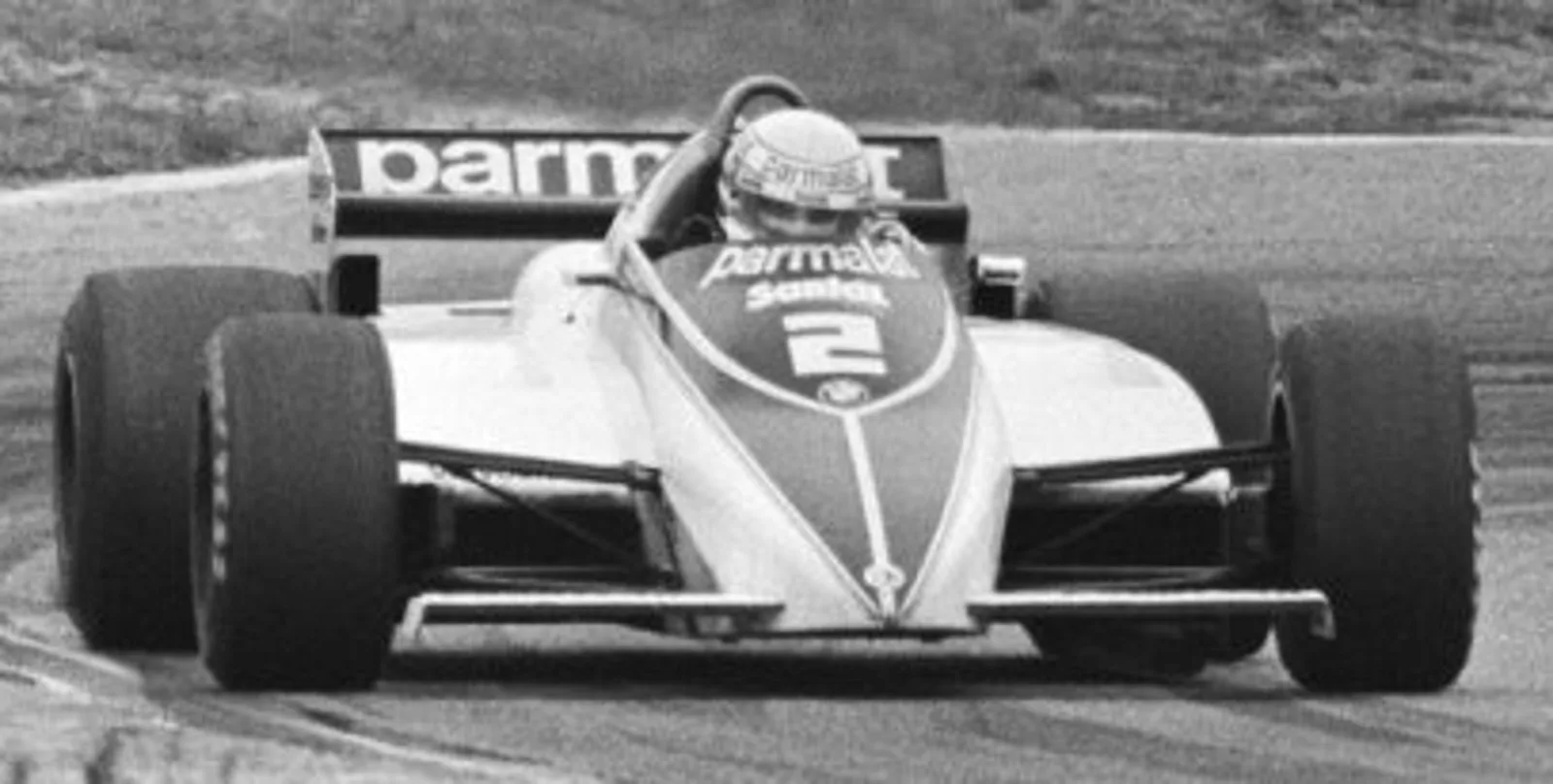
Gordon Murray's 1982 turbo Brabham, built around BMW power, won at Canada but was undone by unreliability and a messy switch between cars.
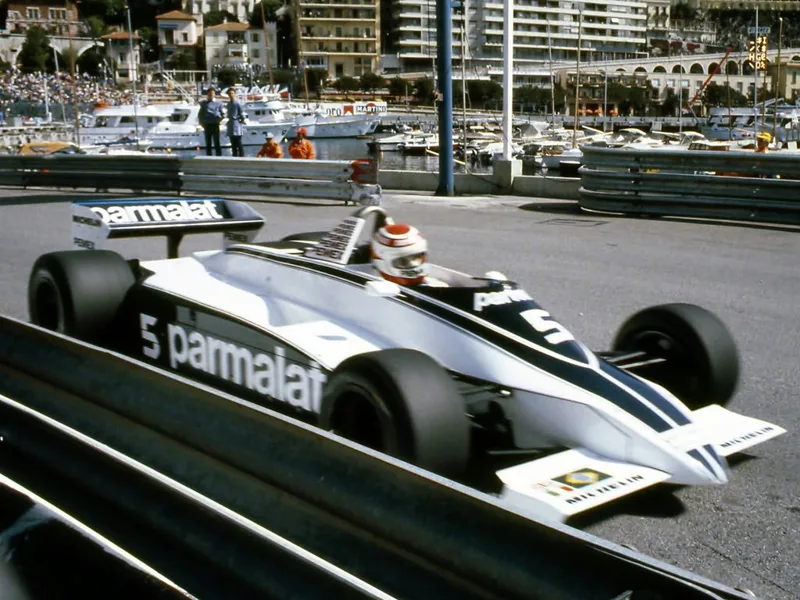
Gordon Murray's 1982 turbo car carried a BMW engine for Brabham. Nelson Piquet won in Canada, giving BMW its first Formula One victory, but reliability problems and a split between cars made the season hard. Five cars were built, and the team finished fifth in the Constructors' Championship.
Built for 1982 by Gordon Murray, the Brabham BT50 ran a turbocharged BMW engine. Only five were made. It gave BMW its first Formula One victory when Nelson Piquet won the Canadian Grand Prix, but unreliability and a complicated switch between cars meant the rest of the season was frustrating for everyone involved.
How did BMW come to power a Brabham?
The idea of a BMW entry was first raised in mid-1979, when Brabham's lead driver, Niki Lauda, grew unhappy with the uncompetitive Brabham-Alfa BT48. Talks about moving Lauda into a BMW-powered McLaren went nowhere, and he retired at the Canadian race that year. The Brabham and BMW relationship, however, grew stronger.
The two sides agreed an engine supply deal in the summer of 1980. Brabham ran Cosworth DFVs that season, but Bernie Ecclestone, the team's owner, could see that turbocharged engines would be the route to long-term competitiveness, and BMW offered a credible one.
The BT50 was fast enough to win and unreliable enough to make that win the exception rather than the rule.
How was the BT50 designed?
Gordon Murray, Brabham's chief designer, worked on the BT50 while the BMW M12/13 turbo engine was being tested in a modified BT49 from late 1980. The engine was a modification of an existing four-cylinder iron block, with a Formula Two four-valve cylinder head. Work on the chassis finished in mid-1981, and it carried over much of the BT49 it replaced.
The chassis had double wishbone suspension with pullrod-activated coil spring and damper units, and an aluminium monocoque reinforced with carbon panels. The Hewland/Alfa gearbox was carried over from 1976, when Brabham had run an Alfa Romeo V12, but it could not cope well with the BMW turbo's output and pulling force. The wheelbase was slightly longer than before, and the fuel cell held 180 litres (48 US gal).
With the engine installed the car weighed 590 kg (1,300 lb), ten kg more than the BT49. It also carried onboard telemetry for watching the engine's fuel injection, a sign of how demanding the turbo package was to run.
How did the BT50 perform before the 1982 season?
The car made its first public appearance at the 1981 British Grand Prix, where Piquet used it in practice. His practice time sat 0.7 seconds off his BT49 qualifying pace, but the BT50 reached 309 km/h (192 mph) on the speed trap, about 24 km/h (15 mph) faster than its predecessor.
Piquet became a firm advocate for the BMW engine. He tested the car through 1981 and believed, like Ecclestone, that the future lay with turbo power. Reliability let him down, and at Paul Ricard the team suffered nine engine blowups in a single test session. Once the 1982 season began there was little chassis development, although some aerodynamic revisions were made. Only five BT50s were built.
How did the BT50 start the 1982 season?
Brabham opened 1982 with three BT50s at the South African Grand Prix, where the high altitude was expected to suit the turbo engines, as it had for the Renault team. Qualifying went well. Piquet was second on the grid beside Rene Arnoux, and Riccardo Patrese was fourth, but both cars retired early in the race.
Piquet lost ground off the line, was overtaken by much of the field and was 13th after the first lap before going off on lap 4. Patrese had briefly run fourth, but a turbo bearing failure ended his race. Ecclestone then chose to field Cosworth-powered BT49s at the next round in Brazil, where Piquet won, only to be disqualified later for running a car below the minimum weight with water-cooled brakes.
The team's problems deepened with the BMW arrangement. The team stayed away from San Marino, a boycott tied to the FISA-FOCA war, and BMW grew impatient at Ecclestone's reluctance to run its engine. Before Belgium, BMW publicly threatened to end the relationship unless the BT50 raced, so both drivers returned to the car for that round.
Why did the Belgian round matter?
Belgium was the return to the BT50, and the result was modest. Piquet and Patrese qualified eighth and ninth. Piquet finished fifth, three laps behind the winner, which earned him two points, while Patrese retired. The BT50 was back, but the team had not yet found the pace or the reliability to match the front runners.
Ecclestone had to compromise. Piquet kept the BT50, while Patrese raced the Cosworth-powered BT49. Patrese won at Monaco in the older car, while Piquet trailed by over two seconds in qualifying and then stopped with gearbox trouble. At Detroit Piquet's main car blew its engine in the first qualifying session, the spare would not run cleanly, and rain in the second session prevented any improvement, so he failed to qualify.
What led to BMW's first Formula One win?
Canada produced the BT50's defining result. Piquet took fourth on the grid, about a second off Didier Pironi's pole time in the Ferrari 126C2. A misfire within two laps of the first practice session had caused a scare, but the car came good on race day, and Piquet moved into second at the start and into the lead on lap 9.
The cool conditions suited the turbo engines, and Piquet never gave up the lead. It was BMW's first Formula One victory, and it was a Brabham one-two, as Patrese finished second in the BT49. The result also showed that the team had made progress with the engine's fuel mix, which Piquet said brought the BMW into line with the Cosworth DFV in behaviour.
Piquet followed the win with second place in Holland, from third on the grid. Patrese, now in the BT50 too, finished 15th from tenth. The two results showed that the car could score when the engine stayed healthy, and that reliability, not speed, was the real limit.
What was the mid-race refuelling strategy?
From the British Grand Prix Murray introduced a radical plan. The car would start light, on softer and faster tyres, then make a planned fuel stop midway through the race. Higher boost became possible, because a top-up was coming, and the light start gave track position over heavier rivals.
Reliability limited how fully the team could use the idea. At Silverstone Patrese was second on the grid and Piquet third, but Piquet retired before he could test the new pit strategy. In France the BT50s were fourth and sixth on the grid, and the light start put both cars first and second within five laps. Patrese set the fastest lap and then lost the lead to a blown engine on lap 8, and Piquet inherited the lead before his own engine failed on lap 24.
What happened at the German and Austrian rounds?
At Hockenheim, the BT50s qualified third and fifth, with Piquet ahead. Piquet built a substantial lead using the light-fuel start, and began to lap slower cars. Two laps before his scheduled stop he crashed into Eliseo Salazar's ATS while attempting a pass, and both cars stopped on the circuit. Patrese had already retired.
The incident was captured on live television. Piquet lashed out at Salazar with hands and feet as the two drivers confronted each other, an episode that overshadowed the German round. Austria followed, where Piquet started from pole after the team locked out the front row.
In Austria the strategy was finally tested. Piquet blistered a tyre within a few laps, and Patrese moved into the lead. Piquet's stop came early, and the mechanics were not ready, so he waited nearly a minute before resuming fourth. Patrese made his stop on lap 24 and lost only 15 seconds. He led for three more laps before an engine failure, and Piquet's camshaft drive failed a few laps later while he was third.
How did the BT50 finish its season?
Both Brabhams scored at the Swiss Grand Prix, held at Dijon-Prenois despite the name. Patrese, third on the grid, ran nonstop and finished fifth. Piquet, sixth on the grid, had tyres that were too hard, and he was only just able to hold off his teammate for fourth. That was the last points finish for a BT50.
In Italy both cars were out within a few laps, with clutch failures. At the last race, in Las Vegas, Patrese dropped out with another clutch failure, and Piquet's engine suffered spark plug problems that led to his retirement. The season ended with the car's reliability record badly damaged.
How did the BT50 compare with the rest of the team's year?
Piquet finished 11th in the Drivers' Championship with 20 points from the BT50. Patrese was tenth with 21 points, but only two of them came from the BT50, since the rest had come early in the year in the BT49.
The BT50 did take one pole position and three fastest laps during the season. Its speed was real, even if its reliability was not. Brabham had gained considerable experience with turbo engines, and BMW had learned what it meant to run competitively in Formula One, a combination that would be put to better use in 1983.
Why was the BT50 so unreliable?
The BT50 was held back by a turbo engine that was still being sorted during the season. Engine failures struck in testing, qualifying and races, and the team switched between cars to limit the damage. Each failure cost points that the team could not afford to lose.
Fuel delivery was the other concern. BMW's revision of the fuel mix control, made mid-season, brought the turbo's behaviour into line with the Cosworth DFV, which Piquet credited with improving things.
The team's response was to juggle cars. Piquet and Patrese moved between the BT49 and the BT50 through the first half of the year, which kept points coming from the proven chassis while the turbo cars were still unreliable. It also meant the BT50 never had a settled run of races to show what it could do.
What came after the BT50?
The BT50's successor, the BT52, was built for 1983, and Piquet won that year's Drivers' Championship in it. The BT50 had shown that a turbo BMW could win a race, and its problems taught the team how much development a turbo engine needed to stay in one piece for a full season. The shared experience of 1982 was put to good use the following year.
The five BT50s remain a small but important chapter in Brabham's story. They produced BMW's first Formula One win and a set of results that were better than the car's reputation suggests, but they also show how unreliability can overshadow even a fast chassis.