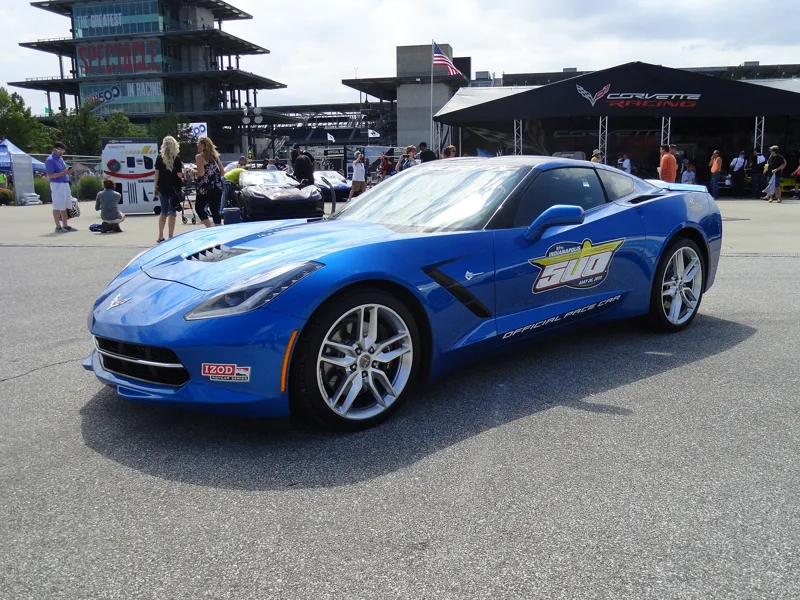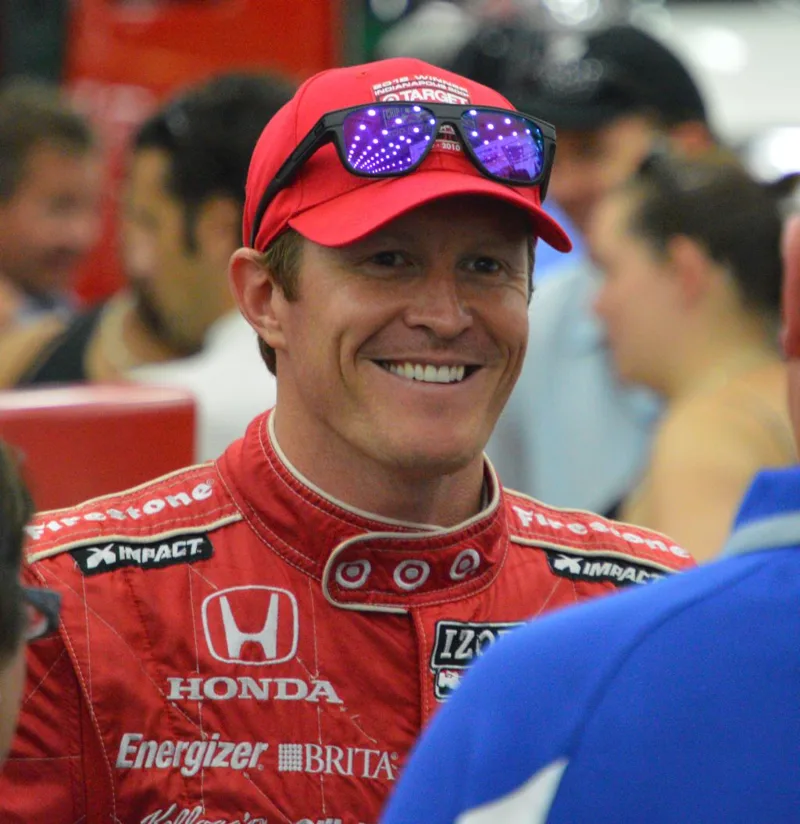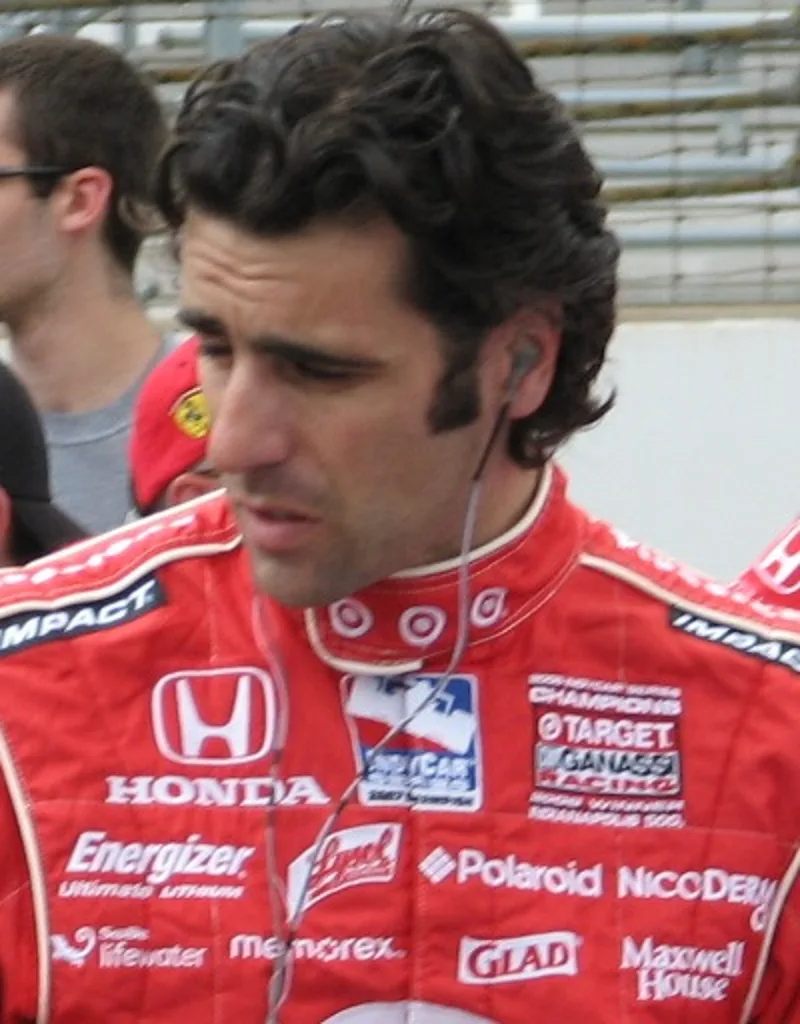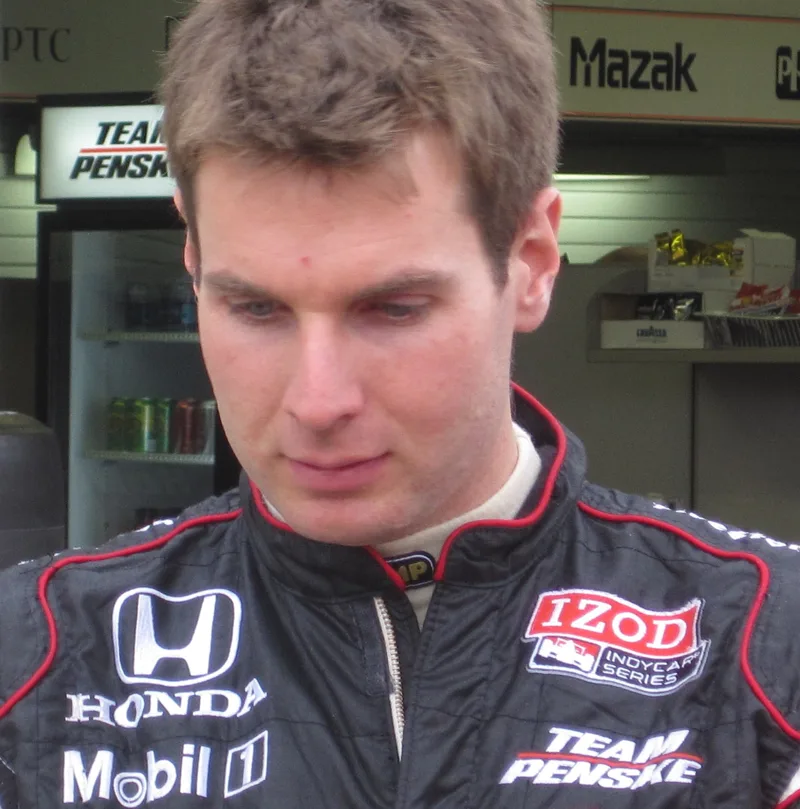
Dario Franchitti became a three-time winner after 34 lead changes, a race record, with his Chip Ganassi Racing team-mate Scott Dixon second.
Franchitti won the 2012 Indianapolis 500 for Target Chip Ganassi Racing, his third win in the race. Team-mate Dixon finished behind him and Kanaan completed the top three, after a record 34 lead changes.
The 2012 Indianapolis 500 was the 96th running of the race and the premier event of the 2012 IZOD IndyCar Series. Dario Franchitti won for the third time, after a race that saw a record 34 lead changes. His Chip Ganassi Racing team-mate Scott Dixon was second and Tony Kanaan third, while Takuma Sato crashed on the final lap.
When and where was the 2012 Indianapolis 500 held?
The race took place on Sunday 27 May 2012 at the Indianapolis Motor Speedway in Speedway, Indiana. It opened the oval season for the IZOD IndyCar Series, and the track was open for practice from Saturday 12 May. Time trials were held on 19 and 20 May, and the final practice, known as Carb Day, was on Friday 25 May.
The race was the first since 1996 in which every entry used a turbocharged engine. Every car was also a brand-new model-year chassis, part of the ICONIC Project. It was the first time since 2003 that the whole field used new chassis, and only the fourth time since 1985.
Franchitti took his third Indy 500 after a record 34 lead changes, with Dixon second and Kanaan third.
What rule changes shaped the 2012 race?
Safety concerns led IndyCar to return to single-file restarts on ovals of at least two miles, which removed the double-file restarts used at Indianapolis in 2011 only. The push-to-pass overtake system was also removed for the Indianapolis 500 and the other oval races.
The pre-race procedure was lengthened to four warm-up laps, made up of three parade laps and a pace lap, up from the three used between 1977 and 2011. Cars could break file on the second and third laps to warm their tyres, then had to reform into rows of three for the start. Cars were also allowed to pass as soon as the green light showed at starts and restarts, rather than after the line.
If a caution came out during the final 20 laps, all lapped cars would be placed at the back of the line for the restart.
How was the entry list put together?
The official entry list of 34 car and driver combinations was released on 18 April. Former winners entered included Franchitti, Helio Castroneves and Dixon. Target, the sponsor of Chip Ganassi Racing, had Franchitti's car carry #50 for the race to mark its fifty years in business, while the team kept its #10 identity for the season.
Jean Alesi was first entered for Newman Haas Racing, but that entry was withdrawn, and he later ran for Fan Force United. Rubens Barrichello became the first former winner of the US Grand Prix at Indianapolis to attempt to qualify for the race. Michel Jourdain Jr., who had last raced at Indianapolis in 1996, was named to Rahal Letterman Lanigan Racing, and with John Andretti not entered, no driver from the 1980s remained in the field.
How did testing and rookie orientation go?
The new chassis and engine package was tested at the Indianapolis Motor Speedway during the offseason. Dan Wheldon led the first phase, running on the road course on 1 September and on the oval later that month. Dario Franchitti and Tony Kanaan tested in early November for Honda and Chevrolet. Drivers complained of weight imbalance, and speeds of 208 to 216 mph fell short of expectations.
An open test on 4 April had nine veteran drivers, who completed 495 laps with no incidents. IndyCar then held an official oval test at Texas Motor Speedway on 7 May, which allowed rookies to get used to ovals. The Texas aero package was not used at Indianapolis or Fontana, because those venues ran the same superspeedway package as the championship.
Rookie orientation on 10 May saw eight rookies on track, with seven passing the mandatory programme. James Jakes led the speed charts at 218.266 mph, and Jean Alesi needed a second day to complete his first two phases.
How did practice shape the grid?
Rookie Josef Newgarden led the speed chart early in the week, but on 16 May he lost the rear at the exit of turn four, spun twice and tapped the inside wall, which made him the first car to have an incident that month. Dragon Racing's Sebastien Bourdais and Katherine Legge had not turned a lap all month until the team got a Chevrolet engine in place for their tests.
On 15 May Andretti posted the month's best lap to that point, 223.676 mph, then returned to the top on Fast Friday, 18 May, at 227.540 mph. Race-day turbo boost was set at 130 kPa, and it rose to 140 kPa for Fast Friday and time trials. Jourdain Jr. suffered a blown engine and an oil fire that session, and the first week of practice was the first since 1998 to run without rain losses.
Who won the pole for the 2012 race?
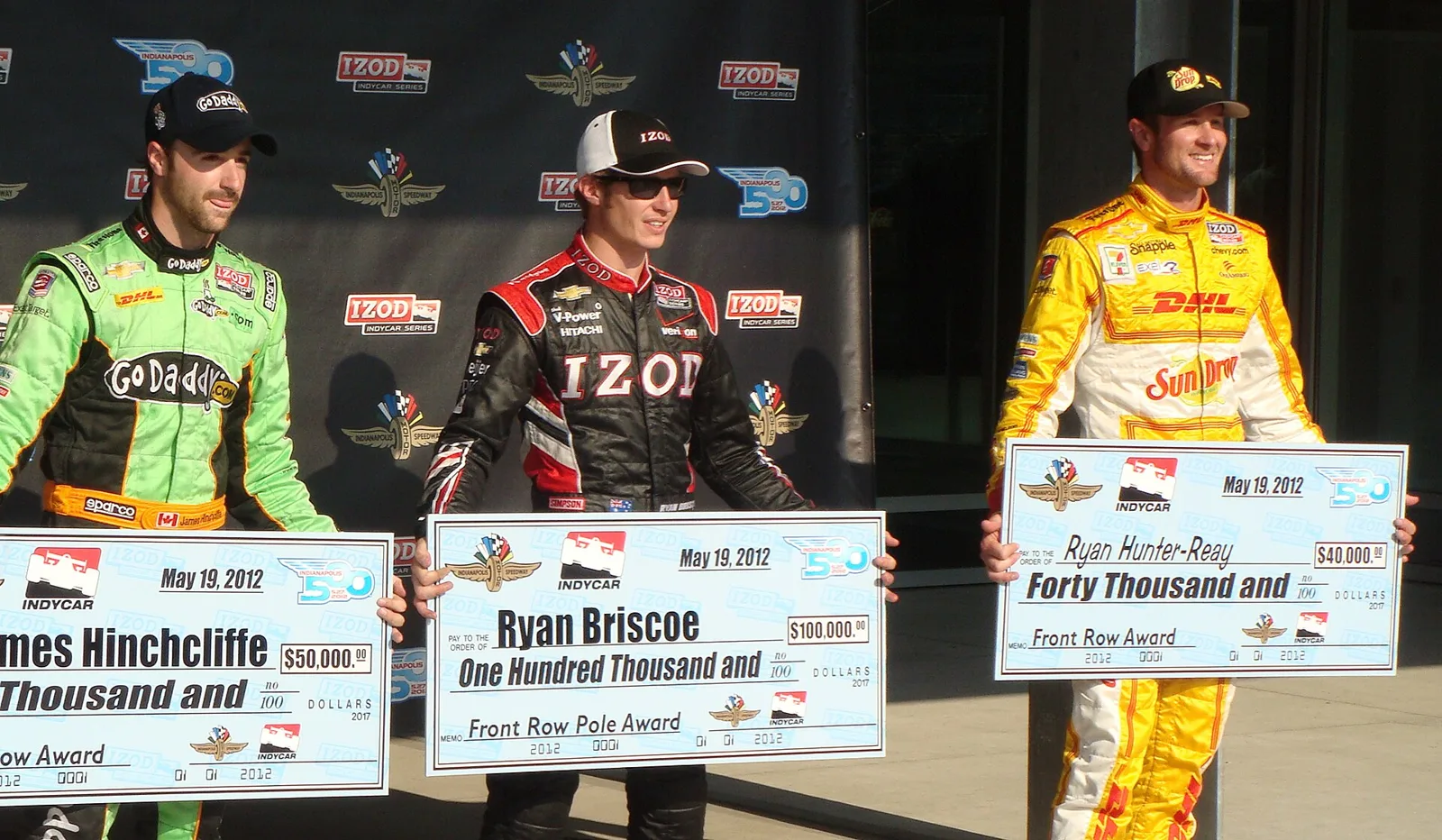
Ryan Briscoe of Penske Racing took the pole after a close Fast Nine shootout. Tony Kanaan's first run had been disallowed for a missing ballast on the mirror, and Mike Conway's time was thrown out when his car was found underweight. Bryan Clauson crashed on his fourth qualifying lap, and Ed Carpenter was bumped and crashed heavily on his re-entry attempt.
Nine drivers reached the Fast Nine, and Briscoe set 226.484 mph on his first full run, which was the second full run in that session. James Hinchcliffe came within a scant fraction of a mile per hour of Briscoe on his first run, but could not improve. Hunter-Reay was the only car to find more speed on a second run, but he did not gain a position. Briscoe kept the pole by the closest margin on record.
What happened on Bump Day?
On Sunday 20 May, Jay Howard and Pippa Mann announced that they would not attempt to qualify. Howard cited an engine deal that had fallen apart. There were rumours that IndyCar had blocked last-minute deals, but Randy Bernard denied this on his Twitter account. The field was completed with exactly 33 cars and no bumps, a result similar to 2003.
How did the race unfold?
Briscoe led from the start, but was drafted and overtaken by Hinchcliffe, who led at the end of the first lap. The two swapped the lead again by the end of lap two. The green flag was given at the first attempt, and there were no accidents at the start.
The first caution came after Bryan Clauson spun at turn one, and the early pit stops were mixed. Franchitti spun at his pit box after being hit from behind by E. J. Viso. Alesi and Simona de Silvestro were black-flagged for not keeping within 105 per cent of the front pace, and both retired. When the field restarted, cars were seen as many as five abreast before turn one.
Marco Andretti led on lap 32, and Takuma Sato began setting the fastest laps by lap 37. At the end of lap 46 the first pit stops came, with Hinchcliffe and Castroneves in, and Dixon and Franchitti a lap later. The Ganassi pair had been setting the fastest pace. By lap 50, a quarter distance, Andretti was in front again, and there had already been six different leaders and twelve changes of lead.
Conway took a drive-through penalty after striking a crew member in the pits. He then collided with Will Power, which brought a second caution on lap 81. Another full-course caution followed after Ana Beatriz spun at turn one and hit the wall.
How did the lead change in the second half?
After pit stops, Dixon led with Franchitti about 11 seconds behind. Briscoe had a gearbox problem on lap 110 and ran 17th for a time. Ryan Hunter-Reay retired on lap 128 with a failed suspension upright. The top six runners at that stage were all Honda powered, which was not what pre-race predictions on engine performance and economy had suggested.
Under the caution on lap 146, most of the leaders stopped. Sato led after the stops, followed by Franchitti and Dixon. On the lap 153 restart Franchitti passed Sato on the back straight, and Dixon passed Sato for second at turn one. On lap 160 Dixon took the lead, and Franchitti retook it at turn one on lap 161.
Josef Newgarden stopped on lap 163 with engine trouble, bringing out another full-course caution. The field was restarted on lap 171, and Franchitti repassed Dixon soon after. By lap 176 there had been 28 lead changes, one fewer than the 1960 record of 29. Franchitti overtook Dixon on lap 178 and broke the record. Carpenter spun on lap 180 and caused another full-course caution, and Andretti crashed into the wall on lap 187.
How did the race finish?
Kanaan led during one caution, but after the green flag returned he dropped to fourth behind Franchitti, Dixon and Sato. The two Ganassi cars swapped the top spot repeatedly before Franchitti took it from Dixon at the start of lap 199, with Sato following into second.
On the final lap, Sato tried to pass Franchitti in turn one, but he spun and hit the turn one wall. Franchitti won, Dixon was second and Kanaan third. Sato finished 17th. The three drivers crossed the line under the final caution side by side.
Who won the 2012 Indianapolis 500?
Franchitti won the race, which made him a three-time Indy 500 champion after his victories in 2007 and 2010. The win was the last Indy car victory of his twelve-season career. A multi-car crash at Houston in 2013 would bring that career to an early end.
In Victory Lane he dedicated the win to Dan Wheldon, the 2011 winner who had been killed at Las Vegas. Franchitti said he had moved up the track to leave Sato space on the inside. Sato said Franchitti had pushed him close to the grass. Officials classed it as a racing incident and kept Franchitti as the winner.
What records did the 2012 race set?
Franchitti became the first driver to win in both a normally aspirated and a turbocharged engine, following Arie Luyendyk, who had won in 1990 and 1997. He was also the first V-6 winner since Robson in 1946. The table below summarises the main figures for the race and the events around it.
| Item | Detail |
|---|---|
| Winner | Dario Franchitti, Target Chip Ganassi Racing, third win |
| Second and third | Scott Dixon, then Tony Kanaan |
| Pole | Ryan Briscoe, Penske Racing, closest pole margin on record |
| Lead changes | 34, a race record |
| Honda in the top six | All six runners at lap 113 |
| Field size | 33 cars, none bumped |
| Pit Stop Challenge | Chip Ganassi Racing won for the first time, with Dixon, for a $100,000 purse |
| Race-day audience | 6.9 million viewers, the highest since 2008 |