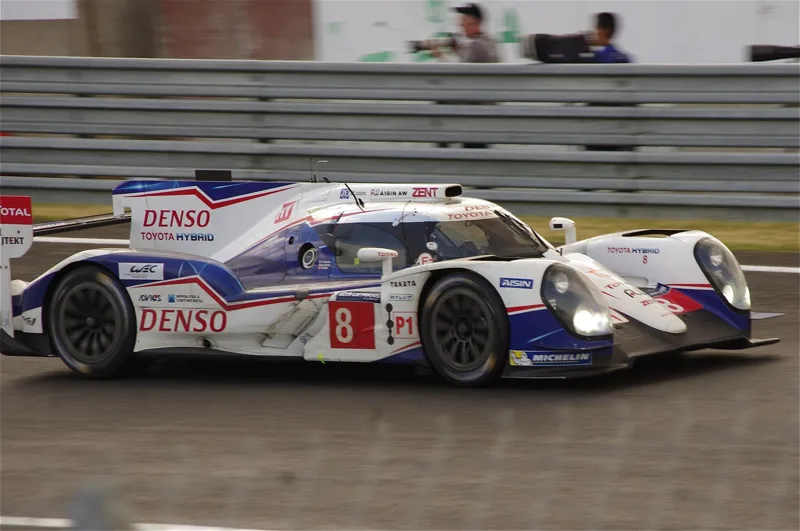
Fassler, Lotterer and Treluyer won by 55.675 seconds after an early Toyota lead, and the result clinched the LMP1 manufacturers' title for Audi.
The 2012 6 Hours of Silverstone was the fourth round of the 2012 FIA World Endurance Championship, held on 26 August 2012. It was the race's debut in the series, and it was the last European round of the season.
The No. 1 Audi R18 e-tron quattro of Marcel Fassler, Andre Lotterer and Benoit Treluyer won the 2012 6 Hours of Silverstone on 26 August 2012, finishing 55.675 seconds ahead of a Toyota. Two months after Le Mans, the result handed Audi the LMP1 title in front of 35,000 spectators.
Who won the 2012 6 Hours of Silverstone?
The No. 1 Audi of Fassler, Lotterer and Treluyer won, 55.675 seconds ahead of the No. 7 Toyota TS030 Hybrid of Lapierre, Nakajima and Wurz. The sister Audi of Kristensen and McNish took third.
The LMP2 class went to the ADR-Delta Oreca 03-Nissan of Jan Charouz, Tor Graves and John Martin, which finished 5.653 seconds ahead of the Starworks Motorsport HPD. The result also put the winning crew at the top of the World Endurance Drivers' Championship.
Audi's hybrid won the race and clinched the manufacturers' title, but the Toyota led the race for a while before the fuel strategy turned.
Who was in the field?
35 vehicles were officially entered, divided into the LMP1, LMP2, LMGTE Pro and LMGTE Am classes. There were 22 Le Mans Prototype cars and 13 LMGTE cars competing.
Audi brought a hybridised R18 e-tron quattro and a diesel R18 ultra. Toyota ran one TS030 Hybrid, Rebellion put two Lola B12/60-Toyotas on the grid, and JRM and Strakka each used an HPD ARX-03.
Reliability worries over the OAK Pescarolo-Judd engine pushed OAK Racing out of LMP1. Roald Goethe declined to fund more work on the Pescarolo 03, so Pescarolo Team also missed the race.
The 15 LMP2 cars came from five manufacturers. Oreca supplied five 03 chassis, two of them run by Signatech Nissan, while Zytek had three Z11SN cars on the grid.
Which teams withdrew before the start?
Gulf Team Middle East withdrew one of its Nissan-powered Lola cars after injuries to drivers Stefan Johansson and Fabien Giroix, which left the squad with a solitary entry. With its withdrawal from LMP1, OAK Racing entered two Morgan LMP2-Nissan cars instead.
Luxury Racing withdrew its two Ferrari 458 Italias from the race because of funding issues. The team had lost a primary shareholder who had been due to provide money for the season's final five races.
The LMGTE Pro class had five cars, with three Ferrari 458 Italias, one Porsche and one Aston Martin. Larbre Competition were the only Chevrolet team, fielding two Chevrolet Corvette C6.Rs.
How did the race start?
The race began at 12:00 British Summer Time before 35,000 spectators, with Olympic canoeists Tim Baillie and Etienne Stott waving the green flag. Wurz used the Toyota's hybrid power to pass Kristensen's Audi for second at the start.
Rossiter had to start from the pit lane after an engine change, and he joined the field after the first lap. Meanwhile Peter Dumbreck lost control of the JRM car at turn one, which pushed the Greaves car of Brundle onto the run-off area.
That incident promoted Sarrazin's Starworks car to the LMP2 lead, with Minassian second in class. Wurz passed Lotterer for the overall lead into Maggots on lap 11.
How did the pit stops shape the lead?
Wurz pulled away from Lotterer and was 11 seconds ahead when Toyota began its first round of pit stops for tyres and driver changes on lap 21. Lotterer then led for four laps before his own stop.
Audi had a greater fuel economy than Toyota, and its cars could be refuelled faster, which allowed longer stints. Fassler therefore brought the No. 1 Audi past the No. 7 Toyota for the overall lead by the end of the fourth hour.
Toyota's high-downforce aerodynamic package meant higher fuel consumption, and Audi exploited the difference.
Which cars were lost early on?
The No. 32 Lotus Lola of Kevin Weeda pulled over on the Hangar Straight with an engine failure. An earlier breakage in the exhaust manifold had caused a fire in the engine wiring loom, and the safety cars were deployed so marshals could recover the car.
Lietz's No. 77 Proton Porsche limped to the garage after its right-rear suspension collapsed, dropping it to the back of the GT field. Stefan Mucke then moved into the LMGTE Pro class lead in the No. 97 Aston Martin.
Hartley's front-left wheel came off the No. 48 Murphy car on the straight to Copse. He kept control of the car and returned to the pit lane.
How did the GT battles unfold?
Ferrari dominated LMGTE Pro, and Bruni and Fisichella's No. 51 AF Corse Ferrari held the class lead for the final 80 laps. The marque also won LMGTE Am, with the No. 61 AF Corse-Waltrip car.
Cioci in the No. 61 Ferrari took the LMGTE Am lead from Hall's Aston Martin after lapping faster. The Porsche of Ruberti then came through to take second in the class during the race.
Mucke was set to finish second in LMGTE Pro in the final stint, but at Vale on the last lap his Aston Martin collided with Bertolini's Ferrari. Bertolini went into the gravel, and Mucke continued with heavy damage to the No. 97 car.
Did the disqualification change the GT results?
The No. 50 Larbre Corvette was disqualified from LMGTE Am after its onboard fire extinguisher was found to be out of date. The No. 88 Proton Porsche moved up to second, and the No. 57 Krohn Ferrari to third.
Team principal Jack Leconte said the team accepted the stewards' findings and would change its assembly procedures when fitting safety equipment.
How did the warm-up go?
The 20-minute warm-up took place on the morning of the race in sunny weather, after overnight rain had left the circuit damp. The No. 7 Toyota of Alexander Wurz set the fastest time, 1:47.398, on his second timed run, and Lotterer's No. 1 Audi and both Rebellion cars followed.
Olivier Pla's No. 24 OAK Nissan set the quickest LMP2 time at 1:51.552. Darren Turner was quickest in LMGTE Pro in the No. 97 Aston Martin, and Ruberti's No. 88 Proton Porsche led LMGTE Am.
On the first lap, McNish ended up in the Abbey turn gravel with the No. 2 Audi, which was pulled out without major damage. A collision between the two Signatech LMP2 prototypes brought the warm-up to an early end.
How did qualifying set the grid?
Treluyer took pole at 1:43.663 on his final lap, with 45 seconds of the session remaining. McNish joined him on the front row, and Lapierre briefly put the No. 7 Toyota on provisional pole with nine minutes to go before dropping to third.
Watts' Strakka was the fastest LMP1 privateer in fourth. He had spun at the final corner at the start of qualifying, on a damp section of track.
In LMP2, Brundle set 1:49.964 on his last quick lap in the Greaves car, which gave him the class pole for the first time in his career. Sarrazin was 0.033 seconds slower in the Starworks car.
Lietz was the only driver under 2:10 in LMGTE Pro, taking pole in the Proton Porsche at 2:09.564. Hall's Aston Martin took the LMGTE Am pole at 2:12.525.
What did practice show?
Treluyer set the fastest lap of the first session at 1:45.777, and Kristensen was quickest in the second session at 1:45.645. McNish set the best time of the final session at 1:43.628, 46 minutes in.
Kraihamer led LMP2 in the first session at 1:51.561 in the OAK Morgan-Nissan, and Minassian led the second session at 1:50.759 in the Jota Zytek. Brundle set 1:49.524 in the last session, the only sub-1:50 LMP2 lap.
Bruni's AF Corse Ferrari set the first sub-2:02 GT lap of the weekend, at 2:01.937, and Adam's Aston Martin set 2:02.920 in LMGTE Am.
What were the balance of performance changes?
The Porsche 911 GT3 RSR gained a splitter 75 mm (3.0 in) bigger and moved its rear wing 100 mm (3.9 in) back. The air restrictor opened by 0.7 mm (0.028 in), and the car shed 10 kg (22 lb).
The hybrid LMP1 cars could recover energy in four braking zones, at Village, Brooklands and the Club corner sequence. A maximum of 500 kJ (120,000 cal) could be recovered between two braking zones.
How did the first hours change the LMP2 and GT classes?
Several class changes happened early, mostly in LMP2 and LMGTE Am. Martin overtook Minassian for second in LMP2 ten minutes into the race, and he took the class lead in the second hour.
In LMGTE Am, Ruberti closed the gap to Hall and took second place, despite contact between the two cars that damaged the rear of the No. 88 Proton Porsche.
Once the safety cars came in, Ruberti was leading LMGTE Am in the No. 88 Proton Porsche. Cioci's No. 61 Ferrari had earlier taken the class lead from Hall after lapping faster, and that Ferrari went on to win LMGTE Am.
How did the LMGTE Pro lead battle develop?
For a time the GT lead was disputed by the Proton Porsche of Lietz (No. 77), the Ferrari of Bruni (No. 51) and the Aston Martin of Turner (No. 97), which challenged one another for position.
The Aston Martin was less fuel efficient than the Ferrari, which mattered over the stints, and the gap in fuel use was a real factor in the battle.
Lietz's car later suffered a collapsed right-rear suspension component, which took it out of the battle and promoted Mucke's No. 97 Aston Martin to the LMGTE Pro lead.
Class results
| Class | Winning crew and car | Second place |
|---|---|---|
| Overall (LMP1) | Fassler, Lotterer and Treluyer, No. 1 Audi | Lapierre, Nakajima and Wurz, No. 7 Toyota, 55.675 seconds back |
| LMP2 | Charouz, Graves and Martin, ADR-Delta Oreca 03-Nissan | Starworks Motorsport HPD, 5.653 seconds back |
| LMGTE Pro | Bruni and Fisichella, AF Corse Ferrari 458 Italia GT2 | JMW Ferrari, two laps back |
| LMGTE Am | Cioci, Griffin and Perazzini, AF Corse-Waltrip Ferrari | Proton Porsche No. 88, promoted after the Larbre disqualification |
The No. 26 Signatech entry completed the LMP2 podium, giving the team its first WEC class podium, 18 seconds behind the class winners. The AF Corse entry won LMGTE Pro, with the No. 97 Aston Martin taking third.
How did the LMP2 class finish?
Jan Charouz's ADR-Delta car held the LMP2 lead for the closing 20 laps. Starworks' Sarrazin closed the gap during the final hour, but the class result stayed 5.653 seconds in Charouz's favour.
Sarrazin had led the class early on, before Martin took the lead in the second hour. Charouz, Graves and Martin made up the ADR-Delta crew, and the Signatech entry finished third in the class.
What did the result mean for the championship?
The win clinched the LMP1 manufacturers' world championship for Audi. The drivers' lead went to Fassler, Lotterer and Treluyer, who were 4.5 points ahead of Kristensen and McNish.
Starworks' lead in the LMP2 teams' trophy was reduced to 12 points by the result. AF Corse secured its second consecutive series victory and extended its LMGTE Pro teams' lead over Aston Martin Racing.