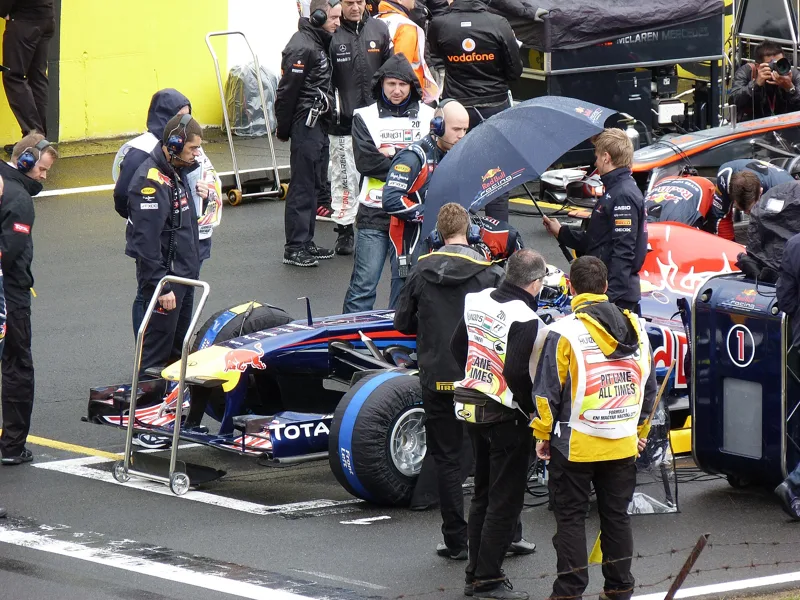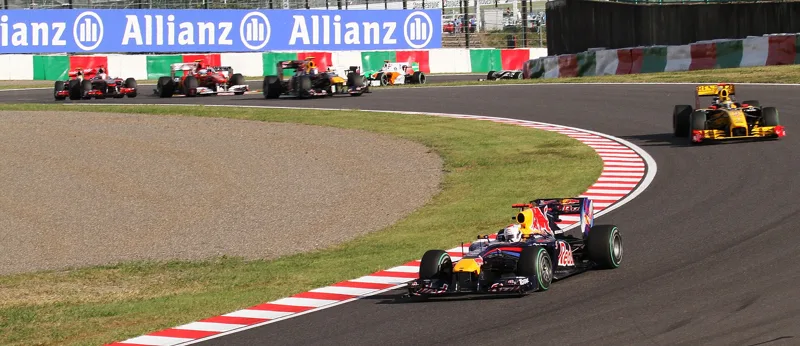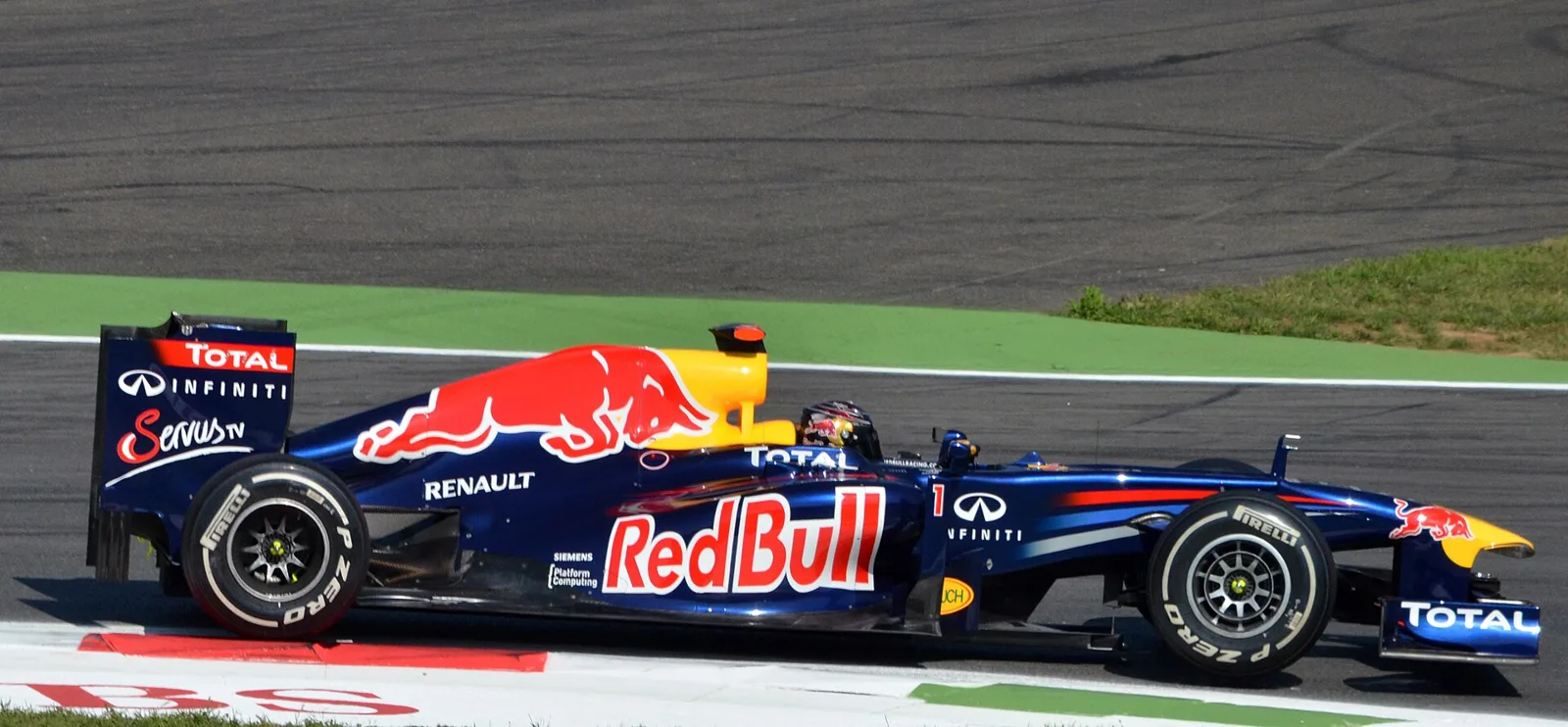
Sebastian Vettel took pole and the win at Monza, stretching his championship lead to 112 points as Button and Alonso completed the podium.
The 2011 Italian Grand Prix was won by Sebastian Vettel from pole at Monza, ahead of Jenson Button and Fernando Alonso. The race extended Vettel's championship lead to 112 points and was run over 53 laps. It also marked the sixtieth Italian Grand Prix staged at Monza.
The 2011 Italian Grand Prix was held on 11 September 2011 at Monza and was the thirteenth round of the Formula One season. Sebastian Vettel started from pole, led from start to finish and won by 9.5 seconds from Jenson Button, with Fernando Alonso third. The result gave Vettel a 112-point cushion in the championship.
What was the 2011 Italian Grand Prix?
The 53-lap contest took place at Monza, the Autodromo Nazionale in Italy. It was the sixtieth staging of the Italian Grand Prix at Monza. Red Bull's Vettel took the win as the championship leader. Jenson Button and Fernando Alonso completed the podium for McLaren and Ferrari.
The winner's prize was a commemorative cup marking 150 years since Italian unification. The same trophy was given to the winner of that year's Giro d'Italia, Michele Scarponi, and to the Coppa Italia winners, Inter Milan. Silvio Gazzaniga, an Italian sculptor, designed the trophy.
The race carried extra weight because of its place on the calendar. Monza is one of the sport's most historic venues, and the event was a rare chance for the leading teams to show their strength on home ground. Vettel's win made the weekend a statement of his position.
Vettel led from pole to flag at Monza, and by the chequered flag the championship had tilted decisively his way.
Why were tyres and camber limits a talking point?
Pirelli brought a white-banded medium compound as the harder prime tyre and a yellow-banded soft compound as the option. The previous year, Bridgestone had supplied the hard compound as the prime. Belgian blistering then led to new camber rules for Monza.
The Belgian Grand Prix had raised a controversy over tyre blistering. Several teams saw their tyres blister during qualifying but were not allowed to change them before the race, because the damage was caused by car set-up rather than an accident. Pirelli blamed Red Bull Racing's camber settings, which were outside the parameters the tyre maker had recommended.
Pirelli said it would be more cautious with its recommendations at Monza. It also made clear it was prepared to ask the FIA to enforce camber limits if blistering appeared after the free practice sessions. Shortly before the last practice session on Saturday, the FIA made Pirelli's camber limits mandatory, and any team that ignored them faced a report to the stewards.
A breach would have been treated as dangerous construction under the technical regulations, with exclusion from the race as a possible penalty.
What changed on the circuit and in the teams?
After trying two Drag Reduction System zones with one activation point each in Montreal and Valencia, the FIA had returned to a single zone at Silverstone. At Belgium it was announced that Monza would have two DRS zones again, but this time each zone was independent and had its own activation point. One zone sat on the main straight.
On Saturday morning the FIA also moved the kerbs at both corners of the della Roggia chicane back five metres. The change gave drivers extra room to negotiate the chicane without riding the kerbs.
Bruno Senna had replaced Nick Heidfeld at Renault from the Belgian Grand Prix. Heidfeld had objected to the change and even launched legal action, but in the week before Monza the two sides reached a settlement that let Senna finish the season. Senna's arrival brought four new sponsors to the team: Embratel, OGX, Gillette and Auden McKenzie.
Virgin Racing had shelved a planned upgrade for Silverstone after a technical review, but it brought the update back for Monza. The Virgin car was reworked throughout: the engine cover, sidepods, exhaust and rear floor were all replaced.
Where did the championship stand before Monza?
Vettel led the Drivers' Championship on 259 points, a margin of 92 over his Red Bull teammate Mark Webber after the two had finished first and second at Spa. Alonso was third on 157 points, ten behind Webber. The McLaren pair of Button and Hamilton were fourth and fifth on 149 and 146 points.
Hamilton had dropped behind Button after a collision with Kamui Kobayashi at the previous race. In the Constructors' Championship Red Bull led with 426 points. McLaren were 131 points behind on 295, with Ferrari third and 64 points further back. Mercedes and Renault were on 98 and 68 points, a long way off the leading group.
How did the Friday practice sessions go?
Friday was dry, and the forecast suggested the same conditions would hold for the whole weekend. In the first ninety-minute session, Hamilton improved steadily to end up fastest, a second clear of Button and half a second ahead of Vettel. Button reported that the surface had been resurfaced since the 2010 race, which made the cars slide about.
Vettel returned to the top in the second session, three hundredths of a second ahead of Hamilton. Hamilton had been held up by Jaime Alguersuari while setting his fastest lap, which cost him the top time. Alguersuari was himself forced onto the grass by Adrian Sutil, and Sebastien Buemi crashed as he left the Parabolica. Several cars, notably Lotus and Virgin, suffered technical problems that cut their running short.
The speed trap told a different story. Vitaly Petrov was the quickest through it at 347 km/h (216 mph), while Vettel was the slowest car on the circuit at 327.9 km/h (203.7 mph). That was 19.1 km/h (11.9 mph) below Petrov, even though Vettel had set the fastest lap of that session.
The twin DRS zones were a real puzzle for the teams. Running a high downforce setup helped in the corners and allowed unlimited DRS use on the straights, which suited qualifying. A lower downforce setup favoured the race but cost time on a single lap, so many teams ran both approaches in practice before deciding.
How did qualifying shape the grid?
Qualifying began in dry conditions. In the first session Pastor Maldonado crashed into the barriers at Parabolica early on, but he changed his front wing and returned to the track. He reached the second session at the expense of Alguersuari, who was eliminated with the Lotus, Virgin and HRT cars.
In Q1 Daniel Ricciardo out-qualified his teammate Vitantonio Liuzzi for the first time, and Timo Glock narrowly beat Jerome d'Ambrosio despite a rear wing problem. Jarno Trulli out-qualified Heikki Kovalainen for only the second time that season.
The second session was a battle for the last Q3 places. Petrov was ninth, a thousandth of a second behind Hamilton, and Bruno Senna beat Paul di Resta by 0.006 seconds. Sutil briefly held tenth before di Resta passed him, and Rubens Barrichello and Pastor Maldonado were in the Williams cars close behind.
In the final ten minutes Ferrari sent both cars out together, hoping to tow each other to a better grid slot, but the tactic largely failed. Hamilton made an error at the Variante Roggia, and Button made a mistake in the Parabolica but still qualified third, five hundredths behind Hamilton. Vettel was half a second faster than Hamilton.
Vettel's pole was his tenth of the season and his 25th overall. With ten poles in two seasons he joined Ayrton Senna as the only drivers to have achieved that feat. Alonso and Webber sat alongside Massa, Petrov, Schumacher, Rosberg and Senna on the first five rows.
How did the race unfold?
Alonso made the best start from fourth and led into the first corner. That lead did not last long. Liuzzi made contact with Kovalainen on the opening lap and slid across the grass into Petrov and Nico Rosberg, and all three cars retired on the spot.
The safety car came out while the debris was removed. Racing resumed with Vettel slipping past Alonso and then controlling the rest of the event to claim win number eighteen. D'Ambrosio's gearbox failed on the opening lap, ending his race.
Further back, Hamilton was caught out by the restart and passed by Michael Schumacher. Webber fought with Massa for sixth going into the first chicane. They touched, Massa spun but continued, and Webber tried to limp back with a broken front wing before crashing out at the Parabolica. It was Red Bull's first retirement of the season. Sutil followed a few laps later with a hydraulic failure at the Ascari chicane.
Hamilton then pressed Schumacher for third. Ross Brawn warned Schumacher over the radio about blocking several times, and the German was defending on the line into the Ascari chicane. The fight slowed both men enough for Button to close in, and at the Curva Grande Schumacher cut Hamilton off and forced him onto the grass. Button made the pass on his first attempt and then chased Alonso.
The Sauber cars of Kobayashi and Sergio Perez both retired with almost identical gearbox failures. Ricciardo's car went into anti-stall on the grid; he rejoined, but was well adrift of the field when Perez retired. He finished fourteen laps behind Vettel, which was not enough to be classified, because he had not covered 90 per cent of the winner's distance. The two Team Lotus drivers, Kovalainen and Trulli, then took 13th and 14th.
What was the final result?
Vettel crossed the line 9.5 seconds ahead of Button, who had reeled in and passed Alonso with under ten laps to run. Hamilton closed in on Alonso but could not pass him. Alonso took third, crossing the line half a second ahead of Hamilton.
Button scored his third consecutive second place and his fourth podium at Monza. Schumacher took fifth, the same position he had achieved in Belgium, ahead of Massa. Alguersuari scored a career-best seventh, ahead of di Resta, whose eighth place earned four points. The double retirement of the Saubers helped Force India move up to sixth in the Constructors' Championship.
Senna took ninth for his first World Championship points, and Buemi claimed the final point in tenth. The table below lists the top ten finishers.
| Position | Driver | Team | Note |
|---|---|---|---|
| 1 | Sebastian Vettel | Red Bull Racing | Pole and eighteenth win; 9.5 seconds clear of Button |
| 2 | Jenson Button | McLaren | Third consecutive second place |
| 3 | Fernando Alonso | Ferrari | Half a second ahead of Hamilton |
| 4 | Lewis Hamilton | McLaren | Lost time in the battle with Schumacher |
| 5 | Michael Schumacher | Mercedes | Fifth, as in Belgium |
| 6 | Felipe Massa | Ferrari | Race affected by early contact with Webber |
| 7 | Jaime Alguersuari | Toro Rosso | Career-best finish |
| 8 | Paul di Resta | Force India | Four points |
| 9 | Bruno Senna | Renault | First World Championship points |
| 10 | Sebastien Buemi | Toro Rosso | Final point |
What did the result mean for the championship?
Vettel's win extended his lead over Alonso to 112 points, and Alonso moved into second overall after Webber retired. Button's second place took him to third in the standings, five points behind Alonso. Hamilton finished fifth overall, and with Webber out of the picture he was the last driver with a mathematical chance of the title.
Vettel would have become the youngest double champion by winning in Singapore, unless Alonso took a podium place and Button or Webber finished second. The result left the title race heavily tilted in Vettel's favour, and several drivers accepted they could not beat him.
Liuzzi received a five-place grid penalty for Singapore, having caused the first-corner incident. McLaren had reduced Red Bull's constructors' lead to 126 points, and Ferrari sat 71 points further back in third.