Two Red Bull team-mates fought at the front, collided on lap 40, and McLaren took a one-two at Istanbul Park.
Lewis Hamilton won the 2010 Turkish Grand Prix for McLaren on 30 May 2010 at Istanbul Park. Jenson Button was second and Mark Webber third, after a lap 40 crash between Webber and Sebastian Vettel removed Vettel from the race. The result also put Webber five points clear of Button.
The 2010 Turkish Grand Prix ended with Lewis Hamilton winning for McLaren at Istanbul Park on 30 May 2010. The race was decided as much by a collision at the front as by pace, because Mark Webber and Sebastian Vettel made contact on lap 40 and Vettel's race ended there. Jenson Button took second for McLaren and Webber finished third for Red Bull.
Where did the 2010 Turkish Grand Prix fit into the season?
This was the sixth Turkish Grand Prix and round seven of the 2010 title chase. It followed a two-week break after the Monaco round, and twelve teams with two drivers each took part. Bridgestone supplied the tyres, and the event was held at Istanbul Park in Tuzla, near Istanbul.
Going into the weekend, Webber and Vettel shared the lead of the drivers' championship on 78 points each, with Alonso third on 75 points and Button fourth on 70. Red Bull led the constructors' standings on 156 points, ahead of Ferrari on 136 and McLaren on 129. Mercedes and Renault were left contesting fourth place.
Webber arrived in form, after taking victory in Spain and Monaco, the two races before Istanbul, and starting from pole for each. Ferrari had a strong record at Istanbul Park, having won three of the previous five races held there, and the team marked its 800th Grand Prix with a logo on its engine covers.
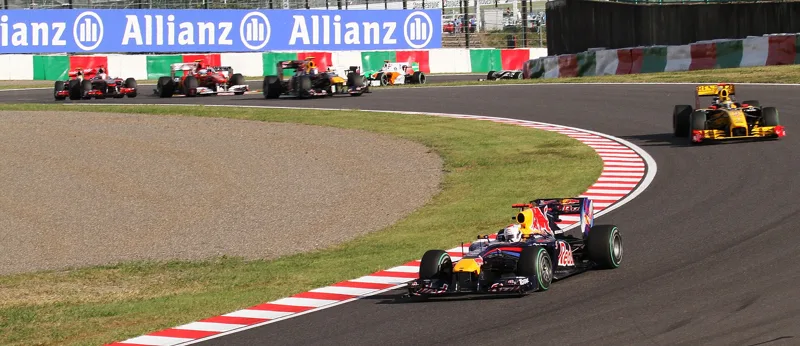
Two Red Bull team-mates fought for the lead, collided on lap 40, and McLaren took the race.
What changed on the cars before the race?
Several teams made changes for Istanbul. Red Bull gave Vettel a revised RB6 chassis after a monocoque defect had caused handling trouble in Monaco. McLaren tested its F-duct system on Friday but took it off for qualifying and the race, and Mercedes ran a longer wheelbase on both of its cars.
The detail work went further than that. Ferrari reworked its F-duct so that the drivers could operate it with their left leg, while Lotus introduced a new rear wing that improved the forward balance of its chassis. Virgin managed to obtain a longer-wheelbase VR-01 for Lucas di Grassi, after work on the car had been held up because much of the team had spent a week stuck in Shanghai.
Mercedes went back to an earlier suspension specification, while Williams returned to an older front wing after accidents involving its drivers in Monaco and brought new brake ducts to the circuit.
How did practice and qualifying shape the grid?
Practice ran over three sessions on a dusty track. Hamilton set the fastest time in the first session and Button the fastest in the second, while Vettel topped the final session with 1:27.086. Qualifying then gave Webber pole position with 1:26.295, ahead of Hamilton, who was 0.148 seconds slower.
Friday morning running took place on a dusty surface, and a number of cars went off line. Sutil crashed into a barrier two minutes before the end of that session, and his front wing and both front tyres were damaged. In the afternoon, Webber came to a halt past turn two with a failed engine, while Hamilton slid sideways into the gravel at turn eight during the final session.
In qualifying, Vettel was fastest in the first two parts, but a roll-bar failure in the final part led to mistakes on his first two runs, and he dropped to third. Button ran too low through turn eight because of a set-up error and started fourth. Schumacher took fifth, Rosberg sixth and Kubica seventh, while Massa, Petrov and Kobayashi completed the top ten.
Sutil was the quickest driver to miss the final part and lined up eleventh, while Alonso was twelfth after touching a white line under braking. Di Grassi had to begin from the pit lane because a problem with his engine's oil system came to light an hour before the start. Glock and Senna were at the back of the grid alongside Chandhok.
How did the race start and develop?
The race started at 15:00 local time (UTC+3) in warm, sunny conditions, with air at 28-29 C (82-84 F) and the track between 39 and 49 C (102-120 F). Webber kept the lead into the first corner. Vettel tried to pass Hamilton on the inside at turn one, but Hamilton took the place back around the outside at turn three.
On the opening lap Hulkenberg made contact with Buemi and punctured the right-rear tyre of the Toro Rosso, forcing both drivers into early stops. When the first lap was complete, Webber was 0.4 seconds ahead of Hamilton, with Vettel, Button and Schumacher next. Webber then recorded the quickest lap so far on lap two, a 1:33.685, and the leading four began to separate from the rest of the field.
McLaren became aware that fuel consumption was higher than expected by around lap ten, and both drivers were told to change engine modes. Vettel pitted from third on lap 15. Hamilton's left-rear tyre was fitted slowly on the following lap, so Webber emerged ahead of him and Hamilton dropped to third behind Vettel. Button, who had been pushing hard, reported that he was losing rear grip and pitted on lap 18 to rejoin fourth.
Trulli retired on lap 35 with a hydraulic failure. His team-mate Kovalainen followed a lap later with a power steering failure, lost his gearbox, clutch and throttle, and was pushed back to the Lotus garage.
What caused the Red Bull collision on lap 40?
Webber switched to a fuel-saving mode on lap 40, which cost him pace, while Vettel, who had banked one kilogram of fuel, was running a faster engine setting. Vettel drew alongside Webber on the back straight, and the pair made high-speed contact at turn 12. Vettel spun through 360 degrees twice, and his race ended with a punctured right-rear tyre.
Webber had asked the team to tell Vettel to slow down on lap 39, but the request was rejected because the McLaren cars were close behind and the pace of the leaders was high. Vettel had to attack for fear of being caught by Hamilton, and Webber's front wing endplate was damaged in the clash. He came in for a new front wing two laps after the clash and still finished third.
Commentators still point to the clash as a turning point in the Webber-Vettel rivalry, and both drivers blamed the other afterwards.
How did Hamilton take the win?
Button drew alongside Hamilton at turn 12 on lap 48 and passed him around the outside, but Hamilton retook the lead on the following lap after a run out of the pit straight. He then took the flag on lap 58, finishing 2.6 seconds clear of Button and taking his first win of the season.
Hamilton's win made him the fifth different winner in seven races this year. Senna had retired on lap 44 with a fuel pressure problem, and Chandhok followed on lap 53 with a fuel pump failure. Alonso and Petrov made contact on lap 54, and Petrov punctured a tyre. He had set the fastest lap of the race, but he pitted for soft tyres on lap 56 and rejoined fifteenth.
Who finished in the top places?
The top five at the flag were Hamilton, Button, Webber, Schumacher and Rosberg. Schumacher's fourth place matched his best finish of the season, which he had also achieved at the Spanish Grand Prix. Kubica, Massa and Alonso filled the next places, while Vettel's retirement left him out of the points.
| Finish | Driver | Team | Detail |
|---|---|---|---|
| Winner | Lewis Hamilton | McLaren | Started second; won by 2.6 seconds |
| Second | Jenson Button | McLaren | Started fourth; pressed Hamilton late on |
| Third | Mark Webber | Red Bull | Pole sitter; front wing endplate damaged |
| Fourth | Michael Schumacher | Mercedes | Equalled his best result of the season |
| Fifth | Nico Rosberg | Mercedes | Held off Robert Kubica |
| Retired | Sebastian Vettel | Red Bull | Lap 40 collision with Webber |
Several cars were lost along the way to punctures, hydraulic failures and fuel system problems, which made the race a test of reliability as well as speed.
How did the result change the championship?
Webber kept the drivers' lead, but only by five points over Button, who moved up to second. Hamilton rose to third and Alonso dropped from third to fourth, while Vettel fell from second to fifth. In the constructors' table McLaren moved one point ahead of Red Bull, with twelve races still to run.
Ferrari dropped from second to third in the constructors' table after a poor finish, and Mercedes stayed fourth on 100 points. Renault kept fifth place on 73 points. Hamilton said he had been unlucky until that race, and McLaren hoped the result would carry momentum into the rounds that followed.
Why does the 2010 Turkish Grand Prix still matter?
The race is remembered for Hamilton's win and for the Red Bull collision that cost the team a probable one-two. Later writers have treated the contact as a decisive episode in the Webber-Vettel feud, and the race showed how tight the title fight had become between McLaren and Red Bull.
Webber himself said he had felt sure of the win, having kept both McLarens behind him for 40 laps. He called the first stint very interesting, but said he had not been as comfortable on the hard-compound tyre.
After the race, Horner implied that Webber had not given Vettel enough room, and he was visibly frustrated with both drivers for wasting a strong chance. Helmut Marko, Red Bull's motorsport adviser, insisted the team had not favoured Vettel through its strategy. McLaren's chief engineer said he understood why Webber changed engine mode.
Red Bull held a meeting at its Milton Keynes factory four days after the race, and everyone who attended believed the situation had been dealt with. Hamilton dedicated the victory to his father, Anthony, and said the result helped McLaren to its second one-two of the season.
For Ferrari, the weekend was a disappointment in the year of its 800th start. Alonso said he was disappointed with the team's performance but looked forward to upgrades in the rounds ahead. Massa spent most of the afternoon stuck behind Kubica and found the race difficult and dull, unable to find a way past.