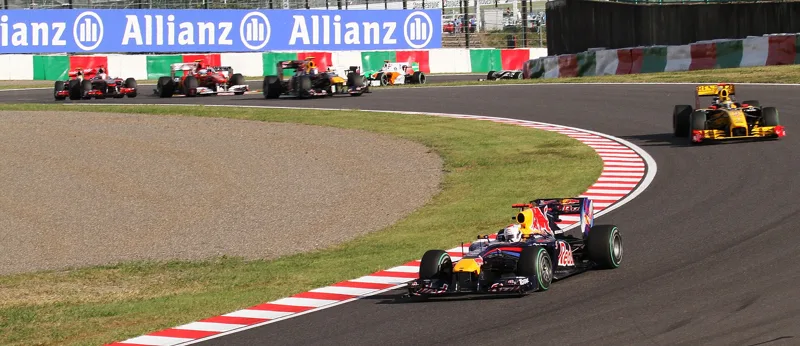
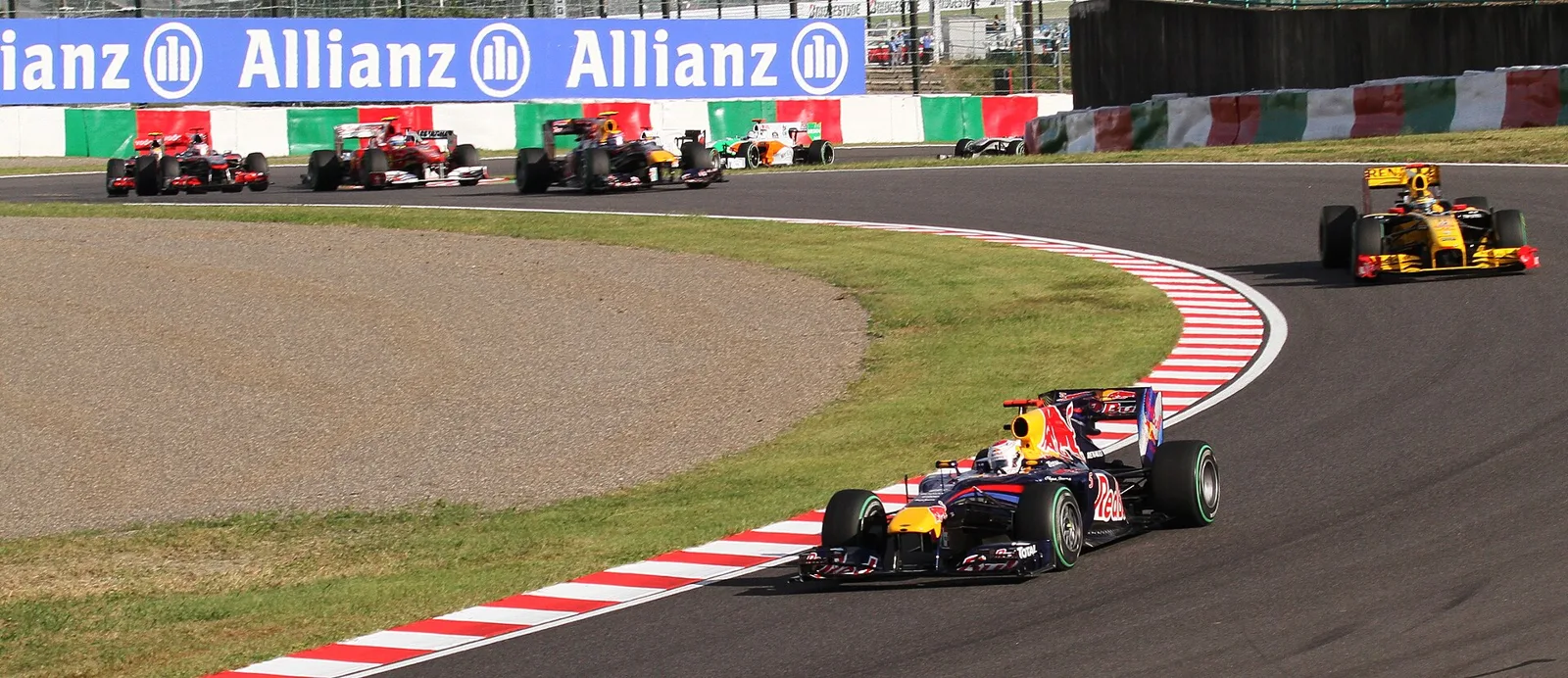
A first win of the season for Button at Albert Park, after a wet start, a first-corner collision and Vettel's retirement on lap 26 handed him the lead.
The 2010 Australian Grand Prix, the second round of the season, went to McLaren's Jenson Button on 28 March. Button started fourth, and Kubica and Massa completed the podium. Vettel's retirement on lap 26 handed the lead to Button, who had been running behind him.
Jenson Button won the 2010 Australian Grand Prix at Albert Park from fourth on the grid, his first win of the season. Robert Kubica took second for Renault, and Felipe Massa finished third for Ferrari. The result lifted him to third in the standings.
What did the championship look like before Melbourne?
Alonso led the drivers' championship with 25 points before Melbourne, ahead of Massa on 18 and Hamilton on 15. Vettel was fourth on twelve points and Rosberg fifth on ten, so the title race was still wide open.
Ferrari led the constructors on 43 points, twenty-two ahead of McLaren. Mercedes were third on 18 points, with Red Bull a further two points back in fourth and Force India fifth on two points.
Alonso had won the season-opening Bahrain race, with Massa second and Hamilton third. Button, the reigning champion, had won the 2009 Australian Grand Prix and said he was pleased to be back at Albert Park, setting himself the target of a podium.
Vettel was certain Red Bull could challenge for victory after losing Bahrain to a faulty spark plug. Webber was entering his ninth Australian Grand Prix and said a home win would be a wonderful feeling, and Hamilton predicted fewer problems than in Bahrain.
Webber also denied a suggestion by Hamilton that he would retire at the end of the season if he won the championship, and the Melbourne weekend began with that question still in the air.
Button took the lead when Vettel retired on lap 26, and won from there.
How was the 2010 Australian Grand Prix set up?
Melbourne hosted the second round of the 2010 Formula One World Championship, held on 28 March at Albert Park. Twelve teams with two drivers each took part. Bridgestone supplied soft options, hard primes and two wet-weather compounds.
Drivers had only eleven sets of dry tyres for the weekend. Every car had to use both dry compounds during the race unless it ran a wet-weather tyre for the whole distance.
The soft tyre carried a green stripe on its sidewall, and the wet tyre had a green line along the bottom of its central groove. The circuit also installed a new combination kerb at the turn nine apex, and artificial grass was laid alongside it.
Kerbs were also extended on the exits of the second and twelfth turns.
Why did the start time spark debate?
The race started at 17:00 local time, later than usual so that European audiences could watch it without getting up early. The air was 26-29 C (79-84 F) and the track 24-28 C (75-82 F) before the start. Visibility was poor at that hour, and the timing was controversial, but it was kept for 2010 after the same debate the year before.
Jarno Trulli wanted the race started an hour earlier. Mark Webber, director of the Grand Prix Drivers' Association, said that commercial pressure was the reason for the later start.
Virgin Racing were allowed by the FIA to enlarge their fuel tanks, because the existing ones were too small for a full race at speed. Their chassis to carry the bigger tank was not due until the Spanish Grand Prix on 9 May.
McLaren changed the opening of their diffusers after a rule clarification from the FIA. Sauber became the first team to bring a version of McLaren's F-duct system, with its air directed onto the main section of the body wing.
Practice: a cone, a broken wing and Webber's late lap
Three sessions were held before the race, two of 90 minutes on Friday and a third of an hour on Saturday morning. Before practice, the pit lane speed limit was cut from 100 kilometres per hour (62 mph) to 60 kilometres per hour (37 mph) on safety grounds. The request came from race director Charlie Whiting.
Kubica topped the opening session in the dry at 1:26.927, a fraction under two tenths clear of Rosberg. Button was third, with Massa and Vettel behind him.
Kamui Kobayashi brought out a stoppage after forty minutes, running over a cone on the inside of turn eleven and tearing away half his front wing. A second front wing then broke off going into the third corner, scattering debris across the circuit.
In the second session, intermittent rain showers came and went. Hamilton set the fastest lap at 1:25.801, while his team-mate Button battled him for the top time. Webber was third, ahead of Schumacher, as the track dried.
Vettel lost the rear of his car and ended up stranded in the turn six gravel trap, with the session down to its last three minutes.
In the final practice session, traffic was heavy, and Webber set the fastest lap of the weekend so far, 1:24.719, in the closing minutes. Alonso had been fastest for four minutes after changing his rear suspension and front ride height, but he finished two tenths slower.
How did qualifying set the grid?
Vettel took pole in 1:23.919, his second straight pole and his first at Albert Park, despite running wide after exiting a corner on his pole lap. Webber was 0.116 seconds behind him on the front row, and Alonso set 1:24.111 to start third.
Qualifying was split into three parts. The first lasted 20 minutes and eliminated the cars that finished 18th or lower, and the second lasted 15 minutes and eliminated those finishing 11th to 17th. The final session ran for ten minutes, and the cars in it could not change tyres before the race.
Overcast conditions kept the air and track at 23 C (73 F). Button lacked grip and had excessive oversteer, which cost him time, but he was happy with the car. Massa struggled to get his tyres into the working range and qualified fifth.
The Mercedes drivers qualified sixth and seventh, with Rosberg ahead of Schumacher. Barrichello took eighth and believed he could have been quicker, because traffic had got in his way. Kubica pushed hard but was ninth, and Sutil rounded out the top ten.
Hamilton, who qualified eleventh, was the fastest driver not to reach the final session. His fastest effort, 1:25.184, was nearly 1.1 seconds off Vettel's best from the second session, and he had been held up by traffic on his first run.
Buemi took twelfth and Liuzzi thirteenth. De la Rosa pushed hard to take 14th, with Hulkenberg 15th in the slower Williams and Kobayashi 16th. Alguersuari started from 17th, and Petrov failed to get beyond the first session.
Petrov was 18th, and the Lotus cars of Kovalainen and Trulli lined up 19th and 20th, with Trulli's seat bouncing in the car. Glock and di Grassi were in the eleventh row, and the Hispanias of Senna and Chandhok took 23rd and 24th.
What decided the first corner?
Vettel led into the first corner from pole, with Massa making a fast start to take second and Webber following in third. Button's front wheel touched Alonso's right rear tyre at the first corner, which spun the Ferrari and dropped him to 22nd.
Trulli's Lotus had a hydraulic pump failure on the grid and did not start. Glock and di Grassi started from the pit lane after their fuel collectors were replaced, because problems in qualifying had left them running with more fuel than was ideal.
Kubica had an excellent getaway, rising from ninth to fourth by the end of the first lap, and Hamilton made up three positions over the same distance. He passed his team-mate Button for sixth at turn three on lap six. Schumacher was collected by Alonso and sustained a broken front wing.
Kobayashi damaged his front wing in contact at turn three, and the piece came off going into turn six and hit Hulkenberg and Buemi. The incident brought out the safety car, which came in at the end of lap four.
Racing resumed with Vettel leading Massa. Kubica tried to pass Webber, but the Australian held the line by moving to the outside. Schumacher went for di Grassi, who retook him around the outside of Ascari.
How did the wet first laps change the race?
Button switched to slicks and went through heavy standing water to enter the pit lane on lap seven. He slid off at turn three, and most of the field pitted for soft dry tyres as the track dried.
Vettel stopped from the lead on lap nine, and by the eighth lap he had led Webber by 1.2 seconds. Webber held the lead for a single lap before his own stop on lap ten, and he ran wide at the first corner on his way out, and Massa then slowed, moving Webber up into second.
Petrov overshot the braking zone for Whiteford corner on lap ten and went into the gravel, where his car was stranded and he was out. Sutil briefly led until his pit stop on lap twelve, and then he retired because he had lost power in his engine.
The middle of the race and the lead change
Vettel regained the lead and began to pull away from Button, who was 1.7 seconds behind on lap 13, with Kubica a further two seconds back in third. Alonso had moved up to tenth by lap 13, after passing de la Rosa at turn nine.
Alonso passed Barrichello for eighth on the fourteenth lap and set a new fastest lap on the next one, 1:31.573. Hamilton and Webber then passed Alonso for fifth and sixth at the start of lap 16.
Webber went wide at turn three and fell to eighth, and Massa immediately overtook Hamilton around the outside. Hamilton fought Massa for fifth, though Massa had graining on his right-rear tyre, and the pair of them were closing on Webber and Alonso at the same time.
At the end of lap 21, Massa slid at turn 16, and Hamilton slipped past him on the inside at Brabham corner. Hamilton had minor front wing damage from the move, but he defended against Massa again at Whiteford corner, while Alonso slowed and let Webber through.
Vettel had sparks coming from his left-front wheel and a large amount of vibration in his car. He lost torque drive between the front left axle and wheel, and spun into the gravel at Ascari on lap 26, and that retirement promoted Button into the lead.
The podium and the grid positions behind it
| Finish | Driver | Team | Grid |
|---|---|---|---|
| First | Jenson Button | McLaren | Fourth |
| Second | Robert Kubica | Renault | Ninth |
| Third | Felipe Massa | Ferrari | Fifth |
Button's win was his first of the season. It moved him to third place in the drivers' standings, two points behind Massa and four adrift of Alonso.
McLaren cut the gap to Ferrari in the constructors' table to sixteen points, and Hamilton dropped to fourth in the drivers' table while Rosberg kept fifth. Renault's strong result levelled them with Red Bull on fourth in the constructors' table, and seventeen races remained in the season.