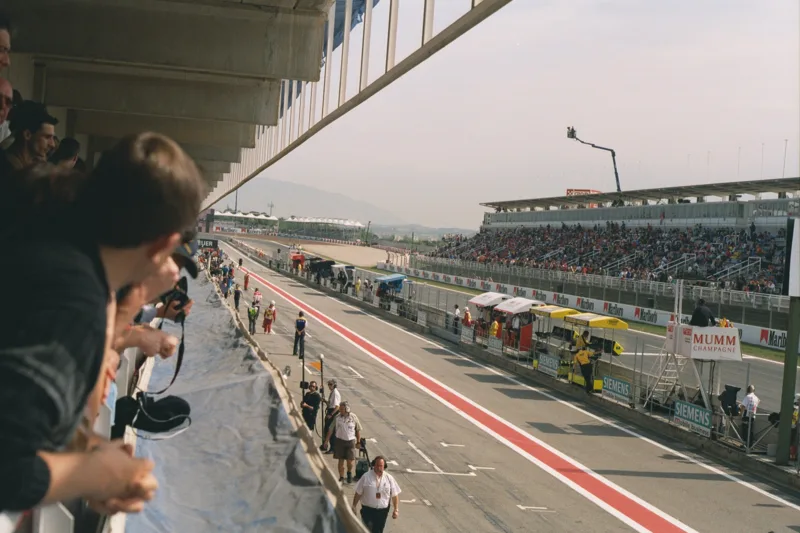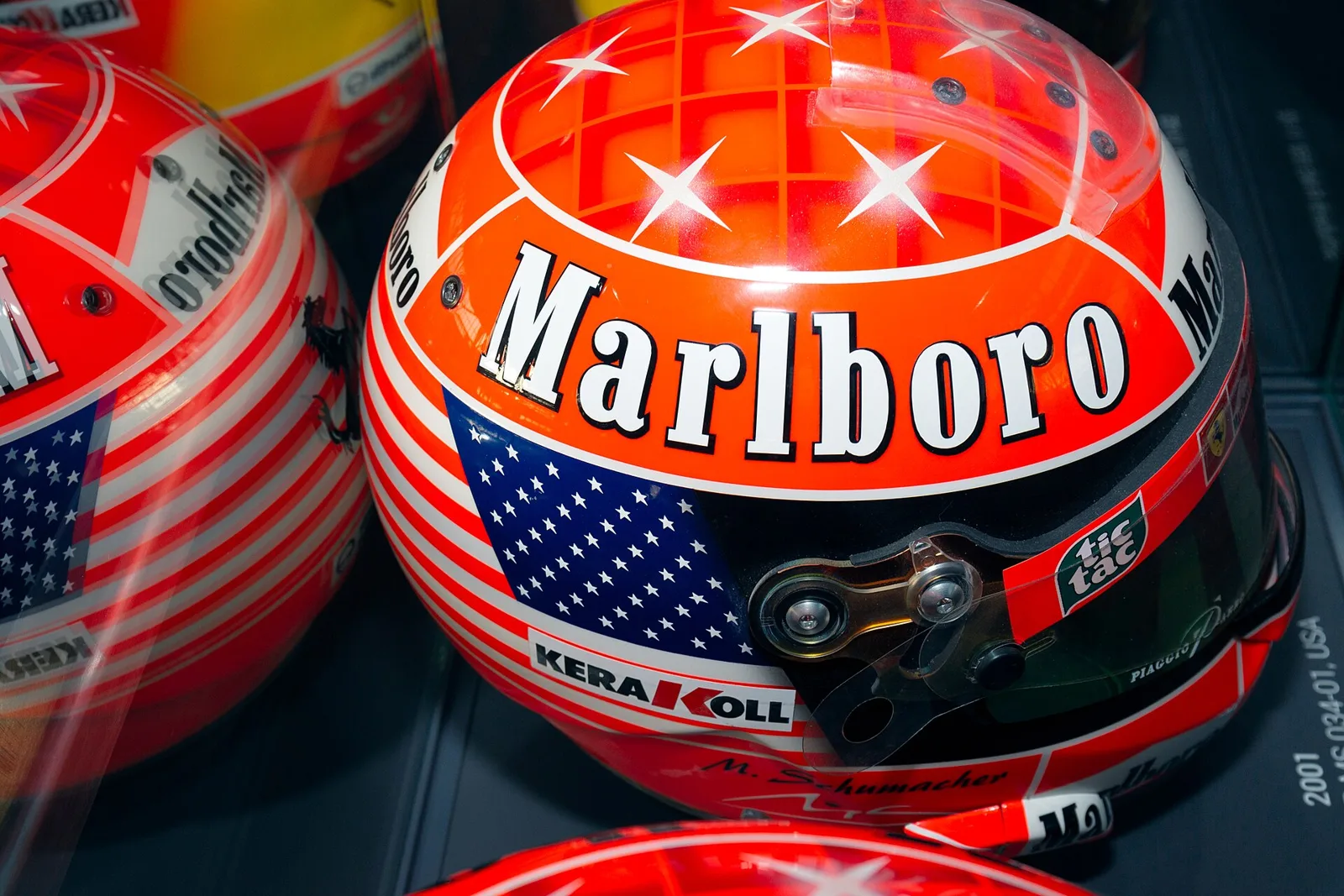
Run 19 days after the attacks, the race at Indianapolis was decided by fuel strategy, a Montoya hydraulics failure and a late Barrichello engine seizure.
The 2001 United States Grand Prix took place at Indianapolis on 30 September 2001. Mika Hakkinen won the 73-lap race for McLaren from fourth on the grid, with Michael Schumacher second and David Coulthard third. It was the second win of the season for Hakkinen and the 20th and final Grand Prix victory of his career.
Mika Hakkinen won the 2001 United States Grand Prix at Indianapolis, the first major international sporting event held in the United States after the September 11 attacks. Michael Schumacher finished second and set a new record for points in a season, while Hakkinen's victory was his last before a sabbatical from the 2002 season. The race was decided by fuel strategy, a stop that went wrong and a late engine failure.
What was the 2001 United States Grand Prix?
The race was the 16th and penultimate round of the 2001 Formula One season, and it was held on 30 September at the Indianapolis Motor Speedway. It was the second United States Grand Prix at the circuit, and the 73-lap event covered 306.016 km (190.150 mi) over the 4.192 km (2.605 mi) road course.
Indianapolis had already hosted the Indianapolis 500 as part of the world championship between 1950 and 1960. The support races were the Porsche Supercup and the Ferrari Challenge. Bridgestone supplied soft and hard compounds, while Michelin brought its Prime and Option tyres.
Both championships were already settled before the race. Schumacher had won the drivers' title three rounds earlier in Hungary, and Ferrari had taken the constructors' title at the same event, leaving McLaren too far behind to catch them.
Run 19 days after the attacks, the race was decided by fuel strategy and a late engine failure that handed Mika Hakkinen victory.
Why was the race held so soon after September 11?
The attacks had taken place 19 days before the race. Some teams were hesitant to send staff to Indianapolis, and some drivers and team principals questioned whether the event should go ahead. The organisers held it with extra security from local, state and federal law enforcement.
Indianapolis Motor Speedway president Tony George said he never considered cancelling after speaking with FIA president Max Mosley and commercial rights holder Bernie Ecclestone. No security incidents occurred, and the race became the first major international sporting event in the United States since the attacks.
Many competitors honoured the victims by putting American flags on their helmets and cars, and the Grand Prix Drivers' Association donated personal racing items to raise money. Ralf Schumacher had called the plans a bad joke, but he still raced. Ferrari had Luca Badoer on standby in case Michael Schumacher withdrew, yet he went ahead.
How did practice and qualifying set the grid?
Michael Schumacher took pole with a time of 1:11.708, set on his third quick lap, his tenth pole of the season in 16 races and the 42nd of his career. Hakkinen challenged him for pole for much of the session, but Schumacher set the pole-deciding lap.
Practice had been unsettled. On Friday, Schumacher set the early pace at 1:14.085 in the first session, and Hakkinen was fastest in the second with twelve minutes remaining. In the first session Hakkinen's McLaren had suffered a pneumatic valve gear failure, which needed an engine change in 45 minutes and restricted him to four laps.
On Saturday Schumacher was quickest again at 1:12.078, but his oil pump failed in the final session. He had to change engines before qualifying, although he still ended the practice fastest overall. In warm-up on Sunday morning, Ralf Schumacher set the best time at 1:13.912, but a stoppage of 15 minutes was needed after Montoya's engine failed eight minutes into the session and left oil and debris between turn 13 and the main straight.
Hakkinen's fastest qualifying lap of 1:11.945 was deleted by the stewards for ignoring a red light at the pit lane exit during warm-up. His second-best lap of 1:12.309 left him fourth, which promoted Ralf Schumacher to second and Montoya to third. McLaren did not appeal, and Hakkinen was angry because he said the low sun had hidden the light.
Barrichello took fifth, and Heidfeld equalled his best qualifying result of the season in sixth. Coulthard was seventh, and Alesi started eighth in his 200th Grand Prix. Button took tenth, his first top-ten start of the year, and 21 of the 22 qualifiers were faster than the 2000 pole lap.
How did the race begin?
The 73-lap race began at 13:00 local time, an hour earlier than other Grands Prix to suit European viewers. Michael Schumacher led into the first corner after Montoya passed Ralf Schumacher off the line, and Barrichello jumped from fifth to third. Enge had stalled on the grid and lost ten seconds.
Ferrari ran the harder Bridgestone compound, while McLaren chose the softer one. Michael Schumacher led Montoya by eight-tenths of a second at the end of the first lap, with Barrichello, Ralf Schumacher, Hakkinen and Coulthard behind.
Raikkonen's race ended early. On lap two he was squeezed three-wide into the first corner by Trulli, damaged his front wing against Trulli's rear wheel and pitted for a replacement. He retired on lap three when his left-rear driveshaft broke after contact with Trulli.
Barrichello was on a two-stop strategy with lighter fuel, so he passed Montoya on the outside at the first turn to take second. On lap five Michael Schumacher realised that Barrichello was faster and eased off, letting his teammate by on the inside into the lead. Barrichello then pulled away and led by 5.2 seconds on lap ten.
How did the middle of the race unfold?
Barrichello led for a long spell, but Montoya and Ralf Schumacher closed as the fuel burned off and the tyres wore. Ralf Schumacher made the first stop of the leaders at the end of lap 23, losing 12.5 seconds when a faulty wheel gun slowed the change. Barrichello made his first stop on lap 27.
Barrichello rejoined fifth, behind Coulthard, after an 8.6-second stop. Michael Schumacher then led the next seven laps under pressure from Montoya, who tried to slow him so that Barrichello could pass in the pits. Montoya got by on the inside on the 34th lap, and on lap 35 he set the race's fastest lap, a new lap record of 1:14.448.
Williams did not use the full fuel capacity of the car, because a heavier load would have worn the rear Michelin tyres. Montoya pitted at the end of lap 36 and dropped to fifth behind Coulthard, and Michael Schumacher retook the lead. Michael Schumacher made his only stop on lap 39, which handed the lead to Hakkinen.
Ralf Schumacher lost control under braking into turn six on lap 37 and finished in the gravel. Alonso's Minardi suffered a driveshaft failure a lap later, after he had entered the pits for a planned stop.
How did the late stages decide the winner?
Hakkinen took the lead on lap 39 and held it for 23 laps, helped by the low fuel consumption of his Mercedes engine. Coulthard made a 9.5-second stop on lap 43, which dropped him to fourth behind Michael Schumacher, and Hakkinen made his only stop at the end of lap 45 with a 9.6-second stop that left him second, ahead of Michael Schumacher.
Barrichello had been more than 22 seconds ahead of Hakkinen, but his final stop on lap 50 took 8.2 seconds. He rejoined second behind the McLaren, and his engine began to misbehave. Blue smoke from the rear of his Ferrari grew on lap 61, and he slowed considerably on the front straight.
Montoya's car had also run into trouble. On lap 39 smoke came from the back of his car through the banked turn 13, because of faulty hydraulics, and he stopped after crossing the line. Marshals moved the car away while the double waved yellow flags were shown, so a safety car was not needed.
Villeneuve and De la Rosa collided at turn eight on lap 43 when De la Rosa tried to pass on the inside. Both kept going, but Villeneuve retired in the garage with left-front suspension damage, and Verstappen retired on lap 47 after a small airbox fire.
Irvine was the last driver to make a scheduled stop, on lap 52, under a strategy of running as far as possible on one set. His tyres were almost worn to the canvas, and the FIA officials took note. On lap 56 Heidfeld lost sixth to Irvine at turn 11.
Barrichello let Michael Schumacher through into second on the main straight on lap 70, and on the next lap he overtook Coulthard at the banked turn 13 for third. On lap 72 his engine seized on the back straight from loss of oil, and he abandoned the Ferrari on the inside before turn eight.
Why did the result change after the race?
Several hours after the race the stewards disqualified Trulli, who had been classified fourth. The wooden skid block under his Jordan was found to be 1.5 mm (0.059 in) thicker at the rear hole than the minimum allowed, which promoted Irvine to fourth, Heidfeld to fifth and Alesi to sixth.
Jordan appealed through the Royal Irish Automobile Club, arguing that the rear fasteners had come loose during the race and caused the excess wear. Eddie Jordan later wrote in his 2007 autobiography that an anonymous caller had suggested the team check the three signatures on the FIA bulletin, because a steward whose name was on it had been absent from the post-race meeting.
Three judges from the FIA International Court of Appeal heard the case in Paris on 26 October. The FIA general secretary ruled that the disqualification should be reversed, because a steward had been missing from the initial hearing, which was a breach of the right of defence. Trulli returned to fourth.
What did the result mean for the championship?
Schumacher's second place took his points tally to 113, five points more than the record he had shared with Nigel Mansell. Coulthard led Barrichello by seven points in the battle for second, and McLaren's performance secured second place in the constructors' table from Williams with one round still to run.
Ferrari continued to lead the constructors on 167 points. Ralf Schumacher, fourth, was a further six points behind Coulthard. Michael Schumacher had set the record for the most points scored in a single season, with the Indianapolis result breaking the mark he had shared with Mansell.
How did the drivers react after the race?
Hakkinen described the win as one of the highlights of his season and one of his most important victories. He said his aim had been to win both Silverstone and Indianapolis in 2001, and that he had not thought about victory while running fifth early on, focusing instead on his lap times.
Michael Schumacher called his race pretty straightforward, adding that he had struggled with slower traffic before his first stop, and he admitted that he was fortunate to finish second after Montoya's retirement. Coulthard said he had benefited from retirements, but he accepted that the results had come his way.
Barrichello was bitterly disappointed to retire two laps from the end, saying that whenever he had the chance to win he went for it. Montoya said his second win in a row had been lost to hydraulic trouble, and Villeneuve and De la Rosa each blamed the other for their collision.
Race results at a glance
| Position | Driver | Team | Note |
|---|---|---|---|
| 1 | Mika Hakkinen | McLaren | 20th and final career win |
| 2 | Michael Schumacher | Ferrari | 11 seconds behind; record 113 points |
| 3 | David Coulthard | McLaren | Held off Michael Schumacher in the closing laps |
| 4 | Jarno Trulli | Jordan | Disqualified, then reinstated after the appeal |
| 5 | Eddie Irvine | Jaguar | Fifth on track; fourth after the disqualification |
| 6 | Nick Heidfeld | Sauber | Sixth despite losing three gears |