
A first-lap crash removed Coulthard, Ferrari's one-stop plan backfired and Hakkinen led from the middle of the race to the flag.
Mika Hakkinen won at Silverstone on 15 July 2001 for McLaren, his 19th Formula One victory. Michael Schumacher was 33.6 seconds back in second, with Rubens Barrichello third for Ferrari, and Coulthard's day ended in the opening laps. The race ran over 60 laps.
The 2001 British Grand Prix was held at Silverstone on 15 July 2001, the 11th of 17 rounds of the season and the 52nd British Grand Prix in the championship since 1950. Mika Hakkinen won from second on the grid for McLaren, taking his 19th Formula One victory. Michael Schumacher finished second for Ferrari and Rubens Barrichello was third, while David Coulthard's race ended in the first laps after a collision with Jarno Trulli.
Who won the 2001 British Grand Prix?
Mika Hakkinen won the 2001 British Grand Prix at Silverstone on 15 July, taking his 19th career win for McLaren. Michael Schumacher finished second, 33.6 seconds behind, and Rubens Barrichello was third for Ferrari. It was Hakkinen's first win since the 2000 Belgian Grand Prix.
Hakkinen started second and let Schumacher lead the first four laps, before the Ferrari ran wide at Copse and the McLaren took the lead. He led for most of the race, losing the lead only during the first round of pit stops, when Juan Pablo Montoya took it for three laps.
Hakkinen was pleased to win after a difficult season so far, and he hoped to add more wins before the year ended. He said it was very important to pass Schumacher for the lead, since otherwise he would struggle to find the gap he needed for his pit stops.
A first-lap collision, a one-stop gamble and a McLaren that took the lead mid-race and kept it: Hakkinen's Silverstone win in 2001.
Why did the race move to July?
The race was given a July date at a World Motor Sport Council meeting in Seville on 4 October 2000, after the circuit's owners, the British Racing Drivers' Club, were judged to have improved the track. The Austrian Grand Prix moved from July to May to make room. The move followed a request from Bernie Ecclestone, the Formula One boss.
The previous year's race had been hit by heavy rain, which closed the car parks and forced spectators to walk long distances. FIA president Max Mosley had threatened to cancel the British Grand Prix over the poor facilities, and the organisers were given a reprieve only after pledging to fix the flaws.
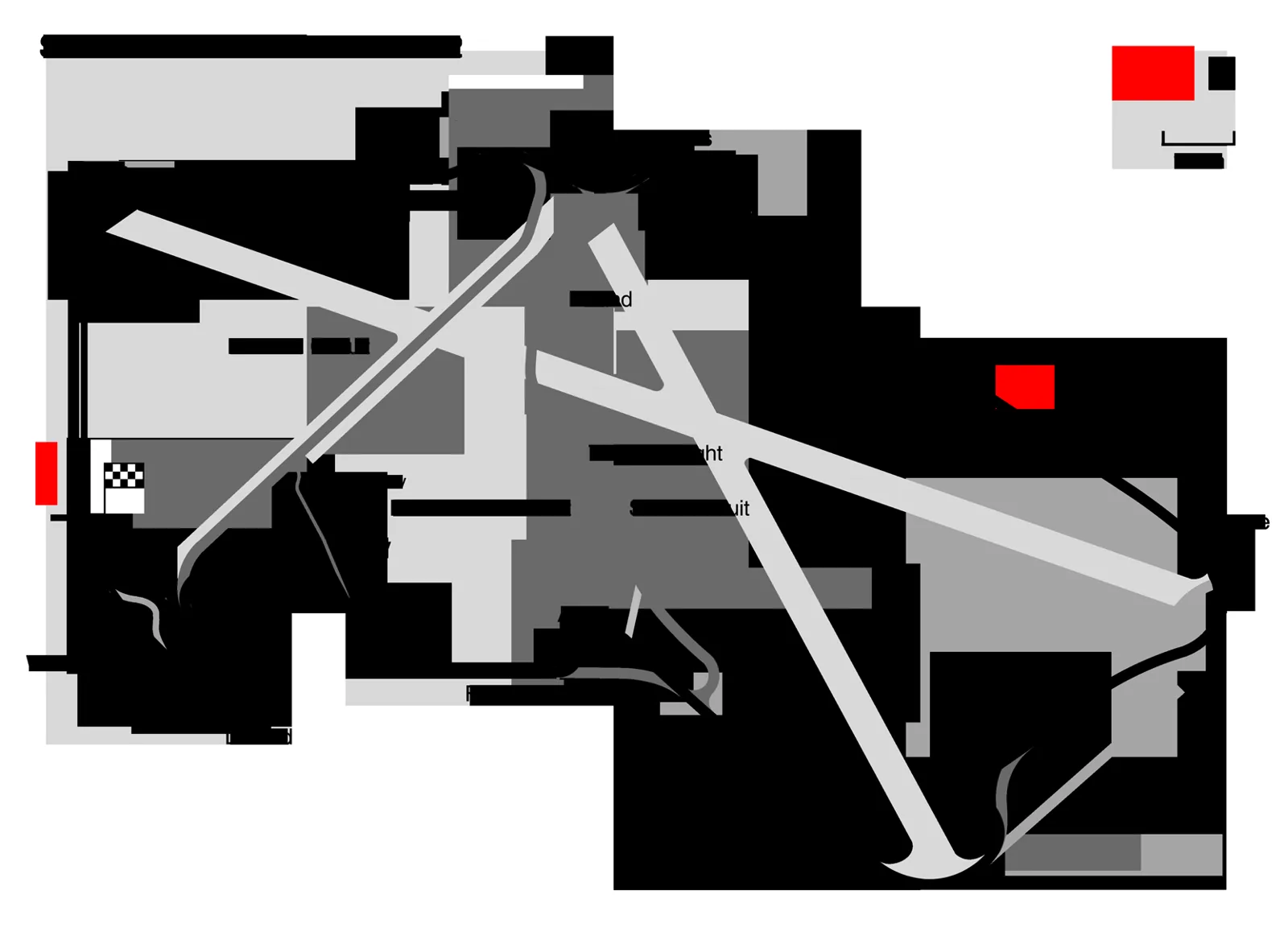
The 2001 race was the 52nd British Grand Prix in the world championship since 1950. Silverstone was a 5.140 km (3.194 mi) circuit, and the event drew between 100,000 and 120,000 spectators on race day.
Where did the title fight stand before Silverstone?
Michael Schumacher led the drivers' table with 78 points, ahead of David Coulthard on 47. Ralf Schumacher and Barrichello were level on 30 points each, and Montoya was fifth on 12. Ferrari led the constructors' table with 108 points, 52 ahead of McLaren, and Williams were third on 43.
Coulthard had won the British Grand Prix in 1999 and 2000 and said he needed a win at Silverstone to get back into the championship. Michael Schumacher was the bookmakers' favourite, and he had the chance to equal Alain Prost's all-time record of 51 career wins there. He said he was taking the races one at a time rather than chasing statistics.
Eleven two-driver teams competed, each one representing a different constructor, and the entry list did not change from the previous race. Several teams brought changes. Ferrari reused a qualifying-spec engine, Benetton ran launch control for the first time, and BAR unveiled Honda-built rear suspension with carbon fibre pushrods.
Practice and qualifying
The race was preceded by four practice sessions. Michael Schumacher was fastest in the first, at 1:23.619, 0.786 seconds ahead of Barrichello. In the second session, held in changing weather as rain fell in the closing ten minutes, Hakkinen set the day's fastest lap at 1:22.827.
Heidfeld, De la Rosa, Ralf Schumacher, Trulli and Raikkonen completed the top ten in the second session.
The third session was held in cold, wet conditions, and several drivers lost control on the sodden track. Michael Schumacher led it at 1:31.430. The final session saw more rain, and most drivers were unable to improve on their earlier times. Michael Schumacher remained fastest, ahead of Frentzen and Hakkinen.
The warm-up was led by Coulthard at 1:22.994, with Trulli 0.182 seconds behind. Heidfeld was the only driver to spin in the warm-up, and he was able to return to the pit lane.
How did qualifying set the grid?
Michael Schumacher took pole with 1:20.477, his 40th career pole and his eighth in 11 races that year. Hakkinen was second, 0.082 seconds behind, with Coulthard third and Trulli fourth. Frentzen was fifth and Barrichello sixth after being demoted in the last minutes.
The one-hour session was held in changing conditions. The rain stopped about an hour before qualifying began, but the track dried slowly and no driver went out for the first 24 minutes. Michelin-shod teams underperformed compared with Bridgestone-shod squads, because their tyres worked less well in the colder weather.
| Position | Driver | Team | Grid |
|---|---|---|---|
| 1 | Mika Hakkinen | McLaren | 2 |
| 2 | Michael Schumacher | Ferrari | 1 |
| 3 | Rubens Barrichello | Ferrari | 6 |
| 4 | Juan Pablo Montoya | Williams | 8 |
| 5 | Kimi Raikkonen | Sauber | 7 |
| 6 | Nick Heidfeld | Sauber | 9 |
Trulli qualified fourth despite hitting a kerb at Becketts on his fourth run, which damaged a front-left suspension pushrod. Barrichello was demoted to sixth in the closing minutes, after being blocked twice by Enrique Bernoldi. Irvine qualified 15th after a front-left suspension failure forced him into the spare Jaguar.
Villeneuve drove the spare BAR for part of qualifying after an engine problem with his race car. Minardi's Tarso Marques failed to set a time within 107 per cent of pole, and the stewards refused Minardi's appeal, so he could not start the race.
How did the race unfold?
Hakkinen took the lead at Maggots on lap five after Michael Schumacher lost speed at the exit of Copse, and he pulled clear over the following laps. Montoya made up places through the early race and took second by lap 18, while Michael Schumacher fell back behind them.
The start went badly for several drivers. Trulli and Coulthard touched at Copse on the first lap. Coulthard continued with damage to his diffuser and undertray but fell to 18th, and Trulli retired. Villeneuve's automatic upshift failed, and he collided with his team-mate Panis at Copse; Panis retired in the gravel.
Montoya moved from tenth to third by the end of the opening lap, and Ralf Schumacher gained five places. Verstappen made the best start in the field, moving from 17th to 11th. Hakkinen set the fastest lap of the race so far on lap three, at 1:25.861, and closed on Michael Schumacher before his lead began to grow.
Coulthard's race ended on lap three. His right-rear suspension collapsed after the contact with Trulli, and he spun into the gravel at Priory. Burti retired on lap seven with an engine failure, leaving oil on the track at Woodcote.
McLaren planned a two-stop race for Hakkinen, while Ferrari planned a single stop for Michael Schumacher. Ferrari suspected Hakkinen would be carrying a small load at the start, and McLaren hoped he could hold Schumacher up long enough for Coulthard to challenge later. Montoya made his first stop on lap 25, a stationary time of 8.2 seconds, and Hakkinen reclaimed the lead.
Ralf Schumacher made his only stop on lap 36, taking two to three seconds longer than planned because his mechanics had trouble removing the refuelling nozzle. He rejoined sixth, and his engine cut out two laps later at the exit of Bridge corner. Montoya's second stop lasted 10.9 seconds, three laps after the leaders had pitted on lap 39, and Barrichello made his only stop on lap 43, taking 8.5 seconds.
On lap 43 Alonso lost his left-front wheel near the pit lane entry, which made his own stop longer. Irvine was the last driver to make a stop, on lap 47. By then Hakkinen led Michael Schumacher by 23.9 seconds, followed by Barrichello, Montoya, Raikkonen and Heidfeld.
Hakkinen finished 33.6 seconds ahead of Michael Schumacher. He slowed slightly on the final lap because of reliability concerns, after losing the Spanish Grand Prix earlier in the season. Michael Schumacher chose not to challenge him, and finished 25.6 seconds ahead of Barrichello in third.
Further back, Verstappen came home tenth with a failing engine, and his first set of tyres gave him excessive oversteer. Alesi finished 11th with a car that lacked grip, and De la Rosa was 12th after a malfunctioning refuelling machine at his first stop. Fisichella was 13th and Bernoldi 14th, while Button finished 15th after a power steering failure on lap 15. Alonso was the final classified finisher in 16th.
What did the result mean for the championship?
Michael Schumacher's lead rose to 37 points over Coulthard. Barrichello moved to third with 34 points, and Ralf Schumacher fell to fourth on 31. Hakkinen's win lifted him to fifth on 19 points, but it left him mathematically out of the title fight, 65 points behind Michael Schumacher with only six races to run.
Ferrari kept a 52-point advantage over McLaren in the constructors' table. Williams were third on 46 points, Sauber fourth on 19 and Jordan fifth on 15. The result showed that Ferrari's one-stop approach had not paid off.
Jean Todt, Ferrari's sporting director, admitted that the one-stop plan had been the wrong strategy. He praised Hakkinen as a great driver and said Ferrari had never underestimated the McLaren team. Ron Dennis of McLaren said the team had spent half the race trying to slow Hakkinen's pace, because drivers tend to make mistakes when they back off.
Ross Brawn, Ferrari's technical director, said the team had a fairly conservative strategy that day, which suited a team defending rather than attacking. He added that the team did not feel it could afford more risks at Silverstone.
Villeneuve apologised to his team-mate Panis for their first-lap collision. Panis called it a racing incident and said the pair would now try to forget about it.
Coulthard apologised to his McLaren mechanics for the damage to the car. He blamed Trulli for the first-lap contact, while Trulli called it a racing incident and said he had left as much room as he could. Patrick Head of Williams said Montoya would have finished third if Ralf Schumacher had let him pass when asked, and Ralf said his team had the right strategy and could have finished on the podium.