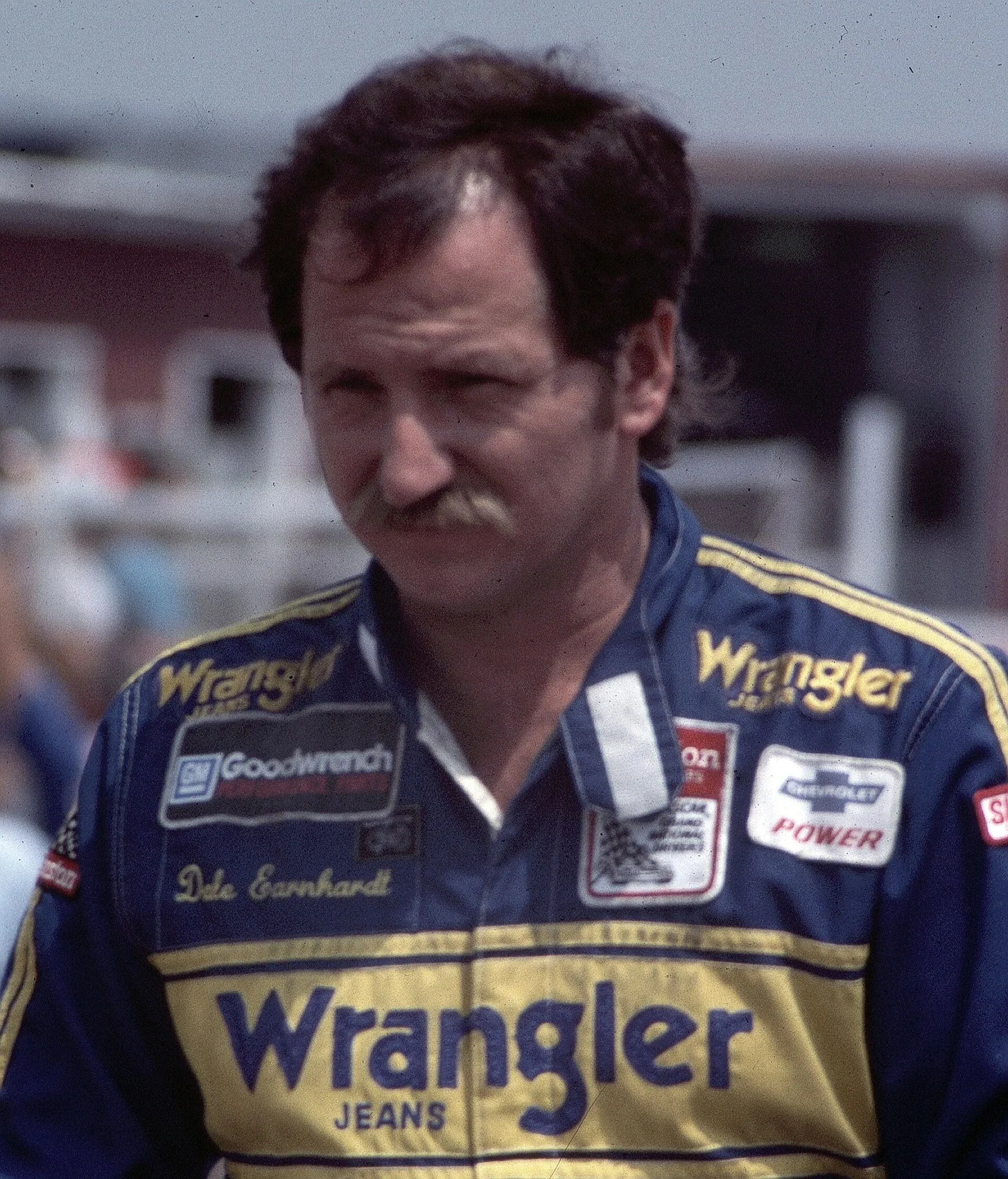
Dale Earnhardt clinched his third championship with two races to go, while Tim Richmond's final wins and a record Talladega pole shaped a busy season.
Dale Earnhardt won his third NASCAR Winston Cup championship in 1987, finishing 489 points ahead of Bill Elliott. He clinched the title at the AC Delco 500 with two races remaining, and Davey Allison was named Rookie of the Year after two wins.
The 1987 title went to Dale Earnhardt, who clinched with two races to go and finished 489 points ahead of Bill Elliott. It was a season of major team changes, a record Talladega pole and a finale at Atlanta, the first time that track hosted the year's last race.
Who won the 1987 NASCAR Winston Cup championship?
Earnhardt's third title was built on a season of repeated wins, and it was settled at Rockingham in late October. Davey Allison's two victories were enough to take the rookie award, while Elliott finished the year as the runner-up. The title was confirmed with the Atlanta finale still to come.
Earnhardt's clinch came when he needed only a 19th-place finish at Rockingham, a target that gave him a margin of 515 points over Elliott with two races to go. The final race at Atlanta was the first season finale held there, and it closed out a season that had gone Earnhardt's way for much of the year.
Earnhardt's third title made him the third driver to clinch with two or more races to spare, joining Richard Petty and Cale Yarborough. Only Earnhardt, though, had done it twice.
A third title for Dale Earnhardt, a record Talladega pole for Bill Elliott and a season of team moves.
How did the team changes reshape the 1987 field?
Darrell Waltrip moved from Junior Johnson's No. 11 to the new No. 17 Chevrolet, a third full-time Hendrick Motorsports entry. Terry Labonte left Billy Hagan's No. 44 to replace him in the No. 11, while Kyle Petty moved to the Wood Brothers Ford and Alan Kulwicki ran his own No. 7.
Other drivers also changed teams before the season. Bonnett moved to the No. 75 Pontiac, Morgan Shepherd joined the No. 26 Buick owned by Kenny Bernstein, and Phil Parsons replaced his brother Benny in the No. 55 for Leo and Richard Jackson.
Cale Yarborough left the No. 28 Ford team and drove his own No. 29 Oldsmobile, while Davey Allison took the No. 28 Ford for Harry Ranier.
How did Tim Richmond's 1987 season unfold?
Richmond announced in January that a bout of double pneumonia would keep him out of the early races. Parsons took over his Folgers Chevrolet for Rick Hendrick, and the car number was changed to 35 to hold the 25 for Richmond's return.
Richmond returned for eight races in the middle of the season, and he won his first two races back at Pocono and Riverside. The Riverside win was the last of his career, and the eight races were the last NASCAR starts he would make.
Richmond's final race came at Michigan in August, where his engine blew while he was running eighth. He was credited with a 29th-place finish, and his career in the series came to an end at that point.
Which drivers won the early races of 1987?
Bill Elliott won the Daytona 500 from pole in February, with Benny Parsons second and Richard Petty third. Dale Earnhardt then took over the spring, winning the Goodwrench 500 at North Carolina Motor Speedway after leading 319 of 492 laps.
Ricky Rudd won the Motorcraft Quality Parts 500 at Atlanta, his first win of the season and his seventh career win. Earnhardt had led 196 laps before a mechanical problem took him out of contention in that race.
At Darlington, Earnhardt won the TranSouth 500 after Elliott ran out of gas while leading, as Elliott's car stalled on the final stretch.
Earnhardt's run continued at North Wilkesboro, where he led 319 of 400 laps in the First Union 400 for his second straight win. He also won at Bristol and Martinsville in April, and the Valleydale win was his fifth victory of the season.
Why does the Winston 500 pole record still matter?
At the Winston 500 at Talladega on May 3, Bill Elliott won the pole at a record speed of 212.809 mph, which he set in 44.998 seconds. That record still stands, and it is unlikely ever to be broken. It has stood since 1987.
The race itself was remembered for a crash in which Bobby Allison flew into the fence and nearly landed in the grandstands. A fan was injured by debris, and the crash led to restrictor plates being introduced in 1988.
Davey Allison won the Winston 500 for his first career Winston Cup victory, in only his 14th career start. The win was an early sign of the rookie's talent, and he would add a second win later in the year.
What happened at the February races?
The Busch Clash opened the season on February 8, with Bill Elliott on pole and Alan Kulwicki as the wild card in that non-points event. The 7-Eleven Twin 125s followed on February 12, and Ken Schrader won the first race while Benny Parsons took the second.
The 29th Daytona 500 ran on February 15, and Elliott won the race from pole. Parsons finished second and Richard Petty third, a podium that showed how strong the Chevrolet and Pontiac teams were early in the year.
The Daytona weekend set the pattern for the year, with Elliott at the front and the field close behind him. Those early results were a sign of the battle that would run through the spring and summer.
Who won the Pocono and Michigan races of 1987?
Tim Richmond won the Miller High Life 500 at Pocono on June 14, his first start of the season. Dale Earnhardt won the Miller American 400 at Michigan on June 28, and Rusty Wallace took his first career pole for the same race.
Earnhardt's win at Michigan added to a summer in which he was the most consistent winner in the series. Earlier in the year he had already won several races on the way to his title.
Bill Elliott returned to Michigan in August and won the Champion Spark Plug 400 on August 16, while Richmond's race there ended with his engine blowing. The two results marked the end of Richmond's career and a strong late run for Elliott.
Why did Kyle Petty's Charlotte win matter?
Kyle Petty won the Coca-Cola 600 at Charlotte on May 24, and the win came by more than a lap over Morgan Shepherd. It was his last win with the Wood Brothers, and it closed a chapter for the team.
Petty left the Wood Brothers after a dismal 1988 season to drive for Felix Sabates. His Charlotte victory, though, remained one of the most notable results of his time with the team.
The Coca-Cola 600 that year also marked a shift in speed for the series, as the pole and the early laps were set on a newly repaved surface.
How did the carburetor rule change the summer races?
NASCAR mandated smaller carburetors at Daytona and Talladega in July, in an attempt to slow the cars. The pole speed at the July Daytona race was just over 198 mph, compared with more than 210 mph in February. The smaller parts reduced the power available to every team.
At Talladega in July, Elliott won the pole at 203.827 mph with the smaller Busch series carburetors, which showed the rule had not stopped the fastest drivers from setting strong times.
The rule was part of a wider effort to manage the speeds of the cars, and it changed the way teams prepared for the superspeedways for the rest of the season. Teams had to adjust their setups quickly to keep up.
Which drivers won the Atlanta and Glen races?
Rudd took the Atlanta race on March 15, and Rusty Wallace won the Budweiser at The Glen on August 10. Wallace's Glen win came after he ran out of fuel near the end, made a quick pit stop and still held his lead.
Wallace also won the Winston Western 500 at Riverside on November 8, the final edition of that race. The result gave him a strong finish to a season in which he was one of the most consistent front-runners.
What was the Winston exhibition race like in May?
The Winston exhibition race ran on May 17 at Charlotte, and Earnhardt won it after a battle with Elliott that became known as The Pass in the Grass. The race was the breakthrough edition that brought in the non-winners' last-chance race format.
The race featured the 19 most recent race winners in the main feature, which was run over 75, 50 and 10 laps across the three stages of the event. The format was a new approach that later became part of the all-star weekend.
How did the autumn races shape the 1987 title?
Earnhardt's autumn was built on consistent results. He won the Busch 500 at Bristol on August 22, the Wrangler Jeans Indigo 400 at Richmond on September 13 and the Southern 500 at Darlington on September 6, which was shortened to 202 laps by rain.
Darrell Waltrip won the Goody's 500 at Martinsville on September 27, after Terry Labonte hooked Earnhardt on the final lap, sending Earnhardt sideways and Labonte spinning into the outside wall. Waltrip slipped past to take the win, and Earnhardt's lead was not lost in the standings.
Labonte won the Holly Farms 400 at North Wilkesboro on October 4, his first win for Junior Johnson. Elliott won the Oakwood Homes 500 at Charlotte on October 11, and the Oakwood win kept him in contention.
The AC Delco 500 on October 25 gave Earnhardt his title. He needed only a 19th-place finish, and his lead over Elliott stood at 515 points at the end of that race, a margin large enough to clinch with two races to go.
What were the key results of the 1987 season?
| Race | Winner | What it meant |
|---|---|---|
| Daytona 500 | Bill Elliott | Won from pole, with Parsons second and Petty third |
| Goodwrench 500 | Dale Earnhardt | Led 319 of 492 laps in an early win |
| Winston 500 | Davey Allison | First career win, in his 14th start |
| Budweiser 500 | Davey Allison | His second win of the rookie season |
| Miller High Life 500 | Tim Richmond | His first start of 1987 after missing the early season |
| AC Delco 500 | Bill Elliott | Earnhardt clinched the title with two races to go |
| Winston Western 500 | Rusty Wallace | Won at Riverside, the final edition of the race |
| Atlanta Journal 500 | Bill Elliott | Season finale at Atlanta; Earnhardt finished the year 489 points ahead |