Ickx and van Lennep won by 11 laps in a turbocharged Porsche 936 as new Group 5 and Group 6 rules brought turbo power to Le Mans.
The 1976 24 Hours of Le Mans, held on 12 and 13 June 1976, was won by Jacky Ickx and Gijs van Lennep in a Porsche 936. The race ran to new Group 5 and Group 6 regulations, drew nine classes of entry and marked the arrival of turbocharged cars in numbers.
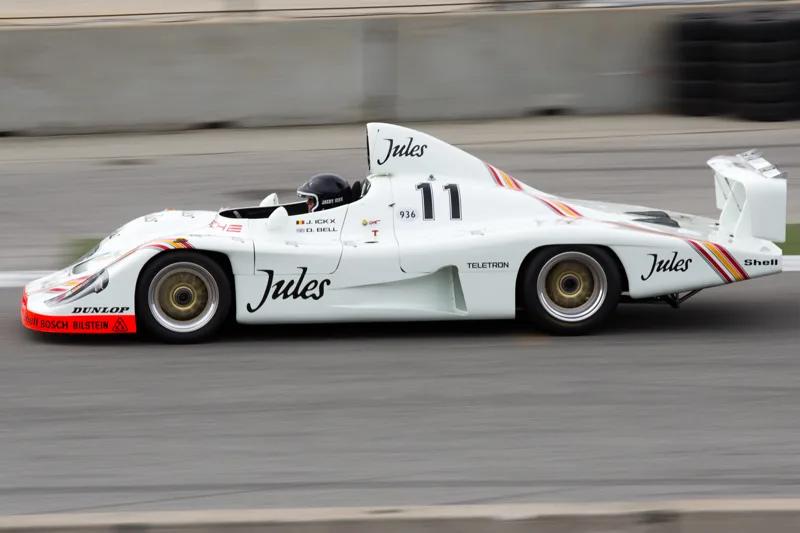
Jacky Ickx and Gijs van Lennep took the chequered flag in a works Porsche 936, finishing 11 laps clear of the field. The race ran on 12 and 13 June 1976 as the 44th Grand Prix of Endurance, under new Group 5 and Group 6 rules. It also marked the year that turbocharged cars arrived at Le Mans in considerable numbers.
Why did turbocharged cars matter in 1976?
Turbocharging arrived in considerable numbers at the 1976 race, with over a dozen turbocharged entries on the grid. A total of 17 turbo cars reached race week, and the extra power they gave outweighed their extra weight for many teams. The race is remembered as the start of the turbo era at Le Mans.
Porsche brought two new designs. The 935 was developed from the 934 Turbo and used a 2.85-litre flat-6 with a KKK turbocharger producing 590 bhp, giving a top speed of 335 km/h (210 mph). Its chassis weighed only 900 kg, well below the 970 kg minimum for a 4-litre car, and the ballast the rules required improved the weight distribution.
The 936 was even newer and had been developed in only nine months. Its 2.1-litre flat-6 was also turbocharged and produced 520 bhp, with a top speed of 320 km/h (200 mph) when the turbo was fully on boost. Group 6 cars were allowed 40 litres more fuel and were to be more than 200 kg lighter.
Renault-Alpine was Porsche's main rival in the shorter World Championship races. Its A442 was developed over the winter, and a longtail version was judged best for Le Mans. With a Garrett turbo it produced 500 bhp and could reach 335 km/h (210 mph). Renault entered only one car, because the race clashed with the Swedish Formula 1 Grand Prix, and it was driven by Jean-Pierre Jabouille, Jose Dolhem and Patrick Tambay.
A turbocharged Porsche 936 won by 11 laps and opened the turbo era at Le Mans.
What were the new 1976 regulations?
The FIA introduced new Group 5 and Group 6 rules for 1976 and renamed the former Group 5 category as Group 6. The new Group 5 was a silhouette formula for Special Production Cars. The Automobile Club de l'Ouest (ACO) added its own GTP class, which brought the race to nine classes of entry.
Group 6 engines could be standard production units up to 5-litre capacity or racing engines up to 3-litres, and turbocharged racing engines were limited to 2.1 litres. The FIA revived the World Sportscar Championship for Group 6 cars. Group 5 ran in a separate World Championship of Makes, and the production requirement for Group 4 was cut from 500 cars to 400.
The ACO opened one race to both categories, which went against FIA policy at the time. The FIA scheduled a championship race at Circuit Paul Ricard on the same weekend, but it was cancelled for lack of entries. The ACO then grew closer to IMSA in North America, and a new Le Mans-Daytona Trophy linked the 24-hour sports-car races.
GTP cars had to be closed-top, at least 110 cm high and at least 850 kg, heavier than Group 6 cars, with no wings. GTP was the forerunner of the Group C regulations used in the 1980s. GTP cars were also limited to less than 25 litres of fuel per 100 km, and engine blocks, cylinder heads, gearboxes and differentials could not be replaced during the race.
Every entry had to have been built from January 1, 1972. Each driver also had to complete at least one lap at 125% of the fastest of the three laps set by drivers in their category. There was no Index of Thermal Efficiency competition this year, and the ACO offered GBP 1000 in prizemoney to the cars covering the most laps in each six-hour period.
Which cars and teams were entered?
The ACO received 97 applications for the race and accepted 68, and 58 cars arrived for qualifying in race week. It was the first Le Mans since the company's founding in 1947 with no Ferrari entrants. Porsche, BMW and Renault brought works teams, most of them running only 1-2 cars each.
Porsche's works team fielded the 935 for Rolf Stommelen and Manfred Schurti and the 936 for Ickx and van Lennep. A second 936, run by Joest Racing with Reinhold Joest and Jurgen Barth, was also in the field. Kremer Racing was among the first customers to receive the 935, and its own modification, known as the 935K-1, kept more of the look of the original 911 RSR.
BMW's 3.0 CSL formed the basis for customer cars, including entries from Schnitzer Motorsport, Alpina-Faltz and the British Hermetite Racing team, whose lead driver was John Fitzpatrick. The works team ran a modified CSL with 19-inch rear tyres, a 3.2-litre engine and twin KKK turbochargers that produced 750 bhp. Frank Stella painted the second BMW Art Car, which was driven by Brian Redman and Peter Gregg.
Porsche dominated Group 4 with the 340 bhp 911 Carrera RSR and the 934, whose turbocharged 3-litre engine produced 480 bhp. The only opposition to that Group 4 Porsche juggernaut came from the returning French privateer Andre Haller, who had uprated his 2.6-litre Datsun 260Z.
Gulf-Mirage was taken over by Harley Cluxton after John Wyer retired, and the two cars that had finished first and third in the previous year's race returned as Mirages. Derek Bell and Vern Schuppan drove one, and Francois Migault and Jean-Louis Lafosse drove the other. Alain de Cadenet ran a slightly modified Lola T380 with Chris Craft, capable of 320 km/h (200 mph).
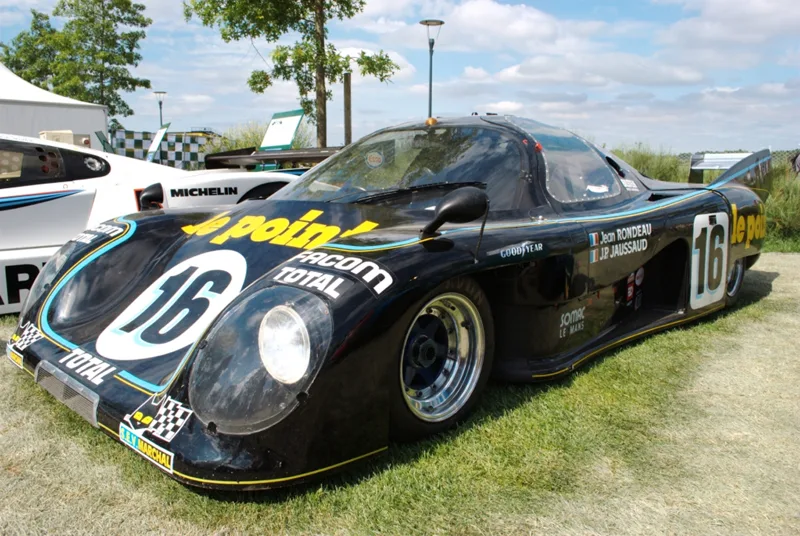
Jean Rondeau's team built the first car to the ACO's new GTP specification. Financed by Charles James of the French home-furnishings company Inaltera, it used a Cosworth DFV V8 and a Hewland gearbox. Gerard Welter's WM P76 ran a 2.7-litre Peugeot V6, and Lancia returned after 23 years with the Stratos.
The ACO worked more closely with IMSA and with Bill France Jr. of NASCAR and Daytona Speedway, and four IMSA-spec cars and two NASCAR-spec cars were entered. The heaviest cars in the race included the Dodge Charger of Hershel McGriff and his son, and the Ford Torino shared by Dick Brooks, Dick Hutcherson and Marcel Mignot. John Greenwood's Corvette, nicknamed the Batmobile, used a 427 cubic inch V8 producing 700 bhp.
How fast were the cars in practice?
Renault's Jean-Pierre Jabouille set the pace on the first day of practice with a 3:33.1 lap, which discouraged the Porsches from fighting for pole position. Ickx was second in the 936 at 3:39.8, and Stommelen was third in the 935 with 3:41.7. Jabouille's time stood as pole.
Xavier Lapeyre's privateer Group 6 Lola was fourth at 3:44.0, ahead of Joest's works Porsche at 3:45.4. The two Mirages posted times almost identical to their qualifying times from the previous year. Brian Redman's BMW art car blew both its engines in practice, while Greenwood's Corvette reached ninth after a clutch failure and Chris Craft rounded out the top 10 in the De Cadenet.
Lower down, the Pescarolo and Beltoise Inaltera was the fastest GTP car in 12th at 3:56.9, while the Hezemans and Schenken Gelo Porsche was the quickest Group 4 car at 4:01.1. The best 2-litre Group 6 qualifier was the Servanin and Ferrier Chevron in 19th at 4:05.4. The NASCAR cars struggled on the tight corners, with McGriff 47th at 4:29.7 and Brooks 54th at 4:38.0.
What happened during the race?
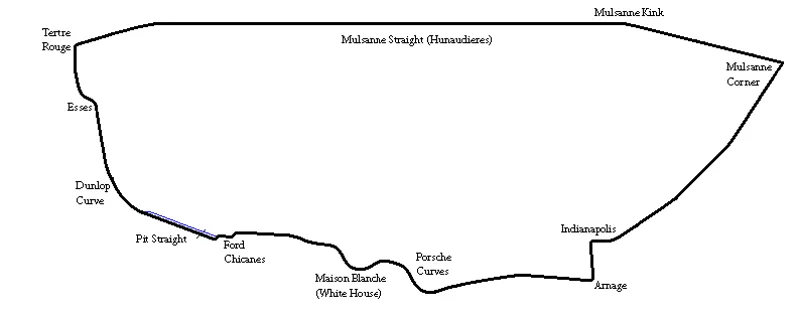
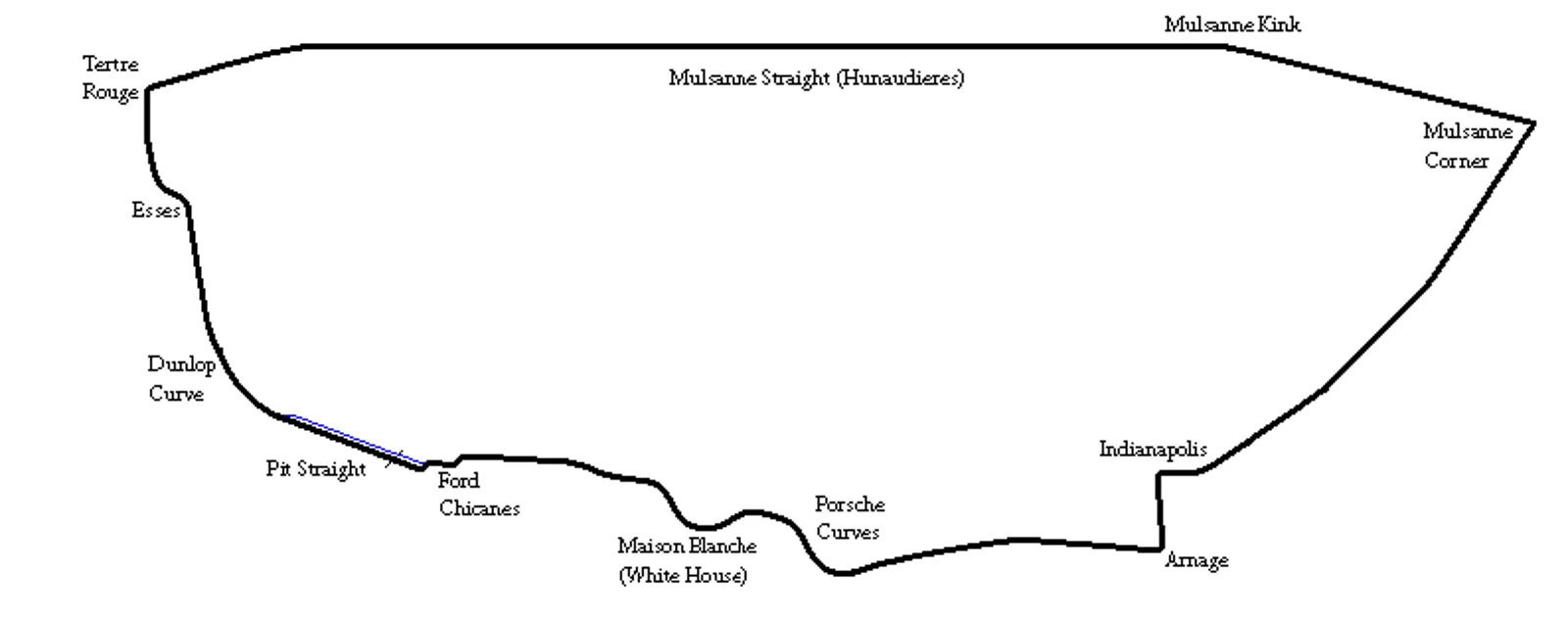
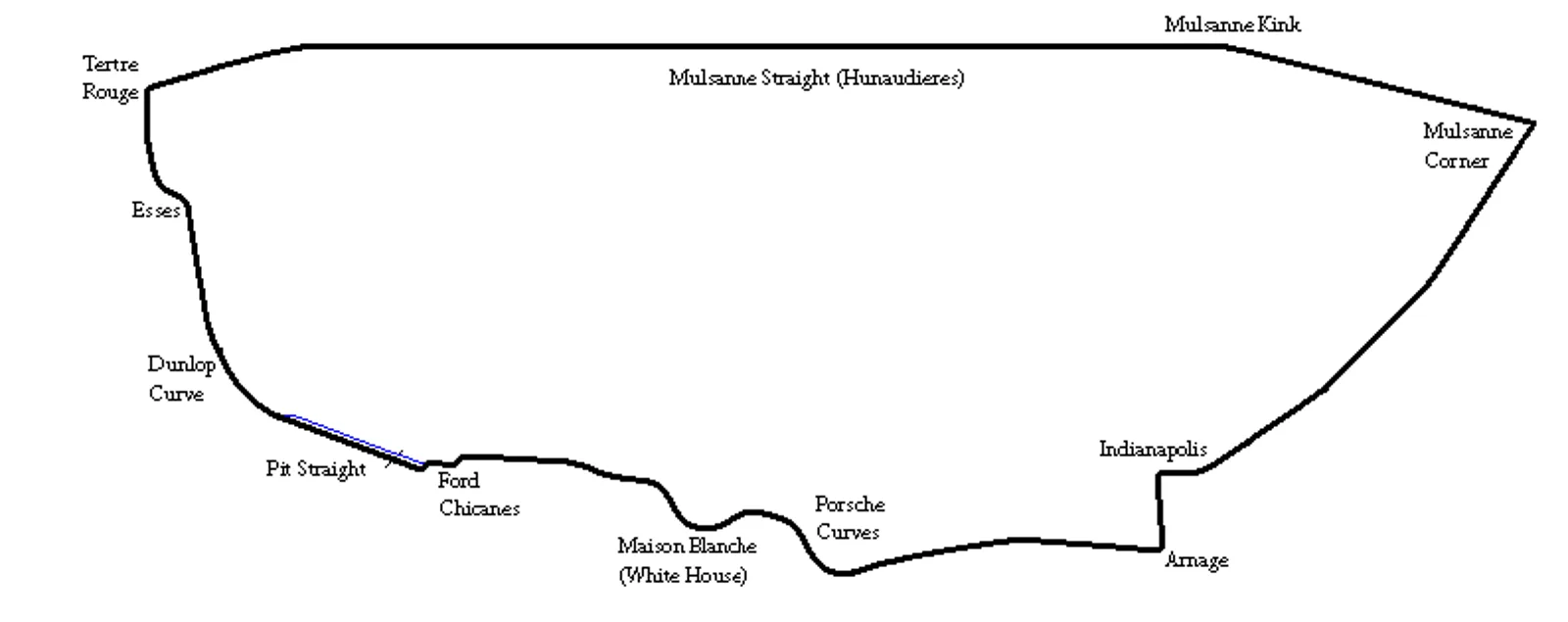
The race was run in some of the hottest weather in years, and Renault Alpine led from the rolling start. Brian Redman's BMW reached third before an oil leak, and a string of mechanical failures followed. At 9pm, Andre Haller crashed his Datsun on the Mulsanne Straight and died on the way to hospital.
Bill France Jr., president of NASCAR, was honorary starter. Redman, knowing his time was limited, pushed the BMW's turbo hard and passed Stommelen and Joest, but the oil leak forced him into the pits in a cloud of smoke. On the first lap the NASCAR Dodge stopped with burnt-out pistons from lower-octane fuel, and the Chevrolet Monza went out with a bent propshaft.
The Alpine pitted after 10 laps to check rising engine temperatures, and its smaller fuel tank meant more frequent stops. A misfire needed new spark plugs and then a new ignition box, which dropped Tambay to 7th. In the third hour Redman's engine gave out, and so did the Hermetite car, leaving Walkinshaw stranded at Arnage.
At 9pm, as darkness began to fall, Andre Haller lost control of his Datsun 260Z when it slipped onto the grass at the kink near the end of the Mulsanne Straight. The car spun several times, hit the barrier and caught fire. Marshals pulled him from the wreck, but he died on the way to hospital from severe chest injuries. It was only his second driving stint of the race.
The Kremer 935, which had been holding a solid seventh behind the De Cadenet, lost its clutch as night fell. The Alpine fought back up the order, and Jabouille set the fastest lap of the race before a blown piston stopped it for good. When the lead Mirage lost 4 laps at 1am fixing its alternator, the Migault and Lafosse car moved into third.
At 4am, midway through the race, the leaders had covered 180 laps, holding a 2-lap margin over their 936 teammates and six laps over Lafosse's Mirage. The Schnitzer BMW was put out by a broken camshaft early in the morning.
As morning broke, the Ickx and van Lennep 936 was still running like clockwork at 15 laps per hour. Most cars behind them had problems. The other 936 lost 20 minutes at 7am fixing its valve gear, and its clutch then broke. The Mirages suffered fuel pump problems, and the De Cadenet lost 8 minutes with a jammed wheel nut.
The Ickx and van Lennep car had a 16-lap lead until it lost five laps spending 34 minutes on a split exhaust pipe that threatened the turbo, just before midday. With four hours left, the Migault and Lafosse Mirage led the De Cadenet by two laps, and the Stommelen and Schurti 935 ran a further three laps back.
The Gelo Porsche, comfortably leading Group 4 and running sixth overall, pitted for a gearbox rebuild and eventually finished 16th. The Porsche Club Romand car inherited the class lead, but its engine expired soon after midday while running ninth.
In the final hour, an oil line came loose in Hans Heyer's Kremer 935, and a spectacular fire broke out on the back straight. Heyer parked the car by the marshal post at Mulsanne corner and got out safely. With under 20 minutes to go, the rear engine cover of Lafosse's Mirage flew off, and although the car lost time in the pits, he stayed a lap ahead of a hard-charging Chris Craft in the resurgent De Cadenet.
Who won the 1976 Le Mans?
Jacky Ickx and Gijs van Lennep won in the Porsche 936, finishing 11 laps clear after a race in which their lead was never seriously threatened. Van Lennep announced his retirement straight after the race, having already won Le Mans twice, including the record-breaking 1971 race.
The Renault Alpine offered the first real challenge, but it was seen off early, and the 936 built a relentless lead. The 34-minute repair to a split exhaust pipe cost five laps, yet the following pack could not close the gap. The winning margin was a comfortable 11 laps.
The victory was the first for a turbocharged or supercharged car at Le Mans since Bugatti in 1939. The winning distance was 4,769.92 km (2,963.89 mi), and the winner's average speed was 198.7 km/h (123.5 mph).
What were the main race results?
The Porsche 936 of Ickx and van Lennep won, the Mirage of Migault and Lafosse finished second, and Alain de Cadenet took third in his privateer Lola. Stommelen and Schurti won Group 5 in fourth place, while class winners included Pescarolo and Beltoise in GTP and Daniel Brillat in the 2-litre class.
| Position | Car | Drivers | Note |
|---|---|---|---|
| 1st | Porsche 936 | Jacky Ickx and Gijs van Lennep | Won by 11 laps |
| 2nd | Mirage | Francois Migault and Jean-Louis Lafosse | Car had finished third the year before |
| 3rd | De Cadenet Lola T380 | Alain de Cadenet and Chris Craft | His best Le Mans result |
| 4th | Porsche 935 | Rolf Stommelen and Manfred Schurti | 23 laps behind the winner, Group 5 class win |
| 5th | Mirage | Derek Bell and Vern Schuppan | Car had won the 1975 race |
| 8th | Inaltera | Henri Pescarolo and Jean-Pierre Beltoise | Won the GTP class |
| 14th | Porsche 911 RSR | Tom Waugh | Sole IMSA finisher |
| 15th | Lola-Cosworth | Daniel Brillat | Won the 2-litre class, 27 laps clear |
Stommelen and Schurti finished 23 laps behind the winning 936, but they were clear winners of Group 5. Tom Waugh's 911 RSR was the only IMSA car to finish the race. The only Group 2 entry, Jean-Louis Ravenel's BMW, was the last classified finisher, more than 100 laps and 1500 km behind the winner.
Pole position went to Jabouille with 3:33.1 at 230.43 km/h (143.18 mph), and his fastest lap of the race ran at 220.20 km/h (136.83 mph). The Group 4 win went to a privateer Porsche of Segolen, Gadal and Ouviere after the new 934s failed.
What was the significance of the 1976 race?
The 1976 race gave the new Porsche 936 and 935 a strong debut. Porsche's dominance at Le Mans and in world sports-car racing was set to return over the next few years, as turbo power took hold.
The race also brought the ACO closer to IMSA and NASCAR, a step toward the inter-series racing the organisers wanted. GTP, the class introduced that year, became the forerunner of Group C in the 1980s.
The race is also remembered for the death of Andre Haller on the Mulsanne Straight, where his Datsun crashed and caught fire on the grass.