A small family car, a large one and a tail-finned six-cylinder flagship: three Vauxhall ranges that ran side by side from the 1950s to the 1970s.
The Viva, Victor and Cresta were three Vauxhall family cars at different sizes. The Viva was the small car (1963-1979), the Victor the large family car (1957-1976), and the Cresta the upmarket six-cylinder model (1954-1972). All drew heavily on American styling, and each had strong years and weak ones.
The only Vauxhall-badged car ever offered for sale in the United States was the Victor, sold in the late 1950s through Pontiac dealers, and for a brief spell it was also Britain's most exported car. It was the middle child of a family in which the Viva took care of small and the Cresta of grand.
Together the three covered a lot of ground between 1954 and 1979. The Viva was Vauxhall's return to the small-car market. The Victor was its large family car. The Cresta was a six-cylinder car with tail fins, later trimmed into something more restrained.
How did the Viva, Victor and Cresta fit together?
| Model | Years | Place in the range | Series | Engines |
|---|---|---|---|---|
| Viva | 1963-1979 | Small family car | HA, HB, HC | 1,057 cc four (HA); 1,159 cc (HB); 1,599 and 1,975 cc options from the Victor |
| Victor | 1957-1976 (VX Series to 1978) | Large family car, replacing the Wyvern | F, FB, FC, FD, FE | 1,508 and 1,594 cc (FB); 1,599 and 1,975 cc (FD) |
| Cresta | 1954-1972 | Upmarket six-cylinder car, built on the Velox | E, PA, PB, PC | 2,262, 2,651 and 3,293 cc sixes |
| Viscount | 1966-1972 | Executive version of the Cresta PC | PCE | 3.3-litre six |
The F-series Victor is the only Vauxhall-badged car ever offered in the United States, sold through Pontiac dealers.
What was the Vauxhall Viva?
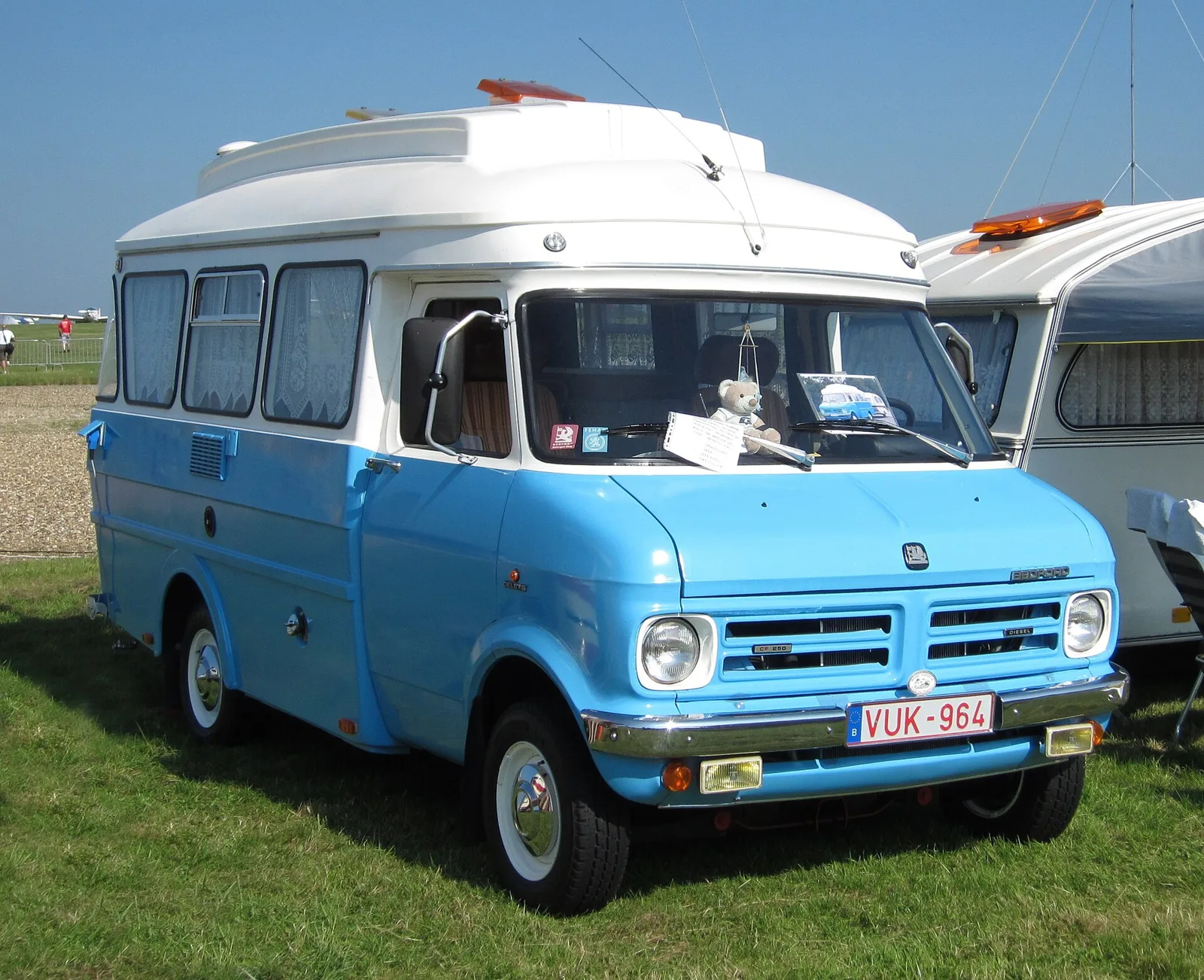
The Viva was a small family car built in three versions, the HA, HB and HC, between 1963 and 1979. It arrived a year after Opel, another General Motors company, launched the Kadett A. Both were products of the same project, with the same floorpan and the same engine design. The main difference was that Opel worked in metric units and Vauxhall in imperial, and although the two looked alike, few parts could be swapped. A van version carried the Bedford name as the Bedford HA. Among its British competitors on launch day were the Ford Anglia, by then well established, and the Morris Minor.
The HC, the third generation, was the last passenger car designed entirely by Vauxhall when it ended in 1979. Once the Viva was gone, General Motors Europe merged the two brands' offerings into one Opel-engineered line-up. Vauxhall revived the name between 2015 and 2019 on a rebadged Opel Karl (the Chevrolet Spark elsewhere), the fourth generation of that model.
What was the Vauxhall Viva HA like?
The HA was launched in September 1963 and superseded three years later in September 1966. It was Vauxhall's first serious attempt at the compact market since the Second World War, and its first new small car since 1936. Under the bonnet sat a 1,057 cc overhead-valve four driving the rear wheels, and the body came only as a two-door saloon, a hair longer than the Anglia, which dated back to 1959. Its other rival was BMC's hugely successful new 1100 range.
The Viva made its mark through lightness. The controls were easy, the gearchange short and slick, the steering and clutch light, the visibility good and the performance nippy for the class. Those virtues helped make it one of the first cars actively marketed to women. Its front crossmember assembly, with double wishbones, telescopic dampers and a transverse leaf spring, was self-contained and could take a much bigger engine, which made it a favourite with British hot rod builders. At the rear it made do with ordinary semi-elliptic leaf springs. The mix gave a soft ride on small bumps, acceptable roll in corners, precise steering and a small turning circle.
It sold in various guises abroad. In Canada Pontiac and Buick dealers sold it as the Vauxhall Viva and Chevrolet and Oldsmobile dealers as the Envoy Epic, placing second to the Volkswagen Beetle among imported compacts. French buyers knew it as the Vauxhall Epic. Holden assembled it in Australia from 1964, and General Motors built it at Petone in New Zealand.
Trim levels grew. Standard and Deluxe models came first, identified by simple horizontal slatted grilles. An SL, short for Super Luxury, joined in June 1965 with an elaborate grille, three round tail lamps and better trim. Entry-level cars made 44 bhp (33 kW), while the Viva 90 of October 1965 raised compression to 9:1 for 54 bhp (40 kW) and added front disc brakes. In some markets two engines and three trims added up to six variants.
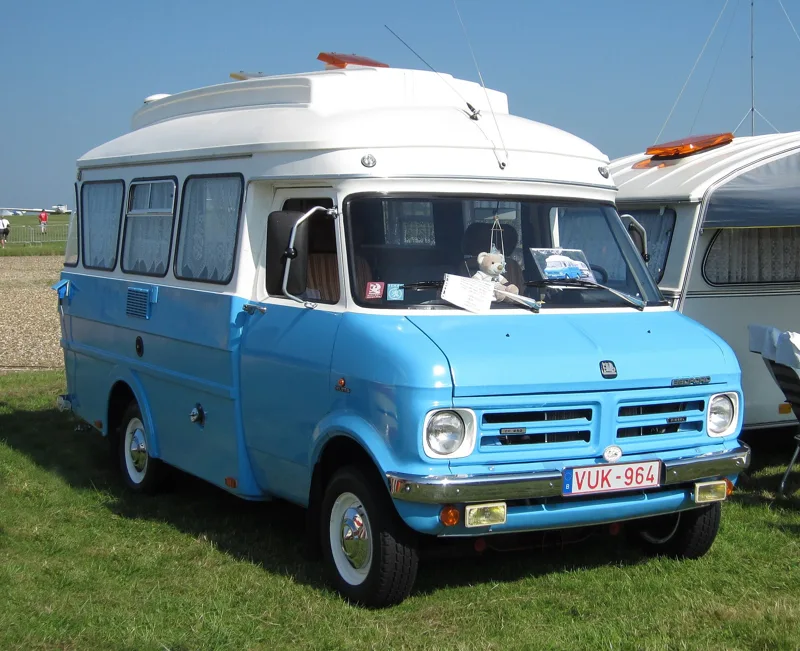
Sales confirmed the formula. More than 100,000 HA Vivas were made in the first ten months, and by 1966 the total passed 306,000, proving Vauxhall had returned successfully to a market it had abandoned after the war; 309,538 were produced in all. The success was big enough to fund a successor designed on a virtually clean sheet. The HA's weakness was rust. Cappings along the top edges of the luggage compartment corroded and let water in, which then ate into the floor, and very few survive. The Bedford HA van, in 6 cwt and 8 cwt forms and a 10 cwt from 1972, outlived the car and stayed in production until 1983, thousands went to the GPO in bright yellow, and fleet orders from British Telecom, British Rail and the Post Office kept it alive.
How was the Viva HB received?
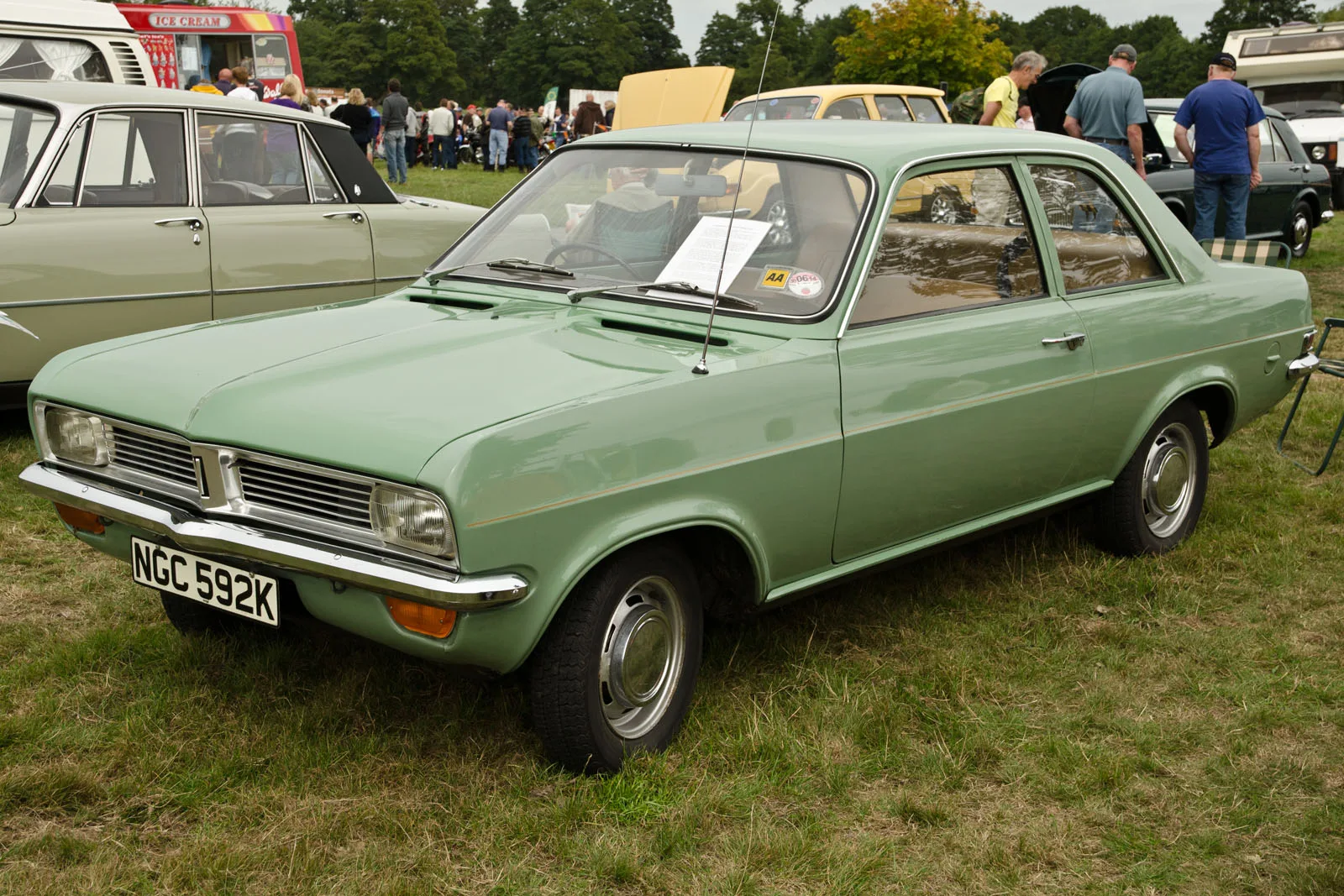
The HB, announced in September 1966 and sold until 1970, was larger, with coke-bottle styling modelled on American General Motors cars such as the Chevrolet Impala and Caprice. It was entirely Vauxhall's own design, as was the Kadett B. The HB kept the HA's basic engine but enlarged it to 1,159 cc, and to preserve the nippy feel the final drive was lowered from 3.9 to 1 to 4.1 to 1. Automatic transmission arrived in February 1967, but a major British motoring journal later numbered automatic Viva HBs among the slowest cars on sale.
The chassis was the HB's selling point. It had double wishbones and coil springs at the front and trailing arms with coil springs at the rear, which set new handling standards in its class while many rivals stayed with leaf springs and MacPherson struts. Sportier versions followed. A short-lived Brabham SL/90, supposedly developed with world champion Jack Brabham, gained a different camshaft, stiffer suspension and a twin-carburettor manifold; it is now almost impossible to find. The Viva GT from February 1968 used the larger 1,975 cc twin-carb engine from the Victor, with a black bonnet carrying twin louvres on an all-white car, and the 1600, with a 1,599 cc engine, followed in May 1968 to replace the Brabham, though many complained of its thirst.
Reliability was the HB's difficulty. A 1971 survey of cars registered in Sweden in 1967 put the HB Viva at the top of the list for faulty brakes in annual testing, with 26 percent affected, just ahead of the Opel Kadett estate at 24 percent. The poor brakes gave the Viva the highest overall failure rate among the 34 models in the reports. Britain's Motor magazine asked Viva 1600 owners whether they would buy another, and only 21 percent said yes, the lowest of the first seventeen models surveyed. It appears the low score reflected weak quality control in manufacturing rather than the design.
Commercially the HB did well. A three-door estate joined the two-door saloon in June 1967, and the four-door version of October 1968, engineered by Holden in Australia and exported as a kit to England, helped the HB break sales records worldwide. In Australia Holden built a variant from 1967 to 1969 as the Holden HB Torana.
What was the Vauxhall Victor?
The Victor was the large family car, produced from 1957 to 1976 to replace the Wyvern. It was renamed the Vauxhall VX Series in 1976 and kept going until 1978, by when it had grown into what its home market regarded as a larger-than-average family car. Vauxhall had been part of General Motors since 1925, so the Victor was sold in the United States through Pontiac dealers, as well as in Canada, Australia, New Zealand, South Africa and right-hand drive Asian markets including Singapore, Thailand, Malaysia, Pakistan, India and Ceylon. In Canada it was sold as both the Victor and the Envoy. The last Victor, the FE, was made under licence by Hindustan Motors in India as the Contessa, with an Isuzu engine, in the 1980s and early 2000s.
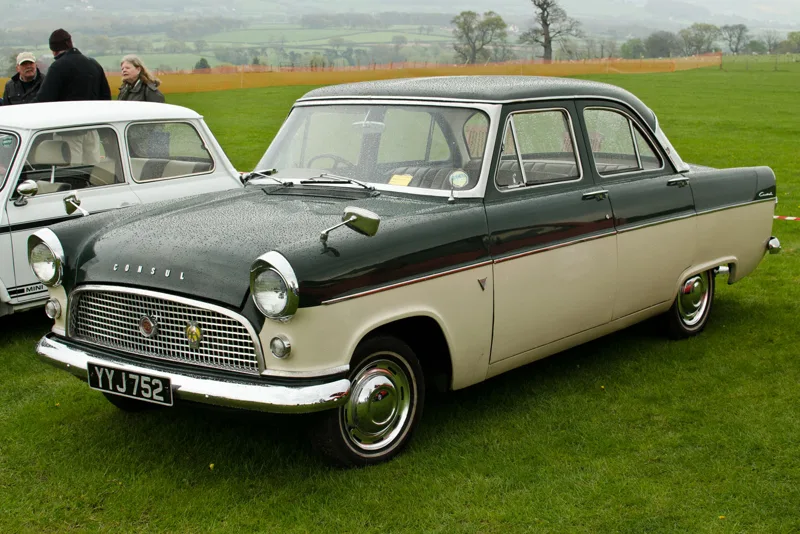
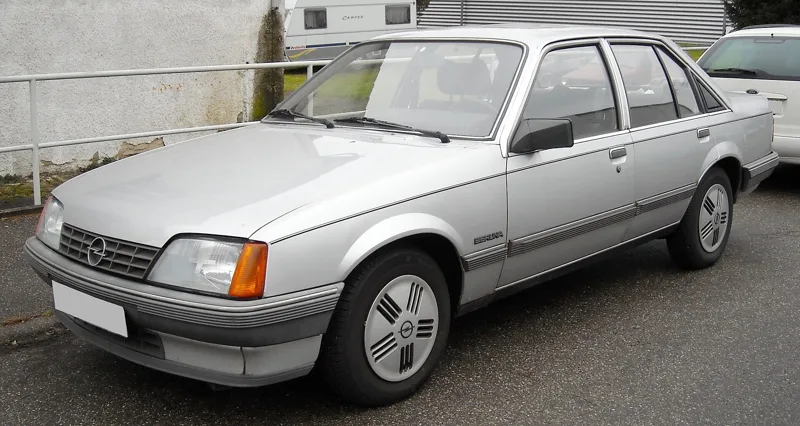
The first, the F series, appeared on 28 February 1957, and more than 390,000 were built. It had unitary construction, a large glass area and a forward-sloping windscreen pillar, with a body derived directly from the classic 1955 Chevrolet Bel Air. It looked much like the Opel Rekord P1, although it was considerably worse built, and targeted the Morris Oxford Series III, the Austin A55 Cambridge and the Ford Consul Mk2. Its new engine had a Zenith carburettor and made 55 bhp (41 kW) at 4,200 rpm. Standardising on premium petrol allowed the compression ratio to climb to 7.8:1, against 6.8:1 for the Wyvern. A Super that The Motor tried in 1957 managed 74.4 mph (119.7 km/h) flat out and needed 28.1 seconds to reach 60 mph (97 km/h), returning 31.0 mpg imperial (9.1 L/100 km). That car cost GBP 758, with the estate at GBP 931.
The F is the only Vauxhall-brand model ever offered in the United States, though Vauxhalls remained available from Canadian dealers until 1971. The FB of September 1960 swapped the American influence for plainer, older-Ford-like lines with better rust protection. American sales stopped after 1961 as Buick, Oldsmobile and Pontiac brought out compacts of their own, and the FB managed 328,000 sales before it was replaced in 1964. The same magazine's 1961 Super topped out at 76.2 mph (122.6 km/h), took 22.6 seconds to reach 60 mph and recorded 32.2 mpg. The sporty VX4/90, announced in October 1961, added twin carburettors, 71 bhp (53 kW) and servo-assisted front discs, and with a revised rear axle ratio of 3.9 could easily exceed 90 mph.
Why did the Victor FC struggle?
Curved side glass made its debut on a Vauxhall with the FC, widening the cabin, and the estate was noted as roomy for its class. The public nonetheless saw it as a step down from the conservative FB, so Vauxhall marketed it as the Victor 101, from the claim of 101 improvements. Its slab sides and full-width grille recalled the Lincoln Continental, and side and indicator lamps set into the front bumper, a cue the Audi 100 picked up four years later, were another novelty. It was the last Victor with pushrod-operated overhead valves, and had sold 238,000 by late 1967.
The VX4/90 was largely eclipsed by the cheaper Ford Cortina GT, which also enjoyed a greater presence in racing and rallying. Autocar tested a Victor 101 de luxe in May 1967 with a 1,595 cc engine and a claimed 66 bhp. Its 81 mph (130 km/h) top speed equalled the Ford Cortina 1600 de luxe and the Austin A60 Cambridge tested shortly before, and the sprint to 60 mph took 20.4 seconds. Its 23.1 mpg (10.9 L/100 km) put it more than 10 percent behind the others on economy, and at GBP 822 it cost more than the Austin at GBP 804 or the Ford at GBP 761. The magazine praised the comfort, light controls, brakes and road holding and criticised the roll and low gearing.
Rust has thinned the survivors, which makes the FC rare and undervalued. The FD that replaced it arrived amid a UK currency crisis and increasingly militant labour relations. It followed Detroit's coke-bottle styling and introduced the Slant Four, all-new 1,599 cc and 1,975 cc engines, the first belt-driven overhead-camshaft units to be mass produced in Britain, plus a bonded-in windscreen, a first for a mass-produced car.
What was the Vauxhall Cresta?
The Cresta began in 1954 as an upmarket Velox, which was itself the six-cylinder Wyvern. The Cresta E used the Velox's 2,262 cc six in the same state of tune, but added a choice of leather or fabric, optional two-tone paint, a standard heater, an electric dashboard clock, a cigar lighter, a boot lamp and a vanity mirror on the passenger's sun visor. The Motor's 1956 car did 82.2 mph (132.3 km/h), needed 20.2 seconds for the 0-60 mph sprint and returned 23.5 mpg; the price was GBP 931. New Zealand assembled 840 of them in 1956.
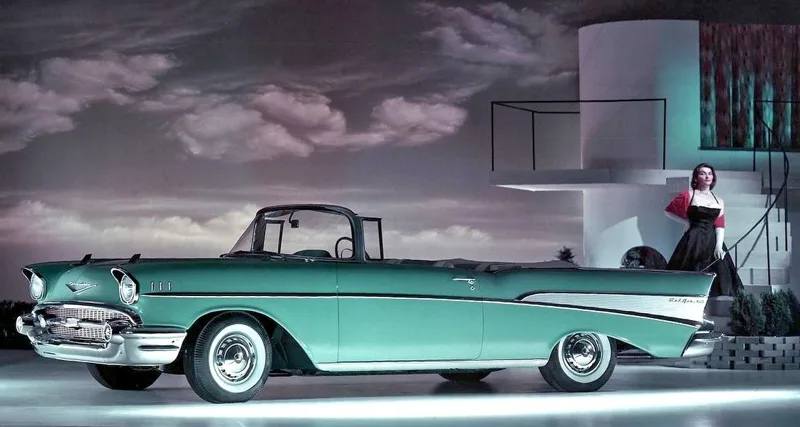
The PA, announced on 2 October 1957, copied the American fashions of tail fins, wrap-around glass and white-wall tyres, borrowing from Harley Earl's Pontiac Strato-Streak concept of 1954. Opel offered a similar car, the Kapitan P1. Every factory PA was a four-door saloon, with estates converted by Friary of Basingstoke. The 2,262 cc six made 82.5 bhp (61.5 kW), the handbrake sat under the dash and the gearchange on the column so six could sit across the bench seats. The Motor's 1958 PA was good for 89.8 mph (144.5 km/h) and 16.8 seconds to 60 mph, with 25.2 mpg, and cost GBP 1,073. A 2.6 litre overdrive car in 1960 raised the top speed to 94.7 mph (152.4 km/h) and cut the sprint to 15.2 seconds. The August 1960 engine grew to 2,651 cc and 95 bhp, and front discs were an option from October 1961, four months after Ford made them standard on its Zephyr and Zodiac.
Today the PA is a recognised classic, and it earned a cultural footprint. Through the 1970s many were customised, popular with fifties revivalists and teddy boys and woven into the rock 'n' roll look. The Specials' 1981 video for Ghost Town features a 1960 PA, which is now in the Coventry Music Museum.
The PB of 1962 dropped the tail fins for a flat bonnet and conservative lines taken from the Victor FB, with which it shared doors. Front discs became standard, and in October 1964 the engine swelled to 3,293 cc and 115 bhp. The PC, launched at the London Motor Show in October 1965, was a different car altogether, larger and in coke-bottle style, like a slightly smaller Chevrolet Impala. It kept the 3.3-litre six, rated at 140 hp SAE gross (104 kW; 142 PS), for all seven years of production. Trims ran PCS (standard), PCD (De Luxe) and PCE (Executive), the last being the Viscount of June 1966 with power steering, electric windows, reclining seats, vinyl roof, walnut dashboard and simulated hand-painted coachlines. An estate by Martin Walter of Folkestone arrived in January 1967 at GBP 1,507, around 40 percent above the saloon and well above the Humber Hawk estate at GBP 1,342 and the Ford Zephyr estate at GBP 1,379. It was never priced to sell, and the last estates were made in 1968.
How the line ended
The Cresta and Viscount finished in 1972, the Victor in 1976 and its VX Series successor in 1978, when the Carlton took over as essentially a badge-engineered Opel Rekord E. The Viva followed in 1979. With them went an era in which Vauxhall designed its own cars. What remained was a range developed at Opel, sold under the Vauxhall name, and a few well-loved survivors on the classic circuit.