Badge engineering through the cases that defined it, from a 1926 two-day emblem swap to Malaysia's Perodua and its Daihatsu roots.
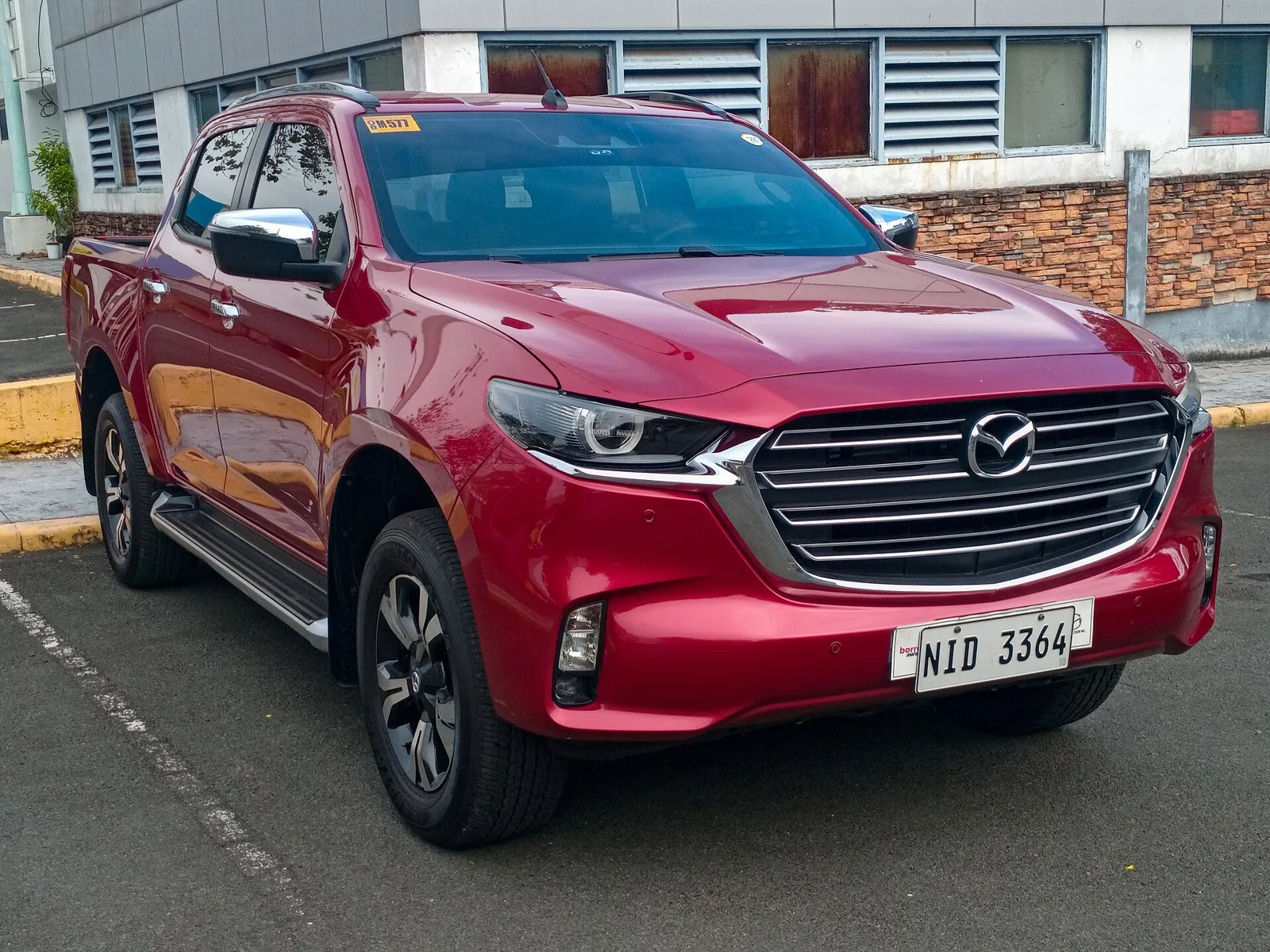
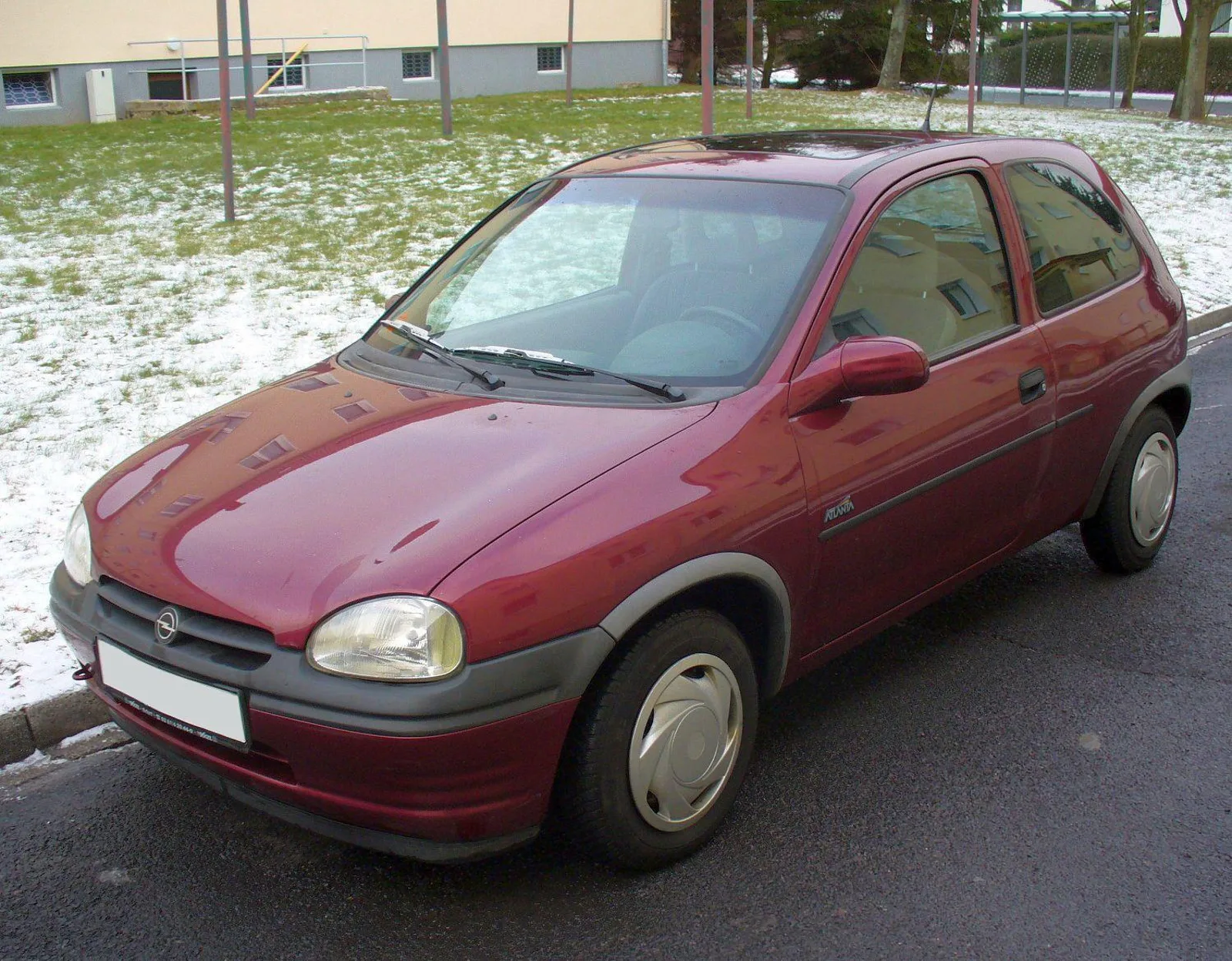
Rebadging, or badge engineering, means selling an existing car under a different badge, often with minor styling changes, to spread development costs over more cars. Examples include the 1962 BMC ADO16, the Volkswagen Routan, and Perodua's Myvi, sold in Indonesia as the Daihatsu Sirion.
In 1926 Nash Motors stopped its production line for two days so that workers could swap the emblems, hubcaps and radiator shells on every unshipped Ajax. The small car had sold over 22,000 units in its first year, yet its maker wanted it to wear the name of a respected brand instead. The chairman, Charles W. Nash, ordered that every Ajax be sold as a Nash Light Six, and owners who had already bought one got a free conversion kit.
That is rebadging, also called badge engineering, in its simplest form, and nearly a century later it is everywhere. Makers build one car and sell it under two names for reasons that range from market segmentation to joint-venture rules, and a company such as Perodua in Malaysia shows the practice at national scale.
What is badge engineering?
Rebadging, also known as badge engineering, carries an intentionally ironic name, since little or no actual engineering takes place. It is a form of market segmentation. A manufacturer wants a distinct car without paying for a new model or brand, with the cost and risk that brings, so it applies a new badge or trademark to an existing product line.
The term began with the swapping of emblems to make an apparently new model sold by another maker. Sometimes nothing else changes. Sometimes there are small styling differences, with new headlights, taillights, front and rear fascias or even outer body skins. In the most extreme cases the engines and drivetrains differ as well.
The goal is to share the heavy development bill for a new vehicle among as many cars as possible. General Motors turning the Camaro into the Firebird is a typical case, and the pairing sold well from the 1960s into the 2000s. Some cars would never reach the market without the savings, and a maker can build many different models, each wearing a different badge, from a single platform.
In Japan and some other countries, makers describe a rebadged car as OEM supply or OEM-supplied, whether it comes from or goes to another manufacturer. Platform sharing is related but can go further, because one platform may sit under a sedan, a hatchback or an SUV body. The wider world of consumer goods has its own version, the white-label product, found in consumer electronics and power tools.
Little or no actual engineering takes place.
Where did rebadging begin?
The first known case dates from 1917, when a car sold in Texas, assembled in Fort Worth, used bodies built by Elcar in Elkhart, Indiana. The Nash story of 1926 is often seen as the first time in the industry that one car simply became another.
General Motors made sharing a habit from its start in 1909, when chassis and platforms were common to Chevrolet, Oakland, Oldsmobile, Buick and Cadillac. Bodywork came from Fisher Body, which GM bought in 1925, and from 1928 the Art and Color Section under Harley Earl gradually separated the exteriors. In 1958, for its fiftieth year, GM issued anniversary models for each brand with an almost identical appearance, including special luxury versions: the Cadillac Eldorado Seville, Buick Limited Riviera, Oldsmobile Starfire 98, Pontiac Bonneville Catalina and Chevrolet Bel-Air Impala.
Britain and the BMC era
Britain supplied the phrase's most famous chapters. After William Morris bought Wolseley, the brand lost its identity after the First World War and eventually gave way to badge engineering. The merger of the Austin Motor Company with the Nuffield Organization, parent of Morris Motors, created the British Motor Corporation. Production was rationalised for efficiency, but marketing was not: each model was adapted through trim and accessories to suit customers who were loyal to a particular badge.
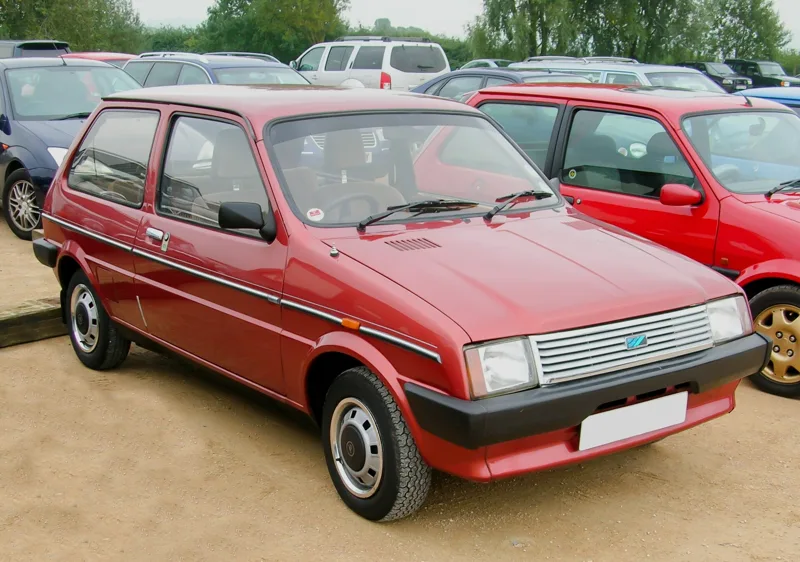
The ultimate case was the 1962 BMC ADO16, offered as a Morris, MG, Austin, Wolseley, Riley and upmarket Vanden Plas. A year earlier the Mini had been sold as an Austin, Morris, Riley and Wolseley, the last two with slightly larger boots.
Why do car makers sell the same car under different badges?
The motives vary, and the examples fall into recognisable groups.
Several brands, one body
A manufacturer that owns a portfolio of brands can expand its range without developing entirely new models. In the United States, the Chevrolet Tahoe, GMC Yukon and Cadillac Escalade share a common body. Ford sells its mainstream Fusion sedan as the Lincoln MKZ and its Expedition SUV as the Lincoln Navigator.
One model, different regions
The same car can change name when it changes market. Opel-built vehicles are sold as Vauxhalls in the United Kingdom, and in the United States they were marketed as Saturns, Chevrolets and Buicks. Holden, the Australian brand, never went on sale in North America, yet its Monaro and Commodore reached buyers there as the Pontiac GTO and G8, the Chevrolet SS and the Buick Regal Sportback and TourX. Back in Australia, the Button car plan of the 1980s and 1990s obliged imported Nissans and Toyotas to wear Ford and Holden nameplates.
Trading products
Two manufacturers can trade models to fill gaps in their ranges. In the 1990s Honda and Isuzu agreed to a swap. Isuzu got its first minivan by selling the first-generation Honda Odyssey as the Oasis, while Honda took the Isuzu Rodeo and Trooper and sold them as the Passport and the Acura SLX. The deal let each company enter new segments without engineering an all-new design. In Europe, meanwhile, the Honda Crossroad was a Land Rover Discovery with a different badge.
Volkswagen wanted back into the North American minivan segment in the late 2000s and early 2010s without investing in making its own design legal there, so it sold a rebranded Dodge Grand Caravan as the Routan. Chrysler assembled it with a Chrysler powertrain, but it got its own styling and content and a sportier suspension and steering.
Joint ventures
Two makers can also share a venture and sell its product as their own. General Motors and Toyota formed NUMMI, which led to the Toyota Sprinter and Chevrolet Prizm, and later the Toyota Matrix and Pontiac Vibe. Ford and Nissan developed the Mercury Villager and Nissan Quest minivans, built from 1993 to 2002. Volkswagen and Ford worked together on the VW Sharan, Ford Galaxy and SEAT Alhambra, and Mitsubishi and Chrysler's Diamond-Star Motors built vehicles for various nameplates from 1985 until 1993.
Japan's sales networks
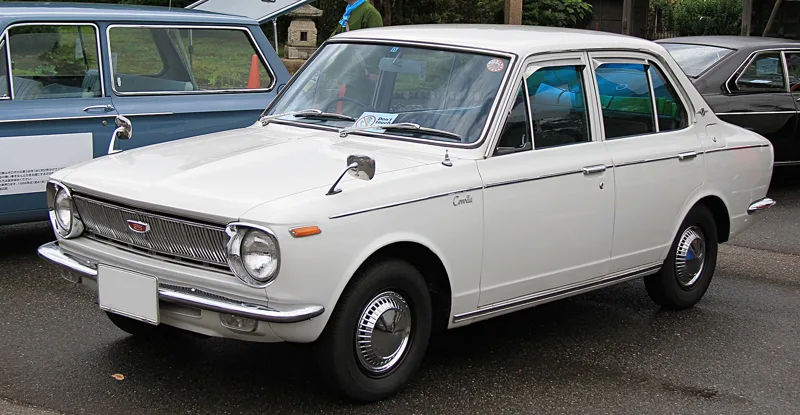
Japanese manufacturers took a different route. Instead of a single vehicle under many brands, they sold distinct versions through multiple dealer networks. Toyota offered the Corolla only at Corolla Store locations, and the Sprinter at Auto Store locations. Nissan sold the Cedric through Bluebird Store dealers and the identical Gloria through Prince Store dealers. Honda ran the Accord through one network and renamed it Vigor for another, while the Vigor became the Inspire for the first.
In time this produced separate vehicles for export. In North America the Sprinter went on sale as the Chevrolet Nova, then the Geo Prizm. The Honda Vigor and Inspire became the Acura Vigor and TL, and Nissan's Gloria became the Infiniti M45.
China's joint-venture rules
Foreign manufacturers building cars in China had to form joint ventures with local firms, and before 2022 the government limited each foreign investor to two. Larger companies often set up a pair to widen their reach: Toyota with FAW and GAC, Ford with JMC and Changan, Volkswagen with SAIC and FAW, and Honda with Dongfeng and Guangqi. To share the production and sales rights between the two partners, makers borrowed Japan's solution and built the same model under two names with small bodywork changes.
GAC Toyota produced the Levin as a twin of the FAW Toyota Corolla, and the Wildlander as an alternative to the RAV4. Honda spread models between its two ventures, creating the Breeze from the CR-V, the Elysion from the Odyssey and the XR-V from the HR-V. Rebadging can also run the other way: the second-generation Chevrolet Captiva is an export version of the Baojun 530, and the Ford Territory is a reworked Yusheng S330 developed by Jiangling Motors.
Giving old tooling a second life
A car near the end of its life can be moved to another brand, usually in the same group, to stretch its life cycle. The SEAT Exeo was an Audi A4 B7 with new styling and a new badge. When A4 B7 production ended, the tooling was dismantled at Audi's Ingolstadt plant, shipped to SEAT's factory at Martorell in Spain and installed again. Similar cases are the Dongfeng Fengdu MX6, built after the near-identical Nissan X-Trail (T31) ended, and the Maruti Suzuki Zen Estilo, based on the recently discontinued Suzuki MR Wagon. The advantage is amortized tooling costs, which allow a higher margin, a lower price, or both.
Luxury versions
Premium marques often borrow from mainstream ones, upgrading features, technology or styling and sometimes the drivetrain. A more contentious case was the Aston Martin Cygnet, a Toyota iQ city car in new clothes, meant to help the maker meet EU emissions rules. It received model-specific trim and a luggage set, and its price nearly tripled that of the iQ. Volkswagen Group under Ferdinand Piech sometimes did the reverse, engineering the plush model first and then stripping features out for humbler marques, as with the Lamborghini Gallardo and Audi R8, or the Audi A4 and Volkswagen Passat.
Rebadged cars compared
| Original car | Sold as | Reason |
|---|---|---|
| Nash Ajax (1926) | Nash Light Six | Move to a respected brand |
| BMC ADO16 (1962) | Morris, MG, Austin, Wolseley, Riley, Vanden Plas | Keep each brand's loyal customers |
| Honda Odyssey | Isuzu Oasis | Fill a gap in the range |
| Dodge Grand Caravan | Volkswagen Routan | Enter the minivan segment without a full redesign |
| Toyota Sprinter | Chevrolet Prizm | Joint venture |
| Audi A4 B7 | SEAT Exeo | Reuse tooling after production ended |
| Toyota iQ | Aston Martin Cygnet | Help meet EU emissions rules |
| Perodua Myvi | Daihatsu Sirion (Indonesia) | Export from 2007 |
Perodua and Daihatsu: rebadging at national scale
Perusahaan Otomobil Kedua Sendirian Berhad, whose name means Second Automobile Company, is better known as Perodua. It is Malaysia's largest car maker, ahead of Proton Holdings. The company was founded in 1993 and launched its first car, the five-door Kancil hatchback, in August 1994. At first it built minicars and superminis in segments Proton did not serve, though their markets later overlapped, notably in small cars, where the Myvi competes with the Proton Savvy and Iriz.
The crux of the Perodua story is that the company has not designed or engineered its major components in-house, engines and transmissions among them. Historically its cars have relied on Daihatsu component designs. Daihatsu held 20% of Perodua at its launch, raised that to 25% in 2001 and then to 35%. In 2004 Perodua also began assembling the Toyota Avanza at its Rawang plant for Malaysian customers.
The Myvi shows the pattern running the other way. Since 2007 Perodua has exported it to Indonesia as the Daihatsu Sirion, and in 2020 that trade made up 55 percent of the company's exports.
Perodua's sales
The model works commercially. Perodua sold more than 207,100 vehicles in 2016, its record at the time, and took a domestic market share of 35.7%, its highest ever. The total has risen since: in 2024 it sold 358,000 cars across the ASEAN markets combined, passing Honda to become the region's second-largest car maker.
The United Kingdom was a modest outpost. Some Proton dealers sold Perodua cars to customers seeking a smaller and cheaper alternative. Sales numbers were small: 914 in 2002, 624 in 2008, 650 in 2009 and 761 in 2010, helped by the new Myvi. Perodua has since left the British, Nepalese and Maltese markets, although spares are still supplied to existing owners. As of 2025 exports go to Singapore, Brunei, Mauritius, Fiji, Sri Lanka and the Seychelles.
Where this goes next
In 2021 Perodua started exploring the export of used cars. By 2024 a few countries, Fiji among them, were receiving them, and shipments to Sri Lanka had stopped. Elsewhere the picture is shaped by rules: China's limit of two joint ventures per foreign investor applied only before 2022.
What this means when you buy a car
For a buyer, the practical lesson is that a different badge does not always mean a different car. A Tahoe, Yukon and Escalade share a body, and Toyota sold its Corolla and Sprinter through different dealer networks under different names. Brands do try to differentiate, since consumers are usually interested in each brand's focus on distinctive styling and driving character. Where the badge is one of the ways a maker keeps customers loyal, as in the BMC years, knowing what sits underneath helps you judge what you are really paying for.