A turbocharged 1.6 that won its class eight years running and a 1960s Japanese straight-six that fed a race engine: two unrelated families, one name.
The Prince is a family of 1.4 to 1.6 litre all-aluminium petrol fours built by BMW and PSA from 2006, with turbo versions in Minis, BMW 1 Series and Peugeot-Citroen cars. The Prince G was an unrelated Japanese series of OHV and OHC fours and sixes from 1955.
In June 2014 the turbocharged 1.6 litre Prince engine won the International Engine of the Year award in its class for the eighth year in a row. In the same year it beat the new BMW B38, the three-cylinder that was already lined up to replace it in Mini and BMW cars. That sums up the career of the Prince: widely praised, quietly retired. The name has a second life, too. The Prince Motor Company, a Japanese maker, built a series of Prince G engines in the 1950s and 1960s, and the two engine families have nothing to do with each other.
BMW Prince engine: a joint design with PSA
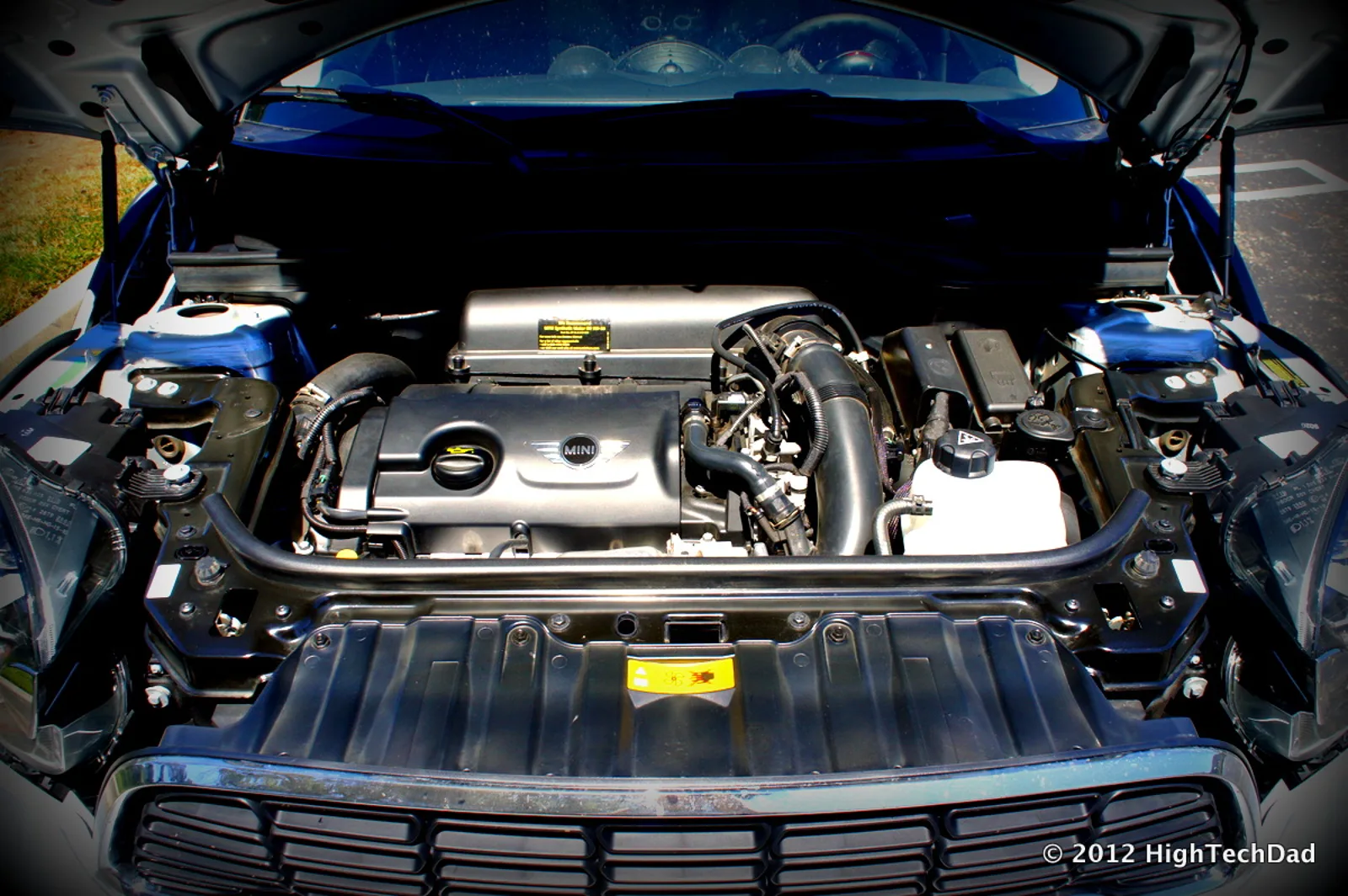
"Prince" is a codename, and it covers a range of all-aluminium petrol fours with 16 valves that BMW and PSA Peugeot Citroen developed together. The engines vary valve lift and timing, span 1.4 to 1.6 litres in size and bring modern touches such as direct injection and turbocharging. BMW and PSA announced the cooperation on 23 July 2002, and the first engines were built in 2006. PSA makes the engine's components at Douvrin, France, while MINI and BMW engine assembly takes place at Hams Hall in Warwickshire, UK.
The Peugeot 207 was the first PSA car to receive the Prince, which started to replace part of PSA's TU engine family; the EB engine replaced the rest. In the Mini range it succeeded the Tritec family and arrived in 2006. In 2011 it reached BMW itself, in the F20 and F21 114i, 116i and 118i, the first time a Prince sat longitudinally in the engine bay. In late 2006 the two groups said they would extend their cooperation with new four-cylinder engines, though they gave no details.
BMW's turbo Prince was the company's first turbocharged petrol four-cylinder since the 2002 Turbo ended in 1974.
How the Prince engine is built
The Prince shares its basic block dimensions with the older PSA TU engines, but BMW directed the engineering. On the intake side it uses BMW's Valvetronic variable valve lift, together with a flow-controlled oil pump, a timing chain, a single belt for all the ancillary units, composite camshafts and a cylinder head made by lost-foam casting. An on-demand water pump is also fitted. The higher-power versions add direct injection and a twin-scroll turbocharger, which splits the exhaust flow into two paths so the turbo spins up sooner.
The cylinders of every Prince are spaced 84 mm apart (3.31 in) and bored out to 77 mm (3.03 in). Stroke on the 1.6 is 85.8 mm (3.38 in), and a crankcase made in two pieces, an aluminium bedplate, adds stiffness.
The PSA Prince engines: 1.4, 1.6 and THP
The smallest member is the 1.4 litre EP3 and EP3C, with a 75 mm stroke and 1,397 cc. Depending on the car, it makes between 70 and 72 kW (95 and 98 PS). It was fitted to the Peugeot 207, the Mini One, the Peugeot 308 and 208, and the Citroen C3, C3 Picasso and DS3.
The 1.6 litre comes in two broad forms. The naturally aspirated EP6 and EP6C displaces 1,598 cc and keeps ordinary fuel injection, with heads made by lost-foam casting. At an 11:1 compression ratio it reaches 88 kW (120 PS) by 6000 rpm, redlines at 6500 rpm and delivers 160 N-m at 4250 rpm. It powered the Mini Cooper from 2007 to 2015 and many Peugeot and Citroen models, including the 207 Sport, 308, 3008, 508, C4, DS 3 and DS 4.
The turbocharged 1.6 adds direct injection and special low-pressure die-cast heads. It first came as the THP150 and THP175, known inside Peugeot as the EP6DT and EP6DTS. The THP150 has 110 kW (150 PS) on tap at 5500 rpm and its 240 N-m arrives early, at 1400 rpm. A later THP163 raises power to 121 kW (165 PS) with the same torque, and went into the Peugeot 408 and 3008 and the Citroen C4 Grand Picasso, among others. The THP175 makes 129 kW (175 PS), with 247 N-m starting at 1600 rpm and staying level to 5000 rpm. An overboost function can briefly raise torque to 260 N-m, between 1700 and 4500 rpm, when the car is in third to fifth gear. It was used in the Peugeot 207 RC, the Mini Cooper S, the 308 and the Citroen DS3 Racing.
Higher-output THP engines
In 2010 Peugeot launched a 200 PS (147 kW) THP, the EP6CDXD, with 275 N-m at 1700 rpm. It combined direct injection, a twin-scroll turbocharger and Valvetronic lift control. It first appeared in the RCZ, where it makes 150 kW (204 PS), and went on into the 308 GTi, DS 4 and 208 GTi. A later Peugeot 3008 GT Hybrid4 pairs the engine with electric power for 221 kW (300 PS).
The 2012 to 2014 Mini John Cooper Works GP got a bigger turbo and altered internals, which produced 160 kW (218 PS), peaking at 6000 rpm, and 280 N-m across a band from 2000 to 5100 rpm. PSA has since developed Euro 6 versions, from the 132 kW (180 PS) EP6FADTXD in the Peugeot 508 and 3008 to the 184 kW (250 PS) and 199 kW (270 PS) EP6FDTR of the 308 GTi, and a 199 kW (270 PS) EP6CDTR for the RCZ.
Stellantis showed a third generation in 2024, the EP6LTCHPD. On its own it has 110 kW (150 hp) at 5500 rpm and 300 N-m at 2000 rpm. A dual-clutch automatic with seven speeds and a 92 kW electric motor built in takes the pair to 195 hp and 350 N-m, in plug-in hybrids from Peugeot, Opel, Citroen and Jeep. In 2025 Stellantis revealed a North American version, the EP6CDTX, at 210 hp, for non-plug-in hybrids on its STLA Medium and STLA Large platforms, beginning with the 2026 Jeep Cherokee.
BMW N13 and the Mini N14 and N18
BMW's own turbocharged 1.6 is the N13, built from 2011 to 2016. It took over from the naturally aspirated N43, and no BMW four-cylinder petrol engine had been turbocharged since the 2002 Turbo went out of production in 1974. It sat below the larger N20 turbo four in the range, and the three-cylinder B38 stepped in as its effective successor. Outputs ranged from 75 kW in the 114i to 100 kW in the 116i and 316i, 125 kW in the 118i and 320i ED and 130 kW in the 2015 to 2016 120i.
Mini's versions are the N14 and N18. The N18 followed the N14 from 2010 and has double Vanos. Both share direct fuel delivery with a twin-scroll turbocharger, and Valvetronic variable lift. The N14 made 128 kW (171 hp) in the 2007 to 2010 Cooper S and 155 kW (208 hp) in the 2009 to 2013 John Cooper Works Cooper, and the N18 made 135 kW (181 hp) in the 2011 to 2013 Cooper S. Naturally aspirated Mini versions were the N12 and later N16, with 88 kW and 90 kW.
Saab, recalls and the end of Mini production
On 29 September 2010 BMW said it would supply the turbo 1.6 to Saab from 2012, mainly for the 9-3. Saab's closure meant supply never started, but the Saab PhoeniX concept at Geneva in 2011 carried the engine at 147 kW (200 PS).
There were problems. Several recalls and extended warranties covered failing high-pressure fuel pumps, and a 2013 service bulletin addressed failing timing chains and chain tensioners, both designed by BMW. Mini production of the Prince was set to end by 2016, in favour of the B37, B38 and B48. A 2015 announcement on the Hong Kong Stock Exchange said BMW had agreed an IPR deal with XCE, which would build the N18 TVDI in China for Brilliance Automotive and other Chinese makers. PSA intended to keep working on the higher-power models, planning production in China with its partners Dongfeng (DPCA) and Changan (CAPSA). The Dundee plant is due to build a new hybridised version from 2025, first for the new Jeep Cherokee.
Prince G engines: the Japanese series
The Prince G-series was the only family of straight-fours and straight-sixes made by the Prince Motor Company, and production began in 1955. Some had overhead valves and some overhead cams, and a 1.9 litre (1,862 cc) four-cylinder diesel called the D-6 was also built. Skyline, Laurel and Gloria models carried G engines from the 1950s into the early 1970s. Nissan made a G series of its own before it merged with Prince, but the engines are unrelated.
Before the G came odd experiments. In 1956 Prince built a 601 cc flat-two, the FG2D, for the DPSK concept. It made 24 hp but shook and made too much noise, and it gave way to the FG4C, a 599 cc flat-four with 38 hp, used in the 1957 CPSK concept.
The straight-fours
The first production fours were 1.5 litres (1,484 cc), with a 75 by 84 mm bore and stroke and overhead valves. The FG4A-10 made 46 PS in the Prince Sedan AISH, and the FG4A-20 made 53 PS. The FG4A-30 made 61 PS and was renamed GA-30 in 1958, and the 71 PS GA-4 of 1959 shared mechanical similarities with an engine used in the Subaru 1500. Bigger 1.9 litre versions, the GB-30 and GB-4, measured 84 by 84 mm and made 81 and 95 PS, and powered the Gloria. The G-1 was an improved GA-4 with 73 hp, and the 1962 G-2, a 1.9 litre with a 2-barrel carburettor, made 96 hp for the Gloria S40.
The most advanced four was the SOHC G-15 of 1967. With a bore and stroke of 82 by 70.2 mm and 1,483 cc, it made 88 PS in the Skyline. With a crossflow head, valves canted in a V and a multi-spherical combustion chamber, it was judged by one assessment to be the most advanced Japanese car engine of its era, even beyond Nissan's L series. The C110 Skyline of 1972 brought its end. The G-16 and G-18 followed. Meeting stricter US emissions rules was judged too expensive for the 1.6 litre G-16, which gave way to the Nissan L16 in 1975, and the 1.8 litre G-18 was replaced by the L18 for the same reason.
The straight-sixes and the R380 engine
The Prince straight-sixes all used single overhead cam heads, and displacement stayed under 2000 cc to limit annual road tax. The 2.0 litre G-7 powered the GT versions of the Skyline. It had a square 75 mm bore and stroke and made 106 hp with a 2-barrel carburettor, or 127 hp with three twin-barrel Webers in the 1965 Skyline GT-B. The Mercedes-Benz M180 straight-six influenced it, but its manifolds sit on the left because Japanese drivers sit on the right. A crossflow racing version, the G7B-R, ran in the S54 Skyline GT in 1965 and 1966 but was never sold. The 2.5 litre G-11 made 134 hp for the Grand Gloria S44P.
The GR-8 was a racing engine derived from the G7 for the Prince R380 and Nissan R380-II. It was a 2.0 litre with double overhead cams, four valves per cylinder and 11.0:1 compression, and it made more than 200 PS at 8400 rpm. Three Weber 42DCOE-18 carburettors fed it, for claimed outputs of 200 hp in the R380 and 220 hp in the R380-II. The R380-III used mechanical fuel injection. Nissan later derived its S20 from the GR-8.
Prince and Prince G compared
| Family | Maker | Layout | Period | Notable fitments |
|---|---|---|---|---|
| Prince | BMW and PSA Peugeot Citroen | All-aluminium straight-four, 1.4 to 1.6 litres | 2006 onward | Mini Cooper S, BMW 1 Series, Peugeot 207 and 308, Citroen DS3 |
| Prince G | Prince Motor Company | Straight-fours and straight-sixes, OHV and OHC | 1955 to the early 1970s | Skyline, Laurel, Gloria |
| Prince GR-8 | Prince, later Nissan | 2.0 litre DOHC racing engine | R380 racing programme | R380 and R380-II |
Which new models use the Prince engine from 2026?
The North American EP6CDTX is listed for the 2026 Jeep Cherokee, the 2027 Chrysler C6X crossover and the 2028 North American Jeep Compass. A hybridised version is due to be built at Dundee from 2025, first for the new Jeep Cherokee.