Germany builds nearly four million cars a year, and France once led the world; here is how the two industries grew, collapsed and rebuilt, and which makers sit where now.
Germany has the larger car industry, with annual output close to four million and a 31.5% EU share in 2017. France was the 11th-largest automaker by 2015 unit production but led the world in 1903. Germany's Beetle and 911 and France's DS all placed in the Car of the Century top five.
The Citroen DS, the Volkswagen Beetle and the Porsche 911 took third, fourth and fifth places in the Car of the Century vote: one French car, two German. Both countries built their industries on the same invention, the engine that burns fuel inside a cylinder. They have been swapping ideas, plants and rivals ever since.
The two histories mirror each other. France led the world in 1903 and slid down the table, while Germany shed all but a dozen of its car makers in the Depression and came back stronger. Today they sit among the largest producers in Europe, and their best-known cars keep reappearing in each other's stories.
Which is the bigger car industry, Germany or France?
Germany, by some distance. It ranks third in the world for car production and seventh for all motor vehicles combined. Yearly output is close to four million, and in 2017 Germany accounted for 31.5% of the European Union's total. By 2015 unit production France ranked 11th among the world's automakers, and it was third in Europe behind Germany and Spain.
Both are large employers. Germany had a workforce of more than 857,336 in the industry in 2016, and French manufactured vehicles account for 16% of the sales of French manufactured products. Between 1945 and 2000 France was consistently the fourth-largest automaker in the world.
Prizes tell a different story from output. No country's designs have collected more European, International and World Car of the Year trophies than Germany's, while French designs have taken the European and World honours many times too.
France led the world in 1903 with nearly half of all cars built; by 1936 it ranked third in Europe, behind Germany and Britain.
How did the German car industry begin?
In the late 1870s Karl Benz and Nicolaus Otto each built four-stroke engines that burn fuel inside the cylinder. Benz fitted his design to a vehicle in the 1880s, which led to the modern motor car. By 1901 Germany was making about 900 cars a year. Daimler-Benz formed in 1926 from the predecessors of Karl Benz and Gottlieb Daimler and sold its cars as Mercedes-Benz. BMW, founded in 1916, did not start building cars until 1928.
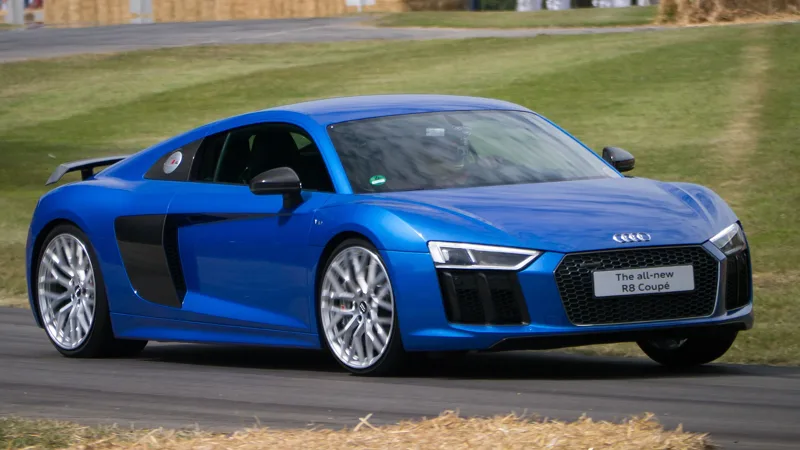
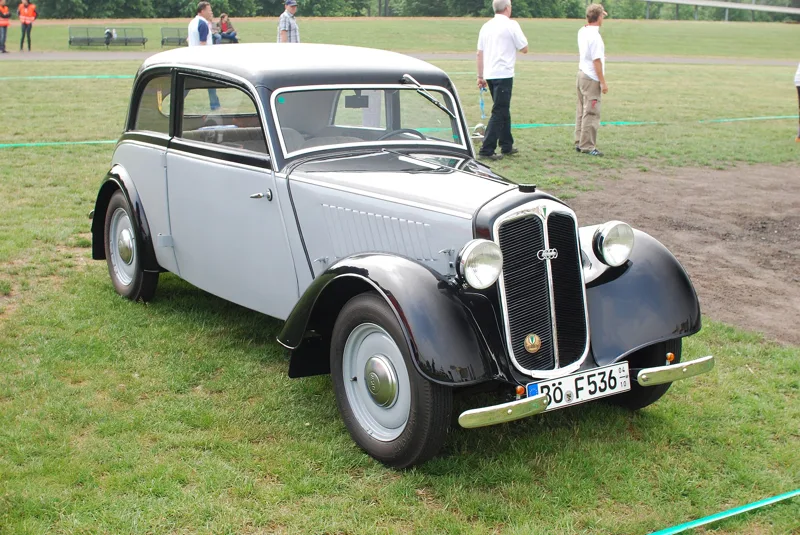
The 1920s left the industry fragile, and American companies moved in. General Motors took over Opel in 1929, while Ford had run its German subsidiary, Ford-Werke, since 1925. Then the Depression struck: of eighty-six car companies that had existed in the 1920s, barely a dozen survived, among them Daimler-Benz, Opel and Ford's Cologne factory. In 1932 four makers, Horch, DKW, Wanderer and Audi, joined as Auto Union, which led Germany's recovery.
After the Nazi Party took power in 1933, the government made motorisation a policy. The first Autobahn was completed in 1935, and a project to build a robust, inexpensive people's car produced the Volkswagen Beetle, presented in 1937. A city, called Wolfsburg from 1945, grew up around the factory to house its workforce. In 1940 Volkswagen switched to military output.
How did Germany rebuild its car makers after 1945?
Most factories were destroyed or badly damaged by the end of the Second World War, and in the east the Soviet Union dismantled much of the surviving machinery as reparations. Yet the Wolfsburg plant was building the Beetle again in 1945. VW had made one million by 1955 and 10 million by 1965, as the car sold well both at home and abroad.
Others restarted from pre-war designs. Mercedes-Benz resumed with the 170 series in 1946, adding the 220 and 300 series in 1951. Opel revived the Olympia in 1947 and the Kapitan in 1948, though the Soviets took the tooling for the Opel Kadett and used it to make the Moskvitch 400-420. Ford began building the pre-war Taunus in 1948. That year Porsche began its 356 sports car, which it replaced in 1964 with the 911, still in production more than 50 years and several generations later.
New and revived names followed: Borgward in 1949, Goliath, Lloyd, Gutbrod and Auto Union (DKW) in 1950, the luxurious BMW 501 and 502 in 1952 and NSU's return in 1957. In the east, Eisenacher Motorenwerk, which started with pre-war BMW designs because the plant had once belonged to BMW, made the Wartburg, and Sachsenring in Zwickau made the IFA F8 and the Trabant. Both kept going until the early 1990s, after reunification.
Microcars filled the middle of the 1950s. The bubble car craze was led by BMW with the Isetta and 600, plus the Zundapp Janus, the Heinkel Kabine and Messerschmitt's KR175 and KR200. By 1970 the concept had been abandoned.
Consolidation followed. BMW ran into financial trouble in the late 1950s and the Quandt family took control, and it bought Glas in 1966. Borgward collapsed in 1961. Daimler bought Auto Union in 1958 and sold it to Volkswagen in stages from 1964 to 1966, when the DKW marque ended and the Audi name was revived. Volkswagen took over NSU in 1969, and the NSU name vanished by 1977 when the Ro80 rotary saloon went out of production.
How did the Golf and Audi reshape German cars?
Volkswagen hit trouble in the early 1970s, with an ageing Beetle still selling worldwide but newer models lagging. The recovery came with a trio of front-wheel-drive hatchbacks: the Passat in 1973, the Golf in 1974 and the Polo in 1975. The layout had been patented by Renault with the R16 in 1965. The Golf was seen as the eventual Beetle replacement, and most leading makers had a similar hatchback by the early 1980s. German Beetle production ended in 1978, though Mexico and Brazil kept building it until 2003.
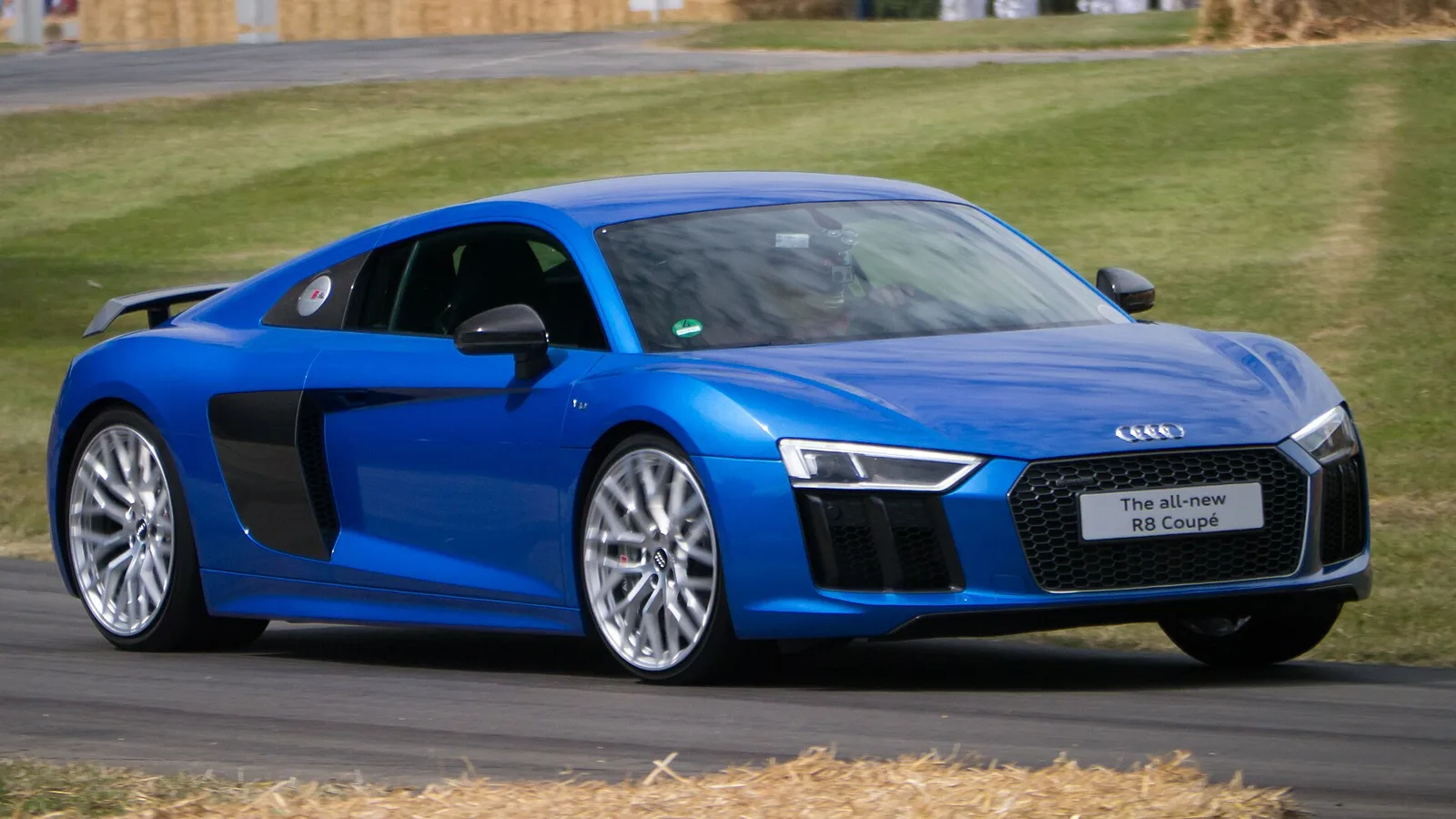
Audi rode the same wave. Its 100 range launched in 1968, and the 80 of 1972 was voted European Car of the Year for 1973. The Polo was in fact a rebadged Audi 50. In 1980 Audi entered the sports car market with its front-drive Coupe and the four-wheel-drive Quattro, and the Quattro system later spread to Audi saloons.
Opel and Ford, both American-owned, shaped German roads too. General Motors integrated Opel with Vauxhall so the two shared designs, moved the Kadett to front-wheel drive in 1979 and opened a Zaragoza plant in 1982 for the Opel Corsa. The Kadett was European Car of the Year in 1984 and the Omega in 1986. Ford launched the Fiesta in 1976, the front-drive Escort in 1980 and the Sierra in 1982, and built the Scorpio in Cologne from 1985. VW updated its range through the 1980s, with the Golf Mk3 winning European Car of the Year in 1991 and a new Beetle, built in Mexico, arriving in 1998.
How did the French car industry begin?
France had the earliest start. Nicolas-Joseph Cugnot built the first self-propelled mechanical vehicle in 1769. Jean Joseph Etienne Lenoir developed an internal combustion engine in 1859, and Edouard Delamare-Deboutteville is credited with the first petrol-powered automobile in 1884. Amedee Bollee and Leon Serpollet built steam vehicles, Panhard et Levassor was established in 1887 and produced its first car in 1891, and Armand Peugeot made a four-wheeler with a Daimler engine in 1890.
Others followed: De Dion and Bouton with a single-cylinder engine in 1894, Delahaye the same year, and the Renault brothers, who sold their first car in 1898. In 1903 France led the world, turning out 30,124 cars (nearly 49% of the global total) while the United States made 11,235. Citroen was founded in 1919, and annual production peaked at 253,000 passenger cars in 1929, a level not matched until after the Second World War.
Why did France slip down the table?
By 1933 French output had dropped to 140,635 cars and Britain, with 220,775, took Europe's top position, although France still had a larger fleet of cars on the road, at 1,448,000, against 1,210,880 in Britain and 510,680 in Germany. In 1936, with strikes and economic paralysis in the middle years of the decade, France fell from second to third among European producers with 204,000 cars, behind Germany's 213,117.
After the war the state took charge. Renault became state-owned in 1945, and the Pons Plan favoured a select group of manufacturers and imposed a punitive tax on bigger engines. By the mid-1950s that tax had helped to end the grand touring makers, including Bugatti, Delage, Delahaye, Hotchkiss, Salmson and Talbot-Lago.
Which French cars set the pace after 1945?
The Renault 4CV came in 1946 and the Citroen 2CV in 1948, a small front-wheel-drive saloon sold as a people's car in the same spirit as the Beetle. The Peugeot 203 also appeared in 1948. In 1955 Citroen launched the DS, with disc brakes and self-levelling suspension; it lasted 20 years and sold more than 1.4 million.
The Renault 4 of 1961 was a small estate aimed at the 2CV, the Beetle and BMC's new Mini, and the Renault 16 of 1965 became the first production large family hatchback and a European Car of the Year. The Renault 5 of 1972 was France's first small hatchback. Renault's Espace of 1984 was the first volume people carrier built in Europe. Peugeot's 205 of 1983, styled by Pininfarina, and the 405 of 1987 also won acclaim, with the 405 voted European Car of the Year.
Production endings marked the eras. The 2CV left French assembly lines in 1988 after 40 years, continuing in Portugal until 1990. The Citroen CX was replaced by the XM in 1989, and the XM was voted European Car of the Year. Renault's Clio arrived in 1990 and took the same title.
How did Citroen's bankruptcy create today's French groups?
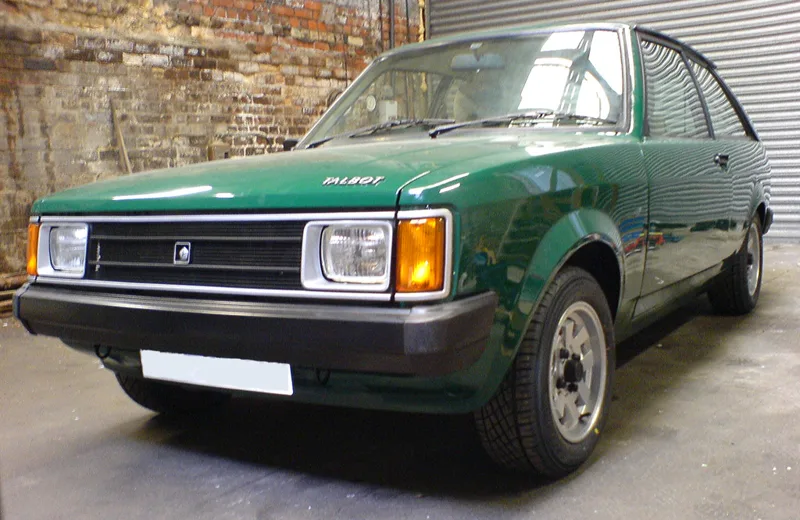
Citroen's new CX was voted European Car of the Year in 1974, yet the company filed for bankruptcy that year. It had taken over Maserati in 1968, and Maserati was sold off. In 1975 Citroen was saved by merging into Peugeot. In 1978 PSA Peugeot Citroen took over Chrysler's European division, covering Simca in France and the old Rootes business in Britain, and in 1979 it discontinued the Simca marque after 45 years and revived the Talbot name for the former Chrysler range.
Who makes cars in France now?
Two big groups dominate. Stellantis owns Peugeot, Citroen, DS and Opel/Vauxhall, with roots in PSA. Renault Group owns Renault, Alpine and Dacia and 43% of Nissan, and was the third-largest automaker in Europe and the tenth in the world in 2015. Toyota runs a factory in France making small passenger cars. Lower-volume names include Bugatti, a Bugatti Rimac marque based in Molsheim, the small sports car maker Venturi, and the microcar brands Aixam, Mega, Microcar and Ligier. Renault Trucks, based in France, is owned by Volvo.
French makers once dominated francophone Africa, but from the 1970s the Japanese gained ground thanks to lower prices and suitable light off-road cars and trucks.
German and French car industries side by side
| Detail | Germany | France |
|---|---|---|
| World ranking | Third in car production, seventh in all motor vehicles | 11th-largest automaker by 2015 unit production |
| Position in Europe | 31.5% of EU output in 2017 | Third, after Germany and Spain |
| First engines | Four-stroke engines by Benz and Otto, late 1870s | Cugnot's vehicle in 1769, Lenoir's engine in 1859 |
| Best-known marques | Mercedes-Benz, BMW, Audi, Volkswagen, Opel, Porsche | Peugeot, Citroen, Renault, DS, Alpine, Dacia, Bugatti |
| People's car | Beetle, 10 million built by 1965 | Citroen 2CV from 1948 |
| Car of the Century | Beetle 4th, Porsche 911 5th | Citroen DS 3rd |
What does the German and French divide mean for buyers?
National lines blur. Opel and Vauxhall, long German and British names under American ownership, now sit inside Stellantis alongside Peugeot and Citroen. Dacia belongs to Renault Group, and Bugatti is based in Molsheim in France, a town that was in Germany when Ettore Bugatti founded the company there in 1910. Audi's roots lie in Auto Union, and the Polo began as a rebadged Audi.
Both countries also produced a cheap people's car, the Beetle presented in 1937 and the 2CV introduced in 1948. Both moved to the front-wheel-drive hatchback in the 1970s, the Renault 5 arriving in 1972 and the Golf in 1974, on a layout Renault had patented with the 16 in 1965.