After 16 hours of talks, the EU agreed to end new petrol and diesel sales from 2035; hybrids, e-fuels and calls for review have kept the debate open since.
Under the EU rule, new cars and vans sold from 2035 must produce no CO2, so new petrol and diesel sales effectively stop. Ministers agreed in June 2022 and Parliament signed off in February 2023. Hybrids and e-fuels are the main arguments, and Italy, France and Poland have pushed for changes. Cars already owned stay legal.
It took 16 hours of talks, ending on 29 June 2022, for all 27 climate ministers of the European Union to agree a rule that would effectively end the sale of new petrol and diesel cars from 2035. Germany had said a week earlier that it would refuse. Since then Italy and Poland have pushed back against parts of the package, France had already objected over hybrids, and many drivers now ask whether the 2035 deadline will really hold.
What is the EU 2035 combustion ban?
The Commission put forward, in July 2021, a plan to cut emissions from new cars and vans by 100 percent as of 2035. It was one part of the Fit for 55 package, a set of laws designed to cut the EU's greenhouse gas emissions by 55 percent by 2030, itself a step on the way to climate neutrality by 2050 under the European Green Deal. The European Parliament voted in favour on 8 June 2022, member states agreed on 29 June, and Parliament approved the finished law, which requires new cars and vans to emit no CO2 from 2035, on 14 February 2023.
The rule does not name petrol or diesel. It sets a target of zero CO2 for new cars and vans, which in practice rules out new internal combustion vehicles. Governments favour this kind of measure because it offers a simpler compliance target than a carbon tax. The regulation is also about new sales. Bans of this type typically leave existing vehicles legal to drive on public roads once they take effect.
The rule targets zero CO2 from new cars and vans; it does not name petrol or diesel, and it does not confiscate cars already on the road.
Will petrol cars be banned in 2035?
Under the law as passed, putting a new petrol or diesel car on sale in the EU becomes effectively impossible from 2035. Cars already on the road would not be confiscated. Whether you can drive one is a separate matter, because many European cities use low-emission zones (and in France a Crit'air air-quality sticker) to restrict where polluting vehicles can go, and those zones keep multiplying, growing and tightening. Some bans in Italy, Germany and Switzerland switch on only at certain hours, in winter or during smog alerts.
Hybrids sit in a grey area, and they were at the centre of the argument. France opposed a ban on combustion cars in July 2021, hybrids in particular. When Germany backed the 2035 target in June 2022, it asked whether hybrids or fuels with no net CO2 might qualify too. Frans Timmermans replied that the Commission was keeping an open mind, though at that point hybrids were not cutting emissions enough and other fuels cost far too much.
| Country | When | Position taken |
|---|---|---|
| Denmark | 2018 and October 2019 | Proposed an EU-wide petrol and diesel ban, which proved contrary to EU rules; later proposed a 2030 phase-out among member states, backed by 10 others |
| France | July 2021 | Opposed a ban on combustion cars, hybrids especially |
| Germany | June 2022 | Finance minister Christian Lindner said the government would refuse, then it backed the target and asked about hybrids and CO2-neutral fuels |
| Poland | August 2023 | Filed complaints at the European Court of Justice against parts of Fit for 55 |
| Italy | September 2024 | Industry minister called for the 2035 ban to be reassessed, with an earlier review and a more gradual transition |
Why is the 2035 rule being questioned?
The pressure comes from several directions. Italy's industry minister asked in September 2024 for a reassessment, pressing for more flexibility in reaching decarbonisation goals. Poland claimed that EU climate policy threatens its economy and energy security. On the other side, Greenpeace criticised the package as too weak to halt global warming, objecting in particular to the sale of non-emission-free cars up to 2035.
Industry and jobs enter the picture as well. Modelling for the Fit for 55 package points to a net gain of 204,000 jobs by 2030, on top of baseline growth of 6.7 million jobs, though effects will differ by region, with eastern Europe likely to lose out where economies lean on carbon-intensive industries. Another change looms for fuel buyers: a new emissions trading system, ETS2, is due to start in 2027 and will, for the first time, price CO2 from fuel burned in buildings and on the road.
Which changes are being discussed?
Two ideas raised in 2022 remain the live questions: whether some hybrid cars would be allowed beyond 2035, and whether cars running on CO2-neutral fuels could count.
What are e-fuels, and could they save the petrol engine?
E-fuels are synthetic fuels made from captured carbon dioxide and hydrogen split from water by electrolysis. They are 'drop-in' replacements, chemically identical to their fossil equivalents, so existing engines, pipelines, tankers and filling stations can use them. Imagine brewing petrol from air, water and a great deal of electricity. When the fuel is burned, it releases about the same amount of CO2 that was captured to make it, which gives a low overall carbon footprint on paper.
The sticking point is efficiency. Because energy is lost turning electricity into fuel and the fuel into motion, a car running on e-fuel needs three to five times more electricity than a battery electric car. The eFuel Alliance, an advocacy group, argues that this misses the point: in places with abundant wind and sun, electricity is cheap, and it puts the overall efficiency ratio at 1.6 rather than the 5 to 7 sometimes quoted. Transport and Environment, another advocacy group, counters that e-fuels in cars are five times less efficient than direct electrification and still emit methane and nitrous oxide. These claims conflict.
How much would e-fuel cost?
A 2018 study by Agora Verkehrswende found that synthetic fuel plants need 3,000 to 4,000 full-load hours a year and very cheap electricity to compete. It estimated that production with solar power in North Africa and the Middle East could reach 0.96 euros per litre by 2030. Another 2018 report, by Prognos and partners, put manufacturing costs at 0.70 to 1.30 euros per litre by 2050, both before tax. Earlier research had put Porsche's cost at forty-five dollars a gallon. European rules also define a stricter class of e-fuel called RFNBO, which demands new unsubsidised renewable power plants in the same bidding zone as the fuel plant, with power and fuel production running at the same time.
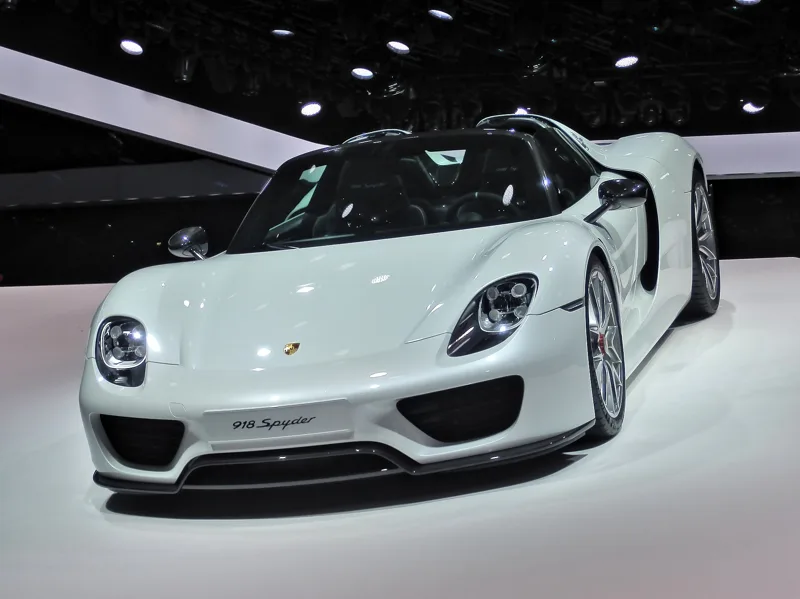
Carmakers are testing the water. In September 2023 Stellantis said it would approve the use of electrofuels in 28 million vehicles in Europe, after tests with Saudi Aramco on 24 engine families fitted in Europe since 2014, and it expects a saving of as much as 400 million tonnes of CO2 over the period to 2050. Audi announced e-diesel and e-gasoline projects in 2021. In December 2022 Porsche opened its Haru Oni pilot, in Punta Arenas, Chile, making about 130,000 litres of e-fuel a year at first, with plans for 55,000,000 litres a year by 2026 and 550,000,000 by 2028.
Why do governments want to phase out combustion engines?
Three reasons recur. One is cutting health risks from pollution, notably diesel particulates and nitrogen oxides. Another is hitting national greenhouse gas targets set through international deals, including Kyoto and Paris. The third is energy independence. Critics add a caution: swapping petrol cars for electric ones still takes up a large share of urban land, which is why some cities look to cycling, walking and car-free streets as a partial alternative.
The battery question comes up often. A 2020 study from Eindhoven University of Technology found that the manufacturing emissions of new electric car batteries are much smaller than a 2017 IVL study had assumed (around 75 kg of CO2 per kWh), and that lithium batteries last at least 12 years at 15,000 km a year, which makes them cleaner than diesel or petrol cars.
How would the EU rewrite a law like this?
Slowly, and in public. The Commission sends proposals to the Council and to the European Parliament. In the Council, representatives of all 27 member states first discuss them in expert-level working parties, and the Permanent Representatives Committee then prepares the ground for a meeting of ministers. Once ministers, Parliament and the Commission have settled their positions, three-way negotiations known as trilogues begin. Fit for 55 went through that route, and any change to the 2035 rule would too.
How does the EU compare with the rest of the world?
The 2035 deadline is not unique to Europe. At the 2021 Glasgow climate conference, governments and companies signed a non-binding declaration aiming for every new car and van to have no tailpipe emissions: by 2035 in leading markets, by 2040 across the world. The United States, China and Germany did not sign, and neither did Volkswagen, Toyota, Renault-Nissan or Hyundai-Kia. California's plan sets zero-emission shares of 35 percent in 2026, 68 percent by 2030 and 100 percent by 2035.
Norway shows what incentives can do without a ban. Electric cars made up 98 percent of its new sales in December 2025, and January 2026 saw just seven new petrol cars sold there, against more than 2,000 battery electric cars. Norway reached that point with tax incentives, bus lane access and reduced tolls rather than an outright prohibition. Ethiopia announced a ban on imports of combustion-engined vehicles in 2024, while Ireland made announcements and never legislated.
What does it mean for someone buying or driving a car?
For a buyer in the EU, the rule changes what dealers can sell new from 2035, not what you may own or drive today. Check three things. First, whether your local city operates a low-emission zone and what it requires. Second, how a hybrid would be treated, since the argument over hybrids has not been settled. Third, whether your maker has approved synthetic fuel for your engine; Stellantis announced in 2023 an approval covering 28 million vehicles in Europe.
For anyone outside Europe, the lesson is that policy moves at different speeds. Plans in the UK, China, Japan, South Korea and Canada target zero-emission sales, as do 12 US states that follow California's programme, but several governments have made broad announcements without passing binding laws.
Where this goes next
Only a few things are fixed on the calendar. The EU's emissions trading for road fuels, ETS2, is due in 2027. By August 2024, Parliament and Council had adopted every Fit for 55 proposal apart from the Energy Taxation Directive. Porsche has announced e-fuel production targets for 2026 and 2028. Italy has asked for an earlier review of the 2035 rule, and Poland's court challenge against parts of Fit for 55 was filed in 2023.