E-fuel is chemically the same as pump petrol and can run in cars on the road today. Making it from air and electricity is the hard part: the energy cost, the price per litre and the first plants that exist.
E-fuels are synthetic fuels made from captured carbon dioxide and hydrogen split from water with renewable electricity, chemically identical to petrol or diesel. Cars burning them need three to five times more electricity than EVs, and forecasts put the cost at 0.96 euros a litre by 2030 at best.
Petrol made from air and electricity is chemically identical to the petrol at the pump, yet a car running on it needs three to five times more electricity than a battery electric car. That single contrast frames the entire argument about e-fuels: they are a clever way to keep every engine on the road running, and an expensive one.
What are e-fuels?
E-fuels, or electrofuels, are synthetic fuels designed as drop-in replacements for fuel in internal combustion engines. They are manufactured from captured carbon dioxide or carbon monoxide combined with hydrogen obtained by splitting water. The main targets are methanol and diesel, though other alcohols and gases such as methane and butane are in scope.
The climate logic is a loop. The process takes carbon dioxide in when the fuel is made and releases roughly the same amount when the fuel is burned, so the overall carbon footprint is low. That only holds if the electricity is clean: for carbon-neutral e-fuels the hydrogen has to be green, split from water using renewable power such as wind, solar or nuclear. Splitting water can also be done with fossil-fuel electricity, which defeats the purpose.
E-fuels are secondary energy sources rather than primary ones. They store electrical energy in a fuel with high energy density that can be moved and burned like conventional liquids. Because they match fossil fuels chemically and in properties, they can use existing tankers, pipelines and filling stations, as well as the existing fleet, and they avoid the difficulties of handling hydrogen.
Synthetic fuel is a wider family than e-fuel. Plants that turn coal, natural gas or biomass into liquid fuel by way of synthesis gas already exist, and this indirect conversion is the most widely deployed route, with global output of around 260,000 barrels a day. The e-fuel twist is the feedstock: carbon dioxide and water instead of coal or gas.
Petrol made from air and electricity is chemically identical to the petrol at the pump, but the electricity bill is three to five times higher than for an EV.
How is synthetic petrol made from air and electricity?
There are three stages, and each is a plant in its own right.
The first is capturing carbon. Direct air capture sucks in ambient air and passes it over a sorbent, a material that grips carbon dioxide chemically, in the way a sponge holds water. Heat is then applied to release the gas, ready for use. Other sources are power stations and biomass, but air capture or biomass is preferred for the best climate result.
The second is making hydrogen. Water electrolysis uses electricity to separate water into hydrogen and oxygen.
The third is turning the two into liquid hydrocarbons. A mixture of hydrogen and carbon monoxide, known as synthesis gas, is converted by one of several routes: the Sabatier reaction, the Mobil process that turns methanol into gasoline, or Fischer-Tropsch synthesis. Carbon dioxide is not a normal direct feed for Fischer-Tropsch, so a reverse water gas shift reaction converts it, with extra hydrogen, into carbon monoxide and water, giving the right mix for the next stage.
Fischer-Tropsch is the workhorse. Over metal catalysts, at 150 to 300 degrees C (302 to 572 F) and between one and several tens of atmospheres of pressure, it builds chains of carbon atoms, with a typical chain length of 10 to 20. Think of threading beads on a string: each reaction snaps another carbon bead onto the chain, and the aim is chains long enough to be diesel or petrol. Methane, a chain of one, is the unwanted by-product. Higher temperatures speed the reaction but favour methane, so operators keep temperatures in the lower half of the range. The reaction is strongly exothermic, giving off about 165 kJ per mole of carbon monoxide consumed, so removing heat is a basic design task. And the underlying mechanism remains poorly understood.
None of this is new. Franz Fischer and Hans Tropsch developed the process at the Kaiser Wilhelm Institute for Coal Research in Germany; one account dates it to 1925, another to 1923. Germany used coal-based synthetic fuel on a huge scale, reaching more than 124,000 barrels a day from 25 plants by early 1944. A 7,000 barrel-a-day plant in Brownsville, Texas ran from 1950 to 1955 and closed when the oil price fell. What is new is feeding the process with carbon dioxide and green hydrogen rather than coal.
How much will e-fuel cost per litre?
Nobody can quote a pump price yet, only studies. Agora Verkehrswende set two conditions for a competitive price in a 2018 study: plants must run at least 3,000 to 4,000 full-load hours a year, because their capital costs are high and every extra hour of running lowers the cost per litre, and electricity must be cheap, because the synthesis uses very large amounts and suffers conversion losses. Its authors recommended sunny and windy regions over offshore wind in the North or Baltic Seas, and named Iceland for its geothermal energy.
| Estimate | Where and when | Cost |
|---|---|---|
| Agora Verkehrswende, 2018 | Solar in North Africa and the Middle East, by 2030 | 0.96 euros per litre (11 euro cents per kWh) |
| Prognos, Fraunhofer and DBFZ, 2018 | Middle East and North Africa, Fischer-Tropsch, by 2050 | EUR 0.70 to EUR 1.30 per litre, excluding taxes |
| Estimate attributed to Porsche | Early years of research | Forty-five dollars per gallon |
The 2050 range depends on interest rates, electrolysis efficiency, direct air capture costs, electricity prices and more, which is why it is a range. These are forecasts, not offers.
E-fuel vs EV: the efficiency argument
The core criticism is arithmetic. Turning electricity into a fuel loses energy, and burning that fuel in an engine loses more, so cars with internal combustion engines on electrofuels need three to five times more electricity than battery electric cars.
Supporters push back. The eFuel Alliance, an advocacy group, argues that the efficiency of the end use is not what matters, but how efficiently renewable electricity can be produced and then made usable. Some regions have far more renewable potential than local demand, so exporting energy as a liquid makes sense. Studies cited on that side put a comprehensive efficiency ratio at 1.6, instead of the 5 to 7 quoted by critics.
Battery electric supporters accept that turning power into hydrogen or synthetic hydrocarbons can make sense in some regions and at some times. They argue the fuels should go to aviation, shipping, steel and chemicals, where mature efficient alternatives do not exist, and note that a battery car is still significantly more efficient even when charged from synthetic methane. The European Federation for Transport and Environment said in 2021 that aviation and shipping need e-kerosene, and that e-fuel use in cars releases methane and nitrous oxide on top of the captured carbon dioxide, leaves local air pollution a concern, and is five times less efficient than direct electrification.
There is also a purity question. Some current processes labelled as electrofuel production run on electricity from fossil fuels, which academics accept as a necessary step in the early stages despite the contradiction. Europe has a stricter class, called renewable fuels of non-biological origin, which requires new unsubsidised renewable plants in the same bidding zone as the fuel plant, simultaneous power and fuel production, and approved carbon sources.
Who is making e-fuel, and how far have they got?
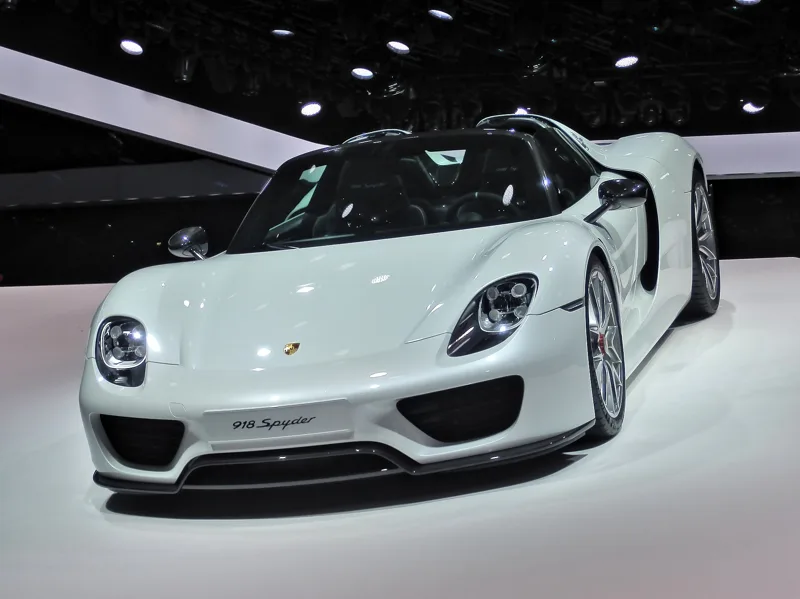
Porsche is the best-known name. It announced its investment in electrofuels toward the end of 2020, including the Haru Oni project in Chile. The pilot plant at Punta Arenas, called Haru Oni, opened in December 2022 as a joint effort with the Chilean company Highly Innovative Fuels. It runs on wind power and produces about 130,000 litres (29,000 imperial gallons; 34,000 US gallons) of e-fuel a year in its pilot phase.
HIF Global, short for Highly Innovative Fuels, was founded in 2016 by the Chilean-Peruvian company AME and is backed by Porsche AG. Siemens Energy announced a partnership in 2020. In April 2022 HIF Australia announced its first facility, in Tasmania, set to open in 2026.
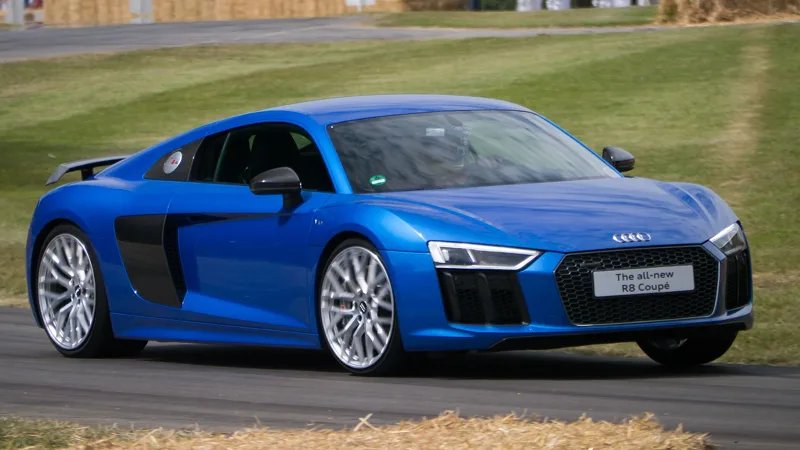
Others have moved too. Audi announced in 2021 that e-diesel and e-gasoline projects were under way. Zero, a British company founded in 2020 by former F1 engineer Paddy Lowe, has a process it calls petrosynthesis and a development plant at Bicester Heritage near Oxford. A 2023 study from the NATO Energy Security Centre of Excellence ranked e-fuels among the most promising ways to decarbonise military vehicles on land, at sea and in the air.
Fuels like these have a second life beyond cars. The same technology can make e-kerosene for aircraft and fuel for ships, which are the areas where battery supporters and the transport campaigners quoted above accept a role for synthetic fuel. Electrofuels also allow wind and solar power from any source to be stored conveniently as a liquid, which reduces curtailment, the waste that occurs when a grid cannot use all the clean power on offer.
Can e-fuels run in a normal car?
In September 2023 Stellantis, whose brands include Alfa Romeo, Peugeot, Opel, Citroen and Chrysler, said it would approve electrofuels for 28 million vehicles in Europe. The decision followed a long test programme with Saudi Aramco that covered 24 engine families fitted to European cars since 2014. The tests examined exhaust emissions, starting, engine performance, reliability, durability, oil dilution, fuel tanks, lines and filters, and behaviour in extreme cold and heat. The company expects the programme to cut up to 400 million tonnes of carbon dioxide by 2050.
That points to the strongest argument for e-fuels. A fuel that matches petrol's chemistry can reach a fleet that already exists, with nothing to scrap or rebuild.
Where this goes next
Plans, not output, dominate the picture. The Haru Oni project aims to scale from the pilot to 55,000,000 litres a year by 2026 and 550,000,000 litres a year by 2028, with the fuel exported through its port. HIF Australia's Tasmanian facility is set to open in 2026. The Agora Verkehrswende forecast looks to 2030 and the Prognos range to 2050.
One cautionary precedent: the US research agency ARPA-E funded an Electrofuels Program, but by 2014, prompted by the fracking boom, its focus shifted from electrical feedstocks to natural-gas-based feedstocks, away from electrofuels.
What it means for drivers
There is no retail pump price yet, so for now an e-fuel car is a prospect rather than a purchase. If you drive a recent European-market petrol or diesel car, makers such as Stellantis have begun testing and approving electrofuels for engine families built since 2014. If you are deciding between an engine and a battery, the efficiency numbers are the decisive ones: three to five times the electricity on one side, and a claimed ratio of 1.6 on the other.