All-wheel drive in every phase, 600 kW of peak power, a bigger battery and new tyres, all due on the Gen4 car for the 2026-27 season.
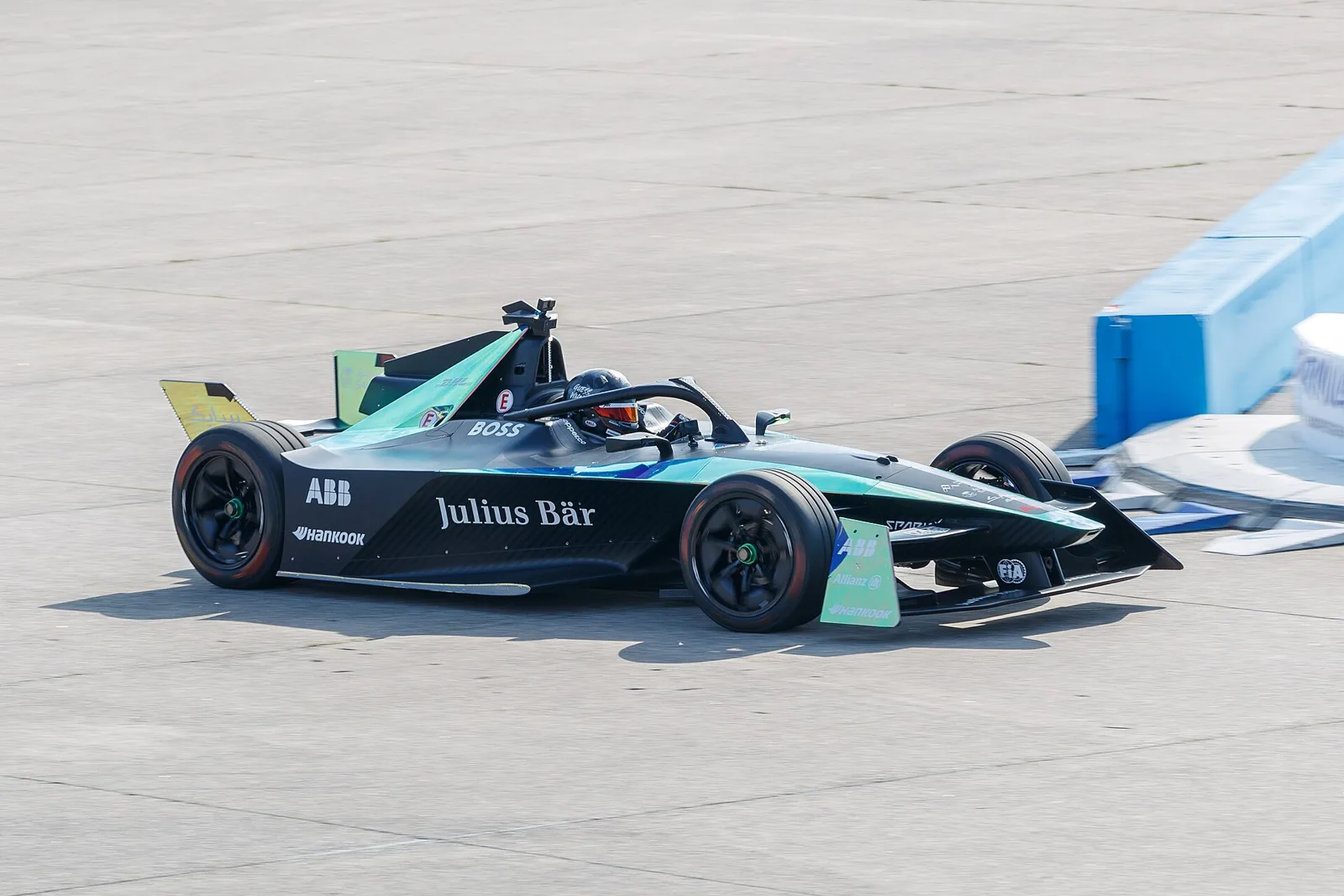
Formula E's Gen4 car, shown on 5 November 2025 and due to race from the 2026-27 season, offers permanent all-wheel drive, 600 kW of peak power, a 55 kWh battery and Bridgestone tyres. Its rear wing has two aerodynamic setups, one for qualifying and one for racing.
Formula E's Gen4 car will have all-wheel drive in every phase of racing, a first for an FIA-sanctioned single-seater series, and 600 kW of peak power against the 350 kW of the Gen3 it replaces.
What is the Formula E Gen4 car?
The Gen4 is the fourth-generation electric single-seater built for the ABB FIA Formula E World Championship. Formula E showed it to the world on 5 November 2025, and its first races are due in Season 13, the 2026-27 campaign. Every team will use it on Bridgestone tyres, replacing the Gen3 Evo package.
Manufacturers began testing prototypes in late November 2025, among them Porsche, Jaguar and Nissan. Teams and manufacturers showed an appetite for the Gen4 era as early as 2024, and the hope was that many of the existing teams would commit for its four-year life. Jaguar Racing set up a specialised mechatronics unit under Muin Ahmad, who had recently led development of the twin battery system for Formula E cars. Each car has to contain a minimum of 20% recycled material, and the whole design is meant to be recyclable once its racing days are over.
Power steering is added to a Formula E car for the first time.
How much faster is the Gen4 than the Gen3 Evo?
The Gen4 peaks at 600 kW (805 horsepower) in qualifying and attack mode, and delivers 450 kW (603 horsepower) in races with permanent all-wheel drive. The championship describes this as a 50% increase in power over the Gen3 Evo, and expects the extra power, downforce and grip to take the car beyond the pace of a contemporary Formula 2 car.
The Gen3 benchmark helps. The Gen3 Evo, which arrived for 2024-25, kept a peak of 350 kW, but only 300 kW is available in race mode, and the extra 50 kW comes from the front powertrain, which allows all-wheel drive for qualifying, race starts and attack mode. Lap times were expected to fall by 1 to 1.5 seconds.
How fast is Formula E in absolute terms? The Gen3 is estimated to top out at 322 km/h (200 mph), against 225 km/h (140 mph) for the first-generation car, which reached 100 km/h (62 mph) in 3 seconds. A modified Gen3 known as the GENBETA covered 0 to 100 km/h in 2.49 seconds in January 2024, beating a 2.6-second benchmark held by a Formula One car, and in 2023 Jake Hughes took it to 218.71 km/h (135.9 mph) indoors at London's ExCeL Centre for a Guinness World Record.
The long climb in power shows how far the formula has come. The first-generation car, built by Spark Racing Technology, peaked at 200 kW in the first season and was limited to 150 kW in races, a ceiling raised to 170 kW for season two. Season three brought an upgraded battery pack and a peak of 250 kW, and the race limit reached 180 kW in season four. Against that history, the 450 kW race output of the Gen4 is a step the earlier cars never approached.
What changes in the drivetrain and brakes?
The Gen4 drives all four wheels through every phase of racing, supported by an active differential, traction control and an anti-lock system for the brakes. It is the first time all-wheel drive has been active at all times in FIA-sanctioned single-seater motorsport. Power steering is added to a Formula E car for the first time.
As in the Gen3, teams can develop the rear powertrain while a common supplier provides the front one. The list of parts teams may design has grown: it now takes in the rear suspension, the brake-by-wire system and the locking differentials fitted at each end of the car. That system now includes friction brakes on the rear axle again, a response to the higher speeds expected.
Recovery is a large part of the design. The Gen4 can regenerate at up to 700 kW, and the championship expects regeneration to supply around 40% of the energy used over a race distance. The Gen3 managed 600 kW, split between 250 kW at the front and 350 kW at the rear. Think of regenerative braking as a bank paying interest: every stop puts a little back into the account.
Why does the Gen4 have two aerodynamic setups?
The new rear wing allows two configurations, a high-downforce one for qualifying and a low-downforce one for races. High downforce presses the car down for grip in corners; low downforce cuts drag so the car travels further on the same energy. The extra aerodynamic package helped stretch the car: it is now 5,540 mm (218.1 in) long, against 5,016 mm (197.5 in) before.
The setups now shape the weekend. On double-header weekends the first race is a 30-minute sprint, run with no pit stops and six minutes of attack mode, in the high-downforce setting seen in qualifying. The second race lasts 45 minutes, with a mandatory pit stop, eight minutes of attack mode and the low-downforce setting.
Attack mode itself dates from the fifth season, when a drive through a zone off the racing line earned an extra 25 kW. Season 9 turned it into a combined time allowance, which became 8 minutes from the 2023 Jakarta ePrix. Under the new rules a driver can pause the remaining time whenever the race is suspended, by safety car, yellow flags over the whole course or a red flag, and it resumes at what is now called the Attack Zone.
What changes for the battery and tyres?
The Gen4 carries a new 55 kWh battery from the Italian firm Podium Advanced Technologies, with 51.25 kWh usable. The Gen3 had a 47 kWh unit weighing 284 kg and limited to 38.5 kWh usable in races.
Bridgestone takes over tyre supply from Hankook, which supplied the all-weather tyres of the Gen3. Compared with the Gen3 Evo's, the front tyres gain 30 mm (1.2 in) of width and the rears 15 mm (0.6 in), giving a 295 mm (11.6 in) front and a 330 mm (13.0 in) rear. A dedicated wet-weather compound called the Typhoon arrives, and the standard tyres gain a more aggressive tread and a grippier mix. For Bridgestone it is a comeback in single-seaters, after its last Formula One supply in 2010.
All of this adds weight. Crash structures were strengthened for higher speeds, and the larger battery and aerodynamic package also add mass, so the car weighs 1,012 kg (2,231 lb). The Gen3 weighed 760 kg (1,676 lb) before the driver.
Gen3 Evo and Gen4 compared
| Detail | Gen3 Evo | Gen4 |
|---|---|---|
| Peak power | 350 kW | 600 kW in qualifying and attack mode |
| Race power | 300 kW | 450 kW |
| All-wheel drive | Qualifying, race starts and attack mode | Permanent |
| Battery | 47 kWh, 38.5 kWh usable in races | 55 kWh, 51.25 kWh usable |
| Regeneration | 600 kW in total | Up to 700 kW |
| Weight | 760 kg before the driver | 1,012 kg |
| Length | 5,016 mm | 5,540 mm |
| Tyres | Hankook, all-weather | Bridgestone, wider, with a dedicated wet tyre |
| Race debut | 2024-25 season | 2026-27 season |
Who will race the Gen4 car?
The grid is being reshaped. Stellantis pulled its DS Automobiles brand out of Formula E after 11 seasons, which also closed a four-year tie-up with Penske Autosport. Opel will field a new team, Opel GSE Formula E Team, alongside Citroen. The Penske operation was acquired by the mining and energy company Fortescue, which enters as Fortescue Zero Racing with Jaguar powertrains.
Porsche said in November 2025 that, having halted its World Endurance Championship programme, it intended to run a second factory team in Season 13. By September 2026 the plan was paralysed and had turned into a customer team with the working name NewCo. After four seasons Andretti Global parted with Porsche and moves to Nissan powertrains. Lola Cars parted from Abt Sportsline after two years and now runs its cars from an expanded base at Silverstone.
The driver market has moved too. Lucas di Grassi, who took part in every Formula E event held, retired, and Sebastien Buemi stepped down after twelve seasons and a title, staying with Envision in an advisory role. Mitch Evans left Jaguar TCS Racing after ten seasons for Opel, where Theo Pourchaire completes the line-up in his Formula E debut. Zane Maloney replaces Norman Nato at Nissan, and Envision has signed Maximilian Gunther and promoted Zak O'Sullivan.
What does the 2026-27 season look like?
The thirteenth season runs from December 2026 to July 2027 with 21 races, the longest in the championship's history. The calendar was published on 23 June 2026. Formula E arrives for a first Austin ePrix at the Circuit of the Americas and a first race at Circuit Zandvoort, while Brands Hatch replaces the ExCeL London Circuit as the venue of the London ePrix. Madrid becomes a double-header.
The points system changes as well: qualifying now awards points to every driver who reaches the duel stages, with extra points for winning duels. Duels are head-to-head knockout runs at 350 kW, introduced in the qualifying format used since season 8.
Why does the Gen4 matter beyond Formula E?
The championship has called the Gen4 a trailblazer, and others have described it as a quantum leap for electric racing. Chief executive Jeff Dodds said it stands for more than a decade of progress, innovation and ambition. Motorsport media highlighted its potential to bring the series greater respect and viewership.
The wider context is the reason the series exists. Jean Todt, president of the FIA, conceived a city-based electric championship and presented it to Alejandro Agag and Antonio Tajani at a Paris dinner on 3 March 2011. Tajani was focused on electrifying the car industry and cutting carbon dioxide emissions. Since 2020 Formula E has held world championship status, the first single-seater series outside Formula One to do so.
Technology also travels. Gen3 cars take their front powertrain from Lucid Motors and the batteries from Williams Advanced Engineering, and Bridgestone is returning to single-seaters after leaving Formula One in 2010. Manufacturers such as Porsche, Jaguar and Nissan are testing the Gen4 prototypes, with Jaguar having set up a dedicated mechatronics unit.
Where this goes next
The first Gen4 racing is forecast for the start of Season 13 in December 2026, and the championship ends in July 2027. Full competition is planned for that season, with many current teams expected to commit for all four years of the Gen4 era.
Porsche's second team has become a customer team with a provisional name, and the grid is still in flux.