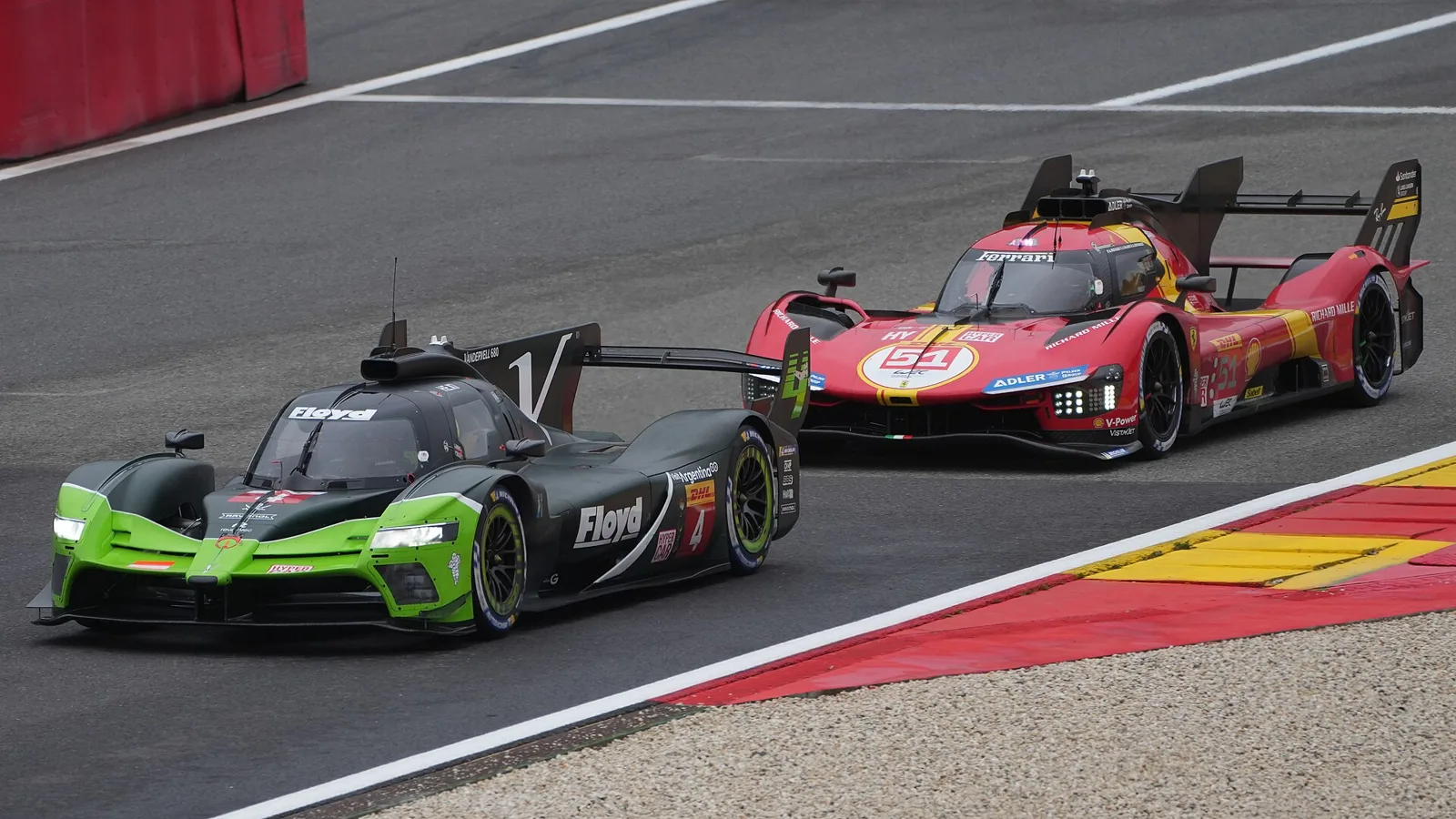
Two rulebooks, one class and a system of adjustments behind the scenes: how LMH and LMDh cars share the top of endurance racing.
Le Mans Hypercar rules let manufacturers build prototypes for the WEC and IMSA with a hybrid motor of up to 200 kW, while LMDh uses a spec 50 kW system. Both classes race together under balance of performance, which adjusts power, weight and aerodynamics so that no manufacturer dominates.
Cars built to two different rulebooks now race each other for outright victory at Le Mans, and a third mechanism, balance of performance, quietly decides how much each can use.
What is a Le Mans Hypercar?
A Le Mans Hypercar, or LMH, is a sports prototype race car built to rules drawn up jointly by the ACO (short for Automobile Club de l'Ouest) and the FIA to follow LMP1 from the 2021 season. It competes in the Hypercar class of the World Endurance Championship and, under the name GTP, in IMSA's SportsCar Championship in North America.
The early concept described a car with two seats, a larger cockpit than the old LMP1 machines, a wider windscreen and a roofline closer to that of a road car. Engine design is free, within one limit: only four-stroke petrol engines are allowed, and diesel power is banned. Movable aerodynamic parts are prohibited, and the bodywork must not let mechanical components show unless the rules say so.
Think of balance of performance as a handicap in golf, applied to engines and aerodynamics.
Why did LMP1 end, and what was the plan for hypercars?
Audi left the World Endurance Championship at the end of 2016 and Porsche at the end of 2017, as the Volkswagen emissions scandal played out, and costs in the hybrid LMP1 sub-category were spiralling. The ACO began talks on cheaper rules, aiming for a full-season manufacturer budget of about 25 million euros, which was 75% lower than existing budgets.
The first idea was modest: a single, low-power hybrid system and a shared platform with IMSA, plus a customer hybrid powertrain for small manufacturers and privateers. The hope was that one car could contest the so-called triple crown of endurance racing, the 24 Hours of Daytona, the 24 Hours of Le Mans and the 12 Hours of Sebring. FIA president Jean Todt later suggested renaming the category.
In June 2018 the FIA confirmed that the new top class would take design concepts from hypercars, and reports said Toyota, Ford, McLaren, Aston Martin and Ferrari had joined roundtable talks. The first outline gave a free engine architecture, with any number of cylinders, turbocharged or not. It set a weight of 980 kg (2,160 lb), a defined fuel-flow limit and a hybrid motor on the front axle fixed at 200 kW (270 hp), which would give the cars four-wheel drive. The engine target was 520 kW (700 hp), and the target lap time at Le Mans was 3:20.
How did the Hypercar rules change before the first race?
Quite a lot. The first outline lasted a matter of months before manufacturers pushed back on timelines and costs, and the rulebook that emerged in December 2018 was stricter and more production-based than the sketch. Several figures then moved again before a car turned a wheel.
- 25 July 2018: Scuderia Cameron Glickenhaus becomes the first manufacturer to commit, planning 25 road-legal cars and one race car to pay for its Le Mans effort.
- 21 October 2018: McLaren says it will sit out the first year, citing tight timelines and fluid regulations.
- 5 December 2018: the FIA publishes the technical rulebook, with production-based powertrains and a maximum combined output of 785 hp (585 kW).
- 7 March 2019: cars derived from road-going hypercars are allowed, the lap-time target eases from 3:20 to 3:30 and moving aero parts are dropped on cost grounds.
- 14 June 2019: full regulations are unveiled, with Toyota Gazoo Racing and Aston Martin Racing committed to the first season.
- 19 February 2020: Aston Martin postpones its project after LMDh is announced.
- 11 May 2020: the power ceiling drops to 500 kW (670 hp) and the weight floor to 1,030 kg (2,270 lb).
The December 2018 rulebook also required a manufacturer to build at least 25 road cars fitted with the race car's engine and energy recovery system by the end of its first season, and 100 by the end of its second. That ruled out specialist race car builders such as Oreca, Onroak Automotive and Dallara. Diesel was banned, and the cost of supplying hybrid systems to customer teams was capped at 3 million euros ($3.4 million US), with a supplier limited to three competitors without FIA approval.
The first outline said 980 kg, the December 2018 rulebook raised it to 1,040 kg (2,290 lb), and May 2020 brought it to 1,030 kg, a figure the FIA described as identical to LMDh. Press talk of 950 hp, made by adding engine and electric outputs, was also wrong. Power units were meant to follow a prescribed combined curve peaking at 585 kW at 95% of engine speed.
What is LMDh, and how does it differ from LMH?
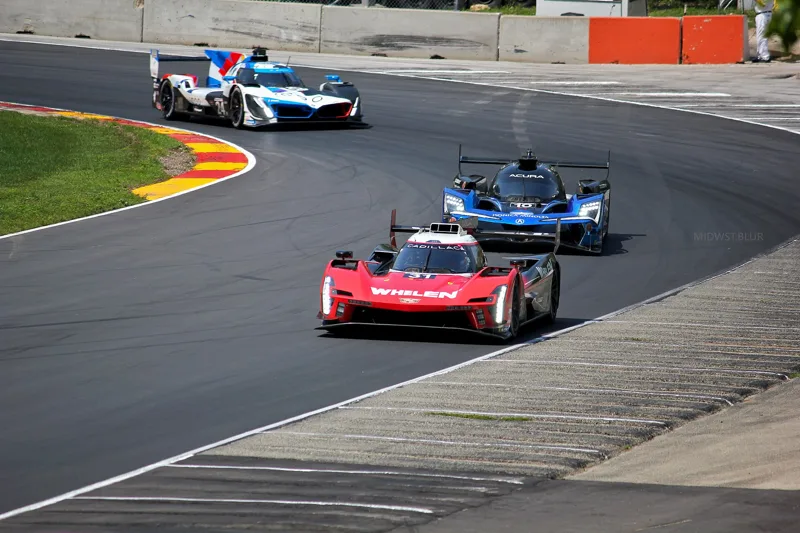
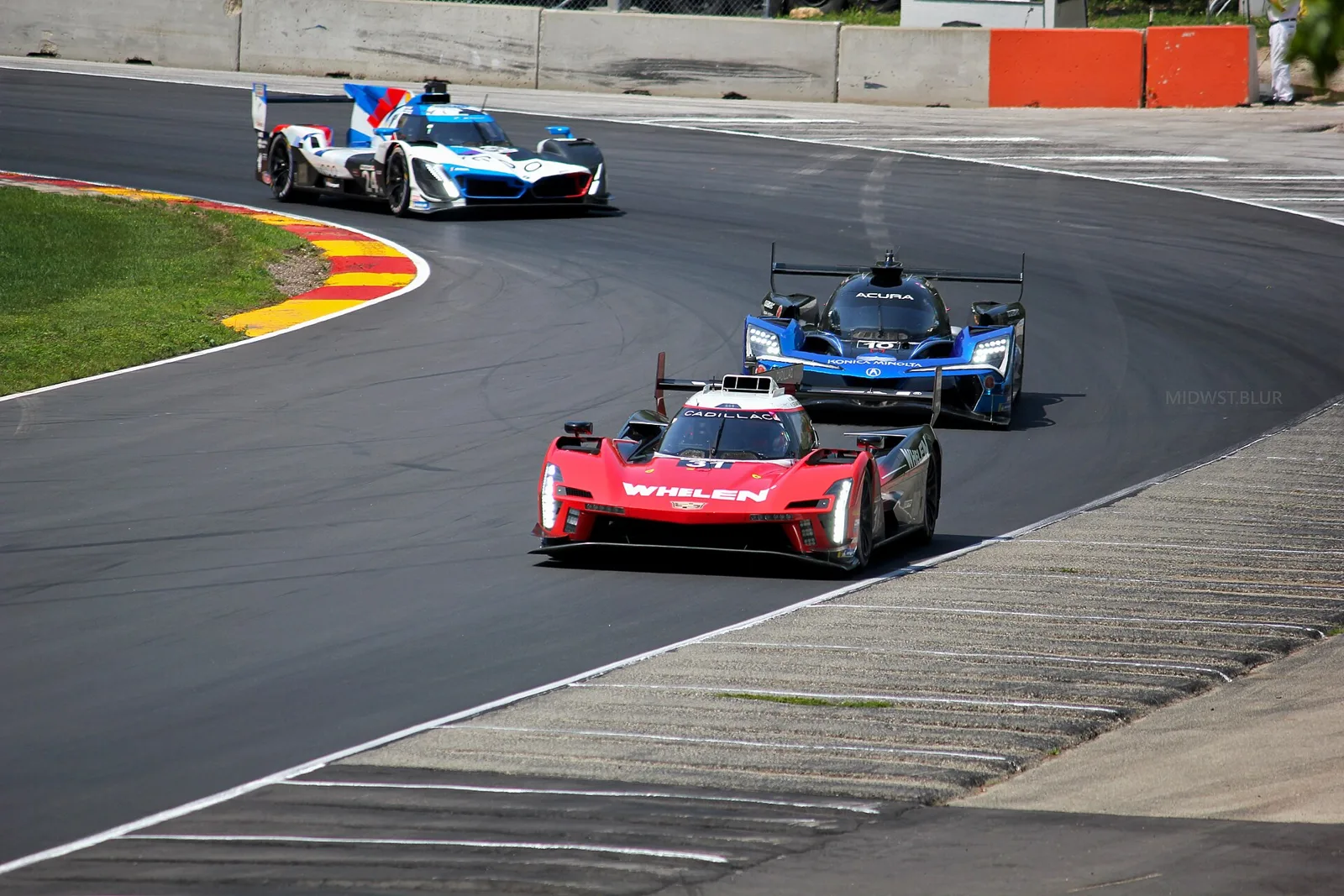
LMDh stands for Le Mans Daytona h. Created jointly by IMSA and the ACO, it is the successor to the Daytona Prototype International (DPi) class and runs alongside LMH in both the IMSA GTP class and the WEC Hypercar class. Its aim was to bring the two top classes together and keep costs down.
The sharpest difference is the hybrid system. LMH lets manufacturers design their own, with a motor of up to 200 kW on the front axle. The LMDh draft regulations scrapped that freedom for a spec hybrid unit of 50 kW (67 hp). The gearbox hybrid comes from Xtrac, the motor generator from Bosch and the batteries from Williams Advanced Engineering. Cars are built on chassis from Dallara, Ligier, Multimatic or Oreca.
LMH and LMDh side by side
| Detail | LMH | LMDh |
|---|---|---|
| Created by | ACO and FIA | IMSA and ACO |
| Successor to | LMP1 | DPi |
| Hybrid system | Maker's own design; MGU-K up to 200 kW on the front wheels | Spec 50 kW (67 hp) system |
| Peak combined power | 500 kW (670 hp) from May 2020 | 500 kW (670 hp) in the draft rules |
| Minimum weight | 1,030 kg (2,270 lb) from May 2020 | 1,030 kg (2,270 lb) |
| Chassis | Maker's own design, production-based powertrain | Dallara, Ligier, Multimatic or Oreca; single bodywork package and single tyre supplier |
| First full season in WEC | 2021 | 2023 |
How did LMH and LMDh end up racing together?
Manufacturers asked for it. After the LMH rules appeared, McLaren said a programme was unviable for it and called for DPi to be admitted to the WEC, with its CEO Zak Brown calling for steep cost reductions. Ford and Porsche voiced similar views, and Toyota said it would be open to the idea so long as it could still show off its hybrid technology.
The joint ACO and IMSA press conference at the 2020 24 Hours of Daytona announced LMDh, planned to replace DPi and converge with LMH. In 2021, days after Peugeot revealed its 9X8, the two bodies merged their rulesets. The unified class is called Hypercar in the WEC and Grand Touring Prototype (GTP) in IMSA, which means the same cars can race in North America and around the world, something not seen at the top of sportscar racing for several decades.
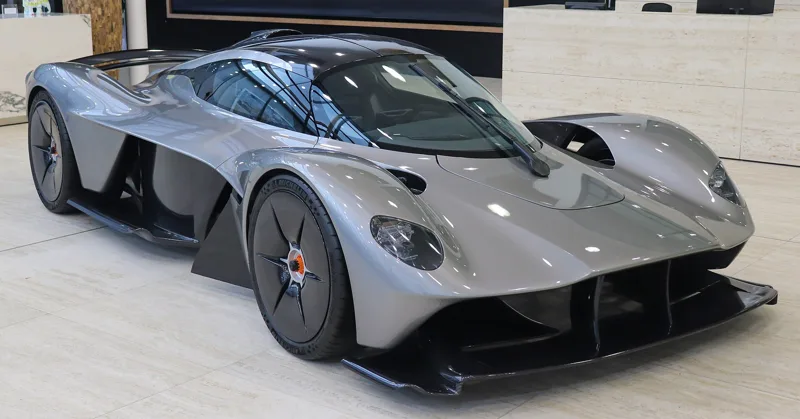
The paths split at first. The WEC created its Hypercar class in 2021, with LMH cars from Toyota, Glickenhaus and later Peugeot, plus an Oreca-built LMP1 car run by Alpine for two seasons. LMDh cars were permitted race by race in 2022 but none appeared. At the 2023 24 Hours of Daytona, GTP made its IMSA bow with nine cars from four makers, every one an LMDh. The first LMH in IMSA was the Aston Martin Valkyrie AMR-LMH at the 2025 12 Hours of Sebring.
What is balance of performance?
Balance of performance, or BoP, is a regulation that keeps competing cars at parity by adjusting horsepower, weight, engine management and aerodynamics, so that no single manufacturer dominates a class. It was named around the creation of GT3 for the 2006 season and has since spread to other production-based racing.
Think of balance of performance as a handicap in golf, applied to engines and aerodynamics. The aim is to let different cars race without an expensive development arms race. The Japanese Super GT series uses a simpler version called success ballast, which changes only a car's weight, while the British Touring Car Championship has used a turbo boost control since 2025. In the LMP1 era the WEC used a related system called equivalence of technology to make hybrid and non-hybrid cars equal.
The adjustment comes from data. Organisers study a car's results in earlier races and sometimes between sessions in the same weekend. New cars face wind tunnel and dynamometer testing, and organisers can change a car's BoP at any point during a season. For GT3 cars, SRO holds two BoP tests a year at Circuit Paul Ricard, with drivers who already race those cars. IMSA and the ACO calculate BoP differently for LM GTE cars.
The system has a known weakness, sandbagging, in which a car deliberately underperforms in a test or race to get a better rating later. Rivals levelled that charge at Chip Ganassi Racing's Ford GT in the 2016 WEC season. IMSA now gives a five-minute stop-and-go penalty to any car found sandbagging during the Roar Before the 24 test.
How does balance of performance apply to hypercars?
In the Hypercar class the BoP table sets the speed at which a hybrid car may begin to use its electric motor. An MGU-K may apply positive torque to the front wheels only at or above the table speed, with separate conditions when the car is not on dry slick tyres. LMDh and LMH cars are meant to be balanced under a single global BoP.
That puts the pressure on the electric side. The MGU-K is capped at 200 kW of DC power, and for hybrids the point at which it can drive the front wheels is a dial that the organisers can turn. Engines are free, so the other levers are weight, power and aerodynamics.
Who races in the Hypercar class?
Hypercars are the top category of the World Endurance Championship, run by the ACO and sanctioned by the FIA. The series began in 2012, replacing the Intercontinental Le Mans Cup, and the Hypercar class replaced LMP1. LMP2 left the grid in 2024, though a minimum of 15 slots stay reserved for it at the 24 Hours of Le Mans, and production-based grand tourers compete in the LM GT3 category.
Four titles are awarded in the 2026 season, two of them world championships, for Hypercar drivers and manufacturers. Points go to the top ten, with half a point for any car classified eleventh or lower. Races of 8 and 10 hours pay about half as much again, so 25 for a win becomes 38, and the 24 Hours of Le Mans is worth about twice as much.
What do hypercar rules mean for road-car buyers?
The link to the road is deliberate. When the FIA proposed LMH it pointed to McLaren's Senna GTR and the Aston Martin Vulcan as examples of the machines it hoped to attract. Production-based engines are common, and the original rules demanded 25 road cars by the close of a maker's opening season. Glickenhaus planned a short run of 25 road-legal cars to pay for its racing.
Aston Martin used its Valkyrie road car as the spine of its hypercar, and Toyota hinted at the GR Super Sport concept. The March 2019 relaxation, which allowed race cars derived from road-going hypercars, was introduced after manufacturers asked for closer alignment between production and race activities. An LMH production-based engine must keep its block and head castings from the base engine, and its crankshaft can be no more than 10% lighter.
Where this goes next
Next up is the Asian Le Mans Series. A 2025 announcement said the Hypercar class could enter the series with customer teams and Pro/Am line-ups, and that both LMH and LMDh vehicles would be eligible from the 2026-27 season.
Back at the WEC, the grand touring side is also changing, with a GT3-based category replacing LMGTE Am from 2024. Richard Mille, who heads the FIA Endurance Commission, says the aim is a customer-focused class in which manufacturers cannot enter officially. The 2018 outline said the Hypercar regulations would stay active for five seasons, though the rules have been revised repeatedly since then.
.jpg)