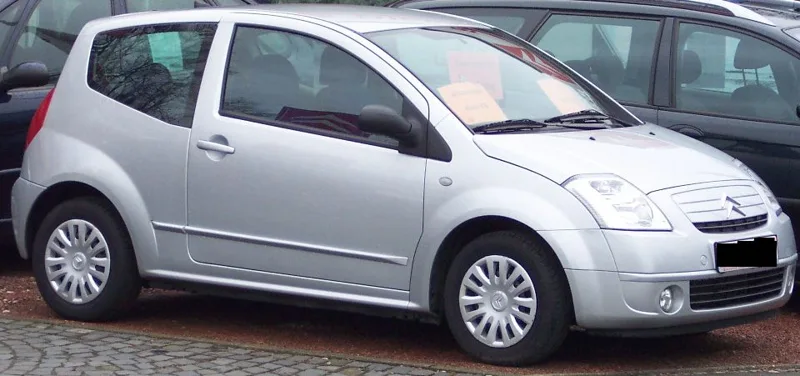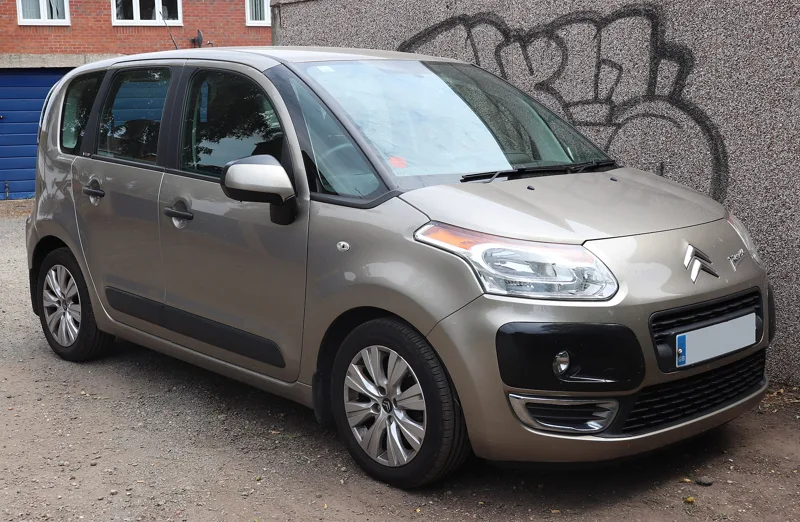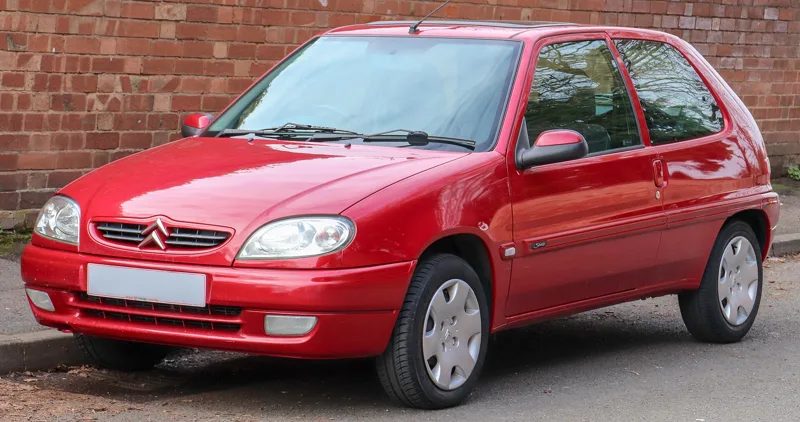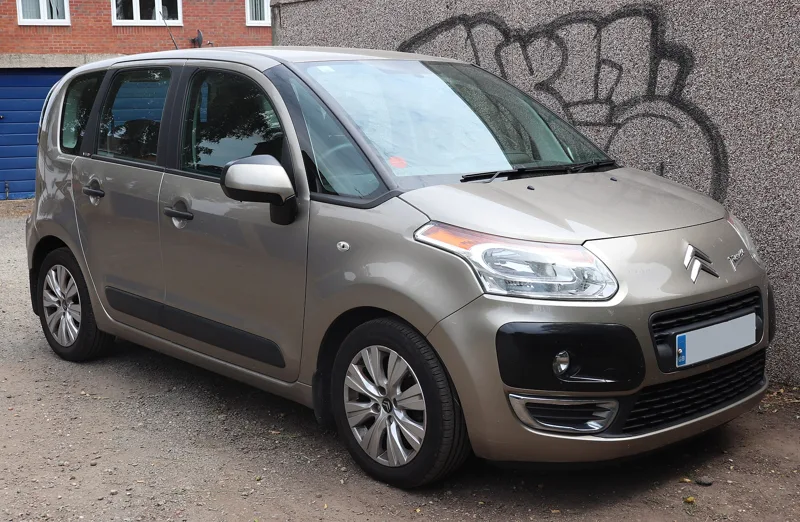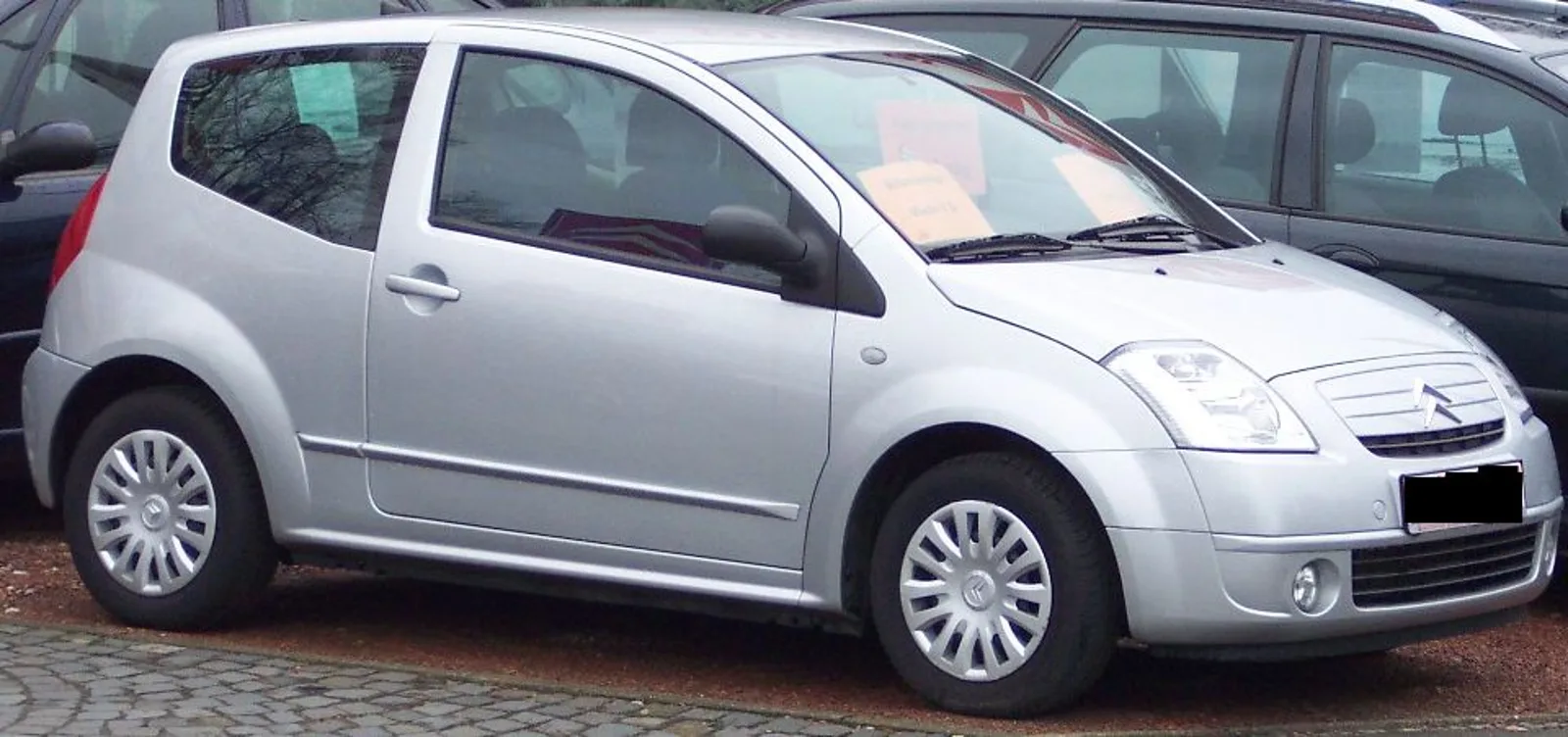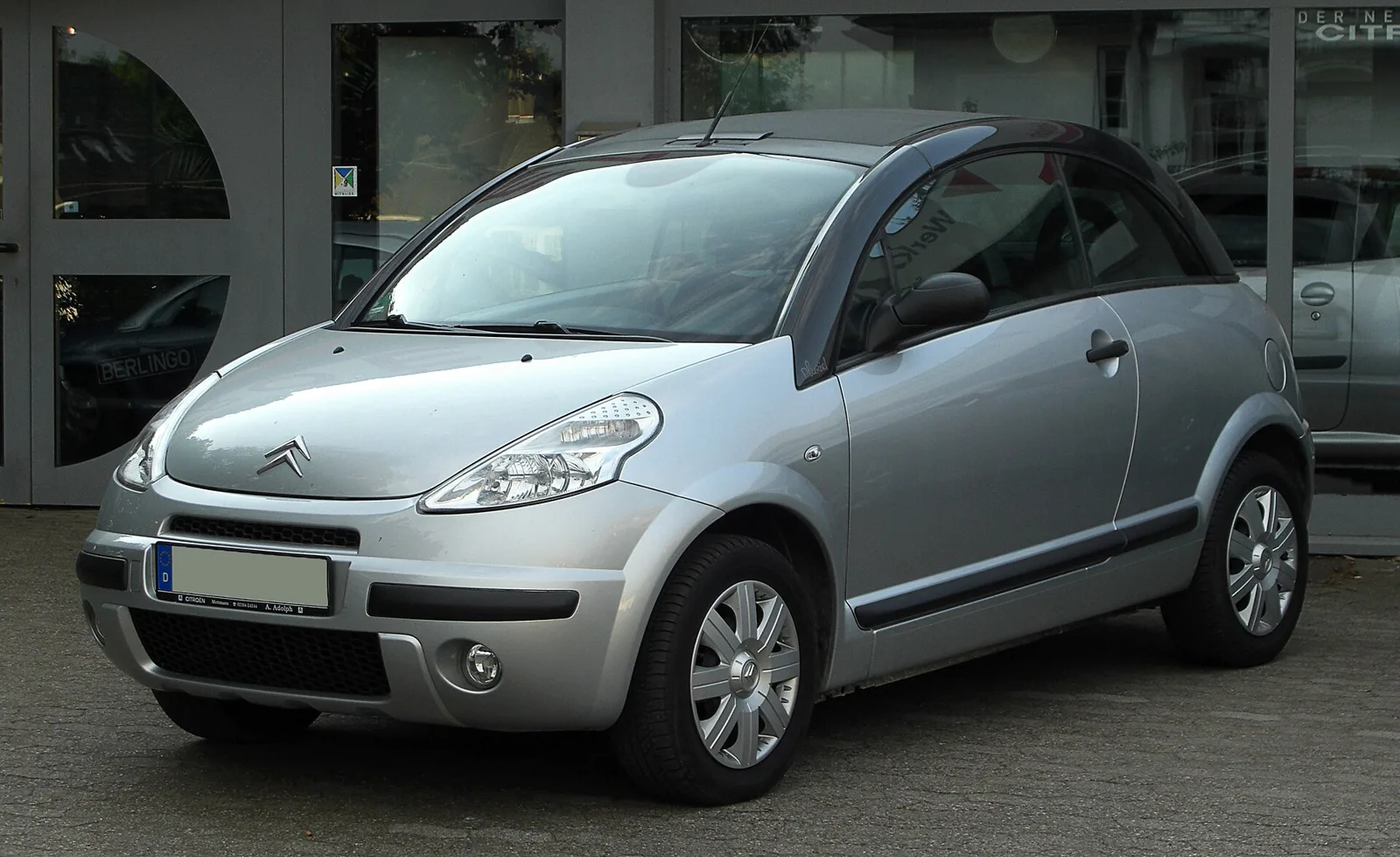
The convertible that sold from 2003 to 2010, set against four generations of the C3 supermini and its electric and India-built offshoots.
Citroen's C3 has been on sale since 2002 as a supermini with several body styles. The Pluriel, its open-top sibling, was made from 2003 to 2010, and the family now includes an electric e-C3 alongside petrol and diesel models. Its Indian and Latin American versions are unrelated to the European car.
The Citroen C3 is a B-segment supermini that Citroen has built since April 2002, replacing the Saxo in the line-up. Its best-known open-top variant is the C3 Pluriel, a convertible sold from July 2003 to July 2010 with five ways of driving it. The family is now in its fourth generation, which Citroen has simplified to two trim levels.
Where did the C3 come from?
Jean-Pierre Ploue became Director of the Citroen Design Center in 2000, and he designed the C3 under Donato Coco, who had already worked on the Xsara Picasso. The first generation launched at the 2001 Frankfurt Motor Show and went on sale in January 2002 as a five-door hatchback. Its initial models used the Peugeot 206 platform.
A 1998 concept called the C3 Lumiere previewed the production car with four seats and a five-speed manual. Citroen's chief executive later said that C3 is the trade name for every B-segment hatchback the company builds around the world.
A supermini that wore a convertible badge for seven years and then became a family of different cars across three continents.
What was the Pluriel?
The C3 Pluriel was a convertible sold from July 2003 to July 2010. Italdesign developed it as a turnkey project, and it was assembled only in Spain. Its name derives from the French word for plural, which reflects the five open-top variations it offered.
The Pluriel could be a hatchback with a multi-layer insulated top, a full-length landaulet that opened as far as the back window, or a fixed-profile convertible with the roof folding into a well in the boot floor. A full convertible had its side rails removed, and a roadster pick-up had back seats that folded into a bed with a drop-down tailgate.
Roof operation drew sustained criticism. Converting it to a convertible meant leaving the roof rails behind, with no foul-weather option, and the roof tended to let in water. Top Gear featured the car in its Worst Car in the History of the World special.
In October 2013 Top Gear Magazine placed the Pluriel on its list of the 13 worst cars of the last 20 years. The magazine described the car as useful as a chocolate teapot.
How did the Pluriel's engines work?
The C3 Pluriel was introduced in July 2003 with a choice of a 1.4 or a 1.6 litre petrol engine, and a 1.4 litre diesel. The 1.6 litre petrol came fitted with an automated manual gearbox as standard, and buyers had petrol and diesel power from launch.
The 2005 facelift of the C3 brought a restyled dashboard with a better finish and a more modern instrument cluster. The Pluriel received similar interior alterations but was otherwise unchanged, and it remained in production until July 2010.
How did the first-generation engines compare?
The first-generation range covered the 1.1 litre TU1 four-cylinder making 45 kW (60 hp), the 1.4 litre TU3 at 56 kW (75 hp) and the 1.6 litre TU5 at 81 kW (109 hp). Diesel engines included a 1.4 litre DV4 HDi and a 1.6 litre DV6 HDi rated 67 kW (90 hp).
Torque figures were modest by later standards. The 1.1 litre produced 94 N m (69 lbf ft), the TU3 made 118 N m (87 lbf ft) and the TU5 reached 146 N m (108 lbf ft). A start-stop system could cut the engine in traffic and restart it briskly when the driver moved off.
What changed in the second generation?
The second generation was unveiled on 29 June 2009 and shown in public at the Frankfurt Motor Show that September. It had a 108 degree field of vision windscreen, similar to the larger C4 Picasso, and a drag coefficient of 0.307 Cd. Its petrol engines were developed with BMW and used double overhead camshafts.
The Prince engines were designed for low CO2 emissions and good economy. The 1.4 litre produced 70 kW (95 PS) and the 1.6 litre 88 kW (120 PS). Airdream+ models used a 1.6 HDi of 66 kW (90 PS) with CO2 emissions of 99 g/km, and every version had a Gear Efficiency Indicator to show the best gear.
The facelift arrived at the Geneva Motor Show in March 2013 with updated chevrons, bumper-mounted LED daytime running lights and new tail light clusters.
How did the third generation look?
The third generation was revealed on 29 June 2016 and took its front styling cues from the facelifted C4 Picasso and the Grand C4 Picasso. Airbump mouldings from the C4 Cactus were available, and buyers could choose from nine exterior colours with three contrast shades. Citroen claimed 36 colour combinations in total.
A facelift in February 2020 added new LEDs at the front, two new colours and two interior atmospheres. The new colours were Spring Blue and Rouge Elixir, and the interiors were called Techwood and Emeraude. The C3 You arrived in 2023 as the new entry-level version of the European car.
How did the Indian and Latin American C3 differ?
The third-generation C3 for India and Latin America was released on 16 September 2021 and is built in Brazil and India. Citroen called it a modern hatchback rather than a crossover, although it has high ground clearance, a high bonnet, roof rails and black cladding. It sits on the Smart Car Platform, so it shares nothing with the European car.
The interior has a 10-inch touchscreen and a dimpled dashboard panel. In India the C3 was praised for its dynamic qualities but criticised for its lack of equipment, so in August 2024 Citroen added automatic climate control, a new instrument cluster and six airbags as standard.
How safe is the C3?
Indian C3s had two frontal airbags, anti-lock brakes and speed alerts, with no side or head airbags and no electronic stability control. The car has not been rated by independent consumer testing programmes such as Global NCAP. The Indian e-C3 scored 0 stars for adults and 1 star for toddlers in 2024.
Indian regulations under AIS require speed alerts at 80 km/h and 120 km/h. The rear centre seatbelt is a static two-point type with no head restraint, and there are no ISOFIX anchorages for child restraints.
The Brazilian C3 scored 0 stars in Latin NCAP 3.5 tests in 2023, which cited unstable structure, weak frontal protection and a lack of seatbelt reminders. An earlier basic Latin American version had earned 4 stars for adults and 2 stars for toddlers from Latin NCAP 1.5 in 2015.
What is the e-C3?
Citroen unveiled the all-electric e-C3 in India in January 2023, with a 42 kW (57 PS; 56 hp) motor and a 29.2 kWh battery for a range of 320 km (199 mi). Blue e badges on the front doors and a charging port on the front fender set it apart from the petrol car.
The fourth-generation car went on sale in Europe after its introduction on 17 October 2023. It is based on the Smart Car Platform, uses a 44 kWh LFP battery with up to 320 km (199 mi) WLTP range, and has an 83 kW (113 PS; 111 hp) motor that reaches 100 km/h in around 11 seconds.
Key specifications
| Specification | Detail |
|---|---|
| Supermini since | April 2002, replacing the Saxo |
| Pluriel sales | July 2003 to July 2010 |
| First generation, 1.1 L | TU1 I4, 45 kW (60 hp), 94 N m (69 lbf ft) |
| First generation, 1.4 L | TU3 I4, 56 kW (75 hp), 118 N m (87 lbf ft) |
| First generation, 1.6 L | TU5, 81 kW (109 hp), 146 N m (108 lbf ft) |
| Second generation, 1.6 L | 88 kW (120 PS) |
| Third generation, 1.2 L | PureTech, 60 kW (82 PS; 80 hp) |
| Third generation, turbo | PureTech turbo, 81 kW (110 PS; 109 hp) |
| Fourth generation e-C3 battery | 44 kWh LFP, up to 320 km (199 mi) WLTP |
| Fourth generation e-C3 motor | 83 kW (113 PS; 111 hp), 0-100 km/h in around 11 seconds |
| Total production | Over 4,500,000 units by May 2021 |
How has the C3 sold around the world?
Total production exceeded 4,500,000 units by May 2021, including the 1-millionth third-generation car. First-generation production ran in Spain until 2010 and in France until mid-2011, and sales continued across Europe until February 2011. Those figures cover several decades of cars built on the same basic idea.
The South American first generation was built at the Porto Real plant from 2003 to August 2012. Later launches included India on 20 July 2022, Argentina on 24 October 2022 with a First Edition limited to 1,200 units, Indonesia on 7 December 2022 and South Africa on 25 May 2023.
The Indian and Latin American C3 won the World Urban Car of the Year award in 2023.
How did the South American C3 differ?
The first-generation C3 was built at Porto Real from 2003 to August 2012 and sold locally and across Mercosur. It became distinct from the European car after a 2008 facelift with exclusive front bumpers. Oferol also assembled a limited number of CKD cars in Uruguay.
What did the Latin American launches look like?
Argentina launched the third-generation C3 on 24 October 2022 with Live, Live Pack, Feel and Feel Pack trims. Its engines were a 1.2 litre PureTech petrol and a 1.6 litre flex-fuel unit, and a First Edition of 1,200 units arrived at launch.
Brazil followed with four trims under the same names and a 1.0 litre FireFly engine from Fiat alongside the flex-fuel 1.6. Brazilian cars were exported from 2023 to Chile, Peru and Costa Rica, and the C3 YOU arrived in August 2024 with a Fiat 1.0 litre turbo and a CVT.
What did South Africa receive?
South Africa launched the third-generation C3 on 25 May 2023 in a single Feel trim with the 1.2 litre PureTech petrol. The Max trim came in March 2024, and the turbo engine became available on Max in November 2024. The Max trim sat above the Feel trim in the range.
For the 2026 model year the line-up gained standard features and the Feel trim was discontinued. The C3 Hola panel van arrived on 10 April 2026 as the cheapest Citroen in the country.