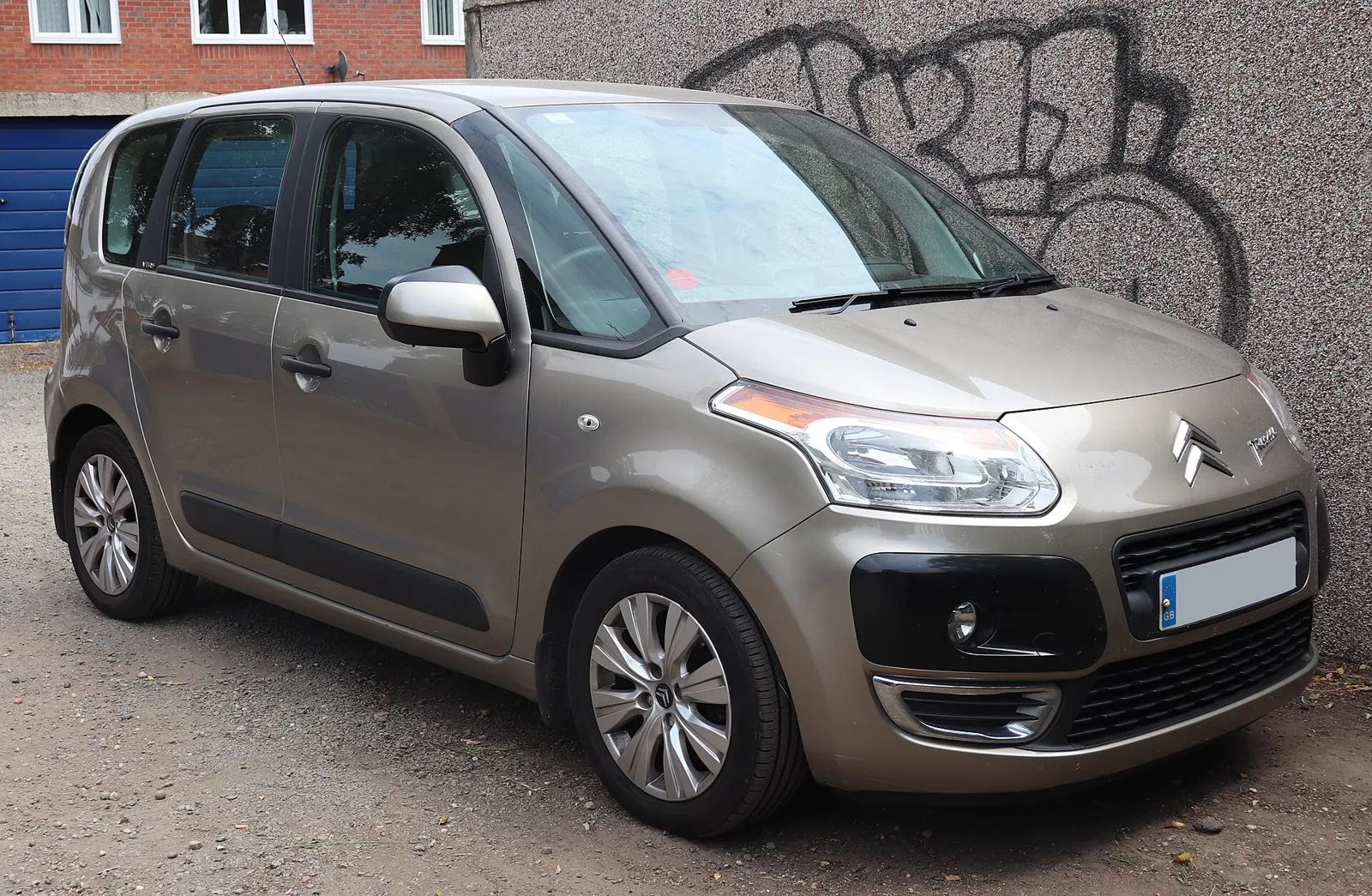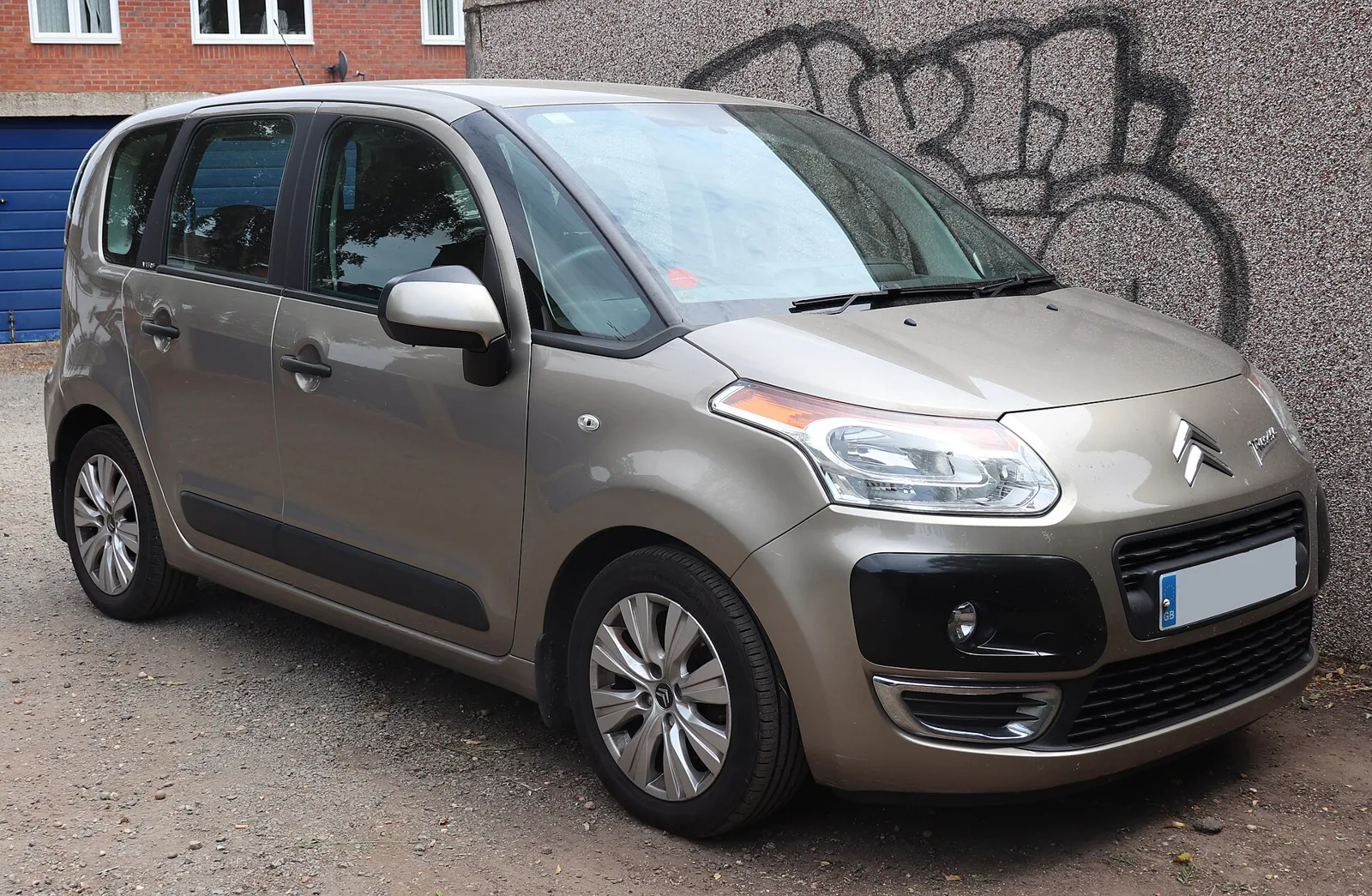
A French mini MPV built in Slovakia against a Japanese-designed Note that sold close to a million: origins, design, engines, safety, recalls and the buyer each suited.
The Citroen C3 Picasso and Nissan Note were five-door mini MPVs aimed at family buyers. The Picasso was built from 2008 to 2017 in Slovakia, with a boot of up to 1,506 litres. The Note first went on sale in 2005 and had sold 940,000 units by mid-2012.
The Citroen C3 Picasso and the Nissan Note were both five-door mini MPVs aimed at families and everyday drivers. The Picasso went on sale in 2009 as the mini version of the C3, built at a PSA plant in Slovakia. The Note had been on sale since 2005, and by mid-2012 Nissan had sold 940,000 of them, so it arrived with a head start.
This comparison covers why the two were rivals, how each came about, their design and interior, their engines, their safety record and recalls, their sales and which buyer each car suited on the facts available.
Why were the Citroen C3 Picasso and Nissan Note rivals?
They were rivals in the same market for practical, compact family cars. Its named rivals at the design stage included the Opel Meriva, the Nissan Note, the Renault Modus and the Ford Fusion, so the Note was one of its targets from the start.
The Note's success was part of the reason. Nissan had seen the Almera Tino sell 200,000 cars in seven years while the Renault Scenic sold 1,400,000 after its second generation, and Nissan began work on the Note in summer 2002 in response.
Both cars were sold across Europe, and both were offered in a range of trims with a choice of petrol and diesel engines. The comparison is therefore between two established family cars that aimed to offer space and flexibility at a reasonable price.
A French mini MPV built in Slovakia against a Japanese family car that sold close to a million before its second generation arrived.
How did the two cars come about?
The C3 Picasso was first unveiled as the Drooneel concept at the 2008 Paris Motor Show. It was the successor to the Xsara Picasso, and it was first assembled in December 2007 at the PSA Trnava plant in Slovakia, which became the sole site for the model.
The Note's development began in summer 2002. The Nissan Tone concept was shown at the 2004 Paris Motor Show, and the production car went on sale in Japan on 20 January 2005. The United Kingdom was the first market to receive it, on 1 March 2006, and the European Note was built at Sunderland from January 2006.
The Note shared some underpinnings with the Renault Modus, which shows how carmakers pooled platforms for models of this type. Nissan's product manager said the car was meant to sell for under 13,000 euros, which set a clear price target.
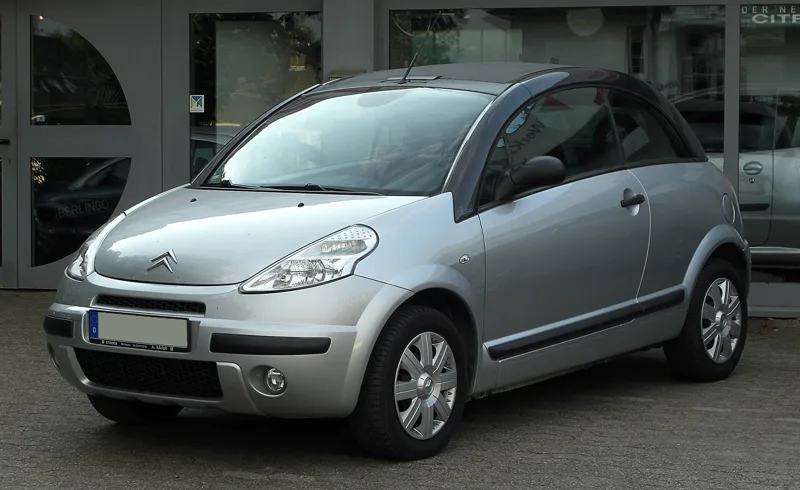
The C3 Picasso used a modified version of the platform from the C3 and the Peugeot 207, which gave it a comparable wheelbase. The Trnava plant was also building the 207, so the reuse of platforms was a practical choice for the PSA group.
How did the design and interior differ?
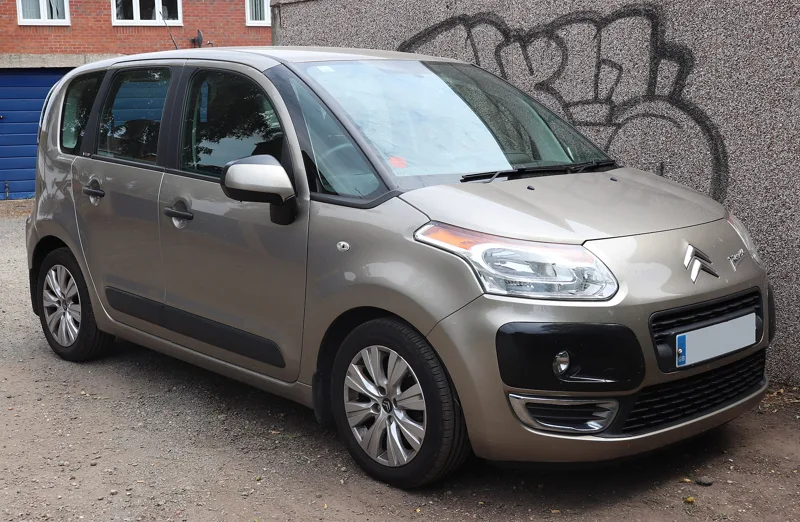
The C3 Picasso was a five-seater with three rear seats that folded flat. Its boot capacity was 385 litres, or 500 litres with the hidden compartment, and up to 1,506 litres with the seats folded. Its top Exclusive trim added roof rails and a folding front passenger seat, which opened the whole interior for storage.
The C3 Picasso's interior used a woven cloth called Mistral Maxi Taylor across the range, and the Exclusive offered a leather and chrome interior with dual-zone climate control. Citroen said top European engineers and designers, including Donato Coco and Jean-Pierre Ploue, had worked on the vehicle.
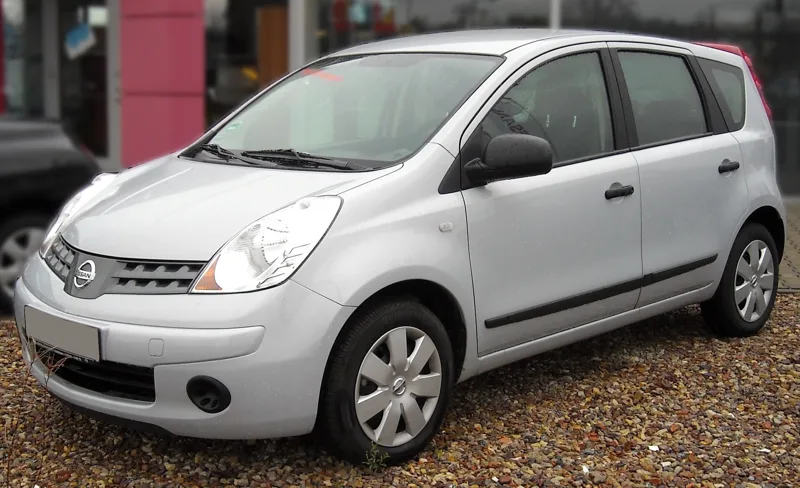
The Note's first generation came with S, SE and SVE trims, which were later replaced by Visia, Visia Plus, Acenta, Acenta R and Tekna. It was described by its maker as a supermini or subcompact hatchback, or a mini MPV, which shows how the car sat between two classes.
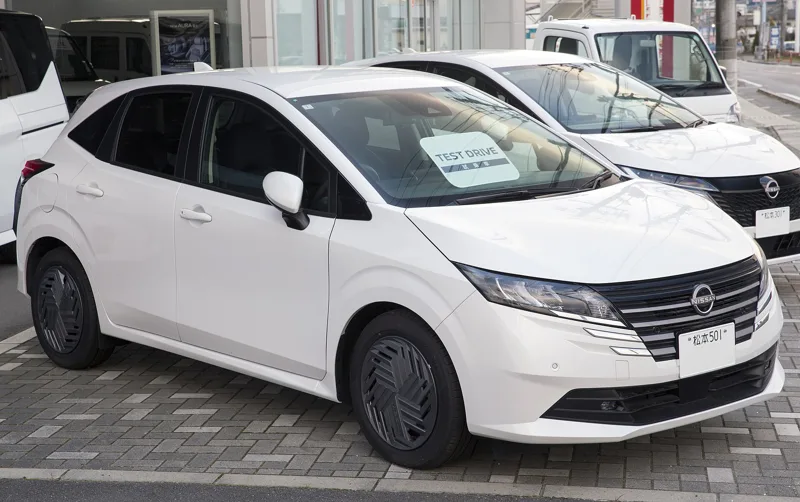
The second-generation Note, based on the Invitation concept shown at the 2012 Geneva Motor Show, was built on Nissan's V platform. Its drag coefficient was 0.298, and its frontal area was 2.13 square metres, giving a drag area of 0.639 square metres.
What engines did the two cars use?
The C3 Picasso's early engines included a 1.4-litre and a 1.6-litre VTi petrol, plus a 1.6-litre HDi diesel. The 1.6 VTi had 89 kW (122 PS; 120 bhp), which gave a top speed of 188 km/h (117 mph) and 0 to 60 mph in 10.6 seconds in the Exclusive and VTR+ models.
From June 2015 the petrol engines were replaced by a 1.2-litre Pure Tech 110 three-cylinder, producing 82 kW (110 hp) with a five-speed manual gearbox and CO2 emissions of 115 g/km. A 73 kW (98 hp) BlueHDi 100 diesel replaced the earlier diesels.
The Note's first generation offered 1.4 and 1.6-litre petrol engines and 1.5-litre dCi diesels. A 2010 European restyle brought a 1.4-litre with 65 kW (88 hp) and a 1.6-litre with 81 kW (110 hp).
The second-generation Note used 1.2 and 1.5-litre engines in Europe, including a 1.2-litre DIG-S with 98 PS and a 1.5-litre turbo diesel with 90 PS. The Note also gained an electric-hybrid e-Power system in late 2016, which led to a WLTC fuel economy figure of 29.5 km per litre (69 mpg-US) for the third generation.
How did the two cars perform on safety?
The C3 Picasso was tested by Euro NCAP in a Confort model with a single front airbag per seat and no electronic stability control, and it scored four of the five stars available. Its front-end results were mixed, and it lost points on whiplash protection for the driver's seat.
The C3 Picasso's recall history was notable. On 20 June 2010 611 cars built between January and March 2010 were recalled for fuel pipe routing, and on 24 August 2010 all 13,234 UK cars were recalled for a windscreen trim fault. In May 2011 all 24,091 UK cars were recalled after a BBC Watchdog investigation into brakes on right-hand drive models.
The Note's safety details are less clear in the material available. The second generation had a Nissan Safety Shield System and Around View Monitor technology, but the comparison gives no Euro NCAP result for the Note to set beside the Picasso's four stars.
The Note also had a dispute in Russia over seat belt pretensioners in the 2012 to 2013 models, which Nissan later acknowledged. That is a regional matter rather than a general safety finding, and it is recorded here as reported.
How did the two cars sell?
The Note was a strong seller. Nissan had sold 940,000 units by 16 July 2012, and the first generation was built in Japan and the UK. The model's wider reach included Thailand, where it served as a B-segment hatchback, and North America, where it was sold as the Versa Note.
The C3 Picasso sold in France from February 2009, at 14,950 euros. In the UK it launched on 9 April 2009 with the 1.4-litre VTi at 11,495 pounds, and the most expensive Exclusive 1.6 HDi at 15,595 pounds. The Picasso's sales total is not given in the material available, so a like-for-like sales comparison cannot be made.
The Picasso was also built in Brazil as the C3 Aircross and a more urban C3 Picasso, which were based on the Brazilian C3. That shows how the name was adapted across markets, though the global car stayed a European product built in Slovakia. The Note, by contrast, kept selling across two generations, which gives it a settled place in its market.
Which buyer suits each car?
On the facts given, the C3 Picasso suits a buyer who wants a French mini MPV with a comfortable cloth interior, folding seats and a range of petrol and diesel choices. The Note suits a buyer who wants a practical Japanese family hatchback with a long record, a hybrid option on later models and a broad range of trims.
A buyer who valued the Exclusive's roof rails, folding front seat and luxury touches would look at the Picasso. Its Euro NCAP result and its recall history are points for a buyer to weigh in their own research.
A buyer who wanted proven volume, a long run of models and the e-Power option would look at the Note. Its sales record and its later hybrid development make it a clear choice for anyone who wants a mainstream car with a settled reputation.
Neither car is shown to be better across the board. The Note has a documented sales record of 940,000 and the longer production history, while the Picasso has the four-star Euro NCAP result and a more distinctive interior. The better choice depends on whether the buyer values sales and a long record or a French interior with flexible seating. Any buyer should test drive both cars and check the recall history of the exact model and year they plan to buy.
Specifications at a glance
| Feature | Citroen C3 Picasso | Nissan Note |
|---|---|---|
| Launch | Concept 2008; on sale in France February 2009 | Japan 20 January 2005; UK 1 March 2006 |
| Production | 2008 to 2017 | First generation from 2004; second generation from 2012 |
| Body | Five-door mini MPV, five seats | Five-door supermini or mini MPV |
| Boot | 385 litres; up to 1,506 litres | No figure given |
| Petrol engine | 1.6-litre VTi, 89 kW (122 PS); later 1.2 Pure Tech 110 | 1.4 and 1.6 petrol; later 1.2 DIG-S 98 PS |
| Diesel engine | 1.6 HDi; later BlueHDi 100 | 1.5 dCi, 90 PS in the second generation |
| 0-60 mph | 10.6 seconds, 1.6-litre VTi | No figure given |
| Top speed | 188 km/h (117 mph) | No figure given |
| Euro NCAP | Four of five stars | No figure given |
| Recalls | 611 cars in 2010; 13,234 and 24,091 UK cars | No figure given |
| Sales | No figure given | 940,000 by 16 July 2012 |