From valve radios in the early 1930s to cars with dozens of control units: how electronics took over, how a workshop interrogates them with UDS and why OSEK shaped the software.
Electronics grew from about 1% of a car's value in 1950 to around 30% in 2010. A workshop talks to the resulting control units with Unified Diagnostic Services (ISO 14229), while OSEK, founded in 1993, standardised the embedded operating system that AUTOSAR later reused.
In 1950 electronics made up only around 1% of a car's value. By 2010 the share was around 30%.
Automotive electronics are the electronic systems in a vehicle, from engine management and ignition to telematics and entertainment. Today they are spread across dozens of control units that must talk to each other, be diagnosed by a workshop and run on software built to common rules.
How did electronics spread through the car?
Slowly at first, then very fast. The first electronics fitted in factories were vacuum tube radios in the early 1930s, and the real expansion came once semiconductors matured after the Second World War.
Solid-state diodes made the alternator standard after about 1960, and the first transistorised ignition systems arrived in 1963. The MOSFET, invented at Bell Labs between 1955 and 1960, led to the power MOSFET from Hitachi in 1969 and to the single-chip microprocessor from Intel in 1971, and from the 1970s MOS chips made a long list of automotive uses affordable.
Milestones in car electronics
| When | What happened |
|---|---|
| Early 1930s | Vacuum tube radios become the first factory electronics |
| About 1960 | Solid-state diodes make the alternator standard |
| 1963 | First transistorised ignition systems |
| 1969 | Hitachi develops the power MOSFET |
| 1971 | Intel's single-chip microprocessor; Fairchild and RCA propose MOS chips for cars |
| 1975 | Ford EEC engine control reaches mass production |
| 1978 | Cadillac Seville gets a trip computer |
| 1991 | Sony and Asahi Kasei commercialise the lithium-ion battery |
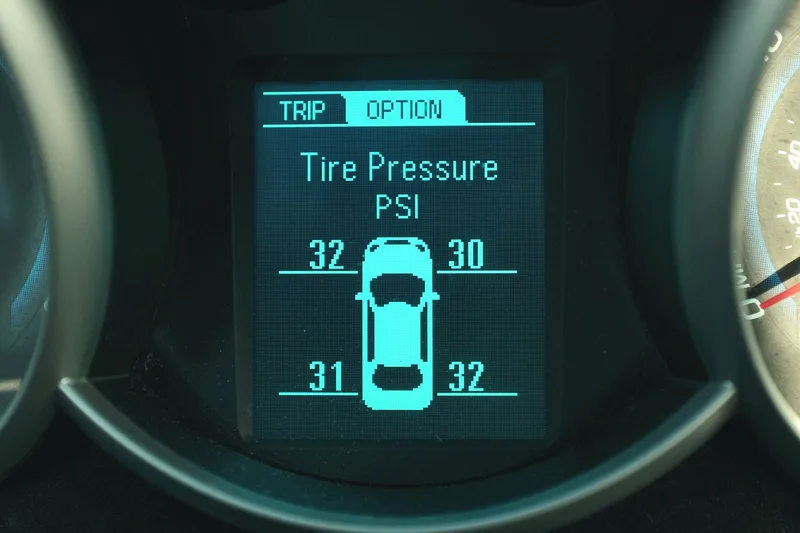
In 1971 Fairchild Semiconductor and RCA Laboratories put forward MOS large-scale integration chips for a long list of jobs: transmission control, adaptive cruise control, alternators, headlight dimmers, fuel pumps, fuel injection, ignition control, tachometers, sequential turn signals, tyre-pressure monitors, voltage regulators, wiper control, skid prevention and climate control.
Japan's electronics industry began making integrated circuits and microcontrollers for its car makers in the early 1970s, covering entertainment, wipers, locks, dashboards and engine control. Ford's EEC engine control system, which used a Toshiba microprocessor, reached mass production in 1975, and in 1978 the Cadillac Seville offered a trip computer built around a 6802 microprocessor.
Regulation pushed the trend. Electronically controlled ignition and fuel injection allowed designers to meet fuel economy and emissions requirements without losing performance or convenience. Cars now contain a dozen or more processors handling engine management, transmission, climate, antilock braking, passive safety and navigation.
What did electronics do for electric cars?
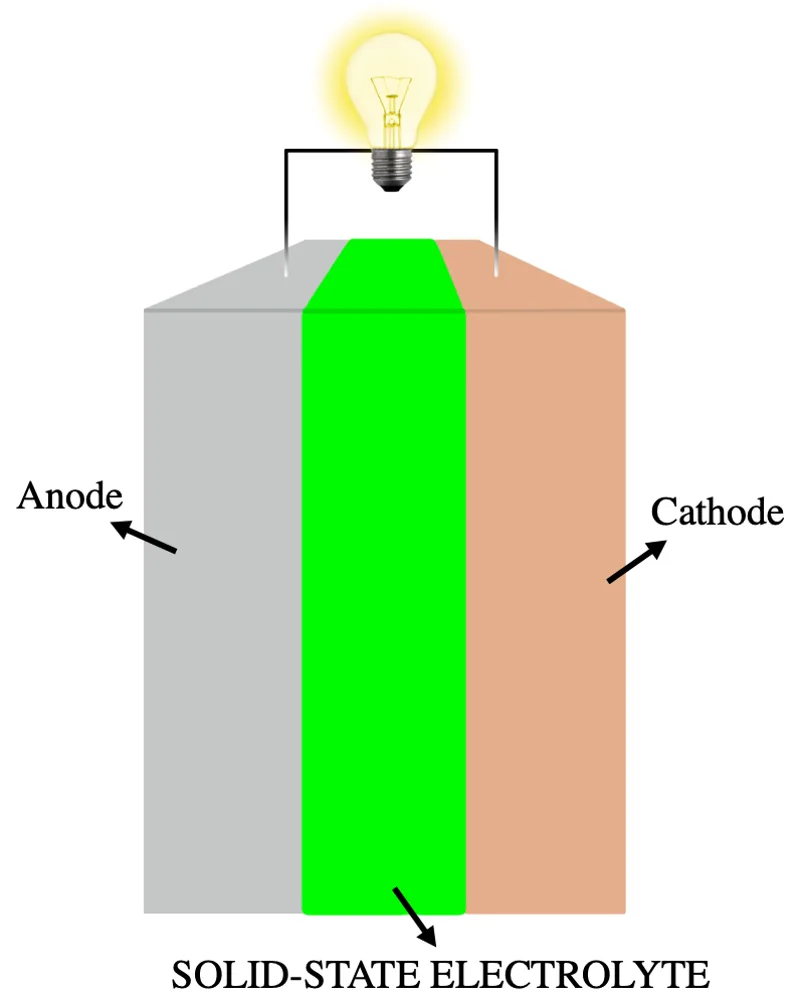
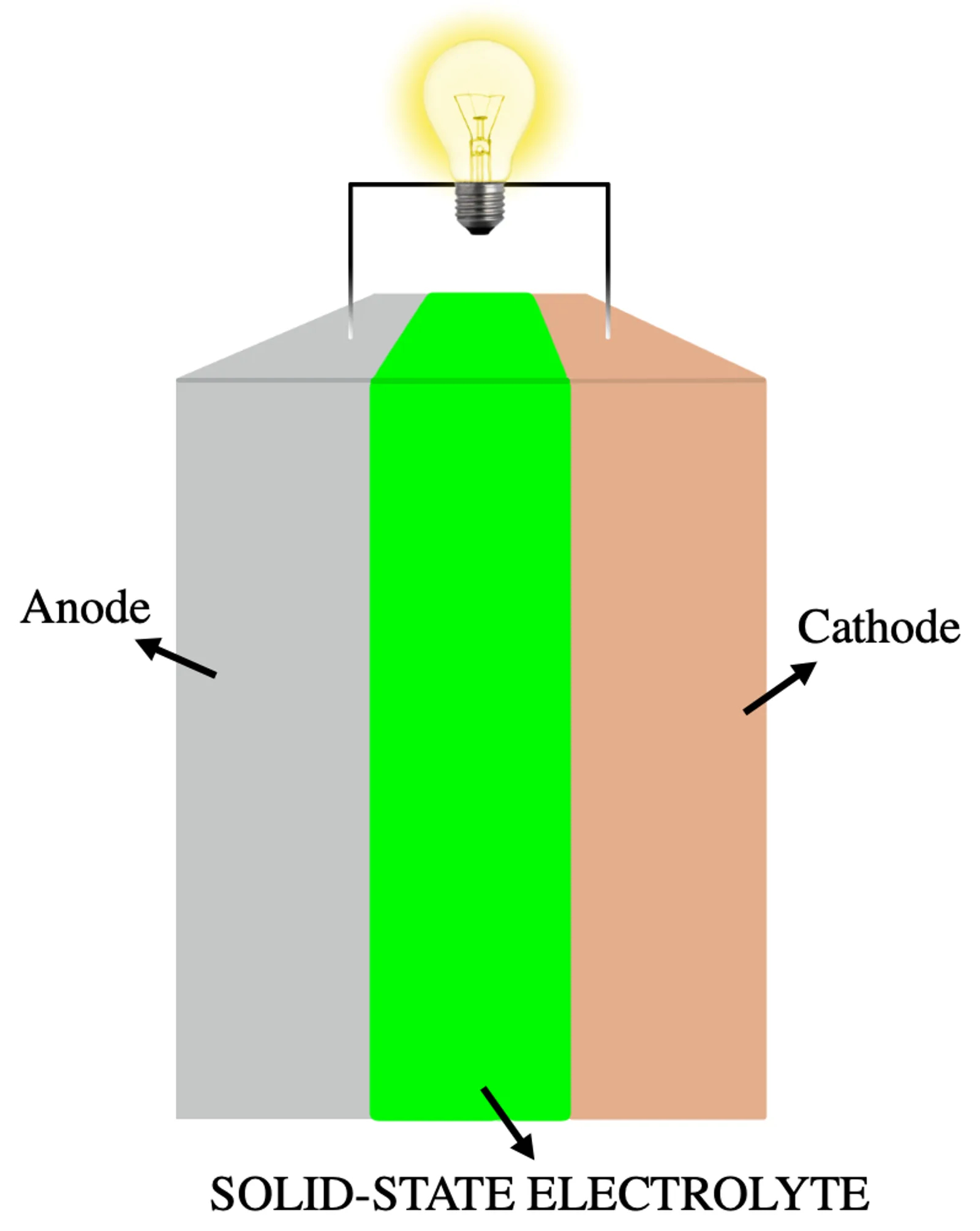
The power MOSFET and the microcontroller moved electric vehicles forward. MOSFET power converters switched at much higher frequencies, were easier to drive, wasted less power and cost far less, while a single-chip microcontroller could manage the whole drive and the battery.
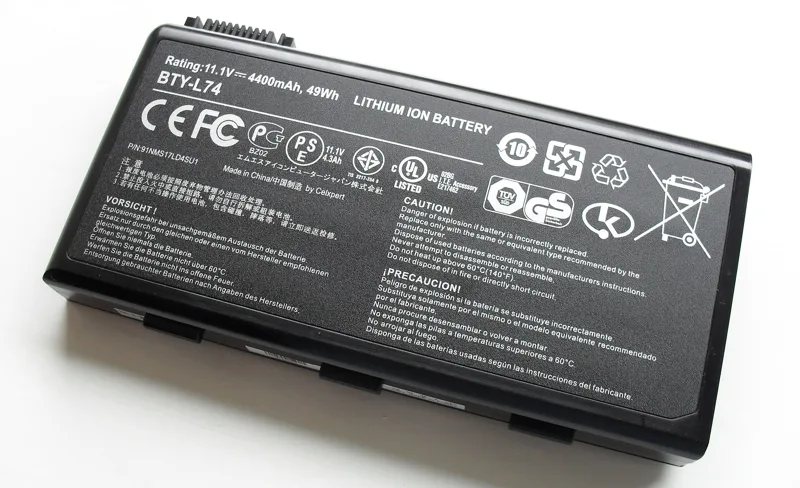
The estimated power semiconductor content of an average mid-range passenger vehicle was $100 to $200 in 2000, and 3 to 5 times that for electric and hybrid models. By 2017 the average vehicle had over 50 actuators, usually controlled by power MOSFETs or similar devices. The lithium-ion battery, which came from John Goodenough, Rachid Yazami and Akira Yoshino during the 1980s, made long-distance electric cars possible by the 2000s.
In 1950 electronics were about 1% of a car's value. By 2010 they were around 30%.
How many computers does a modern car have?
A modern car may have up to 100 electronic control units, or ECUs, and a commercial vehicle up to 40. One estimate puts a 2020s car at 50 to 150 chips.
Engineers group these distributed systems into domains:
- Engine control
- Gearbox control
- Chassis systems
- Passive safety
- Driver assistance
- Comfort
- Infotainment
- Integrated cockpit units
What does the engine ECU control?
The engine control unit is among the most demanding parts of any car. The engine is fast and complex, so its controller works to some of the tightest real-time deadlines in the vehicle, and it has the most computing power of any unit, typically a 32-bit processor.
A diesel ECU handles injection rate, emissions including NOx, regeneration of the catalytic converter, turbocharging, cooling and throttle. A petrol ECU manages lambda control, on-board diagnostics, ignition, injection, cooling, throttle and, in a few cases, lubrication. Between 20 and 50 sensors report pressure, temperature, flow, engine speed, oxygen and NOx to the ECU, which drives around 20 to 30 actuators such as the throttle valve, the EGR valve and the fuel injectors.
What about brakes, safety and comfort?
The transmission controller exchanges messages with the engine ECU and manages gear changes for better shift comfort and less torque interruption. The chassis domain covers anti-lock braking, traction control, brake assist, electronic brakeforce distribution, damper control, stability programmes and parking assistance.
Passive safety electronics include air bags, hill descent control and emergency brake assist, and driver assistance covers lane assist, speed assist, blind spot detection, park assist, adaptive cruise control and pre-collision assist. Comfort functions range from automatic climate control and memory seats to automatic wipers and headlamps. Navigation, audio and information access together make up the infotainment system.
What is an integrated cockpit ECU?
It is a newer hybrid unit that combines the work of several ECUs: the infotainment head unit, driver assistance, the instrument cluster, rear camera and parking assistance, and surround view. That saves on electronics and on physical parts such as the interconnects between units, and it allows more centralised control and easier exchange of data.
Complexity is the price. A hybrid system demands much more rigour to validate for robustness, safety and security. If the infotainment application were breached, hackers might in principle take control of the car remotely, so hardware and software hypervisors are typically used to carve the car into separate trust and safety zones, each shielded from failures or breaches elsewhere.
What is the Unified Diagnostic Services protocol?
Unified Diagnostic Services, or UDS, is the protocol ECUs use to communicate for diagnostics. ISO 14229 defines it, and it grew out of ISO 14230, known as KWP2000, now largely obsolete.
The word unified means the UDS protocol is an international standard, not a manufacturer's own. Nearly all Tier 1 suppliers build it into the ECUs they develop for car makers, and it is also built into larger software architectures including AUTOSAR.
Which buses can UDS use?
| Physical or data link layer | Standard |
|---|---|
| Ethernet | ISO 13400 |
| K-Line | ISO 14230 |
| CAN | ISO 11898 |
| FlexRay | ISO 17458 |
| LIN | ISO 17987 |
UDS can run on so many networks because it specifies the session, presentation and application layers, layers 5 to 7 of the OSI model. In practice it is most often used over CAN through Diagnostic over CAN, defined in ISO 15765.
What can a workshop do with UDS?
A computer or diagnostic tool, called the tester or client, connects to the car's diagnostic interface and sends requests to the control units, which answer with a positive or a negative response. With that conversation a technician can read the fault memory of an individual control unit, update it with new firmware, switch one of its outputs on or off, or run special routines that help to understand the operating conditions of an ECU and diagnose faulty behaviour.
The message structure is compact. A request travels from the client to one or more servers, and its first byte is the Service Identifier. A response travels back from a server, and its first byte is usually the Response Service Identifier. A rejected request comes back with a Negative Response Code that says why.
What is OSEK and why does it matter?
OSEK is a standards body whose output covers an embedded operating system, a communication stack and a network management protocol for in-car embedded systems. The name is German for open systems and interfaces for vehicle electronics.
Its aim was dependable common software across all of a car's control units. It was founded in 1993 by a German consortium of BMW, Robert Bosch, DaimlerChrysler, Opel, Siemens and the Volkswagen Group, together with the University of Karlsruhe. Renault and PSA Peugeot Citroen, which had a similar project called VDX, joined in 1994, hence the official name OSEK/VDX.
OSEK is an open standard, and parts of it are standardised in ISO 17356. The specifications cover an event-triggered real-time operating system, an application-level communication protocol, network management, an offline configuration language called OIL and a debugging interface.
How does the OSEK operating system work?
It is built for small microcontrollers without a memory management unit, a choice favoured for safety-critical systems such as cars. Almost everything is fixed at compile time, so the number of tasks, stacks and mutexes cannot grow while the car is running.
There are two kinds of task. Basic tasks never block and run to completion, while enhanced tasks can sleep and block while waiting for events triggered by other tasks or interrupt routines. Priorities are static, tasks of equal priority are served first in, first out, and priority ceiling prevents deadlocks and priority inversion.
Scheduling can be preemptive, where a higher-priority task can always interrupt, non-preemptive, where interruption happens only at fixed points, or mixed, with groups of cooperating tasks also possible.
How does OSEK relate to AUTOSAR?
AUTOSAR carries the OSEK specifications into its Classic Platform. The AUTOSAR operating system is a superset of OSEK OS that stays backwards compatible and also covers OSEKtime, an optional time-triggered standard, while its communication module derives from OSEK COM. OSEKtime callbacks run at higher priority than ordinary OSEK tasks.
In 2003 a 48-page report by the Software Engineering Institute at Carnegie Mellon University examined the specifications. It identified possible weaknesses in the alarm and event mechanisms, with solutions, and also noted the potential of OSEK. Few implementations exist, and most are sold under commercial licences, while the open-source ones tend to be limited in scope.
Why does functional safety matter in car electronics?
Because inadequate development of safety-related systems can lead to personal injuries and also to serious legal and financial consequences, including cancelled products and recalls.
The IEC 61508 standard for programmable safety-related products is only partly adequate for cars, so the automotive industry uses ISO 26262 instead. Its final version was published as an international standard in November 2011, and it covers the whole life-cycle of safety-related systems in road vehicles, from the concept phase to decommissioning.
How are connected cars kept secure?
With cryptography and controlled access. As more functions connect to short- or long-range networks, systems need protection against unauthorised modification, because engine controls, gearbox, airbags and brakes are all tied into internal diagnostic networks. A remote intruder could alter or disable them, with a risk of injury or death.
Every new interface creates a new attack surface, and the convenience of unlocking and starting a car with a phone app brings its own risk. Manufacturers may protect the memory of control microprocessors both to stop unauthorised changes and to make sure only authorised facilities can diagnose or repair the vehicle. Keyless entry uses cryptographic techniques so that replay or man-in-the-middle attacks cannot record sequences for a later break-in. A 2015 probe commissioned by the German general automobile club into one maker's electronics found weaknesses that could have allowed unauthorised remote unlocking.
Where this goes next
Autonomous cars are expected to depend on heavy computing, many sensors, networking and satellite navigation, and each of those needs electronics. The integrated cockpit units described above are a newer generation, and the expectation is that such systems will arrive soon if they have not already.