State of health has no standard formula, heat and charging limits matter, and a battery management system works constantly to protect the pack.
EV battery health is shown as a state of health percentage, 100% when new and about 70-80% at end of life. There is no industry-standard formula. Heat, charging limits, driving style and climate drive wear, and a battery management system works to protect the pack.
There is no industry-wide formula for the battery health percentage an electric car reports. The designer of each battery management system picks the measurements and decides how heavily to weigh them, and the recipe can even be a trade secret. What wears a pack down, what the car does to slow it and what that percentage really tells you all follow from that.
How is EV battery health measured?
Battery health is expressed as state of health, or SoH, a percentage comparing the pack with its ideal condition. A new battery whose capacity matches its specification scores 100%. Because SoH is not tied to a single physical quality, the industry has no agreed method for calculating it, and each system defines its own.
A pack does not always start at the top. If its performance on the factory floor misses the specification, its first reading is below 100%. From there the number normally falls with age and use.
The designer of a battery management system can draw on any of these inputs, alone or combined: internal resistance, impedance or conductance; capacity; voltage; self-discharge; the ability to accept a charge; the number of charge and discharge cycles; the age of the pack; the temperatures it has experienced; and the total energy that has passed through it. The designer also gives each input an arbitrary weight, so a figure from one system need not mean the same as the identical figure from another.
The routine is the same everywhere. The management system works out the SoH and reports it, and the application the battery serves compares it against a threshold. That comparison tells you whether the pack suits the job and gives an estimate of how long it can keep doing it.
A health figure is only as meaningful as the recipe behind it, and the recipe can be a trade secret.
How long do EV batteries last, and when is one worn out?
A battery counts as worn out for a car when its state of health falls to roughly 70-80%, measured against its original capacity. At that point it is normally replaced, because performance becomes unstable and unreliable. How soon a pack reaches that line depends on how it is used, and the factors are set out below.
The 70-80% limit is tied to a practical symptom. In general the first working life of a battery in an electric vehicle or in electronic equipment ends at that level, and it typically shows up as sudden drops in the supplied voltage, after which the connected power electronics cannot operate normally.
The threshold is a choice made by each application. One use may accept a battery at 50% and above, while a more critical one may demand 90% and above. By the same logic, a pack that has fallen below the level a car needs can still clear the bar for a less demanding job.
What makes an EV battery degrade fastest?
In electric vehicles the biggest contributors to battery wear are driver patterns, driver aggression, climate, the thermal behaviour of the cabin, and the charging infrastructure used. Of these, driver patterns and climate carry the most weight. Cycle count and the age of the pack also feed into health calculations.
Read that list as a driver would. Most of it describes how and where the car is used rather than how it was built, and the two heaviest items, driving patterns and climate, are the ones that differ most from owner to owner.
Behind these factors sit the limits of the chemistry itself. Three conditions stand out for lithium-ion cells: heat held for a long time, charging outside the temperature window, and pushing voltage or current past the design limits.
How do heat and cold affect an EV battery?
Lithium-ion cells tolerate high temperatures well, yet sustained heat shortens battery life. Cool conditions suit charging, and fast charging is possible between 5 and 45 degrees C (41 to 113 degrees F). Between 0 and 5 degrees C charging can go ahead, but the current should be reduced.
Notice that the charging limits are stricter than the operating limits. In other words, a cell can operate at a temperature at which it should not be charged.
The management system does that managing. If the pack strays outside its safe operating area, the system can switch on heaters, fans, air conditioning or liquid cooling, or ask the connected devices to reduce or stop drawing or charging. It watches for both over-temperature and under-temperature.
Does fast charging damage an EV battery?
The evidence here concerns limits rather than speed alone. Cells accept fast charging within 5 to 45 degrees C (41 to 113 degrees F). Breaking the voltage and current limits creates excess heating, and long exposure to heat shortens life. Charging infrastructure is one of the factors named in EV battery degradation.
The usual method for lithium-ion cells is called constant current, constant voltage. In the first phase the charger holds the current steady while the voltage climbs. When the cell reaches its maximum charging voltage, the charger switches to the second phase, holding that voltage while the current slowly tapers until it reaches a minimum threshold. If the cell starts out at too low a voltage, a very small current, known as trickle charging, is used until it reaches a safe level.
Overstepping the limits is the real danger. Ignoring the current and voltage limits can heat the cell excessively, and charging past the voltage it was designed for can end in an explosion. In a lithium cobalt oxide cell, overdischarging can lead to an irreversible reaction that forms lithium oxide, while overcharging up to 5.2 volts produces cobalt (IV) oxide.
The management system sits between the charger and the cells. It works out a charge current limit and a discharge current limit, and in an EV it will request a lower charge current from the charger when conditions call for it.
What does the battery management system do to protect the pack?
A battery management system monitors voltage, temperature, coolant flow and current, estimates the state of charge and state of health, and guards against over-charge, over-discharge, over-current and extreme temperatures. It can open an internal switch, ask devices to reduce or stop using the pack, or control the environment around it.
It also keeps the cells in step. Balancing holds all the cells at one common voltage or charge level so that capacity is maximised and no cell is locally under- or over-charged. The system can bleed energy from the fullest cells into a load, or move energy from the fullest cells to the emptiest.
Cell voltage alone is a poor guide to state of charge, and for lithium iron phosphate cells it is no guide at all. That is why simple passive regulators, which just equalise voltage, have limited effectiveness. They make the voltages match without making the charge levels match.
Systems come in three layouts. A centralised system is the cheapest and the least expandable, with a single controller wired to every cell. A distributed system puts a board on each cell with one communication cable to the controller, which makes it the simplest to install and the most expensive. A modular system is a compromise, with a few controllers each handling a group of cells.
In a vehicle the management system is only one subsystem and cannot work alone. It must communicate with at least the charger or charging infrastructure, the load, the thermal management and the emergency shutdown, and CAN bus communication is common in cars. It also steers energy recovered from regenerative braking back into the pack and, when connecting the battery to the vehicle, can run a precharge step through its contactors to avoid a large inrush of current.
Why do some EVs cool the pack with air and others with liquid?
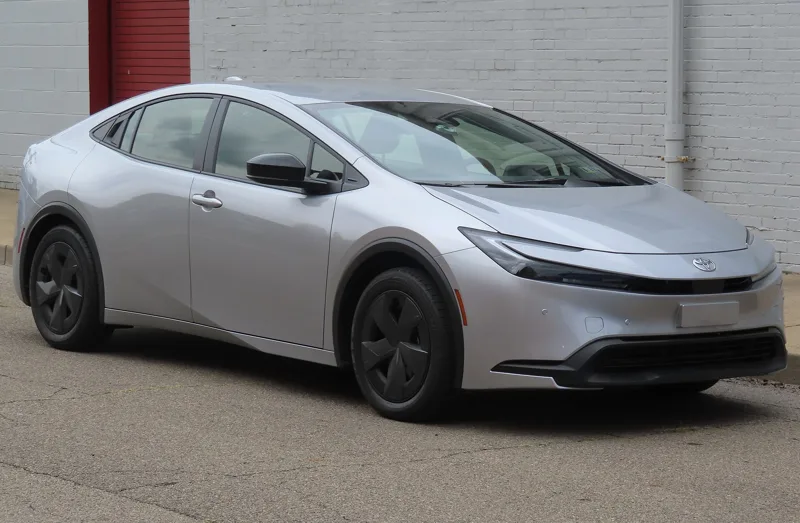
Air cooling is simple, either passive, relying on convection, or active, using fans. Fans cool the packs in both the Honda Insight and the Toyota Prius. Its drawback is inefficiency: it needs large amounts of power, far more than active liquid cooling, and the extra parts add weight. Liquid conducts heat better.
Liquid coolants generally have higher thermal conductivity than air. The cells can sit in the coolant directly, or the coolant can run through the system without touching them. The indirect version has its own problem: the longer cooling channels can create large temperature differences across the pack. Pumping the coolant faster reduces those differences, which sets up a trade-off between pumping speed and an even temperature.
Which lithium-ion chemistries are built to last?
Chemistry sets the balance between energy, power and life. Iron phosphate, manganese oxide variants and NMC are the families pitched at longevity and strong discharge. NMC and its relatives are widely used to electrify transport, while NCA is a high-energy option that is common in electric vehicle batteries.
Chemistries side by side
| Chemistry | What is said about it |
|---|---|
| Lithium cobalt oxide (LiCoO2) | Handheld electronics, with a graphite anode: high energy density |
| Lithium iron phosphate (LiFePO4) | Possible longer life; researchers look to it as a way around cobalt |
| Lithium manganese oxide (LiMn2O4) and lithium-rich layered materials (LMR-NMC) | Same long-life, high-discharge pitch as iron phosphate |
| Lithium nickel manganese cobalt oxide (NMC) | Widely used to electrify transport, with the same pitch for life and discharge |
| Lithium nickel cobalt aluminum oxide (NCA) | High-energy chemistry commonly used in electric vehicle batteries |
How does a lithium-ion cell store energy?
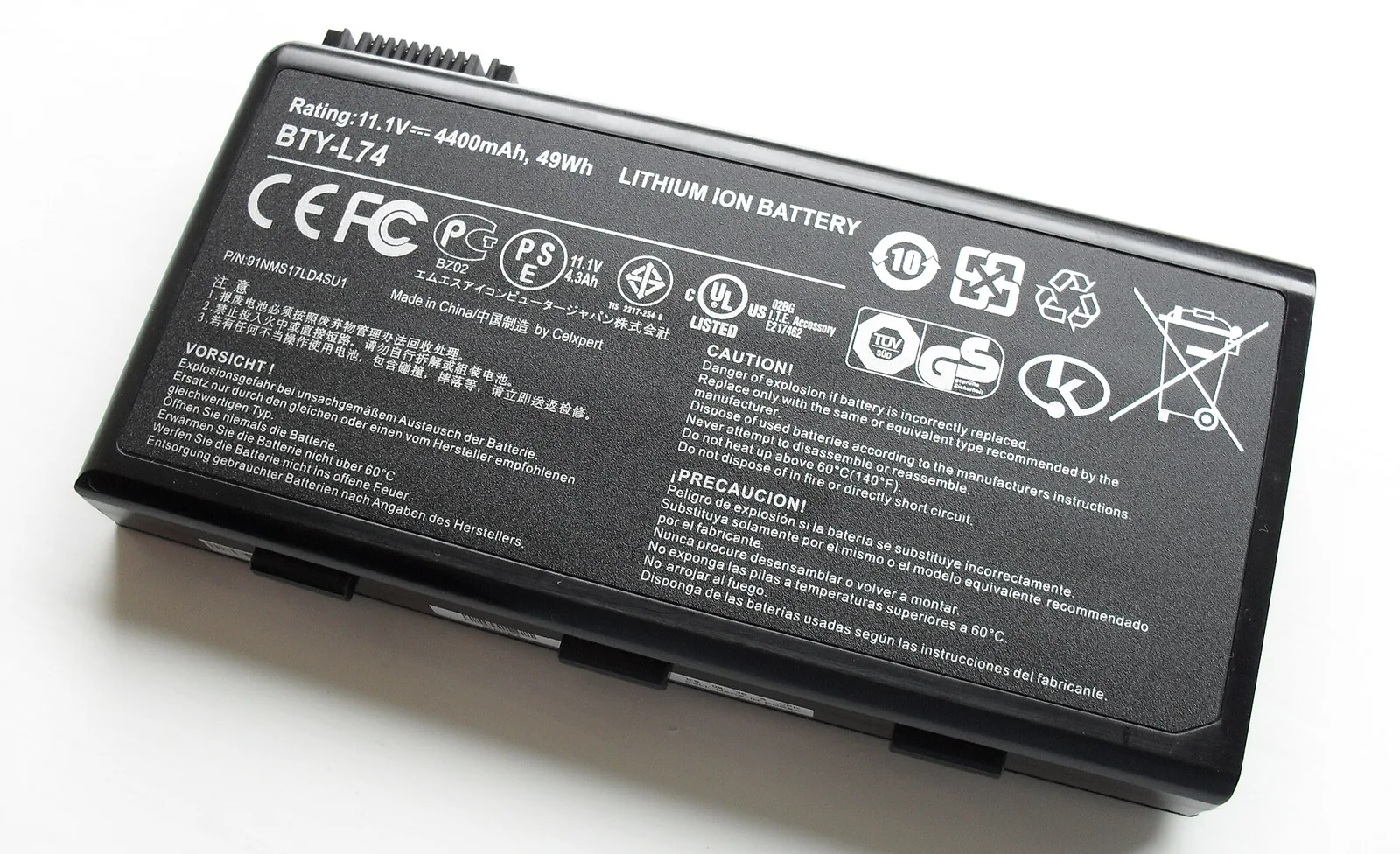
A lithium-ion cell stores energy by shuttling lithium ions between two electrodes through a liquid electrolyte, while electrons travel around an external circuit. Discharging moves ions one way, charging moves them back, and for that reason the cells are called rocking-chair batteries. The negative electrode is usually graphite.
Picture two buildings connected by a corridor. Ions are commuters walking between them through the corridor, which is the electrolyte, while their electrons take a separate road outside, which is the circuit that powers the car. On discharge the ions leave the negative electrode and settle in the positive one. Charging has to push them back, so the outside circuit must supply energy, and some of it is lost along the way because the efficiency of the process is below 1.
The positive electrode material is where the chemistries differ: lithium cobalt oxide, lithium iron phosphate or a nickel manganese cobalt oxide. The electrolyte is typically a solution of lithium hexafluorophosphate in a mixture of organic carbonates, and silicon is often mixed into the graphite to raise the capacity. A cell typically sits at a nominal voltage of 3.6 or 3.7 V, and sizes are not standardised, so formats vary from one device or supplier to another.
Where did the lithium-ion battery come from?
M. Stanley Whittingham created the first rechargeable lithium-ion battery in the 1970s, John Goodenough improved it in 1980, and Akira Yoshino built the first modern prototype in 1985. Sony and Asahi Kasei began selling the cells in 1991. The three inventors shared the 2019 Nobel Prize in Chemistry.
Whittingham's cell paired a cathode of titanium disulfide with a lithium-aluminium anode, but it had safety problems and never reached the market. Goodenough used lithium cobalt oxide as the cathode. Yoshino swapped the lithium metal anode for a carbon-based one, and a team led by Yoshio Nishi commercialised the design in 1991.
Over the three decades that followed, the volumetric energy density of the cells tripled and their cost fell tenfold. By late 2024 worldwide demand had passed 1 terawatt-hour a year, with production capacity at more than double that.
What does all this mean for someone buying or driving an EV?
The facts point to a handful of practical lessons. A pack's health figure is an estimate defined by whoever designed the management system, so it is not a universal yardstick. Driving patterns and climate matter most, and charging belongs inside the cell's temperature window.
Chemistry is a trade-off as well: lithium cobalt oxide favours energy density, while the iron-phosphate, manganese and NMC families are the ones with a case for longevity.
Where this goes next
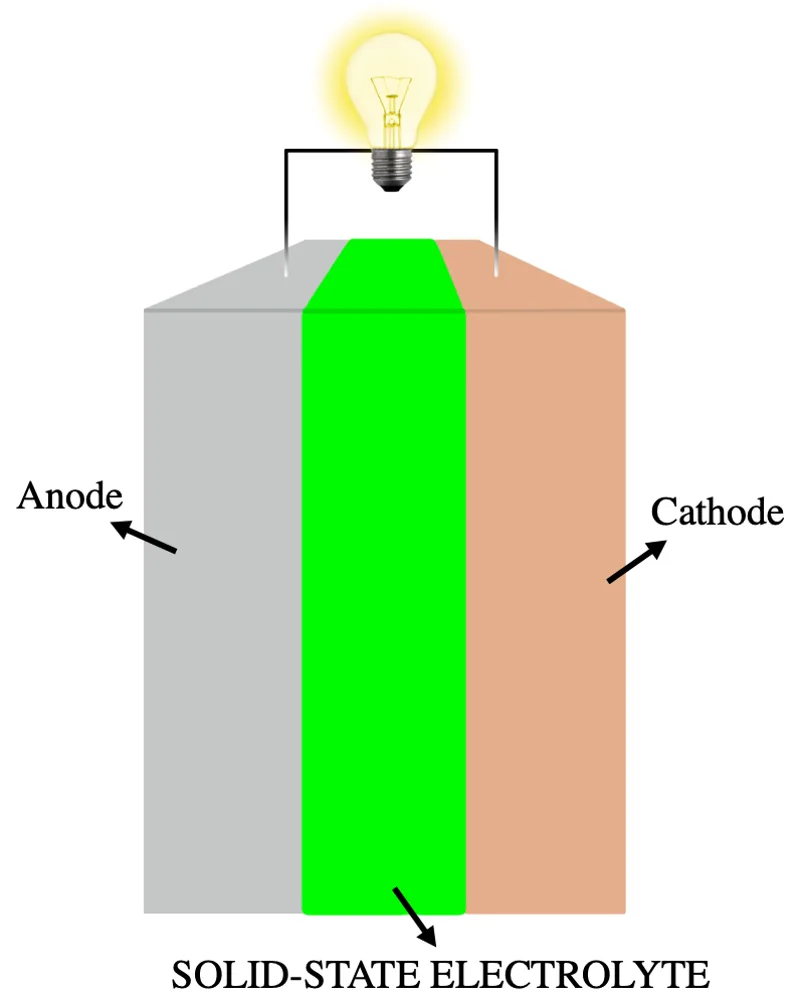
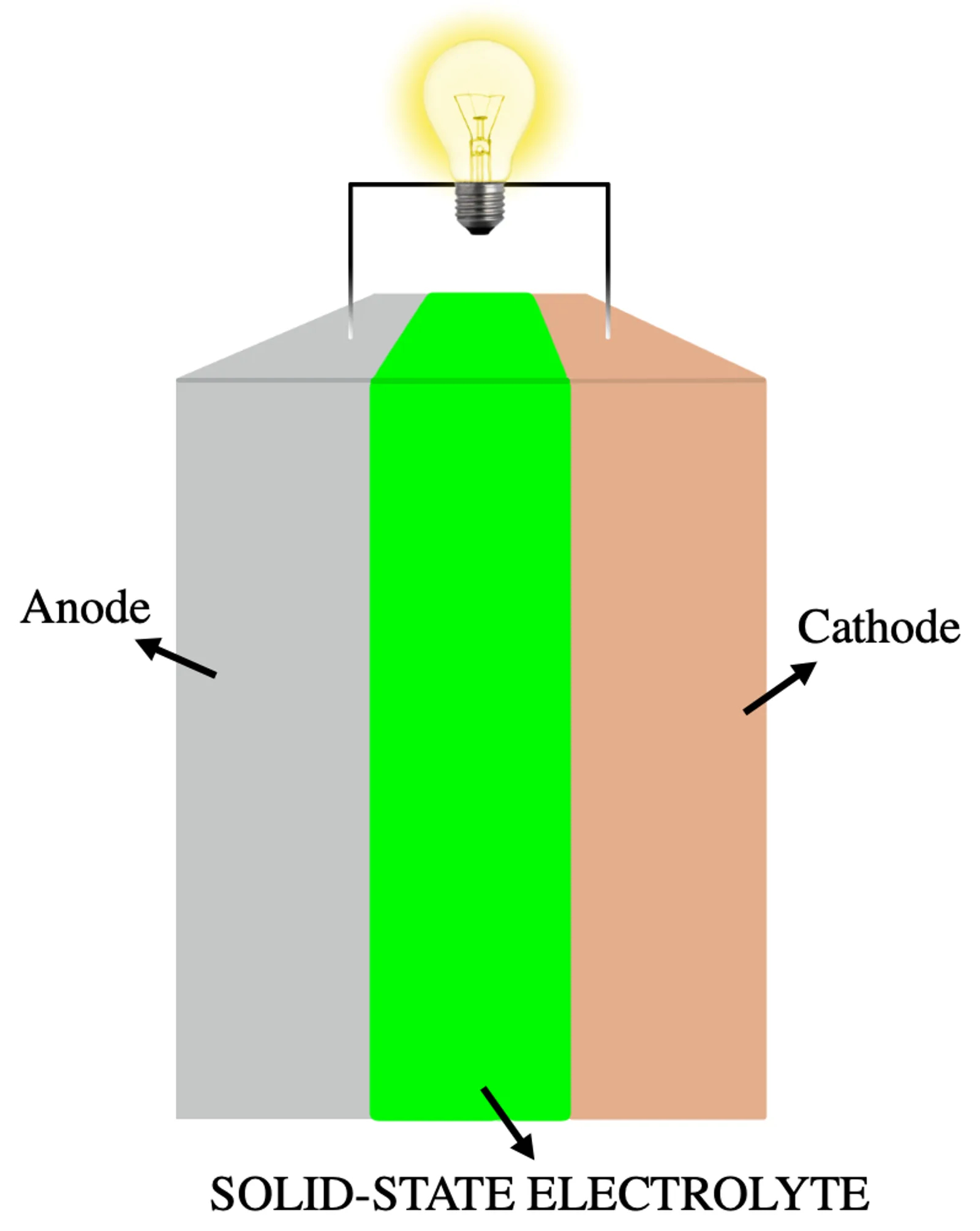
Lithium-ion batteries contain flammable electrolytes and can be a fire or explosion hazard, so work continues on safer cells. Solid-state batteries are being developed to remove the flammable electrolyte. Mining raises its own issues: lithium is water intensive in often arid regions, and cobalt can be a conflict mineral.
Those concerns have pushed some researchers to improve how efficiently minerals are used and to look for alternatives, including lithium iron phosphate chemistries, sodium-ion cells and iron-air batteries.