Nearly every lead-acid car battery is recycled. In 2019 only 5 per cent of EV batteries were. Where the rest go, from home storage to the smelter.
A retired EV battery is either repurposed for stationary storage once it drops to about 80 per cent of its original capacity, or recycled to recover lithium, cobalt, nickel and copper. Only 5 per cent of electric vehicle batteries were recycled in 2019, against nearly 99 per cent for lead-acid.
Almost every lead-acid battery that leaves a car ends up recycled, nearly 99 per cent of them. For electric car batteries the picture is different: in 2019, only 5 per cent were recycled. The gap between those two numbers is the story of what happens to an electric car's most expensive component once the car itself has run its course.
When is an EV battery at the end of its life?
There is no single moment. End of life depends on the owner's willingness to keep driving as the range shrinks, on the health of the car's other components, and on whether the car has been in a crash. For practical purposes, studies of repurposing usually draw the line when a battery's capacity has fallen to 80 per cent of what it started with. That figure appears to come from a definition used by the American Battery Consortium, which looks at delivered capacity or peak power against the rated value.
Judging a pack is harder than it sounds. Degradation is uneven and depends on temperature during use and on how the battery is charged and discharged, so each cell in a pack can age differently. The battery management system can report state of health for the pack as a whole but not for individual cells. Engineers can reduce the damage with better thermal management, and electrochemical impedance spectroscopy can be used to check the quality of a pack.
A lead-acid battery gets recycled almost every time. For electric car packs, the system is still being built.
Can an old EV pack be reused?
Reuse is one of the recognised ways to deal with a retired pack. Giving it a job in stationary storage squeezes more value from the cells and lowers the lifecycle impact for each kilowatt-hour. There have been several successes, with storage projects built from second-life EV batteries doing less demanding work such as peak shaving, or adding capacity next to renewable generating sources.
Getting there takes effort. Taking apart modules and cells is costly and slow, and a module must be fully discharged first. The pack then has to be stripped down and rebuilt to deliver the power and energy its new job demands. A refurbisher can sell or reuse the energy drawn out of a module to offset some of that cost, and robots are being brought in to make the dismantling safer.
Other obstacles are less obvious. Battery technology is opaque and lacks standards. Because the battery is the heart of the car, manufacturers find it hard to label the exact cathode, anode and electrolyte chemistry on a pack, and cell and pack designs change every year. A refurbisher therefore has to work closely with the maker to keep up. A government could set a labelling standard to ease the problem.
Economics cut the other way too. Battery costs have fallen faster than predicted, so a refurbished unit can look less attractive than a new one.
How is a lithium-ion battery recycled?
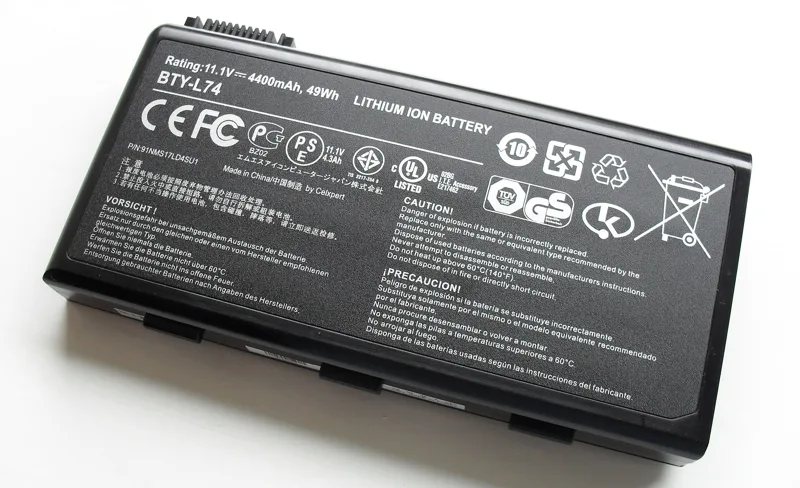
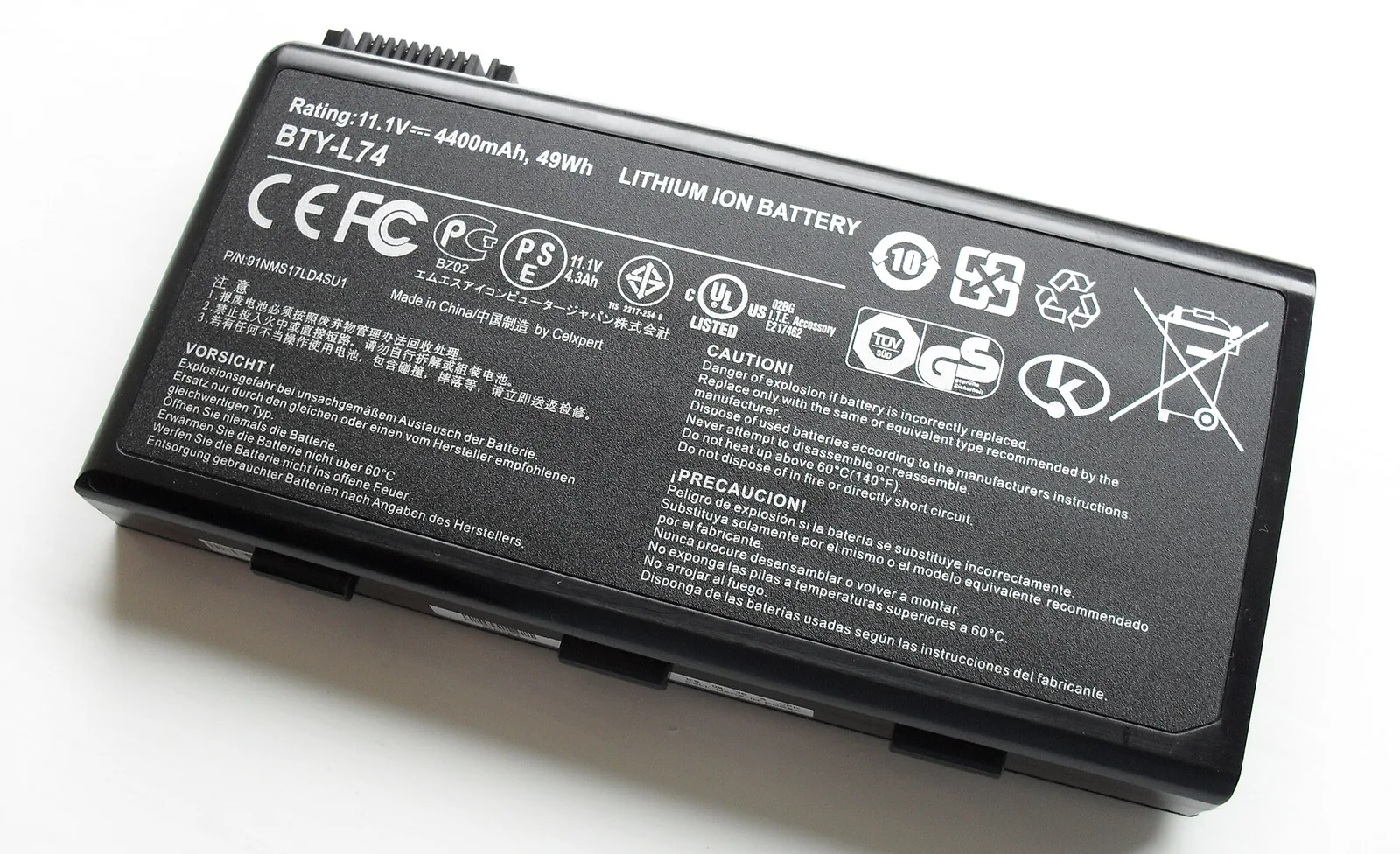
Inside a lithium-ion cell sit lithium plus high-grade copper and aluminium, and the chemistry may add cobalt and nickel. Graphite and manganese are other recoverable materials. Recycling is needed to avoid a coming squeeze on cobalt, nickel and lithium supplies, and today's processes recover roughly 25 to 96 per cent of the materials in a cell. To get there, several steps are combined into complex chains:
- Deactivating or discharging the battery, which matters especially for electric car packs.
- Disassembling the battery system.
- Mechanical processing: crushing, sorting and sieving.
- Recovering the electrolyte.
- Recovering the metals, by hydrometallurgical or pyrometallurgical processes or by direct recycling.
Safety is a constant worry. The dangers are electrical, chemical and thermal, and they can interact. Lithium hexafluorophosphate, a possible electrolyte, reacts with water to form hydrofluoric acid, so cells are frequently submerged in a solvent as protection. The jelly rolls are lifted out and separated, and ultrasonic agitation frees the materials, which leaves electrodes ready to be melted down. Pouch cells give up their copper more easily, though they carry significant safety issues of their own.
Which methods recover the metals?
| Method | How it works | Strengths | Drawbacks |
|---|---|---|---|
| Hydrometallurgical | Metals dissolved in acid, then precipitated as salts | Low energy use, low cost, little hazardous gas | Dangerous acids, complicated processing |
| Pyrometallurgical | Cathode material smelted or roasted at high temperature | Flexible, easy to scale, less hazardous waste | High capital cost, high energy use, process CO2 |
| Direct recycling | Cathode regenerated without breaking its crystal structure | Higher-value product | Not yet commercialised |
In the hydrometallurgical route, the metals are first drawn into an aqueous solution, typically with acids such as sulfuric acid and with hydrogen peroxide as a reducing agent. Each metal is then precipitated out selectively as a salt. The method uses little energy and gives off little hazardous gas, but the acids pose safety concerns and the selective precipitation of every metal salt calls for extensive processing.
The pyrometallurgical route starts by separating the cathode material from binders, organic electrolyte solutions and aluminium foil. That can be done by incineration, which burns the organic parts in an oxygen-rich setting, or by pyrolysis, which decomposes them without oxygen. Incineration generally needs lower temperatures and less time, while pyrolysis gives lower carbon monoxide and carbon dioxide emissions and can capture fluorine-containing electrolytes from the off-gases.
Smelting then melts the cathode mixture at temperatures typically in excess of 1000 degrees C, producing an alloy rich in cobalt, nickel, iron and copper that sinks below the slag. Conventional smelting cannot recover lithium or manganese, because they end up in the slag, although changes to the slag system have been proposed to catch them. Roasting is the gentler alternative. Carbothermal reduction yields a mixed-metal alloy at 650 to 1000 degrees C, while salt-assisted roasting makes water-soluble metal products and can run at temperatures as low as 200 degrees C in some systems. Both can recover lithium without significant changes to the process.
Because it is flexible and simple to scale, pyrometallurgy ranks among the most widely used techniques, applied by companies such as Umicore, Sony and GEM.
What is direct recycling?
Think of hydrometallurgy and pyrometallurgy as breaking a finished building back into bricks and sand, then rebuilding from scratch. Direct recycling tries to rescue the building. It aims to regenerate the cathode material without damaging its crystal structure, which produces a higher-value product than the other methods and is an important gain in efficiency.
The difficulty is the first step. The cathode black mass, containing lithium, cobalt, manganese and nickel, must be separated from the rest of the cell. Shredding, the usual method, introduces impurities, and the alternative of using solvents has its own problem: many of the organic solvents studied are toxic to people and the environment. Finding safer ones is a topic of current research. The recovered material then goes through relithiation, which puts back the lithium lost during use, by solid-state, electrochemical or solution-based means. Research indicates the process can restore cathode materials to their original capacity and performance, but direct recycling is not yet commercialised.
A newer idea, in-situ regeneration, extends a battery's life without taking it apart. It adds lithium to the anode material to correct lithium deficiencies, though electrolyte has to be swapped in and out of the cell, which would mean rethinking how cells are packaged. Its scope is limited, so it suits chemistries that degrade through trapped lithium, such as lithium iron phosphate.
How much of it really gets recycled?
Estimates differ widely. The US Government and others estimated in 2021 that at most 15 per cent of lithium batteries were recycled at the end of their life in 2019, while some recycling advocates claim that most were. For electric vehicle packs specifically, the figure for 2019 was only 5 per cent. Recyclability is not currently a significant consideration in how manufacturers design batteries.
Lead-acid batteries show what a mature system looks like. They are ground up, the acid is neutralised and the polymers separated from the lead, and the recovered materials go into new batteries. Some US states and Canadian provinces charge a refundable deposit, and shops selling new car batteries may collect old ones, or be required to by law. A 2019 study commissioned by the industry group Battery Council found that 99.0 per cent of the lead remaining in the United States after exports was reclaimed between 2014 and 2018, with 13.5 billion of 13.6 billion pounds recycled.
The history of lead shows that rates can swing. The US Environmental Protection Agency reported lead-acid recycling rates that slid from 97 percent in 1965 to 61 percent by 1983, with the 1980 figure above 83 percent and the 1985 figure near 70 percent, and blamed the swings on economics and regulation.
Does recycling make an EV greener?
The battery makes up a significant share of an electric car's cost and environmental impact, so what happens at its end counts. The raw materials are mined in Australia, Russia, New Caledonia and Indonesia, and every later step is currently dominated by China. Lithium mining is water intensive in often arid regions, and cobalt can be a conflict mineral.
The case for closing the loop rests on supply and on the environment. Supplies of nickel, cobalt and lithium are predicted to tighten, and recycling EV batteries has the potential to maximise the environmental benefit. Reusing a pack for stationary storage also lowers the lifecycle impact per kilowatt-hour. Makers are leaning harder on sustainability, trying to use fewer rare-earth minerals and to improve recycling.
Recycling itself is not free of harm. It can release harmful materials to the environment and to the workers who handle the batteries, and pyrometallurgy brings substantial process CO2 emissions.
How are battery chemistries changing the picture?
Lithium nickel manganese cobalt oxide cells remain the most common in electric cars, but lithium iron phosphate reached 41 per cent of global market share by capacity for battery electric vehicles in 2023. It needs no cobalt or manganese, is heavier but cheaper and more sustainable, and is the type for which in-situ regeneration works well. Sodium-ion batteries avoid critical minerals altogether. Chinese makers began delivering the first models in early 2024, and by 2026 they sit in mass-production cars such as the Changan Nevo A06.
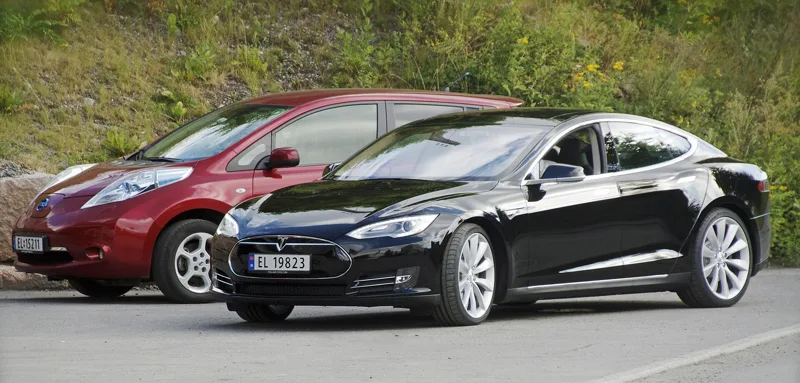
That matters for recyclers, whose business case rests on valuable metals. Demand for electric vehicle batteries exceeded 750 GWh in 2023, with capacities in available models from 21 to 123 kWh and an average of 80 kWh. A pack of that size holds a lot of material, and what it contains is shifting.
Where this goes next
A market for lithium recycled from batteries is expected to exist by 2040, and it could squeeze hard-rock lithium mining, which yields relatively expensive lithium compared with brines. Lithium mining in Australia is expected to be hit in particular.