How long EV batteries last, how depreciation works, and what to ask a seller, with the Nissan Leaf as a worked example.
A used electric car is worth buying when the battery is healthy and range suits your journeys. Researchers treat a pack as spent at 80% of original capacity, so ask for the pack-level state of health, the chemistry, the cooling type and the usable capacity before paying.
Researchers who study second-hand batteries do not wait for a battery to die before calling it finished. They usually draw the line when capacity slips to 80% of what it was when new. Meanwhile some first-generation Toyota RAV4 EVs, powered by nickel-metal hydride packs, are still running after more than a decade and 100,000 miles (160,000 km). A battery's age and its condition are two different questions, and the second one decides whether a used electric car is a bargain.
How long do used EV batteries really last?
There is no single lifespan. Where a battery's life ends depends on several things at once: how willing the owner is to keep driving as range declines, the health of the rest of the car, and whether the vehicle is ever in a crash. For practical purposes, studies that look at reusing packs call a battery spent when it reaches 80% of its original capacity. That is a convention for sorting packs, and it says nothing about the car stopping.
Degradation is also uneven. It depends on temperature during driving and on charging and discharging habits, and each cell inside a pack can age differently. The battery management system reports a state-of-health figure for the pack as a whole, but not yet for individual cells. A single number therefore hides some of the picture.
Chemistry matters as well. Lithium nickel manganese cobalt oxide, known as NMC, is the most common type in electric cars and has been the global standard since the 2010s. It is sensitive to temperature, loses power in the cold, and degrades with age. Early cells would neither take nor deliver charge in extreme cold, and heaters are used in some climates to warm them. Traditional lithium-ion cells also carry a fire risk if punctured or charged improperly.
Lithium iron phosphate, or LFP, is the rising alternative. Compared with NMC it trades some range for lower cost, better safety and a smaller environmental footprint, and it needs no manganese or cobalt. LFP reached 41% of the global BEV market by capacity in 2023. It now leads in China, while its share in Europe and North America stays under 10%. Lithium titanate batteries are known for safety and for cycle lives that often exceed 10,000 charge-discharge cycles, though they store less energy.
A battery's age and its condition are two different questions, and the second one decides whether a used EV is a bargain.
Used EV battery health: the checks to make before you sign
Put these questions to any seller.
- Ask for the pack-level state of health from the battery management system, and ask how it was measured. It describes the whole pack, not each cell.
- Ask which chemistry the car uses. Battery technology lacks common standards, makers find it difficult to label the exact chemistry on a pack, and capacity and cell design change from year to year.
- Ask how the car was charged and where it lived. Temperature in operation and charging patterns drive uneven wear.
- Ask whether the pack is air-cooled or liquid-cooled. Nissan introduced active liquid cooling on the Leaf only with the third generation, in 2025, replacing the passive air-cooled packs of earlier cars.
- Ask for the usable capacity, not just the headline figure. The 40 kWh Leaf pack has 39 kWh usable, and the 62 kWh pack has 59 kWh usable.
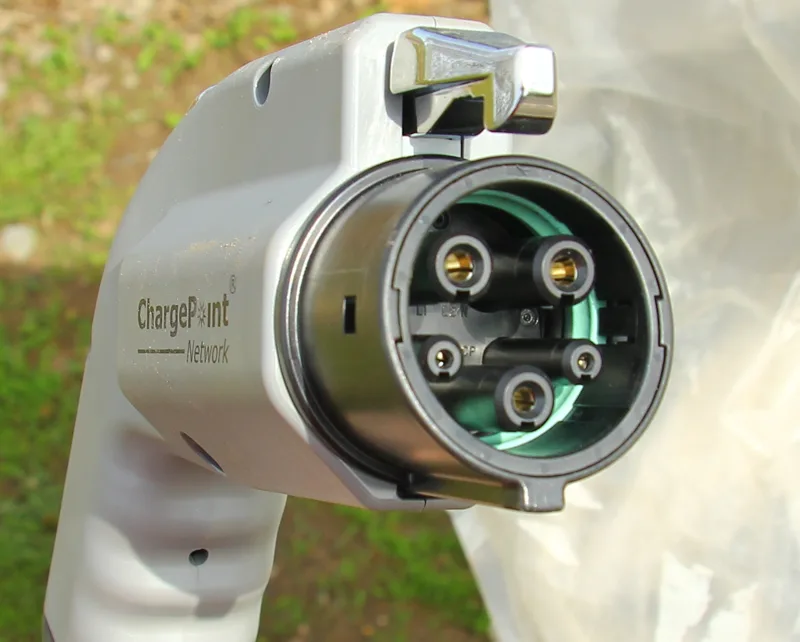
- Ask which charging standard the car uses and how quickly it can take charge. The second-generation Leaf accepts a 6.6 kW regular plug or a 50 kW CHAdeMO fast charger.
The range figure needs a test basis too. Leaf ranges are usually quoted as US EPA ratings, while Nissan's European claim for the third generation is 211 miles (340 km) at a steady 129 km/h (80 mph), so compare like with like when two cars sit on the same forecourt.
EV depreciation: what the numbers say
Depreciation means two things: the real fall in an asset's value, and the accounting method used to spread its cost over the years it is used. The accounting side gives a feel for how a car loses value.
The simplest method, straight-line, subtracts the expected salvage value from the purchase price and divides by the years of life. A vehicle bought at $17,000 with a salvage value of $2000 over 5 years loses $3,000 a year. A per-mile method does the same job by use: the same vehicle over an estimated 50,000 miles loses $0.30 a mile. Accelerated approaches, such as double-declining balance, take bigger bites in the early years and are described as a better representation of how vehicles depreciate. A car's book value is its original cost minus accumulated depreciation.
The battery is the part that could change that picture for an electric car. It makes up a significant share of the vehicle's cost, and one 2019 assessment put the fall in EV battery cost at 87% per kilowatt-hour. Refurbishers also report that battery costs have fallen faster than predicted, so a refurbished unit can look less attractive than a new one. Buyers weighing a used EV should expect its price to reflect what remains of the battery as well as the age of the car.
Best used electric cars: the Nissan Leaf as a case study
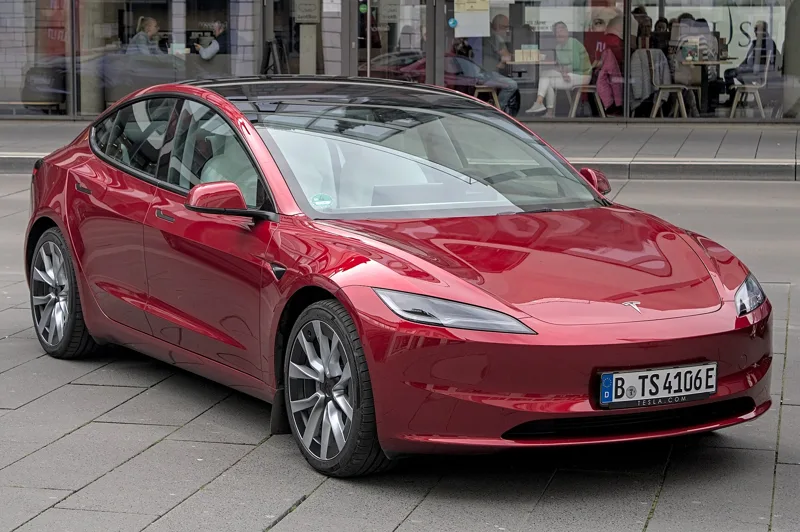
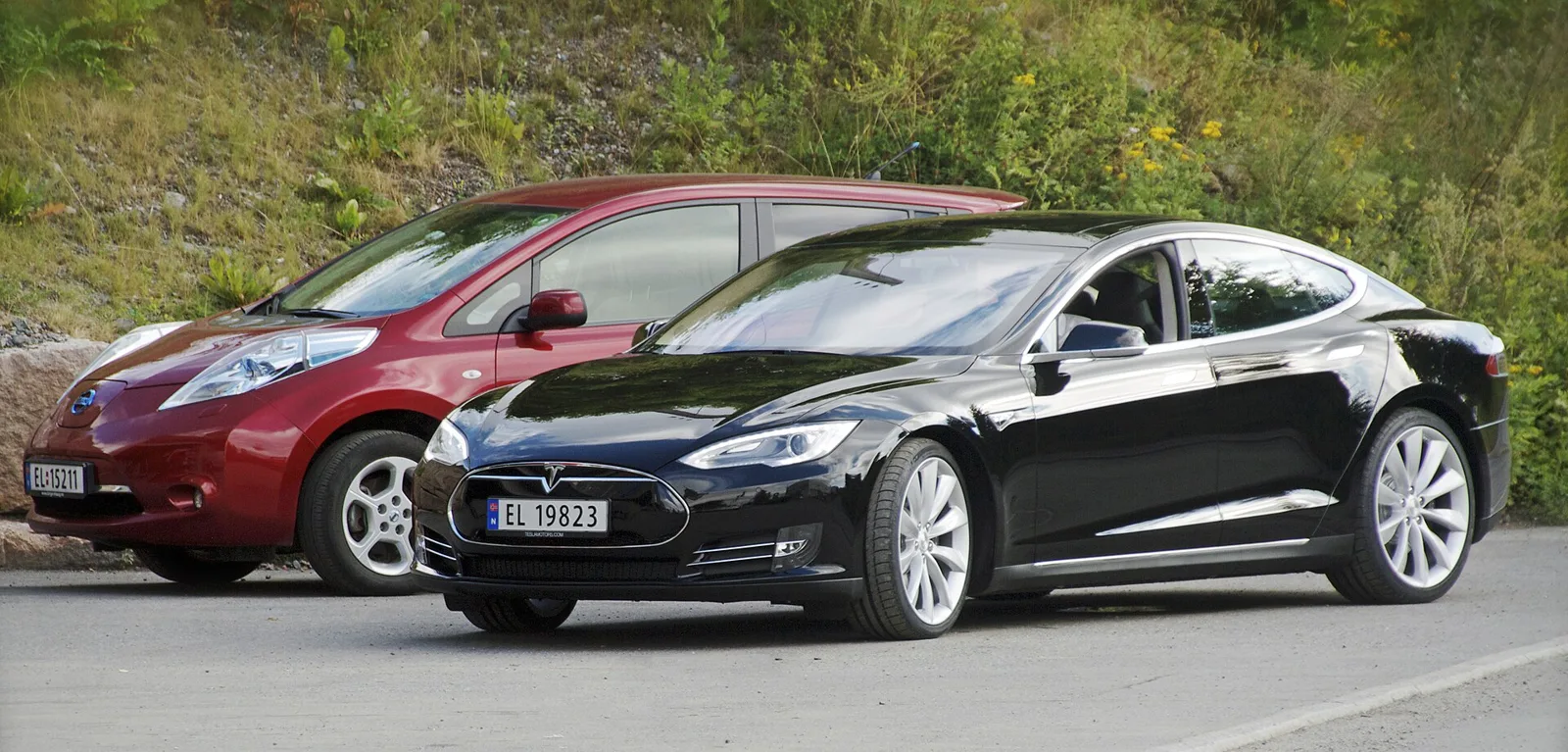
The Leaf is the obvious model to study because it has been around long enough to show how electric cars age. Nissan showed it on 1 August 2009 and billed it as the first mass-market, zero-emission electric vehicle; production began in October 2010. It won the 2011 European Car of the Year and the 2011 World Car of the Year. Global sales across both generations reached 577,000 by February 2022, and it was the world's best-selling electric car in 2011 to 2014 and in 2016 before the Tesla Model 3 passed it in early 2020.
| Generation | Battery | Motor | Range | Cooling |
|---|---|---|---|---|
| First (ZE0), 2010 to 2017 | 192 laminated lithium-ion cells | 80 kW (110 hp) | About 160 km (100 miles) | Passive air-cooled |
| Second (ZE1), from 2017 | 40 kWh (39 kWh usable) | 110 kW (147 hp) | 243 km (151 miles) EPA | Passive air-cooled |
| Leaf e+, from 2019 | 62 kWh (59 kWh usable) | 160 kW | 364 km (226 miles) EPA | Passive air-cooled |
| Third (ZE2), 2025 | 52 kWh or 75 kWh | 130 kW or 160 kW | Up to 490 km (303 miles) EPA on select versions | Active liquid-cooled |
What the first generation offered
The first Leaf used a pack of 192 flat cells developed with NEC and mounted under the floor between the wheels. Its 80 kW motor gave roughly 160 km (100 miles) of range on a full battery. Charging took 16 hours from a 120 V supply or 8 hours from 230 V, and a fast charger could restore 80% in about 30 minutes. Car and Driver criticised the cheap-feeling materials but praised the spacious boot. Opinions on the battery and its range varied, with some critics finding both underwhelming.
The second generation and the Plus
The second generation arrived in Japan in October 2017 and in North America and Europe in February 2018. It added more power and range, plus Android Auto and Apple CarPlay, and its one-pedal braking uses regenerative braking strongly enough to stop the car without touching the brake pedal. The car can send power back to the grid. From 2019 the Leaf e+, sold as the Leaf Plus in North America, brought the bigger 62 kWh pack and a CHAdeMO input of up to 100 kW. After a June 2022 facelift, the EPA range for the 40 kWh version slipped to 240 km (149 miles) and for the 62 kWh version to 341 km (212 miles).
The third generation
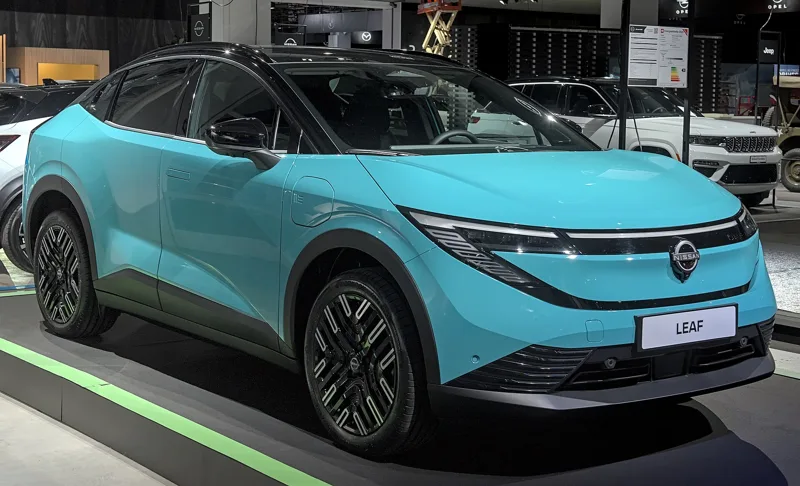
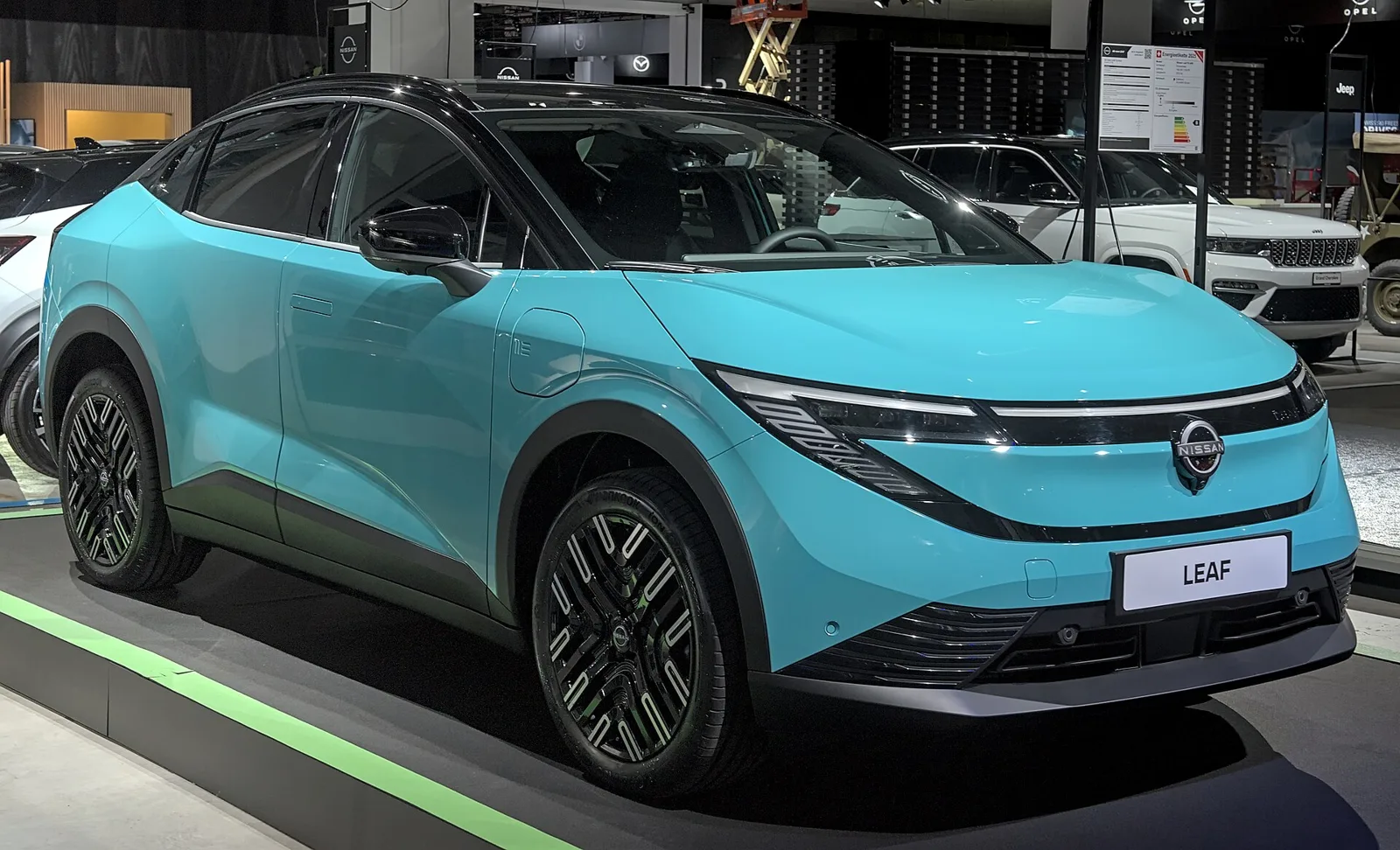
Unveiled on 17 June 2025, the third Leaf is a subcompact crossover rather than a hatchback and shares the AmpR Medium platform with the Ariya. It brings the first liquid-cooled packs in the Leaf, with NMC cells in 52 kWh and 75 kWh sizes. Charging reaches 150 kW, and it is the first Nissan to use the North American Charging System, which makes it compatible with the Tesla Supercharger network. DC fast charging from 10 to 80% takes 35 minutes in North America and about 30 minutes in Europe, according to Nissan.
In 2022 the Leaf was named Best Family Electric Car at the UK Carbuyer's Best Used Car Awards.
How common the Leaf is
Familiarity matters when you are buying second-hand. By December 2020 the Leaf was on sale in 59 markets. Europe was the biggest by September 2021 with more than 208,000 sold, including 72,620 registered in Norway. US sales totalled 165,710 units through December 2021, and Japan took 157,059. Nissan marked the 500,000th Leaf on 9 September 2020, and UK production at Sunderland ended in March 2024 after 270,000 cars across both generations.
What older battery types teach a used buyer
Earlier chemistries offer a few lessons. Most electric vehicles of the 20th century used flooded lead-acid batteries, and discharging them below 50% can shorten their life; cars with them managed up to 130 km (81 mi) per charge. Nickel-metal hydride packs charge and discharge less efficiently, at 60% to 70%, yet they can last exceptionally long when used properly, and they perform poorly below -20 degrees C. The pattern holds across chemistries: how a battery is used counts as much as how old it is.
When a pack is no longer right for a car, it need not be scrapped. Repurposing it for stationary storage can extract more value and cut the lifecycle impact per kWh, with examples that include peak shaving and extra storage for renewable generation. The module must first be fully discharged and the pack reconfigured for its new job.
What a used electric car does well, and where it asks more of you
A battery electric car has no fuel tank, clutch or conventional transmission, and it needs no sophisticated engine cooling. A motor controller sets output and torque. It also converts stored energy efficiently: BEVs travel roughly three times further than similar-size combustion cars per megajoule of stored energy. For journeys within a single charge, rather than long trips, electric cars are practical and can be recharged overnight. They reduce pollution in cities by producing zero emissions at the tailpipe, although the greenhouse gas benefit varies with how the power is generated.
The trade-off is range and time. The batteries in cars of the mid-2010s were a large share of vehicle mass and still often gave a relatively low range, and recharging can take significant time. A used buyer who matches the car to daily journeys, rather than the occasional long drive, is working with the strengths of the technology.
Where this goes next
Several battery types are moving towards the mainstream. Sodium-ion cells avoid critical materials altogether. Chinese manufacturers began delivering the first sodium-ion models in early 2024, and by 2026 the Changan Nevo A06 was a mass-production car fitted with them. Analysts see high potential for the type in small EVs, bikes and three-wheelers. Solid-state batteries promise dense energy storage and possibly better safety, and lithium-sulfur cells are expected to meet demanding performance needs. LFP continues to gain ground.
Recycling is a work in progress. Just 5% of EV batteries were recycled in 2019, and repurposing a pack for stationary storage is one route to extract more value from it. Dismantling modules and cells is costly and time-intensive, and robots are being used to make that work safer.