SUV market share, bigger batteries and the cost of lighter materials are reshaping what a new car weighs, and Paris has started charging more to park the heaviest SUVs.
Two shifts explain most of it: a market that tilted towards SUVs, 45.9% of global passenger car sales in 2021, and electric cars whose batteries hold less energy for their weight than liquid fuels do. Lightweighting offsets some of the gain, but cost limits it to roughly $5 to $15 per kilogram saved.
In February 2024, Paris voters approved a triple parking rate for SUVs, and the line is drawn on the scales: visitors with vehicles over 1,600 kg, or 2,000 kg for electric ones, pay 18 euros an hour in central Paris.
What does a car's weight actually mean?
Kerb weight is the mass of a car with standard equipment and the fluids it needs to run, but no passengers or cargo. Because rules and makers define it differently, two published figures for one car can disagree.
The differences are practical. European manufacturers include a 75 kg (165 lb) driver and luggage, following an EU directive. The United States Environmental Protection Agency counts fuel at nominal tank capacity and adds the weight of optional equipment. A third figure, dry weight, leaves out every consumable. It is rarely used because it is far lighter than a drivable car, and quoting it can make weight and power-to-weight figures look much better than a rival's kerb figure. No standard governs it, so it is open to interpretation.
Gross vehicle weight rating is a different animal. It is the maximum operating weight set by the manufacturer, counting passengers and cargo, so it is a ceiling and not a description of the car as it sits on a showroom floor.
Other ratings matter when a car tows. The gross combined weight rating adds the trailer and its load, and it depends on engine torque, the transmission's ratios, the driving axles and tyres, the radiator and the chassis's strength. The gross axle weight rating caps the load on any single axle, which matters for the road arithmetic further down.
Double the load on an axle and the damage to the road is estimated to multiply by 16.
Are SUVs the main reason cars are getting heavier?
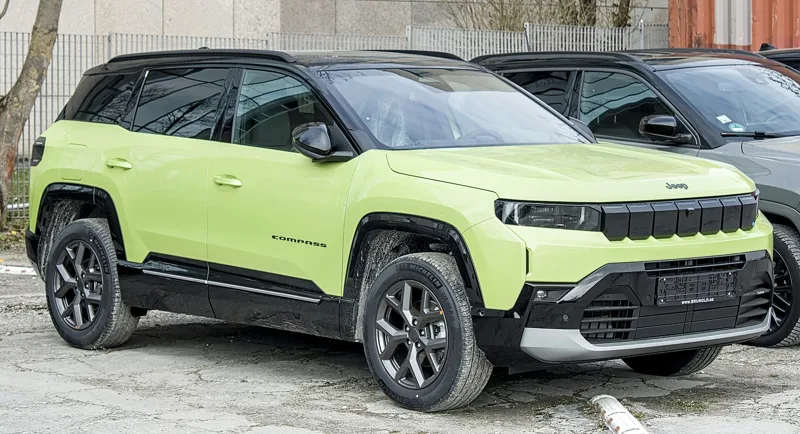
The move to SUVs is the best measured of the changes in what people buy. SUVs took 45.9% of the world passenger car market in 2021 and 57.3% of sales in the United States. In the American regulatory category of truck-based SUVs, the share of new light-duty vehicles rose from 1.7% in model year 1975 to 49.6% in 2024.
The percentages show a market that tilted from sedans and station wagons toward taller vehicles, mostly in the late 1990s and early 2000s. Makers encouraged it: SUVs typically carry significantly higher profit margins.
Counting is messy because definitions differ by country. Australia's statistics agency treats SUVs as vehicles built for off-road work, with extra ground clearance and a wagon-style body, and includes some two-wheel-drive versions. In Europe the term is a market segment, the J-segment, and not a legal category, since EU approval rules sort vehicles into classes such as category M for passenger vehicles. American rules lump SUVs, pick-ups and minivans together as light trucks, and an SUV can be a car in one US state and a truck in another.
Policy helped. In the United States, SUVs were counted as light trucks, which allowed looser fuel economy and emissions rules than passenger cars faced. From 2004 the EPA held them to the same tailpipe standards as cars for criteria pollutants, though greenhouse gas standards were not set until 2010, and in 2011 small two-wheel-drive SUVs moved into the passenger car class for fuel economy rules. A 25% tariff, the Chicken Tax, has protected local makers of SUVs and light trucks since 1964. In Australia, SUVs paid a 5% import tariff against 10% for passenger cars until January 2010.
Buyers had their own reasons. Part of the surge in the 1990s and early 2000s came from a belief that the larger size and raised ride height made SUVs safer for occupants.
Not every SUV put on weight
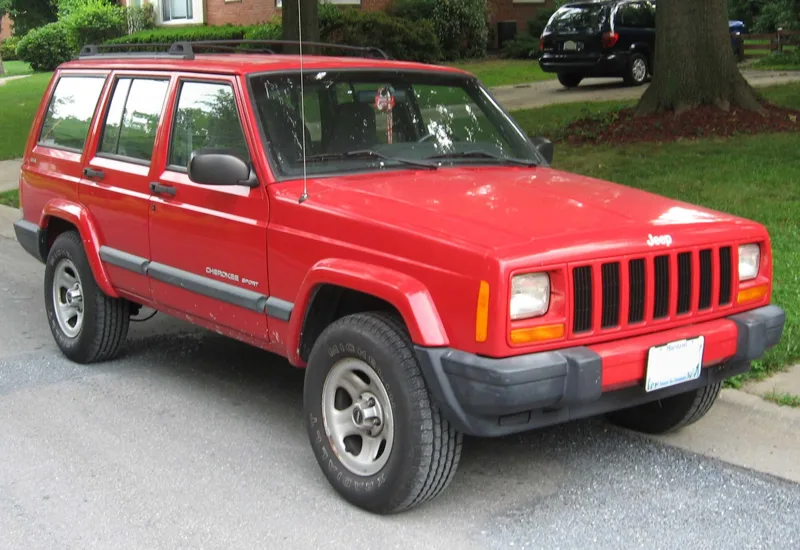
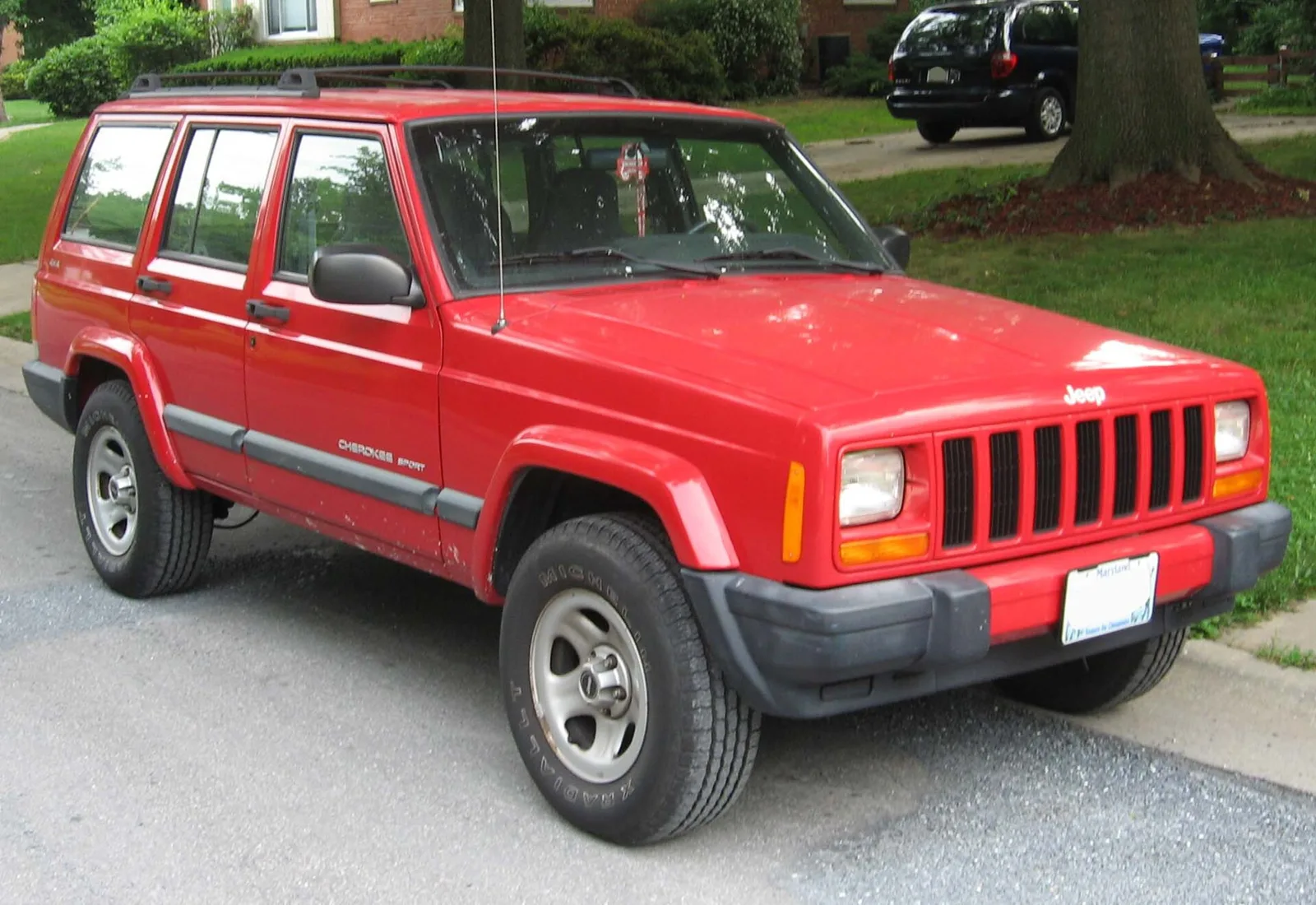
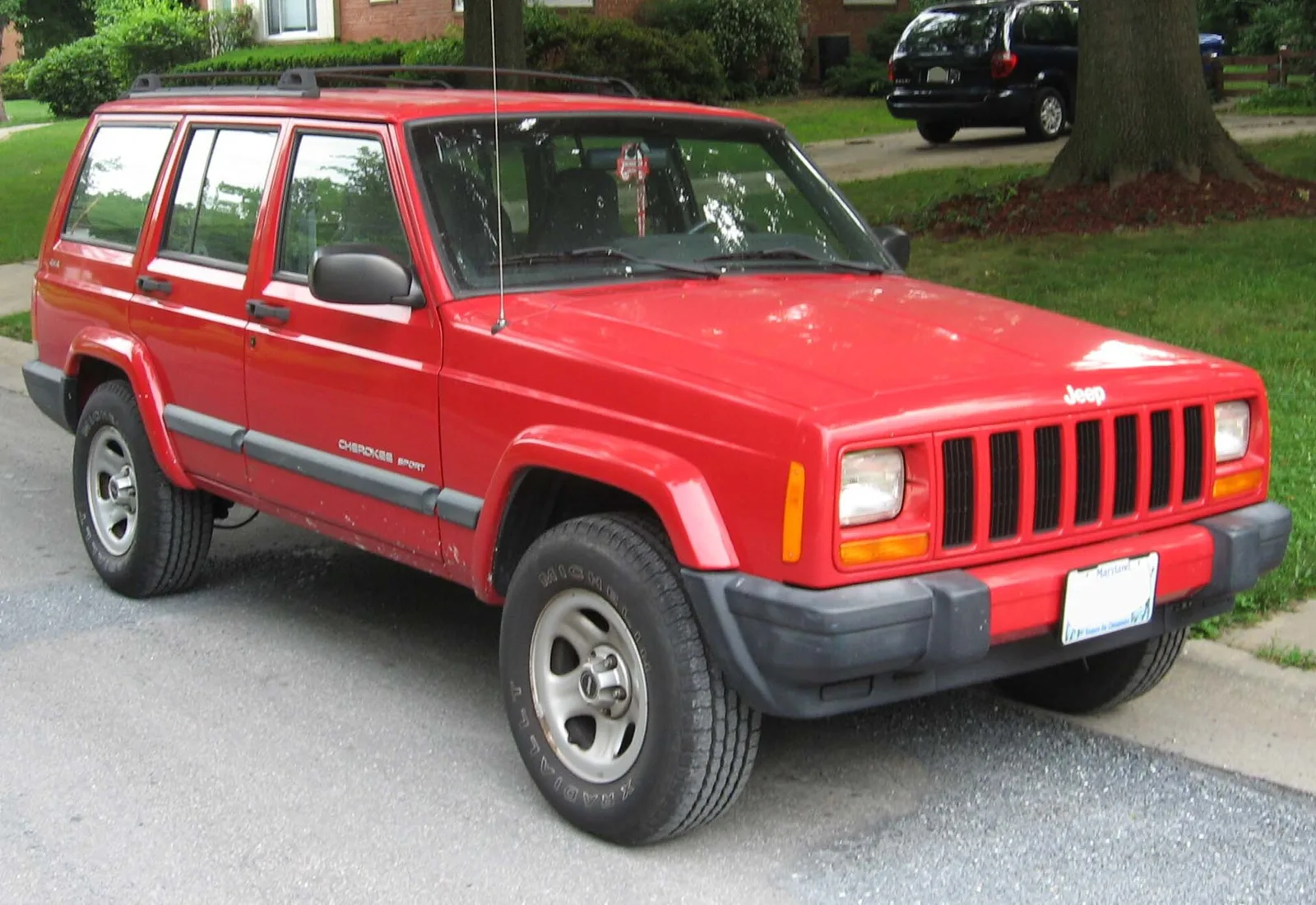
For many years after cars had moved to unibody construction, most SUVs stayed with a separate frame, because they were built on truck chassis. The 1984 Jeep Cherokee (XJ) changed that. It was light but strong, smaller than the truck-based model it replaced, and carried the same number of people and the same amount of cargo. The 1993 Grand Cherokee pushed Jeep further down that road, and most SUVs made today are unibody, with relatively few still on a frame.
How much weight does an electric car's battery add?
No single figure applies, because pack sizes vary widely. What holds across the board is that most current battery technologies store far less energy per kilogram than liquid fuels, so a car either carries more weight or gives up range. Models on sale in 2023 ranged from 21 to 123 kWh, with an average of 80 kWh.
The battery is also a large share of an electric car's cost, and the chemistry decides how heavy it is for a given range. Lithium nickel manganese cobalt oxide cells have been the global standard in battery-electric production since the 2010s. Lithium iron phosphate is on the rise: it reached a 41% share of global battery-electric capacity in 2023. It is heavier, but cheaper, safer and more sustainable, and it avoids manganese and cobalt. It has led in China since 2023, while its share in Europe and North America stayed below 10%.
Lithium-ion dominates for good reasons. As of 2024 its variants lead the battery-electric market, thanks to high energy density and long cycle life, and the technology began in laptops and consumer electronics. Global production capacity almost reached 2000 GWh in 2023, with 772 GWh going into electric vehicles. Most of it is based in China, where capacity grew by 45% that year.
Money has moved faster than weight. By 2019, battery cost per kilowatt-hour had reportedly dropped by 87%, and demand topped 750 GWh in 2023.
Engineers are also changing how the pack sits in the car. A cell-to-pack design drops the intermediate modules. Cell-to-chassis and cell-to-body designs build cells into the frame or the body, where the battery may take part in the structure and add strength instead of being dead weight.
How do the battery chemistries compare?
| Chemistry | Where it stands | Figure worth knowing |
|---|---|---|
| Lithium nickel manganese cobalt oxide | Most common in electric cars; global standard since the 2010s | Sensitive to temperature; fire risk if punctured or charged improperly |
| Lithium iron phosphate | 41% of global battery-electric capacity in 2023; leading in China since 2023 | Heavier, but cheaper and safer |
| Lithium titanate | Known for safety and a wide temperature range | Often over 10,000 charge-discharge cycles; lower energy density |
| Sodium-ion | First models delivered in early 2024 | Avoids critical minerals |
| Nickel-metal hydride | Mature; used in hybrids | 30 to 80 Wh/kg |
| Zebra (sodium nickel chloride) | Early electric cars, 1997 to 2012 | 120 Wh/kg; electrolyte heated to about 270 degrees C |
| Lead-acid | Early modern electric cars, including the 1996 EV1 | Up to 130 km per charge |
| Newer chemistries | In development, including solid-state | Over eight hundred Wh/kg in laboratory testing |
Does a heavier car do more damage to roads?
Damage rises much faster than weight. Engineers use a rule of thumb, stated for reasonably strong road surfaces, that damage scales with the axle weight multiplied by itself four times. Double the load on an axle and the damage is multiplied by 16. It is the reason heavy trucks are taxed so heavily in most countries.
The rule describes how steeply the penalty grows as weight is added. Weight has other costs: too much mass also adds to the fine particles shed by worn tyres and brakes, and lightweighting is pursued because lighter cars accelerate, brake and handle better.
Legal limits give a sense of the scale. In the EU a tractor can generally put 10 tonnes on a single axle, and US limits are generally 20,000 pounds (9,100 kg) on one axle and 34,000 pounds (15,000 kg) on a tandem. A family car is nowhere near those loads, and the fourth-power rule hints at why regulators concentrate on trucks.
Safety figures add to the picture, though they reflect height and size as much as mass. A 2003 estimate put an SUV at 2.5 times the rollover risk of a regular car in a crash. Between 1991 and 2001, SUV rollover deaths in the United States rose by 150%. In 2001, rollovers made up just 3% of crashes but over 30% of occupant fatalities. Their higher front ends make a collision at least twice as likely to be fatal for whoever is struck, and SUVs are exempt from the American rule that a car bumper must protect the zone 16 to 20 inches (41 to 51 cm) above the ground. They generally use more fuel as well, and from 2010 to 2018 ranked second among the causes of the worldwide rise in carbon emissions.
Can lightweighting offset the gain?
Carmakers are working on it. Body parts are made from aluminium sheet and extrusions, press-hardened steel and carbon fibre, with plastic windscreens and aluminium-foam bumpers. The limit is money: the viable extra cost for each kilogram saved runs from $5 to $15 a kilogram, with the exact figure set by the car's price and performance targets.
The aims go beyond economy. A lighter car can improve battery range, acceleration, braking and handling, and can tow and haul more because the engine is not carrying unnecessary mass. A Ford spokesman said engineers pursue lightweighting wherever they can.
Aluminium is the workhorse, and its use grew partly to meet American fuel economy standards. A lightweighting magazine claims that an aluminium body matches steel for strength while soaking up double the crash energy, and one view holds that lighter materials do not reduce overall safety. The trade-off is formability, because the higher-strength grades are hard to shape, which led to techniques including roll forming and hot forming. Carbon fibre appears only where a structure can accept the cost premium. The sustainability of materials is increasingly part of the choice too.
What should a buyer or driver check?
- Which weight is quoted. Kerb or dry, and whether a driver is included. A dry figure flatters a car against rivals.
- Licence limits. An Australian car licence covers vehicles up to 4,500 kg gross vehicle mass. A UK class B licence passed on or after 1 January 1997 limits the holder to 3,500 kg, while earlier test passes allow 7,500 kg.
- Where you park and drive. Paris sets its higher charge at 1,600 kg, or 2,000 kg for electric. Some American city roads restrict vehicles over 6,000 lb (2,722 kg), though it is not always clear if that means kerb weight or gross rating.
Where this goes next
Paris brought its charge in on 1 October 2024. Lyon and Tubingen made similar decisions, and London, Brussels and Amsterdam were reported to be considering comparable ordinances.
On the battery side, sodium-ion cells reached mass-production cars in 2026 with the Changan Nevo A06, after several Chinese manufacturers delivered their first models in early 2024. Analysts saw high potential for small electric cars, bikes and three-wheelers. Solid-state, lithium-sulfur and LMFP batteries are in development.