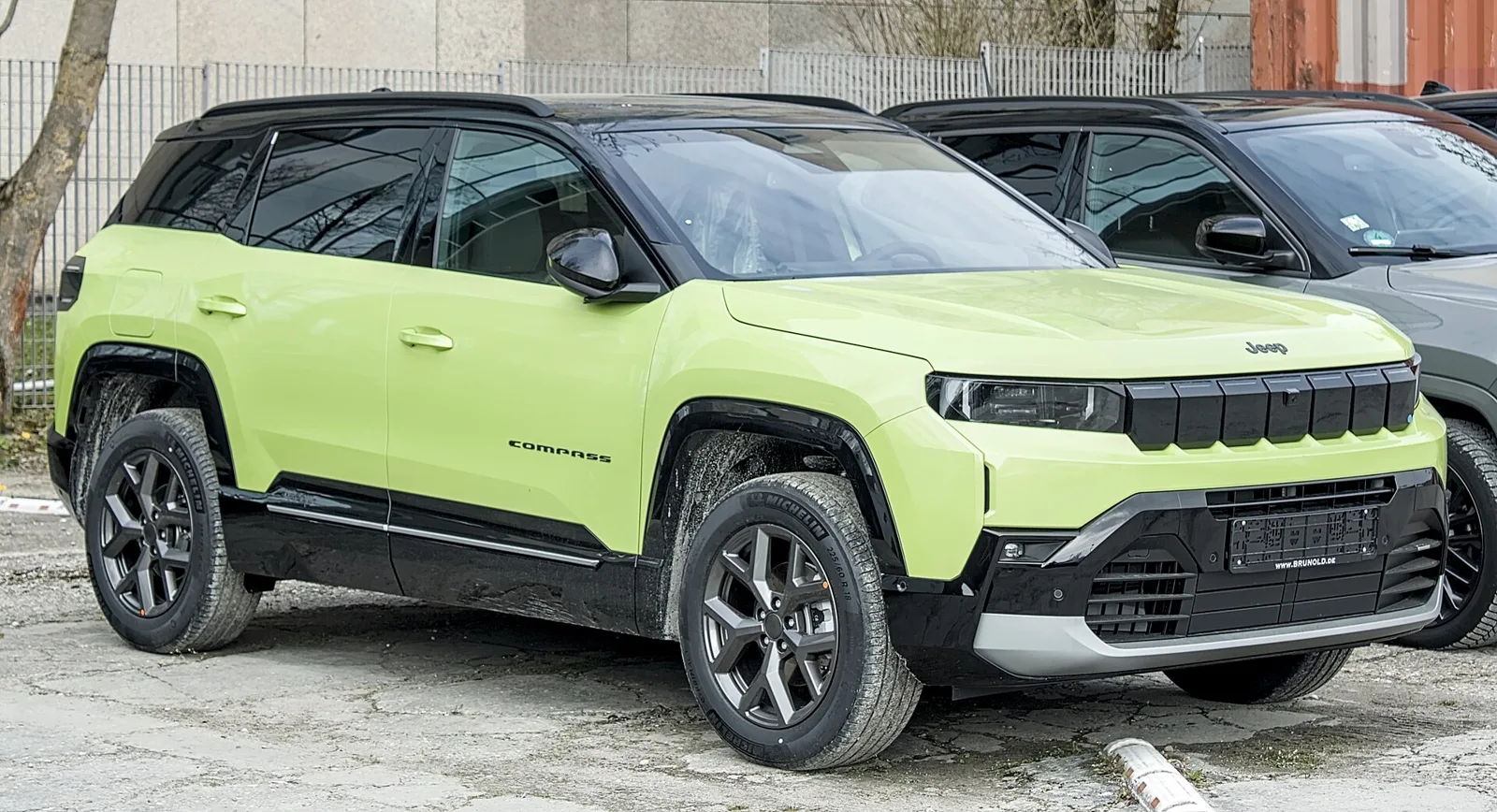
From a 2002 concept with two doors to a 2025 model with hybrid and electric options, the Compass has grown from a Patriot alternative into Jeep's global mainstream crossover.
Jeep's Compass is a compact crossover that went on sale for the 2007 model year. Across three generations, the car has come in petrol, diesel and, since 2025, hybrid and battery electric forms. Stellantis now builds it across several countries, including Italy, Mexico, Brazil, China and India.
The Jeep Compass is a compact crossover that Jeep has sold since 2006, and its three generations trace a move from a North American small SUV to a global model with a wide powertrain range. The first car was one of Jeep's earliest crossovers and was built on the DaimlerChrysler/Mitsubishi GS platform. The third generation, unveiled in May 2025, sits on Stellantis's STLA Medium platform.
What is the Jeep Compass?
The Jeep Compass is a compact crossover SUV introduced for the 2007 model year. It sits between the smaller Renegade and the larger Cherokee in most markets, or the Commander in South America. Over three generations it has been offered with petrol, diesel, hybrid and, from 2025, fully electric powertrains.
Jeep built the car to suit first-time buyers and owners who spent most of their time on paved roads. Each generation took a different route to that goal, from the early Freedom Drive four-wheel-drive systems to the Renegade-based second generation and the broad electrified line-up of the third.
A compact crossover that began as a Patriot alternative and now offers mild hybrid, plug-in and fully electric drive.
Where did the Compass come from?
The Compass began as a 2002 concept of the same name, shown in Detroit with two doors, all-wheel drive and a 3.7-litre V6. The production car arrived at the 2006 North American International Auto Show in January, with four doors and without that engine. It kept the concept's styling cues and some of its features.
The first production Compass was assembled on May 30, 2006, in Belvidere, Illinois, the plant where the Dodge Neon had been built. Jeep used the same factory for the Patriot, the Compass's rebadged sibling, which made the two cars close relatives on the production line.
How did the first-generation Compass differ from the Patriot?
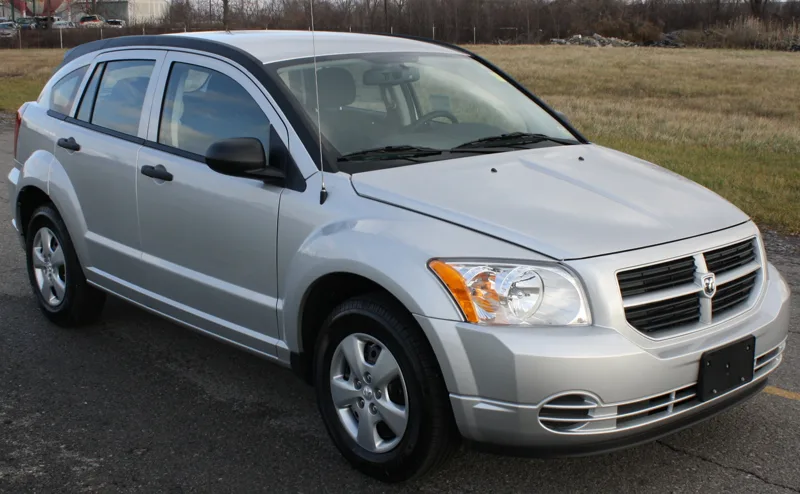
The Compass and Patriot shared a platform but were styled differently. The Patriot was a traditionally shaped four-door Jeep wagon, while the Compass had a softer hatchback look similar to the Dodge Caliber. Jeep marketed the Compass at first-time buyers and drivers who stayed mostly on paved roads.
The first-generation car did not carry the Trail Rated badge found on other Jeeps during its first years, and it gained that badge only for the 2011 model year. Trail Rated versions passed the same off-road tests as the rest of the range for traction, clearance, articulation and water fording.
The 2011 facelift made the Compass look more like the Grand Cherokee and revised the suspension for better handling. The Freedom Drive II Off-Road Package added all-terrain tyres on 17-inch aluminium wheels, skid plates and an extra inch of ground clearance, and a 70th Anniversary Edition marked Jeep's seventieth year in 2011.
What powered the first-generation Compass?
The core engine was a 2.4 L World I4 making 172 hp (128 kW), while a 2.0 L World engine rated 158 hp (118 kW) was available on the 4X2 Sport. Europe and Australia had a Volkswagen-designed 2.0 TDi diesel of 103 kW (138 hp; 140 PS), which gave way to a 2.2 L Mercedes-Benz diesel in 2011.
Two electronically controlled four-wheel-drive systems were offered. Freedom Drive I was full-time with locking capability. Freedom Drive II used the continuously variable transmission to deliver a reduction ratio of nineteen to one, which mimicked the low-range gearing of a dedicated transfer case.
The base model was front-wheel drive. The Sport, Latitude and Limited formed the US range, with the Limited offering leather seats, an available sunroof and a remote starter. The Altitude Edition was added a year after the facelift and later spread to several Jeep models.
How did the second generation replace the first?
The second generation debuted on September 27, 2016, in Brazil and at the Los Angeles International Auto Show that November. It replaced both the Patriot and the first Compass, and it used a stretched version of the Renegade platform. The line-up was Sport, Latitude, Limited and Trailhawk, with front- or four-wheel drive on the Sport, Latitude and Limited, and four-wheel drive only on the Trailhawk.
North American production moved to Toluca in Mexico, while Brazilian production started at Goiana in Pernambuco that same autumn. Most of the upper body and frame is high-strength steel, and the styling drew on both the Cherokee and the Grand Cherokee.
The core drivetrain was a 2.4 L Tigershark four-cylinder with a nine-speed automatic from ZF. Features included a Uconnect 4C touchscreen, a Beats Premium Audio System with a 506-watt amplifier, eighteen-inch alloy wheels, a panoramic sunroof and the Selec-Terrain full-time four-wheel-drive system, standard on the Trailhawk.
Where is the second-generation Compass built?
Compass production spreads across Italy, Mexico, Brazil, China and India. Melfi in Italy and Toluca in Mexico build the North American and European models, Goiana in Brazil handles South American cars, and a Ranjangaon plant near Pune serves the Indian market and right-hand-drive export markets.
The Indian Compass was unveiled on April 12, 2017, and assembly started on June 1, 2017. Indian-built cars were exported to the United Kingdom, Australia, New Zealand, Ireland, Japan and other right-hand-drive markets. In 2017 Jeep sold about 10,000 Compasses in India within months of launch, with over 65% Indian parts.
The Indian cars used two engines: a 1.4-litre turbocharged MultiAir petrol and a 2.0-litre turbocharged Multijet II diesel. The American car used the naturally aspirated 2.4-litre engine until the 2023 model year.
What changed in the Compass facelifts and special editions?
A facelift came first to China in 2020, with a redesigned interior, and India received its own update in January 2021. That version gained a larger grille, a new front bumper, slimmer headlights with integrated LED daytime running lights, LED fog lamps and new alloy wheels.
For the 2022 US model the Compass gained over-the-air updates and a semi-autonomous Highway Assist system. The naturally aspirated 2.4-litre made 177 hp (132 kW) and 172 lb ft (233 Nm), three horsepower and three pound-feet less than before. The 2023 model switched to a retuned 2.0-litre GME making 200 hp (149 kW) and 221 lb ft (300 Nm).
Special editions were frequent. The Upland was based on the Sport with 4WD, the 2.4-litre engine and an automatic. The 80th Anniversary Latitude arrived in September 2020 for the 2021 model year. In 2022 a (RED) Edition based on the Limited donated proceeds to the Product Red Foundation, and the Indian market received a fifth-anniversary edition.
How did the Compass fare in crash tests?
The first-generation Compass was tested by Euro NCAP in 2012 and earned two stars. In the United States, the top trim of the 2022 Compass earned a Top Safety Pick award from the IIHS, and the model included collision warning with automatic braking and lane-keep assistance.
The 2022 US model also added pedestrian and cycle detection, active lane management, a blind-spot monitor and rear cross-traffic alert. Highway Assist allowed hands-on-wheel and eyes-on-road driving at speed.
What is the third-generation Compass like?
The third generation was unveiled on May 5, 2025. It is the first Jeep offered with a choice of mild hybrid, plug-in hybrid and battery electric powertrains. Jeep says the line-up can meet 90% of segment demand in Europe, a figure cited by the head of Jeep Europe.
The design keeps the seven-slot grille and trapezoidal wheel arches, with X-shaped LED taillights that merge into an illuminated Jeep logo. Chrome was dropped for ecological reasons. The car was styled in Turin, Italy, by a team led by Daniele Calonaci, working with the Jeep style centre in the United States.
Ground clearance is 7.9 in (200 mm), and the maximum wading depth is 18.5 in (470 mm). Standard approach, breakover and departure angles are 20, 15 and 26 degrees. Front and rear overhangs are shorter as well.
Inside, a 10-inch digital cluster sits behind a 16-inch touchscreen, and most controls are on the screen, with a few physical switches. Cargo space is 19.4 cu ft (550 L) with the 40:20:40 split rear seats folded, and a 34-liter front storage bin adds practicality. Level 2 driver assistance is available.
Where will the third-generation Compass be built?
Stellantis first planned to build the North American car at Brampton in Ontario, with European production in Melfi. On October 14, 2025, the company moved North American production to Belvidere in Illinois, with output starting in December 2027 for the 2028 model year. The North American car launches with the 2.0-litre Hurricane 4 EVO turbo four.
The hybrid version will come later with a 1.6-litre EP6CDTX turbo four, reusing the setup from the Jeep Cherokee. Stellantis planned US$970 million (1.32 billion Canadian-dollar) so that Brampton could build combustion and battery-electric cars, and the Belvidere move was announced as part of a $13 billion US investment.
In August 2026 Stellantis declined to confirm to a newspaper that Belvidere would still build the Compass, so the production plan remains open.
Jeep Compass specifications at a glance
| Specification | Detail |
|---|---|
| First generation | Production debut in 2006, 2007 model year, built at Belvidere |
| Second generation | Debut September 27, 2016, on a stretched Renegade platform |
| Third generation | Unveiled May 5, 2025, on the STLA Medium platform |
| First-generation base engine | 2.4 L World I4, 172 hp (128 kW) |
| Second-generation engine (2023) | 2.0 L GME, 200 hp (149 kW), 221 lb ft (300 Nm) |
| Third-generation ground clearance | 7.9 in (200 mm) |
| Third-generation wading depth | 18.5 in (470 mm) |
| Third-generation cargo | 19.4 cu ft (550 L) |
| North American launch engine | 2.0-litre Hurricane 4 EVO turbo four |
_IMG_5727.jpg)