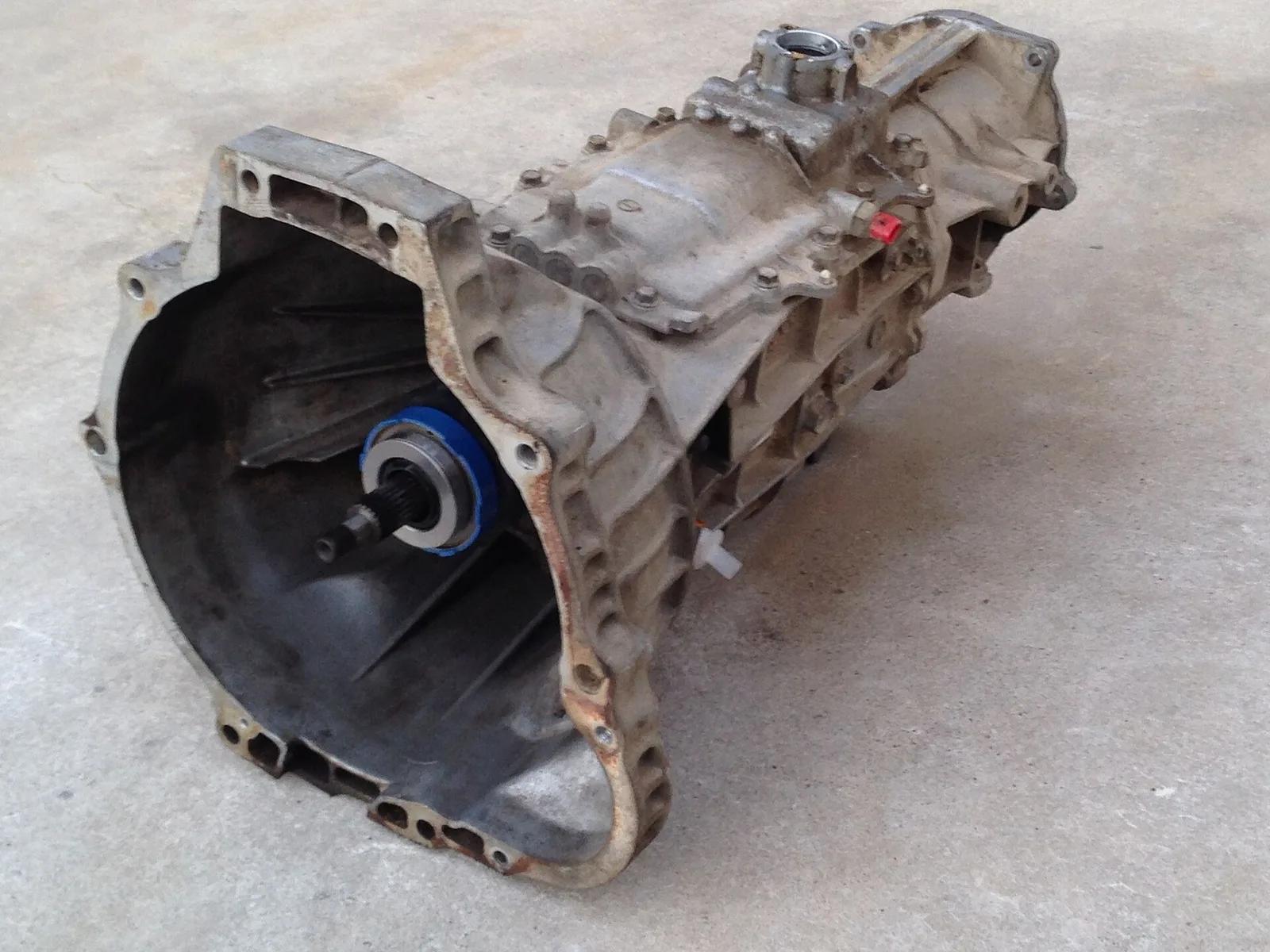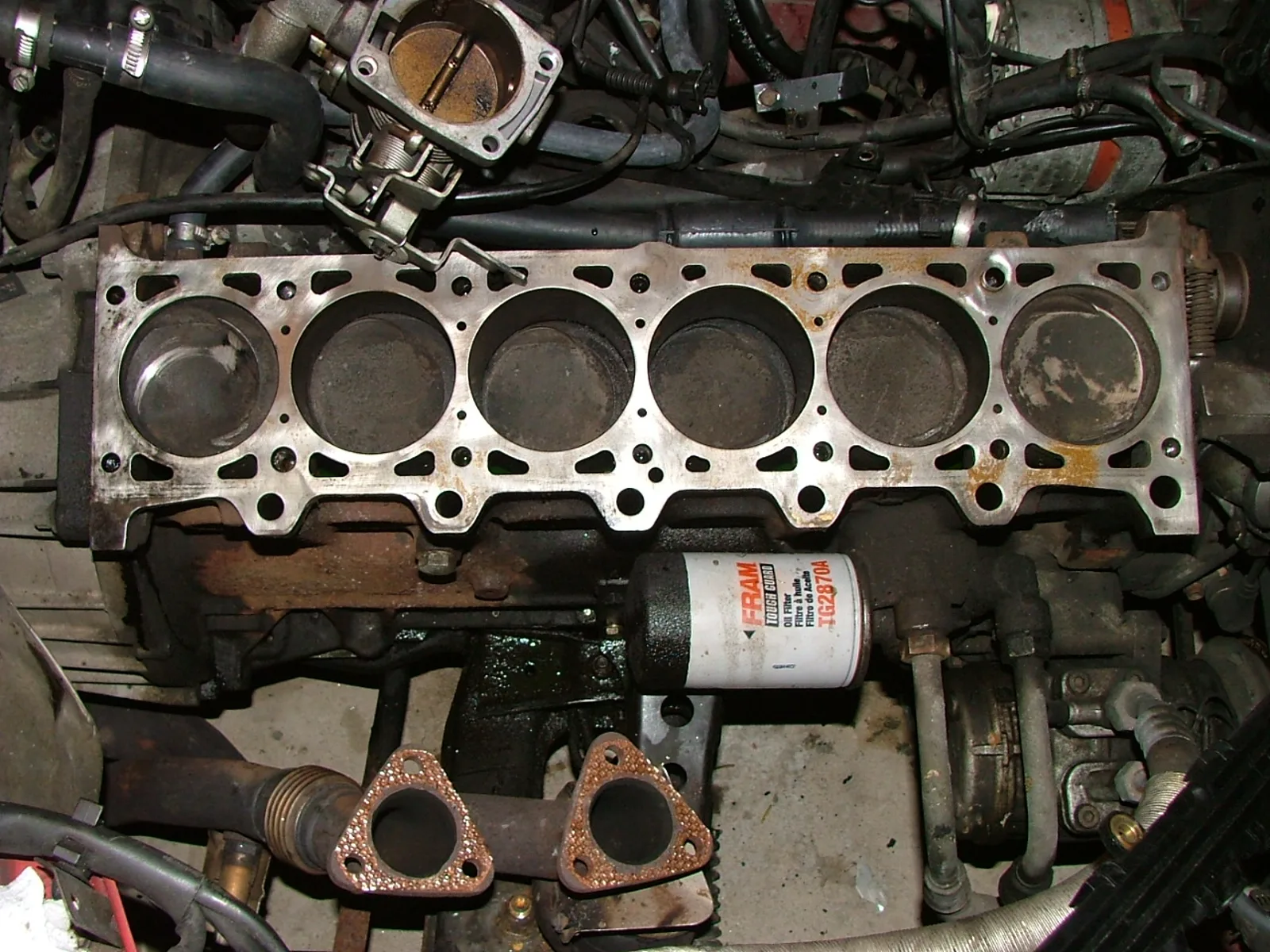
Mercedes dropped its petrol straight-six in 1996 and brought it back in 2017. BMW never let go.
An inline six has six cylinders in one row, which gives it perfect primary and secondary balance and so a smoother feel than a V6. V6 engines won out from the 1980s because they are shorter. Since 2017 Mercedes, Jaguar Land Rover, Stellantis and Mazda have returned to straight engines built from shared modules.
In 1996 Mercedes-Benz retired its petrol straight-six engines and moved to V6 units. In 2017 it brought a petrol straight-six back, and it was not alone: Jaguar Land Rover, Stellantis and Mazda have since followed.
What is an inline six engine?
An inline six, also called a straight-six, I6 or L6, is a piston engine with six cylinders in a single row along the crankshaft. With a suitable firing order it has perfect primary and secondary balance, which means fewer vibrations than any other six-cylinder layout, and fewer than any engine with fewer cylinders.
The layout is old. The first production straight-six arrived in the Dutch Spyker 60 HP racing car in 1903, and by 1909 roughly 80 manufacturers were using one, 62 of them in the United Kingdom. Rolls-Royce built its first in 1905 and its Silver Ghost ran a side-valve straight-six from 1906 to 1926. Alfa Romeo fitted a 6.3-litre flathead to the 1921 G1, and Jaguar's twin-cam XK6, launched in the XK120 and built from 1948 to 1992, won the Le Mans 24 Hours seven times.
Straight-sixes also scale. Most car engines sit between 2 and 4 litres, but the layout stretches from a 0.7-litre motorcycle unit to a 10,972.2-litre two-stroke marine diesel. Bolt two of them onto one crankshaft and you have a V12. That scalability, together with smooth torque and simplicity, is why the layout is still a common choice for trucks and buses.
The V6 won on a ruler. The straight-six is winning back ground on a drawing board full of shared parts.
Why is an inline six better balanced than a V6?
Because its two halves mirror each other. The front three cylinders and the rear three move in pairs, 360 degrees out of phase, so the rocking motion that a three-cylinder engine would suffer cancels itself. The crank throws sit in three planes offset by 120 degrees, and the remaining forces sum to zero all the way up to the sixth order.
A good comparison is a pair of people sawing a log from opposite ends. Each push is cancelled by an equal pull from the other side, so the log stays still. A four-cylinder, a V6 and a V8 all show significant secondary imbalance by comparison, and that shows up as vibration in the cabin.
Six cylinders also give a steadier flow of power than four. In a six, the next piston begins its power stroke 60 degrees before the previous one has finished, so the strokes overlap. A four-cylinder has only one piston pushing at any moment, and each piston must stop and reverse before the next one starts. On a dynamometer a V6 shows torque peaks of 154 per cent above the mean and valleys 139 per cent below it, with a small amount of negative torque between strokes. The four-cylinder swings roughly 270 per cent above and 210 per cent below, with 100 per cent negative torque in the gaps.
Why did the V6 take over?
Length decided it. A straight-six is almost always narrower than a V6 or V8, but it is longer than a straight-four, a V6 and most V8s and V10s. As front-wheel drive spread and engines were turned sideways across the bay, a six cylinder row simply did not fit. The V6 slotted in as the bigger option in cars otherwise built around an inline-four.
The V6 itself was slow to arrive. A single Marmon prototype appeared in 1906, Delahaye produced a 30-degree 3.2-litre V6 for its 1911 Type 44, and before the 1950s the layout was rarely used because its balance was worse than a straight-six. Lancia changed that in 1950 with a 60-degree V6 and six crankpins in the Aurelia, built to cut the vibration of its older V4. Buick followed in 1962 with a 90-degree V6 derived from its 215 V8. The later 3800 version, from 1988, went on to exceed 25 million units before production ended in 2008, and made Ward's list of the 10 best engines of the twentieth century.
Others copied the formula. Ford brought out its Cologne V6 in 1965 and the British Essex V6 in 1966, and Ford dropped straight-sixes from its passenger cars in the mid-1970s. In Japan the Nissan VG arrived in 1983, followed by Honda, Mitsubishi, Mazda, Toyota and Isuzu units through to 1992. Opel replaced its straight-six with a V6 in 1993, Jaguar replaced the AJ16 with a Ford-derived V6 in 1996, and Alfa Romeo had already moved on after the 2600 ended in 1969.
German makers held out longest. Their engineers believed a V6 could not match the smoothness of an inline six, and the first German V6 only appeared in the 1990 Audi 100, a 2.8-litre 90-degree unit. BMW never made the swap at all, and has used a straight layout for every six-cylinder engine it has built.
How do engineers tame the V6?
With a good deal of ingenuity. An even-firing V6 has a primary imbalance because each bank of three cylinders behaves like a straight-three. Most V6 engines therefore carry a harmonic damper on the crankshaft, a counter-rotating balance shaft, or both.
The choice of V-angle matters too. Sixty degrees is the best compromise for balance and gives a narrow, compact engine, and many newer designs get an even 120-degree firing interval from a three-throw crankshaft whose crankpins are linked by flying arms. The 90-degree V6 was cheaper to design because it could be a V8 with two cylinders removed, but early examples fired unevenly, alternating gaps of 90 and 150 degrees, and ran roughly at low speed. Buick fixed that in 1977 with split crankpins offset by 30 degrees.
The extremes are curious. Volkswagen's VR6, introduced in 1991, uses angles of just 10.5 and 15 degrees and a single cylinder head, so it behaves like a short straight engine and added 60 per cent to the displacement possible in a bay designed for a four. At the other end, a 120-degree V6 is wide and still carries the primary imbalance, though McLaren's M630 uses one with a single balance shaft and places its turbochargers inside the vee. Ferrari's 296 GTB is the first Ferrari road car with a turbo V6 at that angle. Porsche sidesteps the issue by using a flat-six in the 911, for its near perfect primary balance and lower centre of gravity.
Straight six vs V6 at a glance
| Feature | Straight-six | V6 |
|---|---|---|
| Primary balance | Perfect with a suitable firing order | Imbalance from two straight-three banks |
| Usual remedy | None needed | Harmonic damper, balance shaft or split crankpins |
| Shape | Narrow but long | Short, wider |
| Cylinder heads | One | Two |
| Exhaust manifolds | One | Two |
| Typical firing order | 1-5-3-6-2-4 | 1-2-3-4-5-6 or 1-6-5-4-3-2 |
| Typical displacement | 2 to 4 L | 2.5 to 4.0 L |
| Best suited to | Heavy trucks, buses, smooth luxury cars | Transverse engines in front-wheel-drive cars |
Why is the inline six coming back?
The trend reversed in 2017. The reason is the ability to build a modular family of straight engines that share many components, so a maker can build an inline-four, an inline-six and even a V8 from the same building blocks. The M256 and the B58 both use 500 cc per cylinder for exactly that reason.
The list of returnees is already long:
- Mercedes-Benz, with the M256, from 2017.
- Jaguar Land Rover, with its AJ300 and AJ300D Ingenium engines, from 2019.
- Stellantis, with the Hurricane, from 2021.
- Mazda, with Skyactiv-X and Skyactiv-D, from 2022.
There is an engineering argument too. Compared with a V engine of similar power and displacement, a straight-six needs fewer injectors, one head and one exhaust manifold, and the shorter parts list counts in its favour for reliability and performance. The price is paid in length.
What makes the BMW B58 one of the best inline six engines?
The BMW B58 is a turbocharged straight-six that entered production in 2015, replacing the N55 and debuting in the F30 340i. It has been named to Ward's 10 Best Engines five times, in 2016 for the 340i, 2017 for the M240i, 2019 for the X5, 2020 for the M340i and 2024 for the X5 xDrive50e.
Against the N55, boost pressure is up 20 per cent, the block is a closed-deck design, compression rises to 11.0:1 and displacement grows from 2,979 to 2,998 cc, for 8 kg of extra weight. A twin-scroll turbocharger gives power with less lag, and a water-to-air intercooler built into the intake plenum shortens the path the air travels to the cylinders. Direct injection, variable valve timing and variable valve lift carry over, the redline stays at 7,000 rpm, and the crankshaft and connecting rods are forged steel. A heat encapsulation system cuts wear and emissions at start-up.
The B58 is built on a module of 500 cc per cylinder, following the B38 and B48, and its crankcase is identical to the one in the B57 diesel, a single part engineered for both fuels. BMW revised the engine in 2018 as the B58TU, raising fuel pressure by 75 per cent and adding a particulate filter, a one-piece timing chain and separate cooling circuits for head and block. A further revision in 2022 added port fuel injection beside the direct system for better emissions.
Output depends on the application. The B58 ranges from 213 kW (290 PS) in the 735i in some markets, the 545e and the Ineos Grenadier, through the 240 kW (326 PS) of the original 340i, to the 285 kW (387 PS) of the M340i. The 2025 Toyota Supra A90 Final Edition uses the strongest version, at 324 kW (441 PS). The engine also appears outside BMW, in the Toyota GR Supra, the Morgan Plus Six and the Ineos Grenadier.
The S58 is the high-performance cousin, launched in early 2019 in the X3 M and X4 M. It has twin mono-scroll turbochargers, lower compression of 9.3:1, a 7,200 rpm redline and a shorter stroke. Pistons are forged by Mahle with an anti-friction coating. Outputs run from 338 kW (460 PS) in the 2023 M2 to 412 kW (560 PS) in the 3.0 CSL, with the M3 Competition at 375 kW (510 PS). It was Ward's pick in 2023 for the M2.
How does the Mercedes M256 differ?
The M256 is a turbocharged petrol straight-six first fitted to the W222 S 450 in 2017. It replaced the M276 V6 and was the first Mercedes petrol straight-six since the M104. Like the B58, it is a module of 500 cc per cylinder, shared with Mercedes inline-four and V8 engines.
The block is aluminium alloy with twin overhead camshafts and four valves per cylinder. The signature feature is a 48V electrical system that powers a BorgWarner electric supercharger, which can spin to 70,000 rpm to reduce turbo lag. The S 500 variant goes further. Its integrated starter alternator supplies a temporary lift of up to 16 kW (22 PS) and 250 N m (184 lb ft), and because it also drives the water pump and air conditioning, the belts disappear and the engine can be smaller and lighter.
The M256 spread quickly through the range: S 450, CLS 450, E 450, GLE 450 and GLS 450, the AMG 43 and 53 models, and the CLE 53 AMG from 2024. Outside Mercedes it powers the Aston Martin DBX Straight-Six, from 2021, and the Austro Daimler Bergmeister plug-in hybrid.
Where does the straight-six still struggle?
Its crankshaft is a long, slender thing, and that creates trade-offs. Large and diesel engines usually use seven main bearings to limit flex under heavy load at low speed. Smaller and high-performance engines use four, since fewer journals mean less friction and a stiffer crank in torsion. But a seven-bearing crank can twist and even break at high revs, and the long camshafts for the rear cylinders add their own flex. At high speed the combination can upset valve timing, and in the worst case the valves and pistons collide.
Packaging is the other barrier. Volvo fitted a straight-six sideways in the 1998-2006 S80, an uncommon arrangement, but stopped producing straight-sixes altogether in 2015. The V6 has not disappeared either. Honda used a 75-degree V6 in the 2016-2022 NSX, and both McLaren's M630 and the Ferrari 296 GTB run turbocharged V6 engines with the cylinder banks 120 degrees apart.
What does it mean if you are buying or driving one?
For drivers the case is mostly about feel. A V6 produces more vibration than a straight-six, which counts against it in a luxury car. Buyers of used BMWs can also use the revision history as a checklist: a B58 built from 2018 has the updated fuel system, a particulate filter in the exhaust and a revised timing chain, and an engine from 2022 adds port injection.
The spread of outputs matters as well. The B58 family alone covers 213 kW to 324 kW in road cars, so the badge on the boot says little until you know which tune sits underneath. On the Mercedes side, the 48V system and electric supercharger are there to reduce turbo lag.
Where this goes next
The B58, the M256 and the Hurricane are all still being built, with the S58 alongside the B58. The swing back to straight engines is tied to shared modules, so what follows depends on how many more makers build their ranges around them.