Half of new American light vehicles are now SUV-type trucks. Tariffs, fuel rules, safety fears and a rich profit margin all pushed the same way.
SUVs took over because several pushes lined up: US rules treated them as light trucks with looser fuel and emissions limits, a 25% tariff shielded domestic trucks, buyers saw them as safer, and they earned automakers higher margins. By 2021 SUVs held 45.9% of the world passenger car market, at the expense of sedans and wagons.
In model year 1975, the US regulator's "truck SUV" category made up 1.7 per cent of new light-duty vehicles produced for sale in America. By model year 2024 it stood at 49.6 per cent. Around the world, SUVs took 45.9 per cent of the passenger car market in 2021. The answer to why SUVs are so popular sits in rulebooks, tariffs, safety fears and profit margins as much as in taste.
What counts as an SUV?
A sport utility vehicle combines passenger-car comfort with off-road features such as raised ground clearance and four-wheel drive. Beyond that, nobody agrees. Dictionaries, journalists and the car industry itself use different wordings, and some definitions demand a light-truck chassis while broader ones accept any vehicle with off-road design touches.
The legal picture is just as patchy. Australia's statistics bureau counts SUVs as vehicles designed for off-road use with extra ground clearance and a wagon-style body, and it admits some two-wheel-drive variants. Europe treats the SUV as a market segment, the J-segment, rather than a legal category. India's goods and services tax applies its utility vehicle class to cars with an engine above 1,500 cc, a length over 4,000 mm and ground clearance of at least 170 mm. New Zealand defines class MC as an off-road passenger vehicle with no more than nine seating positions and set approach, departure and breakover angles. British drivers lean on the terms 4x4 and off-roader, and on the sardonic "Chelsea tractor".
The SUV did not win on one argument. A loophole in the rulebook, a tariff, a feeling of safety and a fat profit margin all pulled the same way.
How did SUVs go from niche to default?
Slowly, then all at once. The ancestors are military and low-volume models from the late 1930s, followed in 1949 by four-wheel-drive station wagons and carryalls. For decades most SUVs stayed body-on-frame, built on the chassis of a light truck or pickup, long after ordinary cars had moved to unibody shells.
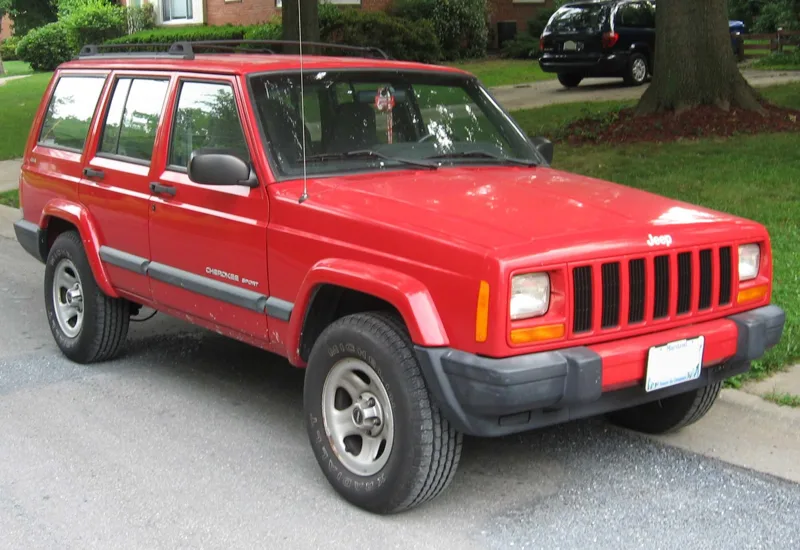
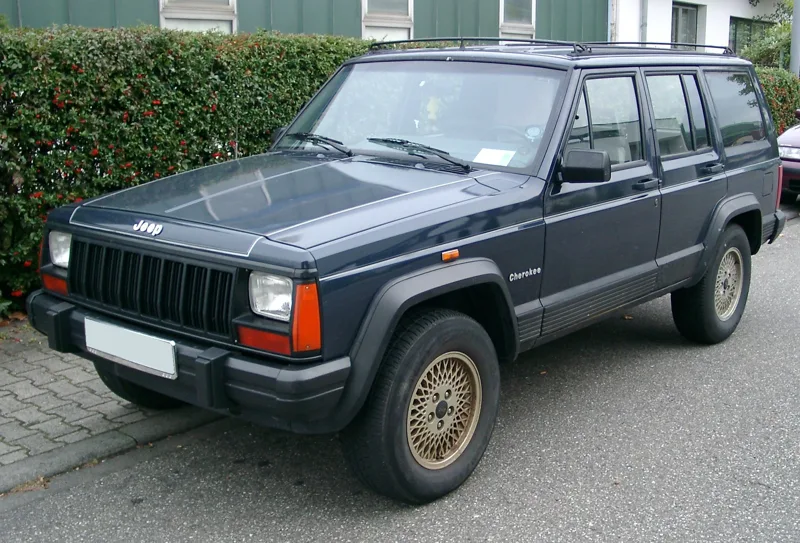
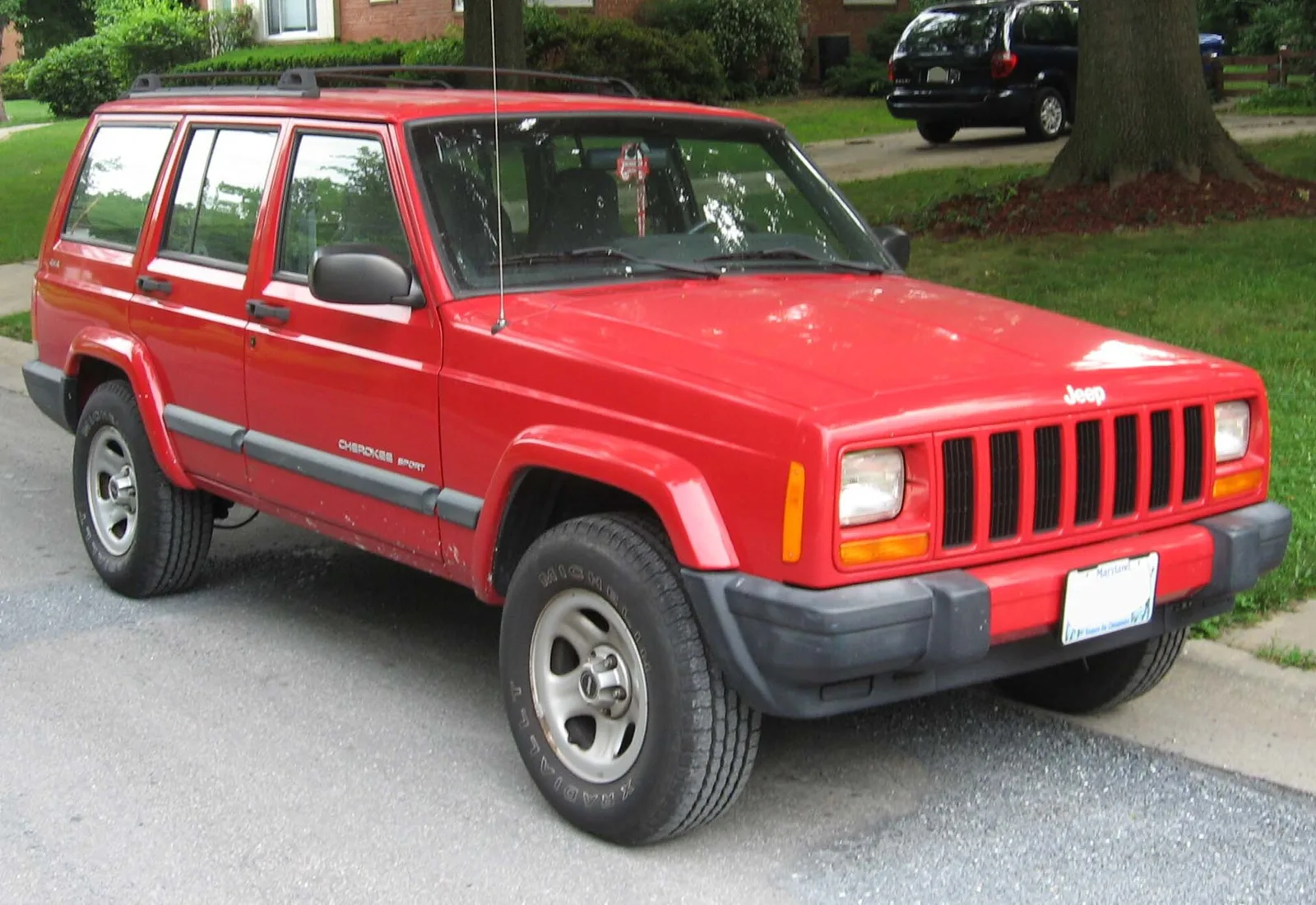
The Russian GAZ-M20 Pobeda M-72 of 1955, the first mass-produced unibody four-wheel-drive passenger car, can be seen as the first crossover. The 1977 Lada Niva paired a unibody with coil-sprung independent front suspension, full-time four-wheel drive and low-range gearing. Even so, unibody SUVs stayed rare until the 1984 Jeep Cherokee (XJ) arrived and sold well. It was lighter and smaller than the truck-based model it replaced, yet carried the same people and cargo. The 1993 Jeep Grand Cherokee (ZJ) pushed more of Jeep's range the same way, and many other brands followed from the mid-1990s. Today most SUVs are unibody and few remain body-on-frame.
The late 1990s and early 2000s were when popularity jumped, often at the expense of sedans and station wagons. Until about 2010 many models also came with two doors. Makers then began dropping them as four-door versions sold better, and only a handful survive, among them the Suzuki Jimny, Mahindra Thar, Toyota Land Cruiser Prado, Ford Bronco, Jeep Wrangler and Range Rover Evoque.
SUVs made up 57.3 per cent of US sales in 2021, while the 49.6 per cent production share for model year 2024 comes from the regulator's truck-SUV category, which does not cover every SUV.
How much did regulation help the SUV?
A great deal, at least in the United States. American rules lump SUVs together with pickups and minivans under loosely defined off-highway categories, so they were treated as light trucks. That status let them face looser limits than passenger cars on fuel economy, under the Energy Policy and Conservation Act, and on emissions, under the Clean Air Act.
The loophole shaped products. Fuel-economy rules once defined a truck partly by cargo space exceeding passenger space, so even the PT Cruiser, with removable rear seats, counted as a light truck. The gap narrowed slowly. From 2004 the EPA held SUVs to car tailpipe standards for criteria pollutants, although greenhouse gas standards were not set until 2010, and in 2011 the fuel-economy rules reclassified small two-wheel-drive SUVs as passenger cars. State rules differ too, so one SUV can be a car in one state and a truck in the next.
What does a tariff on chicken have to do with it?
More than you would expect. The Chicken Tax is a 25 per cent tariff on imported light trucks that has been in force in the United States since 1964. It began as a trade war: France and West Germany put tariffs on American chicken, American exporters lost 25 per cent of their European sales by August 1962, and diplomacy failed after 18 months. On 4 December 1963 President Lyndon Johnson imposed the tax, almost 10 times the average US tariff, by executive order.
Audio tapes from the White House later revealed a second motive. Johnson wanted the United Auto Workers president, Walter Reuther, to hold off a strike and back his civil-rights platform, and Reuther wanted action on rising Volkswagen shipments. The tariff duly hit the West German Type 2 vans and pickups, and in 1964 imports of such trucks from West Germany fell to US$5.7 million, about a third of the year before. Japanese makers pulled small pickups and coupe utilities from the American market as well.
Local makers of SUVs and light trucks have been shielded ever since. Robert Z. Lawrence, a Harvard professor of international trade, contends that the tax insulated the American industry from real competition in light trucks for 40 years. Detroit also lobbied to keep it, and the effect was less pressure to introduce cleaner, more economical vehicles. A 2003 Cato Institute study called the tariff a policy in search of a rationale.
Importers kept finding ways round it. Japanese makers shipped chassis-cab trucks at a 4 per cent tariff and fitted beds in the US, a loophole closed in 1980. The Subaru BRAT carried two rear-facing seats in its bed from 1978 to 1987 to count as a passenger vehicle. In 1989 US Customs reclassified two-door SUVs as light trucks, and Toyota, Nissan, Suzuki and Honda eventually built plants in the United States and Canada. The tariff was still in force as of March 2023, and in 2025 the Ineos Grenadier Quartermaster was the only imported truck sold in America that was subject to it.
Other countries had their own quirks. Australian SUV sales were helped by lower import duties than passenger cars: until January 2010 SUVs paid 5 per cent, against 10 per cent for cars.
Did fashion and fear do the rest?
Partly. Buyers in the 1990s and early 2000s believed SUVs protected their occupants better thanks to the larger size and raised ride height. The psychological sense of security, critics argue, can lead to less cautious driving, and may push people in smaller cars to buy an SUV of their own for protection.
Money mattered too. SUVs typically carry significantly higher profit margins for automakers, and the industry promoted them by appealing to machismo. Descriptions on American automotive websites sell the same pitch, with chair-height seats, picture-window visibility and wagon practicality wrapped in off-road capability.
What happened to the station wagon?
It became a casualty of the crossover. A station wagon, or estate car in Britain, is a sedan with its roof extended rearward over a shared passenger and cargo space, reached through a rear liftgate. It turns the sedan's three-box shape into two boxes and adds a D-pillar. The idea began around 1910 as wooden bodies on Ford Model T chassis, nicknamed depot hacks because they met trains. They were first treated as commercial vehicles and by the 1920s were seen as passenger cars.
Demand for the body style has faded since the 2010s, especially in the United States and Canada, in favour of crossover and SUV designs. There is some irony in that. The AMC Hornet Sportabout of 1972 had a liftgate-style hatchback said to set a precedent for liftgates in modern SUVs.
The wagon has not lost its enthusiasts. The 1994 Audi RS2, developed with Porsche, has been called the first performance station wagon, and the RS4 and RS6 followed. Dodge sold the 2006-2008 Magnum SRT8 with a 6.1-litre Hemi V8 rated at 425 hp (317 kW; 431 PS). The Cadillac CTS-V Wagon, launched for the 2011 model year, was considered the most potent production wagon offered with a manual transmission. Mercedes-AMG C63 and E63 wagons, the BMW M5 and the Volkswagen Golf R and Passat R36 keep the idea going in Europe.
Why are sedans dying?
SUV popularity grew at the expense of sedans and wagons from the late 1990s. The sedan itself is a three-box car with separate compartments for engine, passengers and cargo, typically with a B-pillar, two rows of seats and a rear interior volume of at least 33 ft3 (0.93 m3).
The name comes from the sedan chair, an enclosed box carried by porters that emerged in the 1630s. The first recorded use of the word for a car body was in 1912, when Studebaker marketed the Four and Six as sedans, though the 1911 Speedwell of Dayton, Ohio is often cited as the earliest true example. Styles have also blurred: liftback sedans such as the Peugeot 309, Audi A5 Sportback and Tesla Model S are hard to tell apart from hatchbacks. One sedan style, the pillarless hardtop, died out for safety reasons. The US passed a roof-strength standard in 1973 and the last hardtop sedan, the 1978 Chrysler Newport, ended the line.
SUV vs sedan vs wagon vs crossover
| Body style | Box layout | Cargo access | Construction | Defining trait |
|---|---|---|---|---|
| Sedan | Three-box | Separate boot | Unibody, like most passenger cars | B-pillar, two rows of seats, fixed roof |
| Station wagon | Two-box | Rear liftgate | Shares the sedan platform | Roof extended rearward, D-pillar |
| SUV | Two-box | Combined with passenger area | Mostly unibody today, once body-on-frame | Raised ground clearance, often four-wheel drive |
| Crossover SUV | Two-box | Combined with passenger area | Unibody | Built like a passenger car, with SUV looks |
SUV vs crossover: does the difference matter?
Less than it used to. A crossover is usually defined as an SUV with a passenger-car unibody, but the labels are increasingly blurred by what the vehicles can do, by how marketers name them and by electrification. Since most SUVs now use unibody construction, the old chassis-based split no longer sorts them cleanly. For tax and registration, local definitions count for more than the label on the tailgate.
What does the SUV boom cost?
Critics list a long set of drawbacks. SUVs generally burn more fuel and take more resources to build than smaller cars, and between 2010 and 2018 they were the second-largest contributor to the worldwide rise in carbon emissions. Their tall bodies and high centres of gravity raise rollover risk: in 2003 they were quoted as 2.5 times more likely to roll in a crash than regular cars, and between 1991 and 2001 SUV rollover deaths in the United States rose 150 per cent. In 2001 rollovers were 3 per cent of crashes but over 30 per cent of occupant deaths.
Other road users pay too. Larger blind spots and higher front ends make an SUV at least twice as likely to kill a pedestrian it strikes. SUVs are exempt from the US rule that a car bumper must cover the zone 16 to 20 inches (41 to 51 cm) above the ground, so the impact lands higher on the other car. Some tall vehicles also struggle in the Swedish moose test, and the 2011 Jeep Grand Cherokee failed it.
Cities are starting to respond. In February 2024 Paris voters mandated a triple parking rate for SUVs, which took effect on 1 October 2024. Visitors with vehicles over 1,600 kg (3,527 lb), or 2,000 kg (4,409 lb) for electric ones, pay 18 euros an hour in central Paris and 12 euros in outer districts, while residents and professionals are exempt. Lyon and Tubingen made similar decisions.
What does it mean if you are buying a car?
Classification affects your costs, so check how your country sorts the vehicle. Weight now matters in some cities, as the Paris thresholds show. If you want a two-door SUV, the list is short. And if you like the idea of a wagon, performance models are one of the few places the body style is still strongly alive.
Where this goes next
Paris acted first, and London, Brussels and Amsterdam are considering similar ordinances, so more SUV-specific parking rules are a live possibility.