How Tesla's fast-charging network grew from a handful of California sites to about 9,000 stations, how its hardware moved from 72 kW to 500 kW, and where the programme faces pressure.
The Tesla Supercharger network is a global DC fast-charging system that began in 2012 with six California stations. It has grown to about 9,000 stations, with V4 posts reaching 325 kW and a peak output of 500 kW, and it now serves non-Tesla cars through adapters and standard connectors.
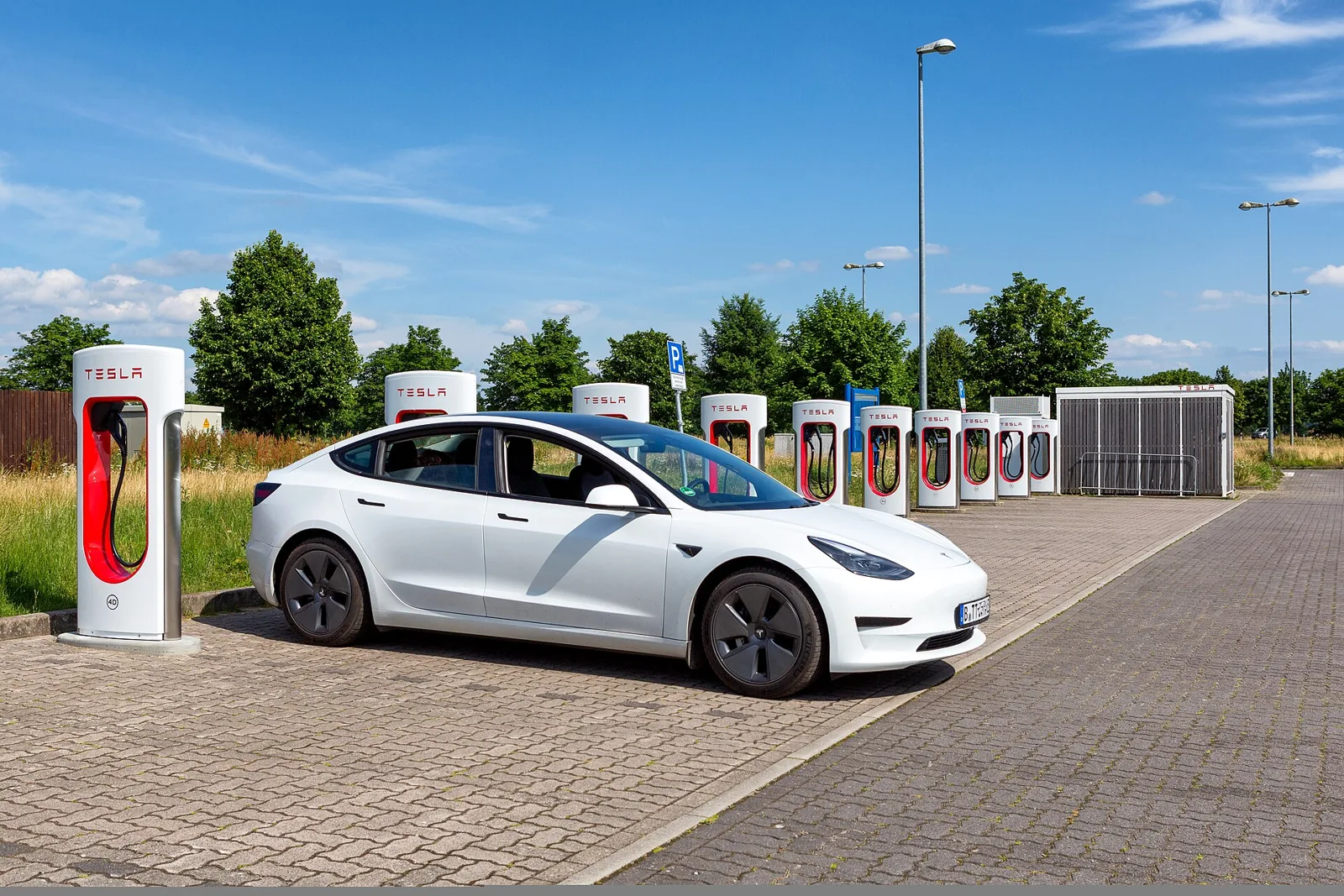
The Tesla Supercharger network is a DC fast-charging network built and run by the American manufacturer Tesla. It opened in September 2012 with six stations in California, and by 1 October 2026 it had 9,007 stations worldwide with more than 85,000 connectors. Its current maximum output is 500 kW, and the network has grown from a few highway corridors into a global system that sets the pace for fast charging in the car industry.
When did the Supercharger network begin?
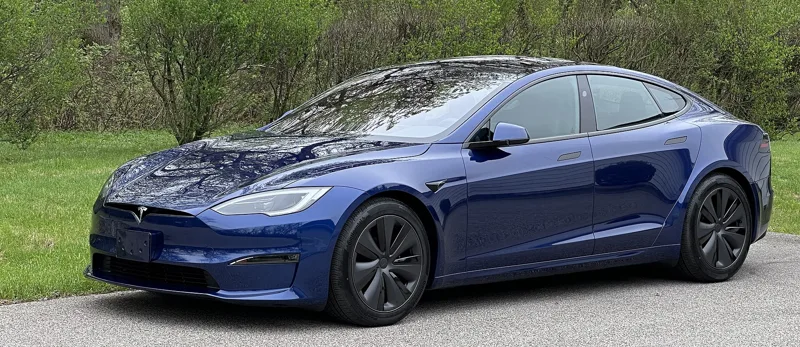
The first Superchargers arrived in 2012, the same year the Model S entered production. The first six stations allowed trips between Los Angeles, San Francisco, Lake Tahoe and Las Vegas. Two more stations went up along Interstate 95 in Connecticut and Delaware, linking Boston, New York and Washington, DC.
By mid-July 2013 the count reached 15 stations nationwide. In October 2013 the whole West Coast was opened along Interstate 5 and US Route 101, and in January 2014 the first coast-to-coast corridor was completed from Los Angeles to New York City via Chicago. Canada followed in 2014, with stations along the Ontario Highway 401 and Quebec Autoroute 20 corridor between Toronto and Montreal.
A network that started with six stations in 2012 and now covers the globe, with each hardware generation pushing power higher.
How big is the network today?
The network is now large in every major region. As of 1 October 2026 Tesla counted 9,007 stations, and by region the largest share sits in Asia Pacific with 3,610 stations, followed by North America with 3,594 and Europe with 1,788. The figure had stood at 7,900 stations with over 75,000 connectors in November 2025, which shows how quickly the count has risen.
The United States alone had more than 2,500 sites with nearly 30,000 stalls by January 2025, more than any other nation. Canada had 236 sites and Mexico had 38. China is the second-largest market, with nearly 2,200 sites and 12,350 stalls. Other Asia Pacific markets include South Korea with 165 sites, Australia with 150 and Japan with 138.
How much power does a Supercharger deliver?
Power has risen with each generation of hardware. The first V1 and V2 stations used one charger cabinet holding four modules shared between two posts, so two cars requesting maximum power split the output, either 50/50 or 75/25. Tesla later introduced urban posts in September 2017 that did not share equipment, so each delivered its full output of 72 kW. Those compact posts were aimed at shopping centres, car parks and garages.
V3 stations arrived in 2019 and could deliver up to 250 kW. Up to four posts shared a 350 kW cabinet, and several cabinets could share power over a DC bus, so in most cases every post could deliver its maximum regardless of nearby sessions. The V3 posts used a liquid-cooled cable, which allowed it to be thinner and lighter while carrying more power.
| Generation | Introduced | Peak output | Key feature |
|---|---|---|---|
| V1 and V2 | 2012 onward | Shared between two posts | Four modules per cabinet, 50/50 or 75/25 split |
| Urban posts | September 2017 | 72 kW | Compact, unshared equipment for towns |
| V3 | 2019 | Up to 250 kW | Shared 350 kW cabinet, liquid-cooled cable |
| V4 | Early 2023 | Up to 325 kW from January 2025 | Up to 1000 volts and 1000 amps, longer cables |
| V4 cabinet | Deployed September 2025 | 1MW or 1.2MW across 8 stalls | No DC bus between cabinets |
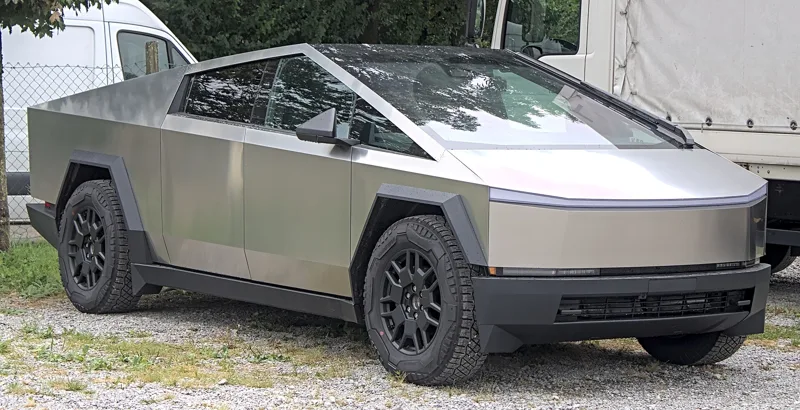
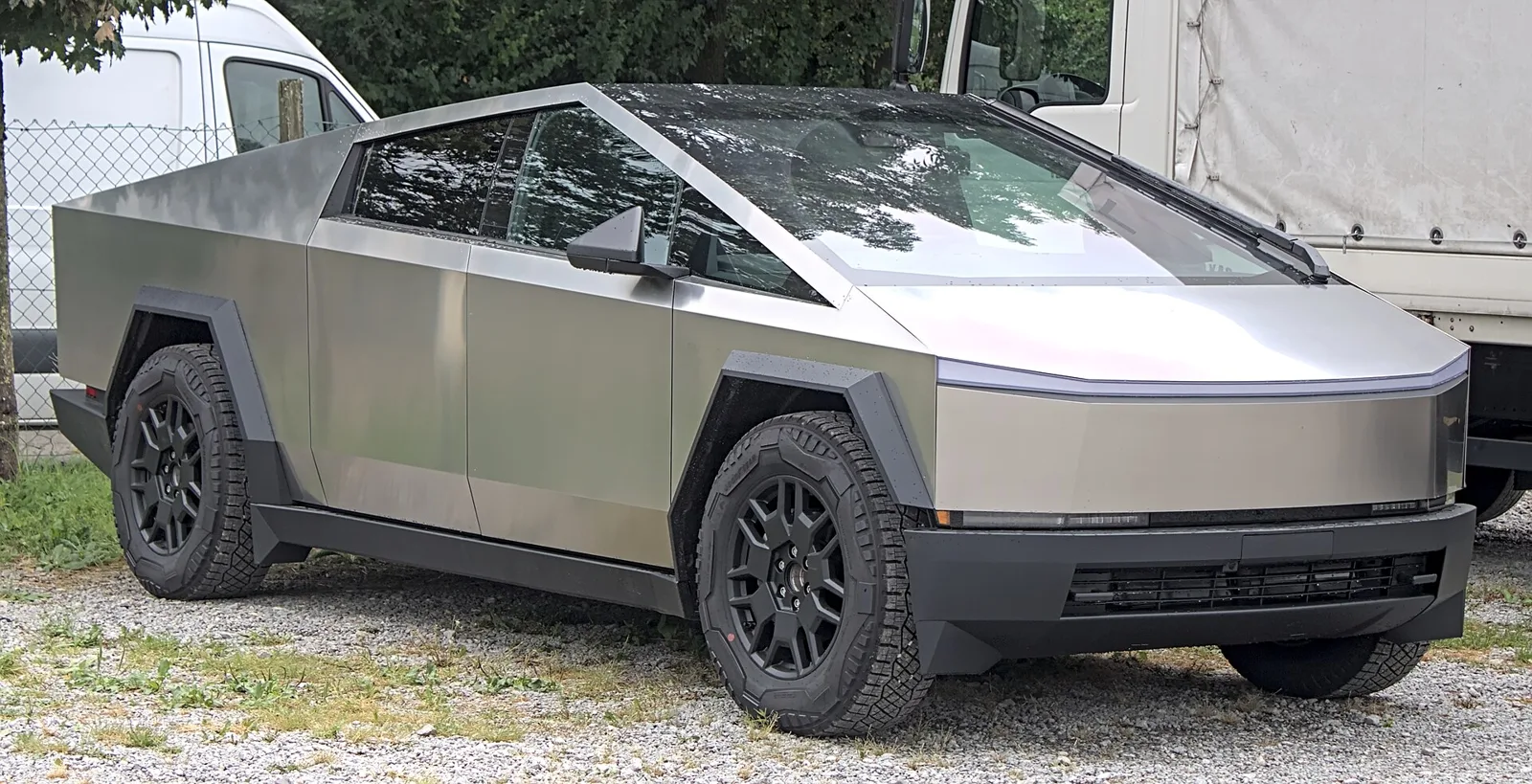
V4 posts began rolling out in early 2023 with longer cables for charging other manufacturers' cars. They support up to 1000 volts and 1000 amps, and from January 2025 they delivered up to 325 kW. As of the 2026 model year lineup, only the Cybertruck could charge at that rate. The V4 cabinet, announced on 14 November 2024 and first deployed in September 2025, provides either 1MW or 1.2MW across eight stalls and no longer links cabinets through a DC bus. It can charge 400 V and 800 V systems at up to 250 kW and 500 kW respectively.
Can the network charge non-Tesla cars?
Yes, and the change has come gradually. In February 2023 Tesla began installing the Magic Dock at selected V3 sites. The dock houses an adapter that converts the North American Charging System connector to the Combined Charging System standard, and the adapter stays locked either in the dock or on the Tesla connector, depending on which car is charging.
Tesla started rolling out V4 posts in North America in October 2023 with an integrated Magic Dock and a built-in payment terminal. Those upgrades let non-Tesla vehicles charge without a separate adapter or the Tesla app, and they made Tesla eligible for federal, state and local incentives, including funding of 7.5 billion dollars under the National Electric Vehicle Infrastructure programme.
The standards landscape shifted quickly. Most North American automakers committed to the North American Charging System between May 2023 and February 2024. The standards body SAE gave NACS its formal designation, J3400, in September 2024, which made CCS1 support for future Superchargers unnecessary. By September 2025 only a small number of locations had adopted the dock, with fewer than 100 V3 sites upgraded and under 80 V4 adapters switched on. In September 2025, Tesla opened its first complete V4 station in Redwood City, California, which supports up to 500 kW for passenger vehicles.
Europe took a different route. In November 2018, under pressure from European regulators, Tesla said it would adopt the CCS2 standard, adding the inlets to new vehicles, offering adapters to existing owners and fitting CCS2 connectors to its Superchargers. In China Tesla uses the GB/T standard for its vehicles and its stations.
How is a Supercharger session billed?
Usage is normally billed by the energy consumed in kilowatt-hours, except where a site must bill by time. Idle fees can be charged to drivers who stay plugged in after charging is complete, which discourages loitering. Some sites have also introduced congestion charges since 2023, aimed at drivers who keep the car plugged in when the battery is high and charging is slower. Charges go to the Tesla account associated with the car or to the card on file.
Some owners had free supercharging promotions. Unlimited free supercharging for life was offered to Model S and Model X buyers who ordered before 15 January 2017, and in some periods between 2019 and 2020, as well as to Model 3 performance buyers in 2018. Model S and Model X cars ordered between 15 January 2017 and 2 November 2018 received 400 kWh of free credits each year, which is about 1,000 miles or 1,600 km. Once those credits ran out, the usual price applied.
How much did Tesla spend per charging stall?
Tesla said it builds its chargers at about half the cost of its competitors. A 2025 post from the company's North American charging director put the cost per stall below 45,000 dollars for V3.5 Superchargers, with a target of under 40,000 dollars per stall for V4. In a 2014 filing with the US Securities and Exchange Commission, Tesla gave an estimated useful life of 12 years for its stations.
Demand has shifted over time. In 2016 the average was 34 Tesla cars per stall. In 2014 fewer than 10 percent of charging sessions took place at Superchargers, since most charging happens at home or at work. Tesla reported 99.95 percent uptime for 2024, and its power supply was 100 percent renewable, combining on-site solar with matched renewable purchases.
Has the expansion slowed?
Expansion has faced pressure. In May 2024 it was reported that Tesla had laid off its whole Supercharger team, including its head. Executives in the charging industry began preparing for the company to withdraw from the federal National Electric Vehicle Infrastructure programme, which had a goal of 500,000 charging ports over five years. Tesla had won contracts at 69 of the 501 funded sites by then. Musk later promised to invest US$500M in the network that year, which was a significant reduction from earlier plans and was estimated to cut the rate of port deployment by 77 percent.
The Supercharger work moved to Tesla's energy team afterwards. Expansion continued in other regions, with the first South American Superchargers in Chile in October 2024 and the first station in Colombia, at Medellin, in November 2025.
What is the Megacharger?
In November 2017 Tesla announced a higher-capacity Megacharger alongside the prototype of its Tesla Semi, a Class 8 prime mover. These units can give 400 miles (644 km) of charge in 30 minutes. The first Megacharger was installed at the Gigafactory Nevada in November 2021, where the Semi is built, and a second was permitted for a PepsiCo facility in Modesto, California.
The megawatt-class cable has three times the current density of the V3 Supercharger cable, at 35 amperes per square millimetre compared with about 12, and it is liquid-cooled to support 1000-amp charging at 1000 volts. In November 2024 Tesla said the new V4 cabinets would support Semi charging at up to 1.2MW.
Where are Superchargers placed and powered?
Tesla usually builds Superchargers close to major highways, with amenities such as restrooms, restaurants and shops nearby. Some sites add solar canopies and Megapack batteries installed by Tesla Energy, which offset energy use and shelter drivers from the weather.
The Koge station in Denmark was the first European Supercharger to receive a solar canopy, in early 2015. Its roof carries 300 m2 (3,230 sq ft) of solar cells with a projected annual output of 40 MWh, and since 2018 the site has had its own battery bank to store surplus power.
Mobile Superchargers arrived in 2019. They pair urban posts with a Megapack energy store mounted on a semi-trailer, giving temporary charging for events, extra capacity in peak travel seasons or cover while a fixed station is offline. A single Megapack can charge up to 100 vehicles before it is depleted.
Tesla also tested battery swapping at Harris Ranch in California in 2015. It carried out a few swaps and then discontinued the station shortly afterwards, leaving the plug-in Supercharger as the model the network kept.