How Toyota protects the Prius battery, what wears NiMH cells out, and how to judge a used Prius or Camry hybrid.
A hybrid battery has no fixed lifespan. Toyota protects the Prius pack by holding charge between 40% and 80%, and US warranties run 150,000 miles or 10 years in California-standard states, 100,000 miles or 8 years elsewhere. A 2019 study ranked the Prius second longest-kept.
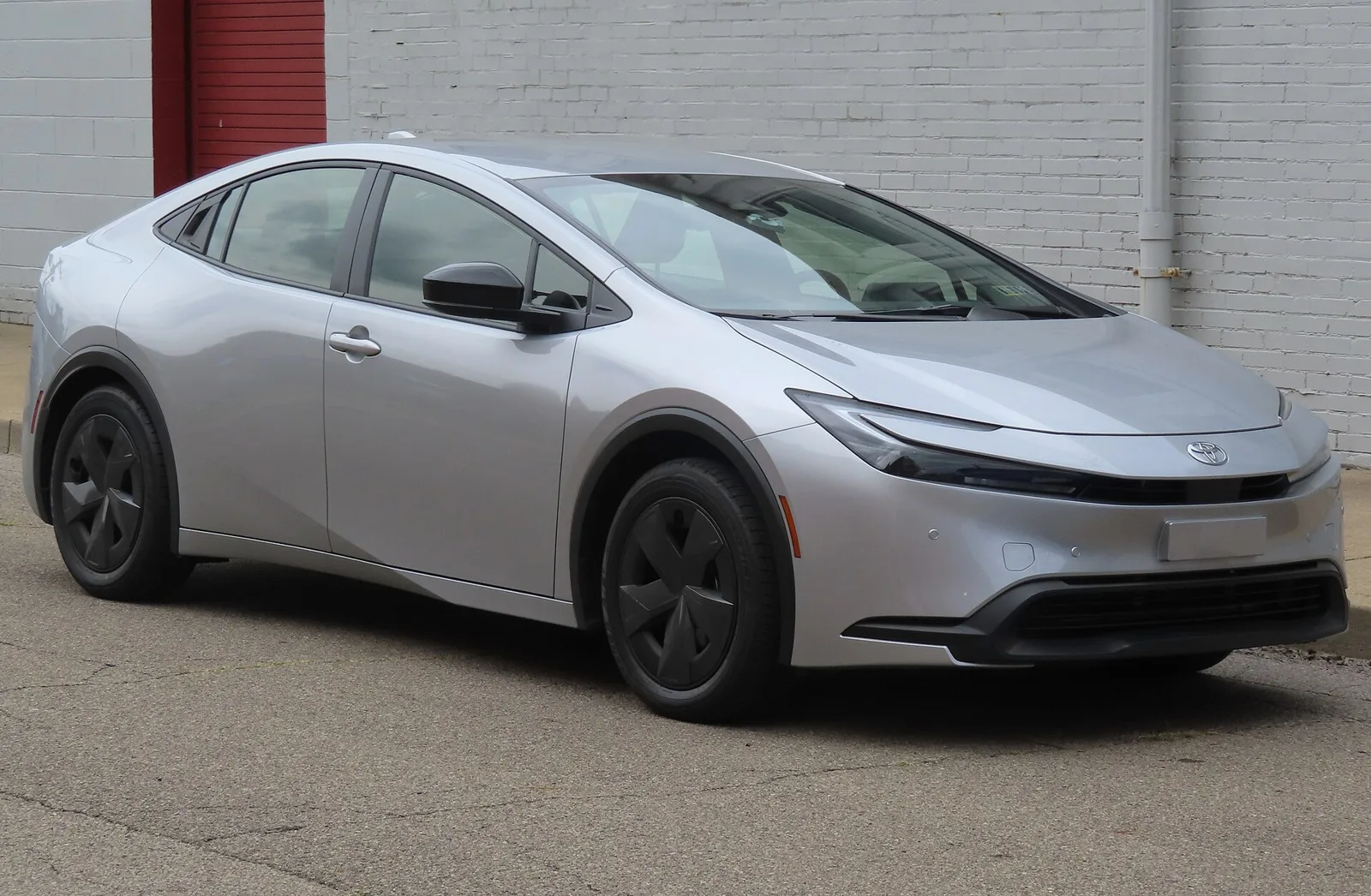
The battery in a third-generation Toyota Prius is never allowed to fill or empty. Its electronics keep the state of charge inside a 40% to 80% window, and they let the car use just 40% of total rated capacity, about 6.5 ampere-hours. Toyota built that cushion in deliberately to prolong the battery's life, and it is the single best clue to how long hybrid batteries last.
How long do hybrid batteries last?
The answer depends on design and use, so the better question is how carefully the maker manages the pack. A Prius has a computer devoted solely to holding the battery at its best temperature and charge level, and the energy management controller that every hybrid carries can be set to favour battery life among its goals, alongside fuel economy and emissions.
The evidence from owners points the same way. A 2019 iSeeCars study ranked the Prius as the second longest-kept vehicle among US drivers, and in December 2013 Consumer Reports named it Best Value for the second year in a row. Toyota's sales give the technology a long track record: one million by May 2007, five million by March 2013, and over 15 million hybrids from Toyota and Lexus as of January 2020.
The Prius battery is never allowed to fill or empty, and that engineered cushion is the best clue to how long it lasts.
How a hybrid uses its battery
A hybrid pairs an internal combustion engine with one or more electric motors, and its battery acts as a buffer. Regenerative braking turns the car's kinetic energy back into electricity and stores it, and many hybrids shut the engine off at idle and restart it when needed. An energy management controller sits between the driver and the components and decides, moment by moment, how much power comes from each source. Because the combustion engine is not always tied to the wheels, it can be run at its most efficient speed, which is where Toyota's system gets much of its economy.
Toyota's version replaces the geared transmission with the planetary gear set and two motor-generators. An ordinary gearbox has only four to six ratios, which forces the engine through speeds where it burns more fuel. The Toyota system behaves like a continuously variable transmission, so the engine can stay in its best range while the wheels speed up. The battery supplies energy during acceleration and takes it back during regenerative braking.
What kind of battery is in a hybrid?
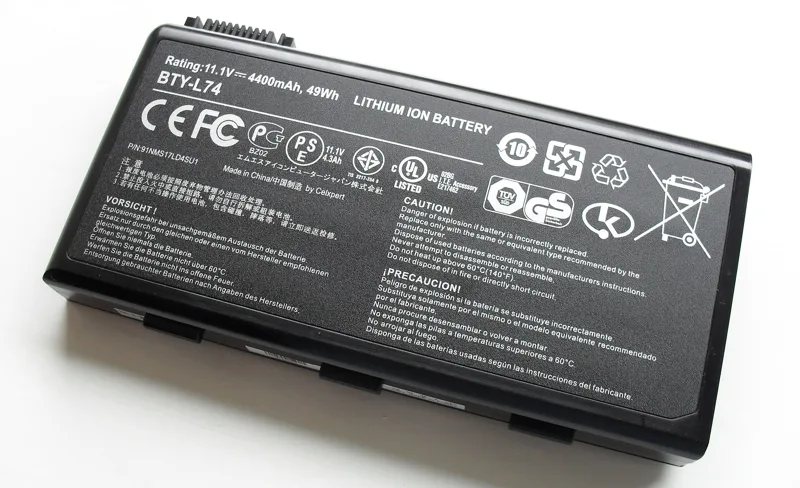
Toyota's Hybrid Synergy Drive uses a sealed traction battery that is either nickel-metal hydride (NiMH) or lithium-ion, and a separate 12 volt lead-acid battery that runs the electronics and accessories while the hybrid system is switched off. The first-generation pack held 228 cells in 38 modules. The second and third generations use NiMH, in 28 modules of six 1.2 volt cells in series, giving a nominal 201.6 volts. A boost converter lifts that to 500 volts DC for the inverters that run the two motor-generators. The plug-in version of the fifth-generation Prius pairs its engine and motor with lithium-ion batteries.
NiMH is a mature chemistry. It holds two to three times the capacity of the older nickel-cadmium cell of the same size, though only about half the energy density of lithium-ion. Early development, sponsored by Daimler-Benz and Volkswagen, produced cells with a life of 500 charge cycles at full depth of discharge. A later alloy, demonstrated in 1987, kept 84% of its capacity after 4000 cycles. More than two million hybrid cars had been built with NiMH batteries by 2008, and in 2015 BASF altered the microstructure to make cells more durable and lighter, lifting specific energy to 140 watt-hours per kilogram.
What wears out a hybrid battery
Heat, cold and misuse are the three enemies, and the NiMH chemistry shows each of them.
Temperature
Heat speeds up self-discharge. At room temperature a NiMH cell loses 0.5% to 4% of its charge a day once the first day settles, but at 45 degrees C (113 degrees F) the rate is about three times as high. Cooler storage means slower discharge and longer battery life. Cold has its own cost, because capacity declines as cells cool. A Prius pack delivers less power at lower temperatures and more at higher ones, with about 20 kW available from the second-generation pack at 50% charge. That is why the dedicated battery computer matters.
Overcharge and over-discharge
Overcharging forms hydrogen gas inside a NiMH cell, which can rupture it, so cells carry a vent. Fast charging calls for a smart charger that cuts off before the cell is overcharged. Going too far in the other direction is just as harmful. If one cell in a multi-cell pack runs flat before the others, the healthy cells can drive it into reverse polarity and damage it permanently. The risk is greater when cells differ in temperature, because the colder cells lose capacity and sag in voltage. Holding the Prius pack between 40% and 80% of full charge keeps it clear of both extremes.
Is voltage depression a sign of failure?
Voltage depression is not necessarily a failure. It comes from repeated partial discharge, it is often mistaken for the memory effect, and a few full discharge and charge cycles reverse it. NiMH cells are also made of environmentally friendly materials, with only mildly toxic substances, and they are recyclable.
Toyota hybrid battery warranty: what the US terms say
For the second-generation Prius and later, the US battery warranty on 2004 and later models runs for 150,000 miles (240,000 km) or 10 years in states that have adopted the stricter California emissions standards, and 100,000 miles (160,000 km) or 8 years elsewhere. The warranty on hybrid components is 100,000 miles (160,000 km) or 8 years.
The age and mileage of a used car therefore decide whether a battery replacement would fall inside those limits.
Is a used Prius or Camry hybrid a safe buy?
Start with how the system works. Hybrid Synergy Drive replaces a conventional geared gearbox with an electromechanical one: a planetary gear set, two motor-generators called MG1 and MG2, a high-voltage battery and a computer. MG1 starts the engine and charges the battery, while MG2 is the main drive motor and recovers energy under braking. The system cannot run without the computer, the power electronics, the battery pack and the motor-generators. In an emergency a car can cover a mile or two with no petrol at all. Toyota calls the transmission an electronic CVT.
The Prius was the first mass-produced hybrid car, going on sale in Japan on 10 December 1997. The Camry joined the family when the Hybrid Synergy Drive reached the 2006 Camry and Highlander.
| Generation | Years | Battery | Approximate sales |
|---|---|---|---|
| First (NHW10, NHW11) | 1997 to 2003 | 228 cells in 38 modules | About 123,000 first-generation Priuses |
| Second (XW20) | From 2003 | 28 NiMH modules of six 1.2 volt cells; smaller and lighter than before | About 1,192,000 |
| Third (XW30) | From 2009 | 28 modules of six cells, 201.6 volts; charge held between 40% and 80% | About 1,688,000 as of June 2013 |
The second generation, presented in April 2003, paired a smaller, lighter NiMH battery with an all-electric air-conditioning compressor, and it was more powerful and efficient than the first. The third generation, on sale from 18 May 2009, adds the selectable EV, Eco and Power modes. In EV mode the car can run on electricity alone under most low-load conditions below 25 mph (40 km/h), over a distance of up to 1 mi (1.6 km), provided the traction battery holds enough charge.
The Prius is sold in over 90 markets, and the conventional Prius was the best-selling hybrid in both Japan and the US as of January 2017, with 1.75 million sold in the US and over 1.8 million in Japan. Japan has the world's largest hybrid fleet, at 7.5 million as of March 2018, which was 19.0% of passenger cars on the road, excluding kei cars.
The earliest cars are a separate case. The first Prius, the NHW10, went on sale in Japan on 10 December 1997 and was sold only there, with 37,425 built before production ended in February 2000. The NHW11 followed in 2000 as the first Prius sold outside Japan, in Asia, America, Europe and Australia, priced at US$19,995 in the United States between the smaller Corolla and the larger Camry. The 2011 range extension added the Prius v, an MPV, and the Prius c, a subcompact hatchback, and a plug-in version followed in 2012.
What to check on a used hybrid
- Which generation it is. The battery layout, the control strategy and the warranty history differ between the first, second and third generations.
- Whether the traction battery is NiMH or lithium-ion, since the two behave differently in heat, cold and storage.
- Where the car sits against the warranty limits of 150,000 miles (240,000 km) or 10 years, or 100,000 miles (160,000 km) or 8 years, for US cars, and 100,000 miles (160,000 km) or 8 years for hybrid components.
- The condition of the separate 12 volt battery, which powers the electronics when the hybrid system is off.
- Whether the EV button still holds electric mode at low speed and low load, since that depends on the traction battery having enough charge.
How the battery fits into the wider hybrid picture
Not every hybrid works like a Prius. In parallel hybrids from 2013, a full-size engine pairs with a single small electric motor under 20 kW and a small battery pack, while after 2015 some parallel hybrids exceed 50 kW. Series hybrids use only the electric motor to drive the car, and they usually carry a larger battery pack, which makes them more expensive. Plug-in hybrids go further, with a much larger all-electric range. The Prius Plug-in Hybrid can drive 11 mi (18 km) in electric mode on the EPA rating, until its battery is depleted.
Honda's Insight was the first hybrid to go mass-market in America, and the Prius was the second. Toyota's lead is large: by January 2017 the Prius family had totalled 6.1 million sales, 61% of the 10 million hybrids Toyota had sold worldwide since 1997.
Where this goes next
The Prius is moving on from its NiMH roots in the latest generation. Presented on 16 November 2022, the fifth-generation Prius offers a 1.8-litre hybrid and a 2.0-litre hybrid in Japan, plus a 2.0-litre plug-in with lithium-ion batteries producing a combined 164 kW (220 hp). European deliveries started in the first quarter of 2023 with only the plug-in model, and the plug-in was renamed Plug-in Hybrid for North America in the 2025 model year. It was not sold in Australia, where Toyota pointed to sluggish sales of the previous generation, and a Corolla Hatchback Hybrid took its place.
Beyond the Prius, Hybrid Synergy Drive technology has been adapted for the hydrogen-powered Mirai. In Brazil, Toyota launched a flex-fuel hybrid Corolla Altis in September 2019, and by February 2020 it accounted for almost 25% of Corolla sales there.