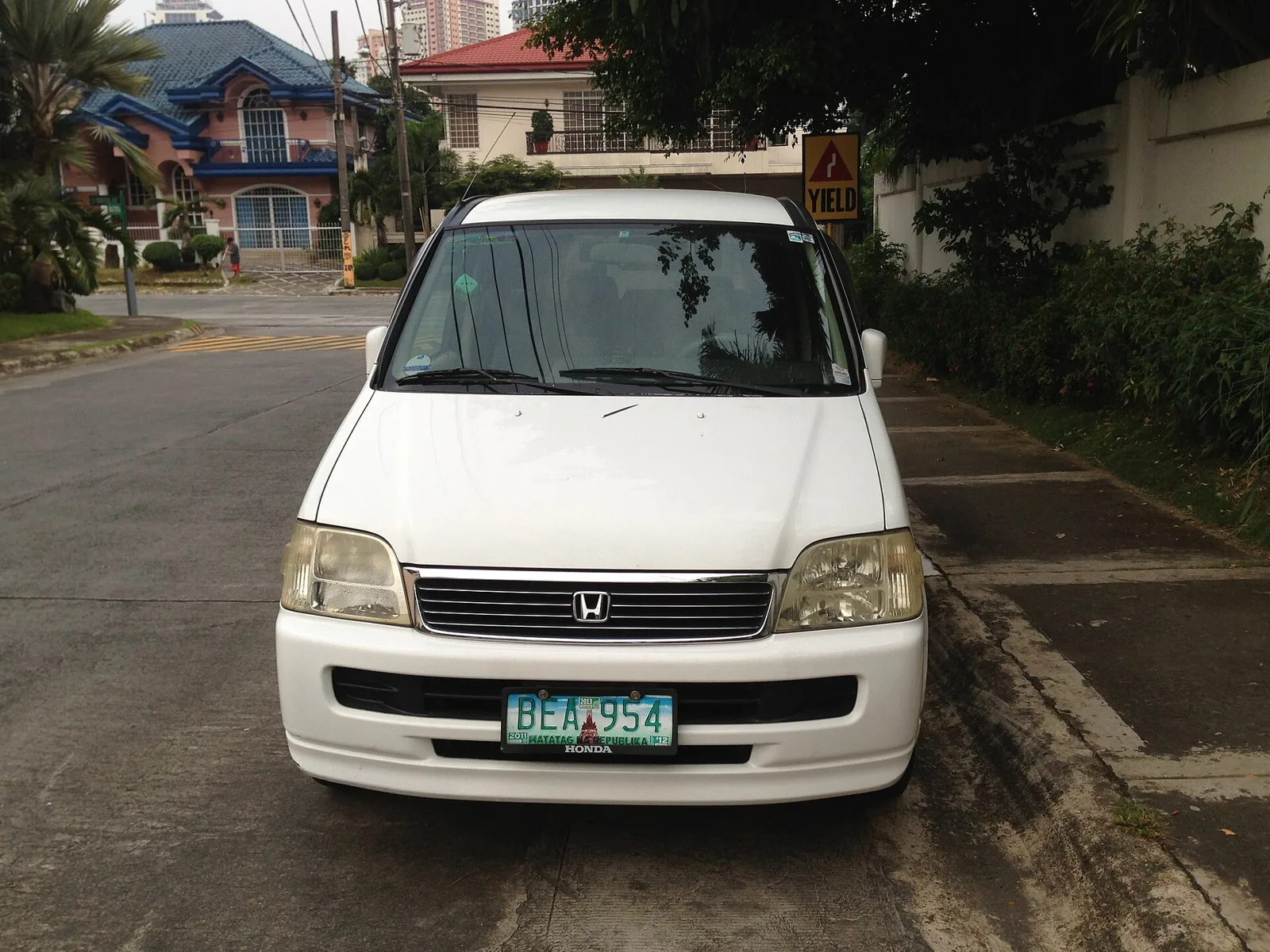
A car in Japan travels half the American average and loses most of its value in six years. That gap feeds Australia's JDM scene, and the compliance rules decide who gets to join it.
JDM means Japanese domestic market: cars built for sale in Japan. They are cheap to export because Japanese cars lose most of their value within six years. In Australia, an imported vehicle must meet the Australian Design Rules. One not built to comply is generally barred unless converted and certified by an authorised compliance engineer.
A car in Japan travels on average just over 9,300 kilometres a year, less than half the American figure of 19,200 kilometres, and rigorous road tests plus steep depreciation leave it worth very little after six years. That gap is why used Japanese cars flow to countries such as Australia, and why a buyer who ignores the compliance rules can find a car that Australia generally bars at the border.
What does JDM actually mean?
JDM stands for Japanese domestic market: Japan's home market for vehicles and parts. Strictly, it means cars built for sale in Japan. It is also used loosely, and wrongly, for any car made in Japan but sold in another country, which is why a lot of internet arguments about "real JDM" go nowhere.
The difference matters because domestic cars can differ greatly from the export versions built on the same platforms. Japanese owners tend to look for innovation rather than long-term ownership, so carmakers refine new technology on home-market cars first. The 2003 Honda Inspire was the first to carry Honda's Variable Cylinder Management, while the near-identical 2003 Accord V6 built mainly for North America did without it, and VCM reached the Accord only in the 2008 redesign.
Domestic cars also lived under their own rules. In 1988 Japanese makers agreed voluntary limits through their industry body, capping cars at 280 PS (276 hp; 206 kW) and 180 km/h (112 mph) for safety. The power cap was lifted in 2004, but the speed limit remains. For a couple of decades, cars were also fitted with a speed chime that rang above 105 km/h (65 mph), or above 85 km/h (53 mph) for kei cars. It was mandated on 21 November 1974, then removed in 1986 after American and other overseas producers pushed back, because it counted as a non-tariff barrier. Some makers offered it as an option into the early 2000s, and the last car to carry it as standard was the Honda City GA1/GA2. Its nickname was kinkon, after the clanging noise.
In Japan a car is worth very little after six years. Elsewhere the same car becomes a project, a prize or a problem.
Why are Japanese cars so cheap to export?
Because the home market throws them away young. Rigorous road tests and steep depreciation leave a car worth very little in Japan after six years, and strict environmental laws make scrapping costly. Exporting them is the profitable answer, and the best markets are countries that drive on the left, including Australia, New Zealand, Ireland, the United Kingdom, South Africa and Malaysia.
The average JDM car is 8.7 years old, placing Japan 9th in a survey of 30 leading economies. Low distances per year also mean that many used cars have seen little use.
Steering position can even become a selling point. Some right-hand-drive Japanese vehicles are sent to left-hand-drive countries to work as mail delivery vehicles, and many Japanese-market Jeep Cherokees now serve rural mail carriers in the US. Motorcycles followed the same logic in the 1990s, when power caps, licence rules and a near non-existent second-hand market made it economic to ship nearly new bikes abroad, until recession and a global crash all but ended that trade.
How does a grey import work?
A grey import vehicle is a new or used vehicle legally imported through channels other than the maker's official distribution system, and the term parallel import means the same thing. Carmakers set prices by market, so the same model can carry different real prices in different territories. Grey importers exploit that difference.
For the trick to work, nothing can swallow the saving. Barriers include regulations that ban imports or demand costly modification, and in some places, Vietnam among them, grey imports have largely been banned. Dealers tied to a maker's network often regard grey imports as a threat. Independent distributors do not, since an odd brand brings in service and spare-parts money.
Europe offers an example of the other extreme. The European Union tacitly approves grey imports from other member states, and in 1998 the European Commission fined Volkswagen for trying to stop German and Austrian buyers going to Italy for cheaper new cars. Pre-tax prices are lower in Italy, as in Denmark, because of higher tax on cars.
What do the Australian Design Rules require?
Every new road vehicle made in Australia, and every imported vehicle, new or second-hand, has to comply with the relevant Australian Design Rules when it is first supplied to the Australian market. They are the national technical rulebook covering safety, theft resistance and emissions. State or territory legislation generally requires compliance with the ADRs as they stood when the vehicle was made.
The rules are largely based on, and actively harmonised with, UN vehicle and equipment regulations. Where an ADR is fully harmonised, a manufacturer only has to show a UN approval or a valid test. Partly harmonised ones add Australian requirements on top. There is no whole-of-vehicle approval, unlike the EU system. Once evidence is accepted for a vehicle type, a type approval is issued, the maker adds the VINs to the Register of Approved Vehicles, and a compliance plate can be fitted stating the build date, specifications and a statement that the car meets all applicable ADRs.
The line that matters most to importers is this. A car that was not built to meet the ADRs is generally kept out of Australia, unless the work needed to bring it into line is done and then inspected and signed off by an authorised compliance engineer.
How have the Australian rules changed?
In stages. The First Edition ADRs were circulated only for discussion. The Second Edition took effect on 1 January 1969 and was applied selectively under state and territory law to vehicles built from that date. The Third Edition became effective on 1 July 1988, and by 1 September 1989 it had been made a national standard after a transition year in which it gradually replaced the Second.
The Third Edition is still the standard as of 2024. It began as a mix of live Second Edition rules, later amendments and in-use requirements imposed by state and territory governments, such as vehicle length. Administration passed to the federal department under the Road Vehicle Standards Act 2018 on 1 July 2021. From July 1989 until then, it ran under the Motor Vehicle Standards Act 1989. For vehicles built up to July 1989, the states and territories remain responsible for applying the ADRs, so an older car may be judged differently from a newer one.
How do you check that a JDM car is genuine?
Start with the numbers. Japanese carmakers do not use a vehicle identification number in the overseas style. They use a frame, chassis or vehicle ID number, a model code and an emissions code. A frame number such as SV30-0169266 breaks into SV30, which identifies the Toyota Camry or Vista, and a serial number. A model code such as ST205-BLMVZ identifies a third-generation Toyota Celica GT-Four and its set of features.
The emissions code usually comes before the model number, and the five most common designations are E, GF, GH, ABA and CBA. They appear only on domestic models and not on exported ones. Examples are E-EK9 or GF-EK9 for the first Civic Type R, E-BNR32 for the R32 Skyline GT-R and E-JZX100 for the eighth-generation Mark II. A neat comparison is the European Civic VTi, which carries JHMEEG6, against E-EG6 on the Japanese fifth-generation Civic SiR. Reading these markers correctly helps prove that a car is what the seller claims.
What trips buyers up?
Paperwork aimed at the wrong car is the classic trap. The best-known case comes from the United States, where Motorex crash-tested R33 Skylines in 1999 and petitioned the regulator to make 1990-1999 GT-Rs and GTSs eligible. In late 2005 the regulator learned that the data covered only the R33 although the company had asserted it applied to R32 and R34 models too. It ruled that only 1996-1998 R33s had been shown able to meet the standards. Motorex stopped importing in March 2006 and its principal was arrested. The lesson carries over: compliance evidence has to match the exact model you are buying.
Other traps follow from the rules. A car that was never built to the ADRs needs conversion and certification, so the purchase price is only part of the cost. Home-market cars differ from export versions, so parts and features may not match what an Australian owner's manual describes. And cheap cars can carry safety baggage. New Zealand, where 59 per cent of registered vehicles came from overseas and 94 per cent of those from Japan, is investigating tougher restrictions on imports with poor crash-test ratings, especially the Toyota Corolla, Mazda 2 (Demio) and Suzuki Swift.
How do other countries compare?
| Country | Key rule | What it means for a Japanese import |
|---|---|---|
| Australia | Australian Design Rules | Must comply; non-compliant vehicles generally barred unless converted and certified |
| New Zealand | Import-heavy market, rules under review | 59% of registered vehicles imported, 94% of them from Japan; tougher rules being investigated |
| Canada | 15-year rule | Cars not built to Canadian specification can come in once 15 or more years old |
| United States | 25-year dispensation from 1989 | Older vehicles presumed to be collectors are exempt; California is an exception |
Which Japanese imports do people chase?
The Nissan Skyline GT-R sits at the top of the list. The first GT-Rs ran from 1969 to 1972 and a brief second generation followed in 1973, with 197 cars built. After a 16-year gap Nissan revived the name in 1989 as the R32, which won four straight Japanese Touring Car Championships in Group A trim. In Australia the R32 took the touring car title with Jim Richards in 1991 and Mark Skaife in 1992, until a 1993 rule change excluded it. The Australian magazine Wheels nicknamed it Godzilla in July 1989.
The R32's 2,568 cc RB26DETT engine produced 206 kW (280 PS; 276 hp) at 6,800 rpm and 353 N m of torque at 4,400 rpm, in a car with a kerb weight of 1,430 kg. It paired the ATTESA E-TS all-wheel-drive system with Super-HICAS four-wheel steering. Special versions followed: a Nismo model of 560 units in February 1990, a 245-unit N1 in 1991, and the V-Spec in 1993 and V-Spec II in 1994, built in 1,396 and 1,306 units. The later R34 earned the headline "Godzilla Returns" from Wheels, which called it the best handling car it had driven, and tests recorded 12.2 seconds for the quarter mile and 4.4 seconds from 0 to 100 km/h.
There is a twist for Australian buyers. The Skyline GT-R was never built outside Japan, but its only official export markets were Hong Kong, Singapore, Australia and New Zealand, all in 1991, followed by the UK in 1997. Elsewhere it is mainly a grey import, in Britain, Ireland, South Africa, Canada and the United States as well. Production ended in August 2002, and in 2019 Nismo said it would resume spare parts for every generation, including body panels and engines.
Skylines are not the only draw. New Zealand's import lists show a mainstream side, with the Mazda 3 (Axela) and Suzuki Swift at the front, then the Nissan Tiida, Toyota Corolla and Mazda 2 (Demio), and a quirkier side: the Honda Torneo, Nissan Laurel, Toyota Altezza and kei cars such as the Suzuki Carry, Daihatsu Move and Subaru R2. In an average year from 2015 to 2019 the country took in 134,834 of them.