In 1985, 66,900 grey-market cars reached the United States. Ten years later, 300 did. One dispensation from 1989 is why foreign classics now trickle back in.
The 25 year rule is a 1989 dispensation under which the US regulator NHTSA exempts vehicles over 25 years old from its rules, presuming they are collectors. It exists because the 1988 Motor Vehicle Safety Compliance Act effectively ended private imports of newer foreign cars. California and some states still add their own limits.
In 1985, 66,900 grey-market vehicles reached the United States. By 1995 the figure was 300. The law that did it passed in 1988, and the year after, the safety regulator granted an exemption that let the cars come back once they were old enough. That exemption is the 25 year import rule.
What is the 25 year import rule?
In 1989 the National Highway Traffic Safety Administration, or NHTSA, granted vehicles over 25 years old a dispensation from the rules it administers, because such cars are presumed to be collector vehicles. In practice, most private importers wait until the Environmental Protection Agency's restrictions no longer apply to the car they want, and the clock is a rolling one.
Two things follow from a rolling clock. The age is measured against the individual vehicle, so each year another batch of models crosses the line. And the rule is a dispensation rather than a right: it sits on top of a system that otherwise blocks private imports of recent foreign cars, and some states add their own restrictions.
America did not forgive the grey market. It waited for the cars to become old enough to be called classics.
Why is the US so hard to import into?
Because it plays by its own rules. The United States and Canada are unique in having not signed on to the United Nations Economic Commission for Europe standards for automobile design, so they run an anomalous set of safety and emissions regulations. In America those are developed and administered by NHTSA and the EPA, and they differ significantly in detail from the UN Regulations used across the rest of the world.
Making a car comply is not cheap. Automotive News has cited one 2013 model where the modification cost US$42 million. That bill weighs most on low-volume makers and high-end sports cars, though larger companies such as Alfa Romeo and Peugeot have also named the cost of federalising their ranges as a disincentive to return to the US.
The federal approach itself dates to 1966. The National Traffic and Motor Vehicle Safety Act empowered the government to set the first mandatory federal safety standards for motor vehicles, and it created the National Highway Safety Bureau, now NHTSA. It was a response to a long climb in casualties: deaths on the road had risen 6-fold since 1925 while the number of vehicles was up 11-fold. The Act led to the Federal Motor Vehicle Safety Standards, and with them came head restraints, energy-absorbing steering wheels, shatter-resistant windscreens and safety belts. By 1970 death rates were falling on both main measures.
How did the grey market rise and fall?
It began with servicemen. During the Second World War, American soldiers stationed in Europe discovered light, nimble British sports cars such as the MG T-type and shipped them home. There were no legal restrictions until 1967, and some owners even acted as sales representatives for makers who were glad of the help. The resulting craze led to official imports and prompted Detroit to build rivals, among them the Nash-Healey, the Ford Thunderbird and the Chevrolet Corvette.
In 1968 the door slammed. Import regulations became far harsher, the Mini was excluded at once, and possession of a vehicle that did not meet US standards became a crime, with exceptions for foreign nationals touring in their own cars and for vehicles imported for show and display.
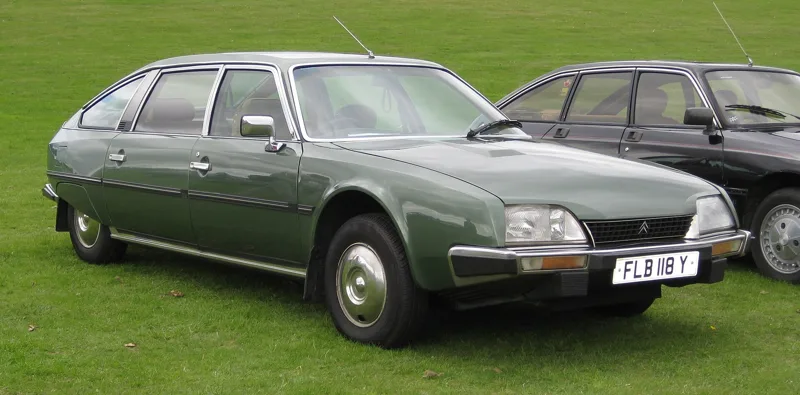
Demand did not vanish. In the late 1970s, American buyers who could not get certain foreign models turned to the grey market. From 1976 to 1988 individuals could obtain a car built to international standards and convert it, adding headlamps, sidemarker lights, bumpers and a catalytic converter. NHTSA and the EPA reviewed the paperwork, and they could approve possession or order the car destroyed or sent back. Tens of thousands of cars arrived each year in the 1980s, mostly one at a time, among them the Citroen CX, the Range Rover Classic, the Renault 5 Turbo and the Mercedes-Benz G-Class.
It worked well enough to hurt Mercedes-Benz in North America. The company mounted a successful multi-million-dollar lobbying effort in Congress, importers in California, Florida, New York and Texas formed the Automotive Importers Compliance Association to resist, and the Motor Vehicle Safety Compliance Act passed in 1988. Allegations of improper lobbying followed, though they were never raised in court. The grey market fell from 66,900 vehicles in 1985 to 300 in 1995.
What can you still import today?
Not much that is new. A non-US vehicle can no longer be brought in as a personal import except under four exceptions, and none of them lets Americans buy recent cars that were not sold officially. The surviving route is a registered importer or independent commercial importer, who modifies the car to meet US equipment and safety rules and then certifies it, at enormous expense. The heaviest cost is destructive crash testing, which is required if the car is substantially similar to a model sold in the US, and in practice the path is nearly impossible even for an extremely wealthy individual. Importers sometimes bring several cars at once to spread the bill.
Canadian-market cars offer a narrow path. Because Canadian rules are similar to American ones, a car built to Canadian standards can be imported if the original manufacturer issues a letter saying it also conforms to US standards. That letter is at the maker's sole discretion, and most makers want proof of Canadian residency and a minimum period of use in Canada, because they keep separate prices in the two markets.
US import rules, then and now
| Period | Rule | Effect |
|---|---|---|
| Before 1968 | No legal restrictions until 1967 | British sports cars shipped home in numbers |
| From 1968 | Harsher rules; non-compliant cars criminalised | Many models, such as the Mini, excluded at once |
| 1976 to 1988 | Convert-to-comply grey market | Tens of thousands of cars a year |
| 1988 | Motor Vehicle Safety Compliance Act | Grey market falls from 66,900 (1985) to 300 (1995) |
| 1989 | NHTSA dispensation for vehicles over 25 years old | Collector-age cars can come in |
| Today | Registered importers; rolling 25-year cycle | Recent cars effectively out of reach for individuals |
Why do Americans want JDM cars?
Because Japan's home market throws cars away young and builds some of them in ways the US never saw. The average Japanese car travels over only 9,300 kilometres a year, against 19,200 in the US, and high depreciation and strict disposal rules make a car worth very little in Japan after six years. Cars built for the Japanese domestic market can differ greatly from export versions on the same platform, which adds to the appeal.
The grey market has a history of proving demand. The Lamborghini Countach was available in the US only as a grey import from 1976 to 1985, as were the Range Rover and the Mercedes G-Class, and those makers later built US versions. American versions were often weaker than the rest of the world's: in 1981 Mercedes offered Americans only the 380 SEL, while some wanted the faster 500 SEL, and BMW faced the same problem with the 745i Turbo. Nissan developed the 2008 GT-R with that demand in mind, and the Smart Fortwo arrived grey in 2004-2006, ahead of its official US launch in 2007.
Which cars become eligible next?
There is no single list of eligible cars. The rule is rolling and measured against each vehicle, so a model becomes legal as its own build date passes the line, and that date varies by car.
Take the Nissan Skyline GT-R. Nissan revived the name in 1989 as the R32 after a 16-year gap, and production of the Skyline GT-R line ended in August 2002, when the R35 replaced it. A GT-R built in that final month becomes old enough 25 years later, and earlier ones qualify sooner. The R34 GT-R, which Wheels magazine nicknamed Godzilla Returns, covered a quarter mile in 12.2 seconds and reached 100 km/h in 4.4 seconds in tests, and the R32, R33 and R34 all fall under the same arithmetic. Other Japanese models, such as the first Civic Type R, the third-generation Celica GT-Four and the eighth-generation Toyota Mark II, work the same way.
Canada runs a parallel clock. Cars not built to Canadian specification may be imported once they are 15 or more years old, which is how JDM imports became popular there in 2004, when the 1989 Nissan Skyline GT-R became eligible. Canada's exception covers many, but not all, US-specification cars through a compliance modification and inspection program.
What did the Skyline teach importers?
That paperwork has to match the car. In 1999 a California company, Motorex, had a number of Skyline R33 GTS25 cars crash-tested and petitioned NHTSA to declare 1990-1999 GT-Rs and GTSs eligible. Many Skylines came in through the company until late 2005, when NHTSA learned that not all models would perform identically in crash testing. Motorex had submitted data for the R33 only, yet claimed it applied to the R32 and R34 as well. NHTSA decided that only 1996-1998 R33 models had been shown capable of meeting the standards. In March 2006 Motorex stopped importing and its principal was arrested.
The Skyline GT-R is a good case in another way. It was never built outside Japan. Nissan sold it officially in only five places: Hong Kong, Singapore, Australia and New Zealand from 1991, then the UK from 1997. In the United States its fame comes from grey importing and pop culture, with appearances in The Fast and the Furious, Gran Turismo, Initial D and Need for Speed. In 2019 Nismo said it would restart spare parts production for every generation, including body panels and engines.
Where do state rules still bite?
California is the main exception to the 25-year dispensation, because its emissions requirements make it hard to register a classic from overseas, and its Smog Check applies to cars from 1976 on. Kei trucks follow a different path: 21 states let them be imported and registered as utility vehicles at any age, with on-road use and speed restrictions varying by state, and none permits them on Interstate highways.
Rules can also tighten after the fact. In 2021 Maine began deregistering imported third-generation Mitsubishi Delica vans by classifying them as off-road all-terrain vehicles. Rhode Island deregistered legally imported kei cars in October 2021, citing a non-binding best practices guideline from the American Association of Motor Vehicle Administrators. A car that clears customs is not guaranteed a registration.