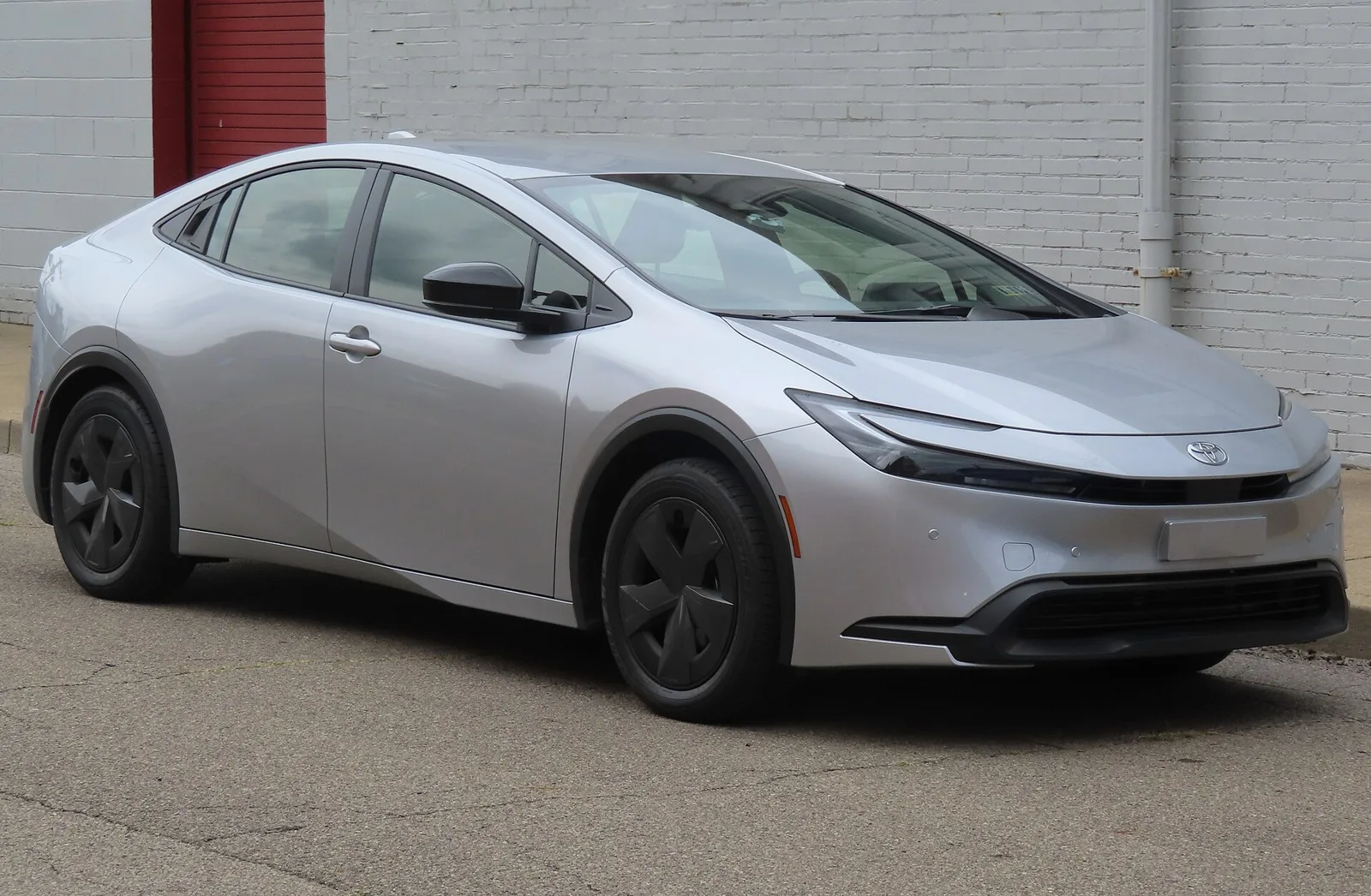
A mild hybrid cannot drive on electricity at all, and its typical fuel saving is 2 to 8 percent. Each hybrid layout moves a car differently, and the labels confuse buyers.
A hybrid combines an engine with an electric motor. Mild hybrids use a small motor to assist the engine and cannot drive alone, parallel hybrids let both power the wheels, series hybrids use the engine only as a generator, and full hybrids such as the Prius can run on electricity alone.
A mild hybrid cannot drive a car on electricity at all. Its small motor only helps the engine, and the typical saving is 2 to 8 percent of fuel. Yet the label hybrid is shared by that car and by a Prius that can pull away on battery alone.
What is a hybrid, and what makes it one?
A hybrid vehicle has more than one form of motive power, and it can come in many configurations. A typical example burns petrol but can swap between electric drive and the combustion engine. That pairing of electric and combustion was the only type commercially available as of 2017.
The strict definition is narrower than many people assume. A diesel-electric locomotive fails it, because its electric drive replaces the mechanical transmission instead of acting as an extra source of power. One of the earliest hybrid land vehicles was a trackless trolleybus experiment in New Jersey that ran from 1935 to 1948. It took current from an overhead wire but also carried a combustion engine that drove the mechanical drivetrain directly, so that it could work where there was no wire.
A mild hybrid helps the engine. A full hybrid can leave the engine off. In a series hybrid the engine only makes electricity.
What is a mild hybrid?
A mild hybrid, or MHEV, pairs a combustion engine with a small electric motor and battery that help it along. Unlike a full hybrid, its motor cannot power the car independently. It adds extra power when the car accelerates or the engine is working hard, and that supplementary push improves fuel economy.
The motor is usually an integrated starter generator, which replaces the traditional starter motor and sits between the engine and the transmission. In a typical set-up a belt links the generator-motor to the engine, and the unit also recaptures energy from braking. The system can switch the engine off while the car coasts, brakes or idles, and restart it the moment power is needed. That resembles a start-stop system, but the starter generator restarts more smoothly and lets the climate control and other electrical systems carry on at full strength with the engine off.
Modern mild hybrids typically use 48-volt lithium-ion batteries, which is why they are sometimes simply called 48-volt systems. They are generally cheaper, smaller and lighter than full hybrid systems, so they fit without eating into passenger or cargo space, and their benefit is greatest in urban stop-and-go driving.
The gains are modest. Cars with a mild-hybrid system typically go 0.4 to 1.7 km further on each litre (1.1 to 4.8 mpg imp, or 0.9 to 4.0 mpg US) than comparable models without it, a saving of 2 to 8 percent. Some journalists have questioned whether MHEVs should count as hybrids, or be called electric vehicles at all, since they cannot run on electric power alone. Others argue that the emissions reductions are minimal and that the technology is promoted in ways that amount to greenwashing.
Who builds them?
General Motors built many of them, with its Parallel Hybrid Truck and numerous cars and SUVs fitted with the belt alternator starter, or BAS, system. A BAS car uses a belt drive to start the engine, and once running the engine turns a 14.5 kW motor-generator that charges a 36-volt battery. The EPA rated a 2009 Saturn Vue Greenline with BAS at 27 per cent better combined fuel economy than the equivalent non-hybrid front-wheel-drive Vue.
Most mild hybrids use petrol engines, but some are diesels: Land Rover began selling the Range Rover Sport D350 in 2021, powered by a 3.0-litre Ingenium diesel.
How does a parallel hybrid work?
A parallel hybrid has both a combustion engine and an electric motor, and either can drive the car alone or both can drive it together. It was the most common hybrid system as of 2016. When the two are joined on one axis, they turn at the same speed and their torques add up.
In a car, the electric motor typically sits between the engine and the transmission, adding or subtracting torque as the situation demands. The first two generations of the Honda Insight worked this way. When only one source is working, the idle one has to be uncoupled, using a one-way clutch or freewheel, so that it turns without resistance.
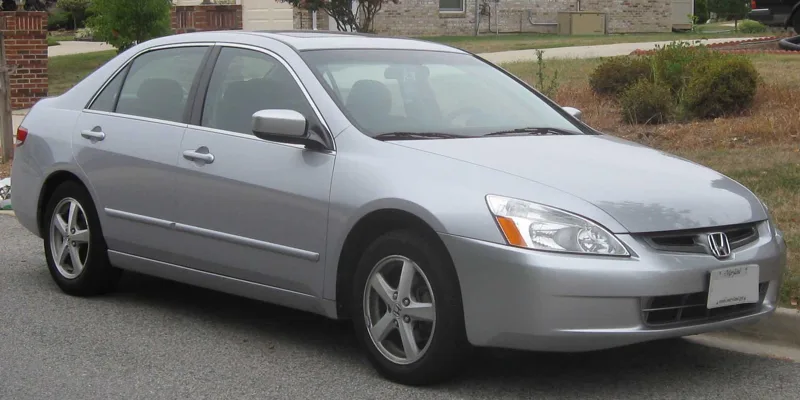
Parallel hybrids lean on regenerative braking, and the engine can also act as a generator for top-up charging. That makes them especially efficient in urban stop-and-go driving, and their battery pack is smaller than in other hybrids. Early hybrid versions of the Honda Insight, Civic and Accord used Integrated Motor Assist, and GM's Parallel Hybrid Truck and BAS cars such as the Saturn Vue, the Aura Greenline and the Chevrolet Malibu hybrid follow the same layout.
There is a catch with the labels. Because current parallel hybrids usually cannot run on electricity alone or on the engine alone, they are often categorised as mild hybrids.
What is a through-the-road hybrid?
A through-the-road hybrid is a variation in which a conventional drivetrain powers one axle and one or more electric motors drive the other. The road itself links the two. Think of a bicycle with a front hub motor helping the rider's pedalling at the rear wheel.
The arrangement gives the car a complete backup power train, and in some conditions all-wheel drive. The battery gets its charge from regenerative braking, or by making the electrically driven wheels act as a load while cruising, which keeps power management simple. Cars of this type include the second-generation Honda NSX, the BMW i8, the BMW 2 Series Active Tourer, the Volvo V60 plug-in hybrid, and the Peugeot 3008 and 508 and Citroen DS5, which share PSA's HYbrid4 system.
How does a series hybrid work?
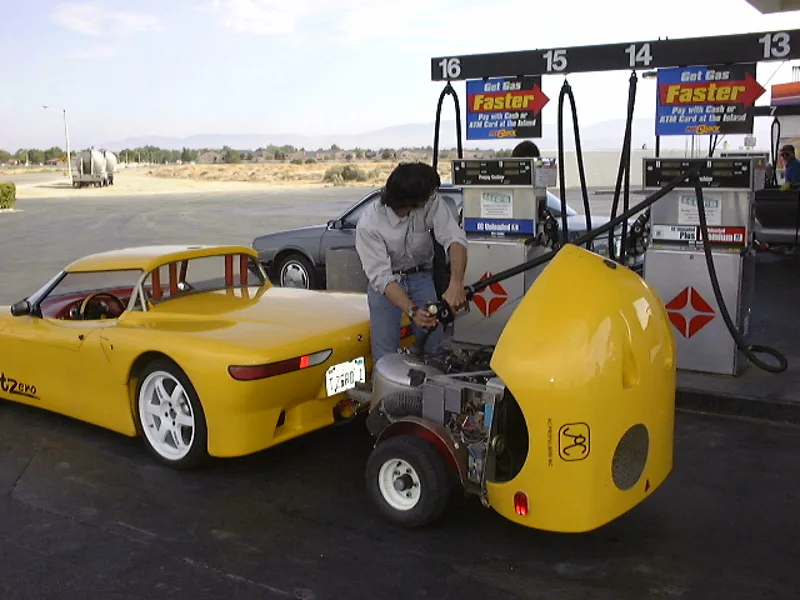
In a series hybrid, the engine does not drive the wheels. It works instead as a generator wired to the battery, and the electric motor moves the car. The chain is engine to battery to motor to wheels, although in some cases the generator also feeds the motor directly.
Series hybrids are also called extended-range electric vehicles, shortened to EREV, REEV or EVER. All series hybrids belong to those groups, but not every extended-range car is a series hybrid. The California Air Resources Board classes series hybrids with particular characteristics as range-extended battery-electric vehicles, or BEVx.
The appeal is that the engine is cut off from the demands of driving. It can run only at its most efficient speed, and it can shrink considerably, because it never has to cope with high speed or hard acceleration. Electric motors are more efficient than combustion engines, with high power-to-weight ratios and torque over a wide speed range, while engines are most efficient at a constant speed. Eliminating the gearbox also gets rid of the weight, bulk, noise and complexity of a mechanical transmission, along with the drain on power at every gear change. Acceleration is smoother because there are no changes.
At a standstill the engine switches off without idling and the battery supplies whatever is needed, so cars waiting at lights or crawling in traffic need not burn fuel. A supercapacitor or flywheel can hold on to energy from braking, rather than letting the brakes turn it into heat. Figures quoted for the layout put engine efficiency at 37 per cent, against an average of 20 per cent for a combustion engine, and at low or mixed speeds that could mean about a 50 per cent gain in overall efficiency, from 19 to 29 per cent.
The idea is older than most buyers realise. Electric transmissions had been invented by 1903, the year the Russian river ship Vandal was launched as the first diesel-electric vessel. In the early twentieth century Ferdinand Porsche designed several successful vehicles for Lohner-Werke on this principle, calling it System Mixte, with hub motors fitted to two or four wheels, and Lohner-Porsche cars in racing trim broke speed records.
Today's examples include Nissan's e-Power cars, the Note, Serena, Kicks, X-Trail and Qashqai, in which the engine turns a generator and the EM57 traction motor does the driving. The Mazda MX-30 can be ordered with a range extender, as can the BMW i3, whose generator feeds only the battery. The Fisker Karma is another example. The Chevrolet Volt comes close, but above 70 mph its engine is also linked mechanically to the wheels. Toyota's 1997 series-hybrid bus was the first of its kind sold in Japan, and Wrightbus builds others, including the Gemini 2 and the New Routemaster.
How do the main hybrid types compare?
| Type | Electric-only driving | How power reaches the wheels | Examples |
|---|---|---|---|
| Mild hybrid | No; the motor cannot drive the car alone | Engine drives; small motor assists and restarts it | GM BAS cars, Mercedes-Benz C-Class (W206), Range Rover Sport D350 |
| Parallel hybrid | Often not; many are classed as mild hybrids | Engine and motor each able to drive, torques added | Honda Insight, Civic and Accord with IMA |
| Through-the-road hybrid | The motor-driven axle provides a complete backup power train | Engine drives one axle, motor drives the other | Peugeot 508, Volvo V60 plug-in, Honda NSX |
| Series hybrid | Yes; the wheels are always driven electrically | Engine turns a generator; battery and motor drive the wheels | Nissan e-Power, BMW i3 with range extender, Fisker Karma |
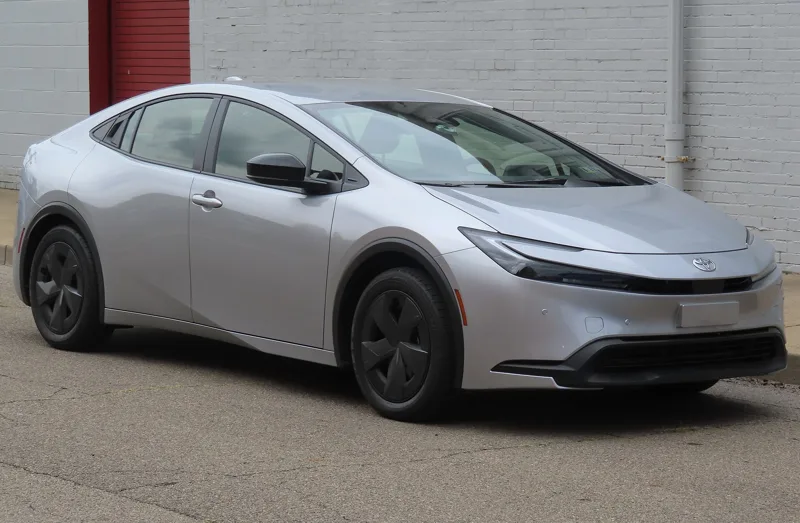
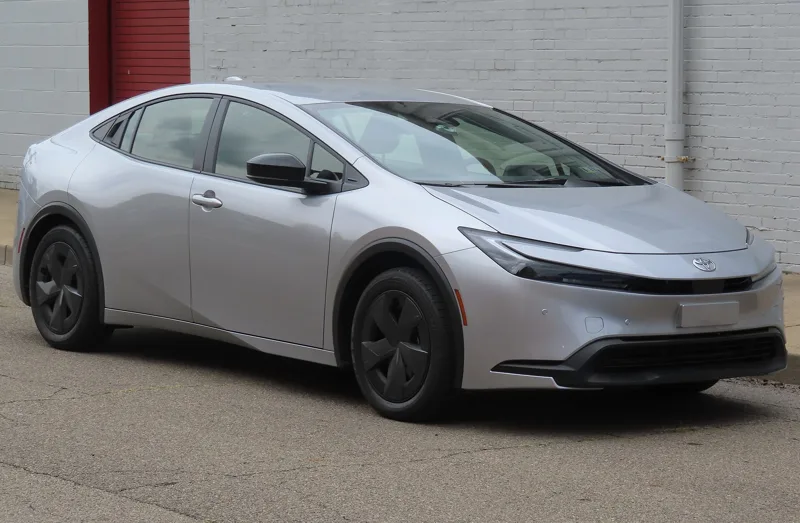
| Series-parallel full hybrid | Yes | Planetary gearset splits engine power between wheels and generator | Toyota Prius, Lexus hybrids |
How does Toyota's Hybrid Synergy Drive work?
Hybrid Synergy Drive, or HSD, is Toyota's brand name for the hybrid system in its Toyota and Lexus cars, first introduced on the Prius. It is a full hybrid, which means the car can run on the electric motor only, unlike most other makes' hybrids, which cannot and are considered mild. It replaces the normal geared transmission with an electromechanical one.
The reasoning begins with the engine. A combustion engine is most efficient over a small range of speeds, but a car's wheels have to turn across a much wider range. A conventional gearbox, typically with four to six gears, forces the engine to turn at speeds where it wastes fuel. A continuously variable transmission frees the engine to run where it is most efficient, and HSD works that way: it runs the engine at its best whenever power is needed to charge the battery or accelerate, and shuts the engine down when less power is needed. Toyota calls the result an e-CVT, for electronic continuously variable transmission.
The hardware is compact. Two motor-generators, called MG1 and MG2, replace the geared transmission, the alternator and the starter motor. MG1 starts the engine and acts as a generator, charging the high-voltage battery and powering MG2. MG2 is the main drive motor, and it also recovers energy when the car brakes. A planetary gear set, also called the power split device, links the engine, MG1 and the wheels, and the whole assembly sits in one transaxle housing bolted to the engine. By regulating how much electricity MG1 generates, the computer effectively controls the continuously variable transmission.
The planetary gears divide the engine's power three ways: extra torque at the wheels, extra rotation speed at the wheels, or power for the generator. Without the computer, power electronics, battery or motor-generators the car is helpless, though in principle it could run without the combustion engine, and an emergency drive of a mile or two without petrol is possible. The system is drive-by-wire: the accelerator and the gear lever do nothing more than signal a control computer.
What the car does depends on the demand. It can drive from the battery alone, with power flowing from the battery through MG2 to the wheels. For moderate acceleration the engine drives the wheels directly and also sends power through MG1 and MG2. On a motorway the engine drives the wheels while charging the battery through MG1. On a steep hill the engine drives the wheels, charges the battery and feeds MG2 at once, and at full power the battery joins in as well. When the driver brakes, MG2 acts as a generator and sends energy back to the battery.
What is the battery like?
The system carries a high-voltage traction battery, either nickel-metal hydride or lithium-ion, and a 12-volt lead-acid auxiliary battery that powers the electronics when the hybrid system is off. The second-generation Prius used 28 nickel-metal hydride modules of six 1.2-volt cells each, giving a nominal 201.6 volts, with about 20 kW of discharge power at 50 per cent state of charge. A computer is dedicated to keeping the pack at the best temperature and charge level.
The third-generation Prius uses the same cell type, with a boost converter lifting the voltage to 500 volts DC for the inverters. The electronics allow only 40 per cent of the rated capacity to be used, 6.5 ampere-hours, which keeps the state of charge between 40 and 80 per cent to prolong battery life.
An EV button holds electric mode below 40 km/h (25 mph) when the battery has enough charge, permitting up to 1.6 km (1 mi) of driving with no fuel used, and the software switches into that mode by itself whenever it can. Among cars with the system, only the Prius Plug-in Hybrid has a longer all-electric range, 18 km (11 mi) on the EPA rating before the battery is depleted.
Where do the labels cause trouble?
Mostly in the gaps between categories. Mild hybrids also go by power-assist hybrid and BAHV. Parallel hybrids that cannot run on electricity alone get filed as mild. Series hybrids go by three names, EREV, REEV and EVER, and the California regulator has its own, BEVx.
For a buyer the useful question is simple: can the car move on its battery alone, and for how far? Mild hybrids cannot. Full hybrids can, though for short distances at modest speeds. Plug-in versions, which can be recharged from the grid, can extend that range: among cars with Toyota's system, the Prius Plug-in Hybrid has the longest.
What does it mean for someone buying or driving a hybrid?
The biggest gains come in town. Parallel, series and mild hybrids all do their best work in stop-and-go traffic, where regenerative braking recovers energy that friction brakes would waste, and where an engine that switches off at a standstill burns nothing. Regeneration also reduces wear on the brakes in a mild hybrid.
The trade-off is cost and complexity. Mild hybrids are the inexpensive route, with a small but real saving. Batteries that are light and store more energy are far more costly. A big pack is not always the aim: the third-generation Prius uses only part of its battery's capacity to make it last.
Where does hybrid engineering go next?
The series layout opens the door to engines that would not suit a conventional car. Because the engine runs at a steady speed, there is scope for a microturbine, a rotary Atkinson cycle engine or a linear combustion engine. In-wheel motors, such as the small, light Hi-Pa Drive units, would remove the gearbox, transmission shafts and differential altogether, and offer simpler traction control, all-wheel drive and a lower floor. The price is more unsprung mass and less responsive suspension, though the effect should be minimal with very small motors.
Mild hybrids are moving in another direction too. Dual mild hybrids recover energy through two separate systems: the Mercedes-Benz C-Class (W206), the Mercedes-AMG SL 43 and CLE 53 and the Porsche 911 Carrera GTS T-Hybrid use an electrically assisted turbocharger (MGU-H) for the second, and the Genesis G90 and GV80 Coupe also come as mild hybrids with an electric supercharger.