Renault and Nissan call theirs a manufacturing system, PSA built two sizes of modular kit with Dongfeng, and Subaru moved every model onto one unibody: what each shares, and which cars use it.
CMF, CMP, EMP2 and the Subaru Global Platform are modular architectures that let carmakers reuse structure across models. CMF is Renault-Nissan's five-module system, CMP and EMP2 are PSA's small and compact-to-mid platforms, and SGP is the single unibody under nearly every Subaru.
Renault and Nissan insist their Common Module Family is not a platform at all but a manufacturing system. PSA, now part of Stellantis, built two modular platforms, the CMP for small cars and the EMP2 for compact and mid-size ones. Subaru took a third route and put nearly every model it makes onto a single unibody.
Why do carmakers share platforms?
Because a platform is the part of a car that buyers never see, and developing one is expensive. EMP2 cost PSA 630 million euros, the CMP project was reported at 200,000,000 euros, and Subaru's fifth-generation Impreza cost US$1 billion over four years, a significant fraction of it spent on the platform beneath.
The return comes from reuse. Renault and Nissan describe their CMF as a way to cut manufacturing costs and compete with Volkswagen Group's MQB. Subaru says a common platform lets existing production lines switch models without major reconfiguration, with parts reused between models. Each of the four architectures here chooses a different amount of freedom: how many dimensions can change, and how much of the car is shared.
Four architectures show how carmakers share the part of the car buyers never see.
What is the Renault-Nissan Common Module Family?
The CMF is a modular concept developed by Nissan and Renault through their alliance with Mitsubishi. It splits a car into five groups of interchangeable, compatible modules: the engine bay, the cockpit, the front underbody, the rear underbody and the electrical and electronic systems.
The companies say it is not a conventional platform. Real platforms are assembled from a limited set of common modules, so one module can serve different platforms and different classes of vehicle, so components can be standardised more widely across the three brands. The first CMF cars appeared through 2013 with Nissan's CMF-C/D models. Initially it covered approximately 14 models worldwide, with estimated production of 1.6 million units a year. Users so far range from Dacia, Datsun and Dongfeng to Mercedes-Benz, Mitsubishi, Nissan, Renault and Venucia, and Alpine and Lada were expected to join in 2025.
Which cars use which CMF?
The CMF family has several sizes. The small CMF-A underpins city cars, with the Renault Kwid, launched in India in September 2015, as the first. Its electric form, CMFA-EV, carries the Renault City K-ZE and Dacia Spring. CMF-A+ is a larger derivative for low-cost subcompacts in emerging markets, found under the Renault Triber and Kiger and the Nissan Magnite, with the Nissan Gravite due from 2026.
CMF-B is split by price. The high-specification CMF-B HS replaced the B and V platforms and underpins the Renault Clio V, Captur II and Nissan Juke and Note, plus the Mitsubishi Colt and ASX. The low-specification CMF-B LS replaced the B0 and M0 platforms and carries budget cars including the Dacia Logan III, Sandero III, Jogger, Duster III and Bigster, and the Lada Iskra. RGMP Small, a newer evolution of CMF-B LS for emerging markets, began with the Renault Kardian.
For electric small cars there is CMF-B EV, renamed AmpR Small in November 2023 and then RGEV Small once Ampere returned to Renault's fold. It shares about half its components with CMF-B and was designed to cut cost and raise efficiency compared with the bespoke platform of the Renault Zoe. Two NMC battery types are expected, with a goal of bringing battery cost below US$80/kW-hr by 2030, and the Twingo E-Tech adds a lithium iron phosphate option. It underpins the Renault 5 E-Tech, Renault 4 E-Tech, Twingo E-Tech, Alpine A290 and Nissan Micra, and Ford announced in December 2025 that it would build two new European cars on it.
At the top, CMF-C/D replaced the C and D platforms for cars from the C-segment upward. It carries the Renault Espace V, Kadjar, Megane IV, Koleos II, Scenic IV and Austral, the Nissan Qashqai and X-Trail, the Mitsubishi Outlander and even the Mercedes-Benz Citan. Electric models sit on CMF-EV, now RGEV Medium, which replaced the platform of the Nissan Leaf and underpins the Megane E-Tech, Scenic E-Tech, Nissan Ariya and Leaf and the Alpine A390.
What is the PSA Common Modular Platform?
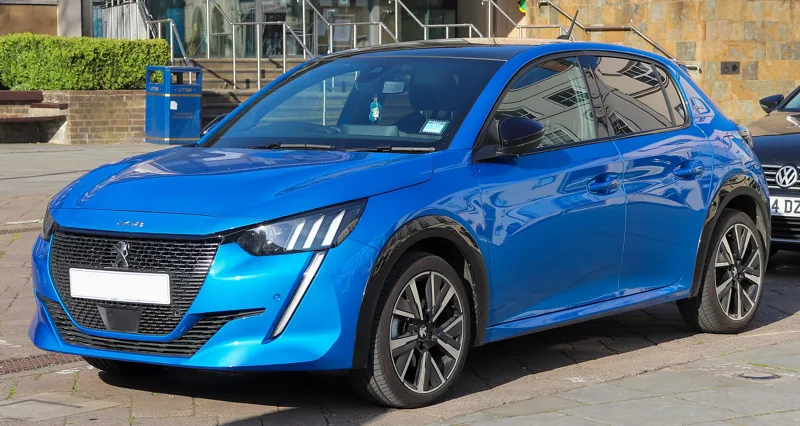
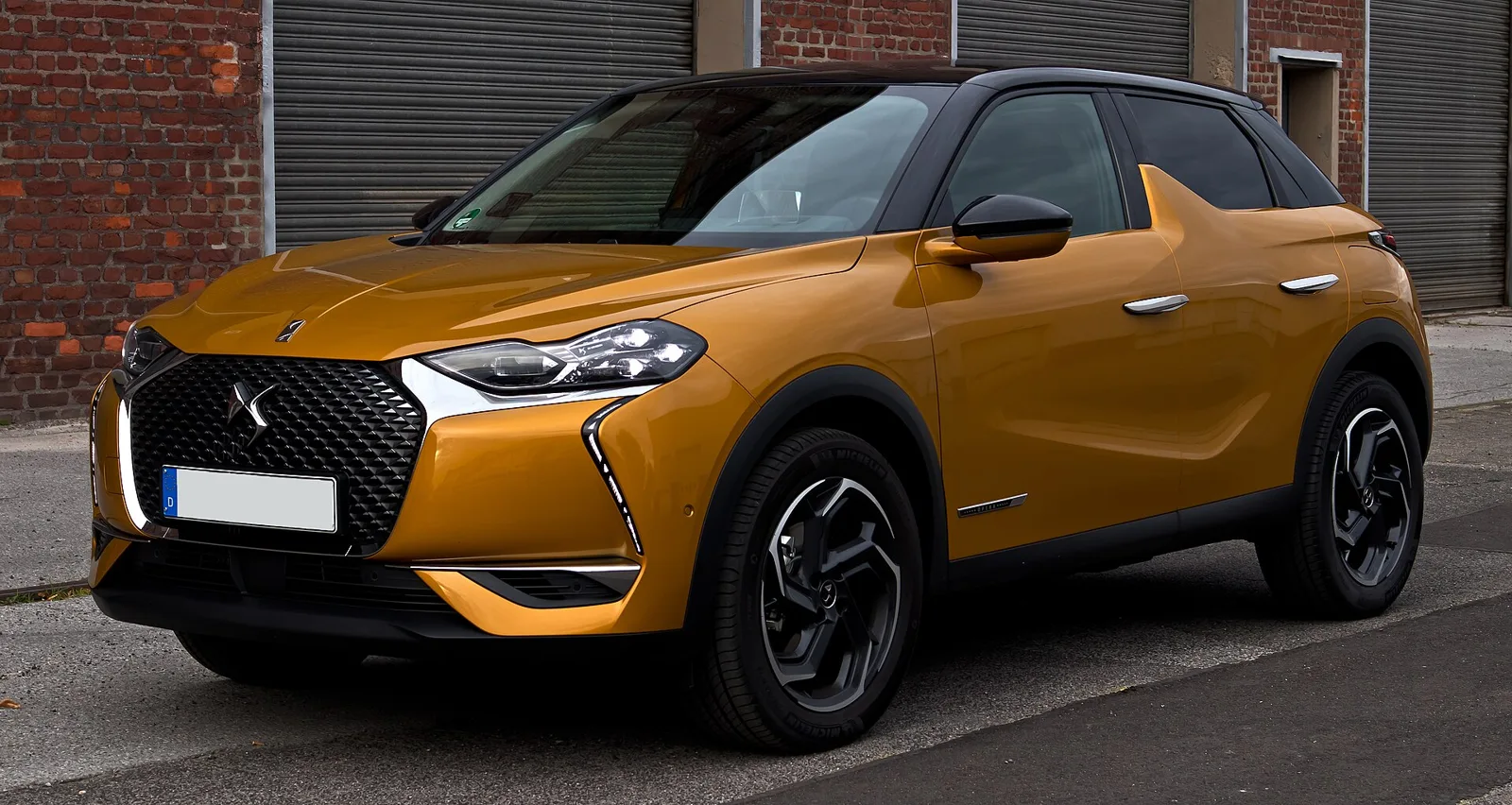
The CMP, which also goes by EMP1, is a modular architecture created jointly by PSA, now Stellantis, and the Chinese maker Dongfeng. It debuted in 2018 with the DS 3 Crossback and serves mainly B-segment cars and some entry-level C-segment ones. Larger cars use the EMP2.
Engineers can choose between two track widths, three wheelbases and three rear modules, and vary wheel diameter too, which lets them build anything from hatchbacks and saloons to SUVs. PSA and Dongfeng agreed to begin development in March 2014, and a 2015 report said they would spend 200,000,000 euros, with 60 per cent from PSA and 40 per cent from Dongfeng. A team of Dongfeng engineers worked at PSA's main research centre in Velizy, south of Paris.
How does the e-CMP work?
The CMP can be built as a battery electric car under the name e-CMP on the same assembly line. Early targets were a range of 450 km (280 mi) and charging fast enough to add up to 12 km (7.5 mi) of range per minute, with the first cars scheduled for 2019.
First-generation e-CMP cars pair a 100 kW (136 PS; 134 hp) electric motor with a lithium-ion pack of 50 kWh gross, 46.3 kWh net, plus an efficient heat pump. The second generation brought the eMotors M3, the first motor from eMotors, which Stellantis owns jointly with Nidec. It is rated at 115 kW (156 PS; 154 hp), with torque of 260 N m (190 lbf ft), and comes with a 54 kWh (51 kWh net) NMC battery.
A further electric iteration, the Smart Car Platform, came from Tata Consultancy Services for PSA as a leaner alternative to Stellantis's other STLA architectures. Seven future Stellantis models are due to use it, among them Fiat's Grande Panda, the Citroen C3 Aircross and the Opel Frontera. Its electric version has a 43 or 83 kW motor and a 29 to 44 kWh lithium iron phosphate battery, good for up to 320 km.
The platform is already in use outside Europe. The Citroen C3 has been on sale in Asia, South Africa and Latin America since 2022 and the C3 Aircross since 2023, while European buyers got the C3 and e-C3 and the C3 Aircross in 2024, along with the Citroen Basalt, Opel Frontera and Fiat Grande Panda. Two more, the Fiat Grizzly and Grizzly Fastback, badged as the Chrysler Arrow Cross and Arrow, are due to start in 2026.
What is the EMP2 platform?
The EMP2, the Efficient Modular Platform, is PSA's architecture for compact and mid-size cars, aimed at models driven through the front wheels or all four, with the engine mounted across the car. It merged the old PF2 and PF3 platforms into one and cost PSA 630 million euros to develop.
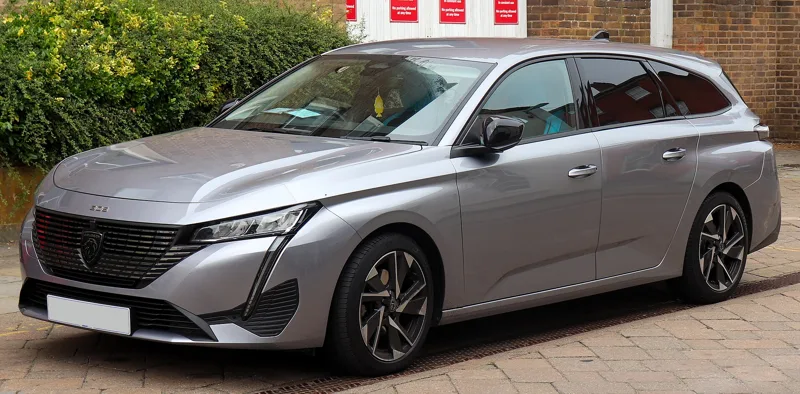
It offers a short or long wheelbase, a low or high ride height, and a rear suspension that is either independent multi-link or a twisted beam. Compared with the PF2, it saves 70 kg through very high strength steel, aluminium and magnesium alloys and composites. It first appeared on the second-generation Citroen C4 Picasso, built at Vigo in Spain and previewed by the Technospace concept, and on the second-generation Peugeot 308, built at Sochaux in France. Later versions can be varied across four track widths, five wheelbases, two cockpit and two rear axle designs and up to six rear assemblies, all made on the same line.
How did the EMP2 evolve?
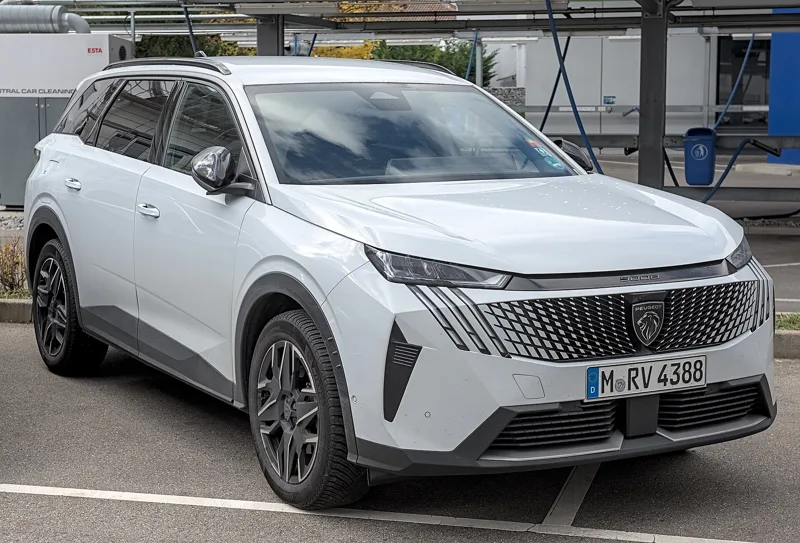
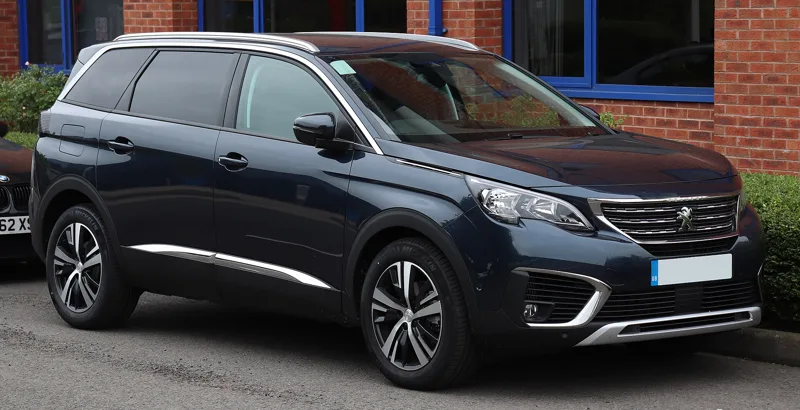
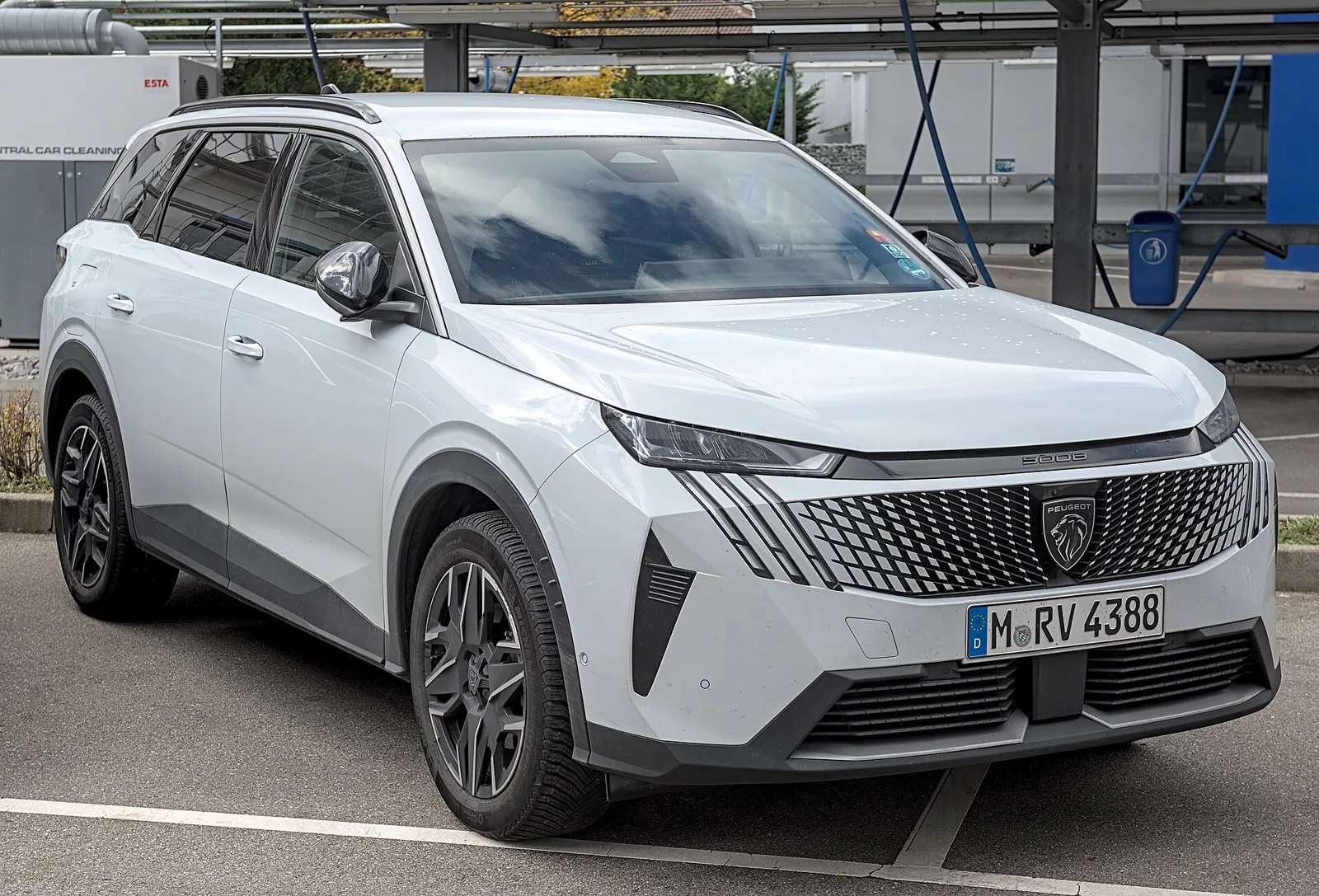
EMP2 V1 debuted in 2013 with the C4 Picasso and 308, and also served the Citroen C6 and Peugeot 408. V2, from 2016, added mild hybrid and plug-in hybrid power and lay under the Citroen C5 Aircross, DS 7 Crossback, Opel Grandland, Peugeot 3008, 5008 and 508 and the DS 9.
V3 debuted with the second-generation DS 4, with 70 per cent new components compared with the previous version, and it supports mild-hybrid, plug-in and fully electric drive. It carries the Citroen C5 X, Opel Astra L, Peugeot 308 III and 408, and an electric offshoot called eVMP covers the Peugeot e-308, e-408 and Opel Astra-e. A later STLA Medium line carries the Peugeot 3008 and 5008 III, Jeep Compass III, Lancia Gamma and DS No. 8.
The EMP2 also spread to vans. The K9 platform, under the Citroen Berlingo, Peugeot Partner and Rifter, Opel Combo, Toyota ProAce City and Fiat Doblo, adopted the EMP2 front end but kept a rear section derived from the previous generation. The K0 platform carries the larger Citroen Jumpy, Peugeot Expert, Toyota ProAce, Opel Vivaro, Fiat Scudo and, from 2026, the Ram Promaster City.
What is the Subaru Global Platform?
The Subaru Global Platform, or SGP, is a modular unibody for nearly all Subaru models, starting with the fifth-generation Impreza in 2016. Its main dynamic benefits are strength, rigidity and a lower centre of gravity, and it makes production more flexible: lines can shift between models without major reconfiguration, and common parts can be reused.
By 2021 it underpinned every vehicle Subaru built and sold. The second-generation WRX, which debuted on 10 September 2021 for the 2022 model year, was the last to move across. Cars Subaru only rebadges, and the jointly developed BRZ and Toyota 86, are not on SGP, although the second-generation BRZ and 86 benefited from the knowledge gained.
How is the SGP built?
It is Subaru's first completely new platform since the first-generation Legacy of the late 1980s. A derivative of that platform, named the SI chassis in 2007, featured fully independent suspension, with struts at the front and double wishbones at the rear. The SGP keeps that suspension layout but refines it to raise rigidity. Kazuhiro Abe, who led the Impreza project, compared the move to the change from the Leone to the Legacy.
Structural adhesives join the floor panel to the side members. The side members, sills and pillars use hot rolled steel in the 590 MPa (86 ksi) class, reinforced with 1,470 MPa (213 ksi) steel to protect the passenger compartment. Subaru claims improvements in straight-line stability, noise and vibration control, and comfort, helped by mounting the rear stabiliser directly to the body.
Safety also benefits. The structure absorbs 40 per cent more impact energy than earlier Subarus, and pedestrian protection airbags are fitted in some markets. Euro NCAP named the Impreza and XV of 2017 and the Forester of 2019 best in class among the cars tested in those years, and JNCAP gave all three its Grand Prix Award for collision safety.
The SGP can take combustion engines, petrol-electric hybrids and battery-electric drive. Even so, Subaru and Toyota announced in June 2019 a jointly developed C-segment electric SUV, and in December 2020 Subaru confirmed it would use the e-TNGA platform rather than SGP.
What is planned next?
Several of these architectures have new models lined up. STLA Small is due to debut in 2026, with the Peugeot e-208 and, from 2027, the Fiat 500. Within the CMF family, the Nissan Gravite, the Nissan Tekton and the Dacia Striker are scheduled to commence in 2026, as are the Nissan Juke EV and Mitsubishi Eclipse Sportback on RGEV Medium. On the Subaru side, the electric SUV it is developing with Toyota will use Toyota's e-TNGA platform instead of the SGP.
How do the four architectures compare?
| Architecture | Owner | Debut | Approach | Example cars |
|---|---|---|---|---|
| CMF | Renault-Nissan-Mitsubishi Alliance | First cars through 2013 | Five groups of interchangeable modules | Nissan Qashqai, Renault Clio V, Renault Kwid |
| CMP | PSA (now Stellantis) with Dongfeng | 2018 | Two track widths, three wheelbases, three rear modules | DS 3 Crossback |
| EMP2 | PSA (now Stellantis) | 2013 | Short or long wheelbase, low or high ride height, two rear suspension types | Citroen C4 Picasso, Peugeot 308 |
| SGP | Subaru | 2016 | One modular unibody for nearly every model | Subaru Impreza, WRX |