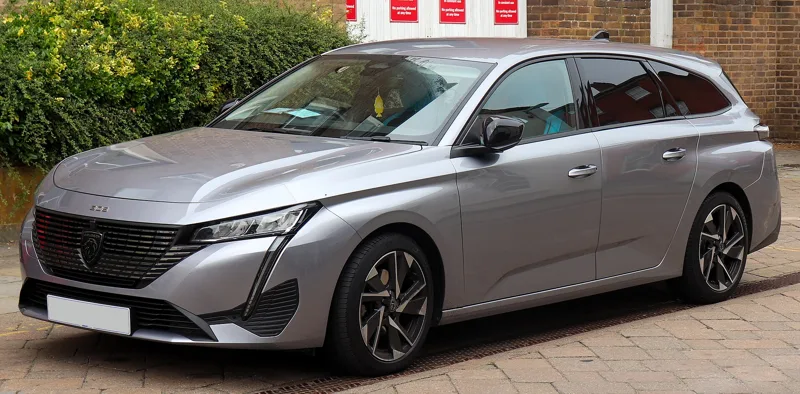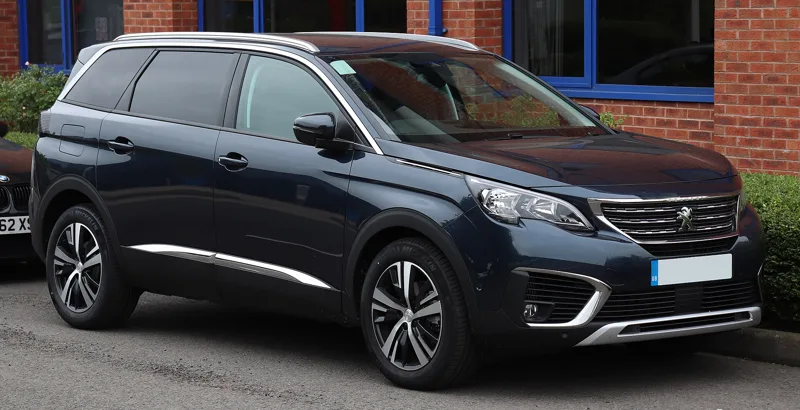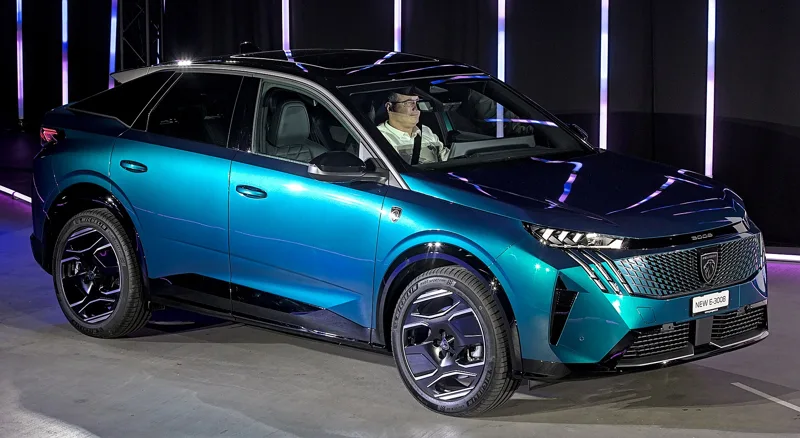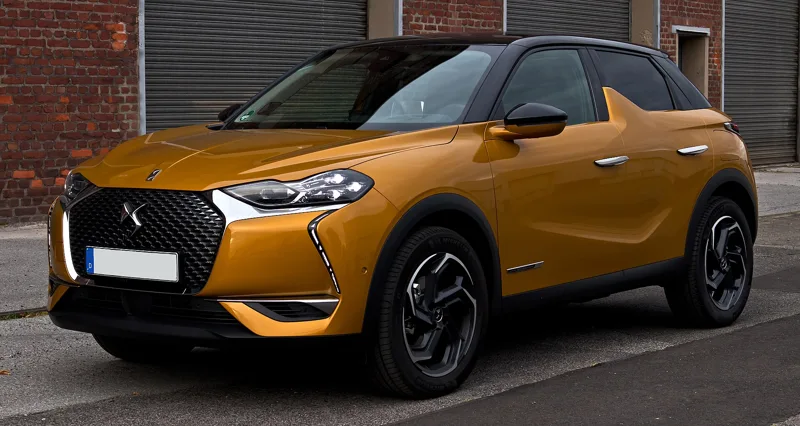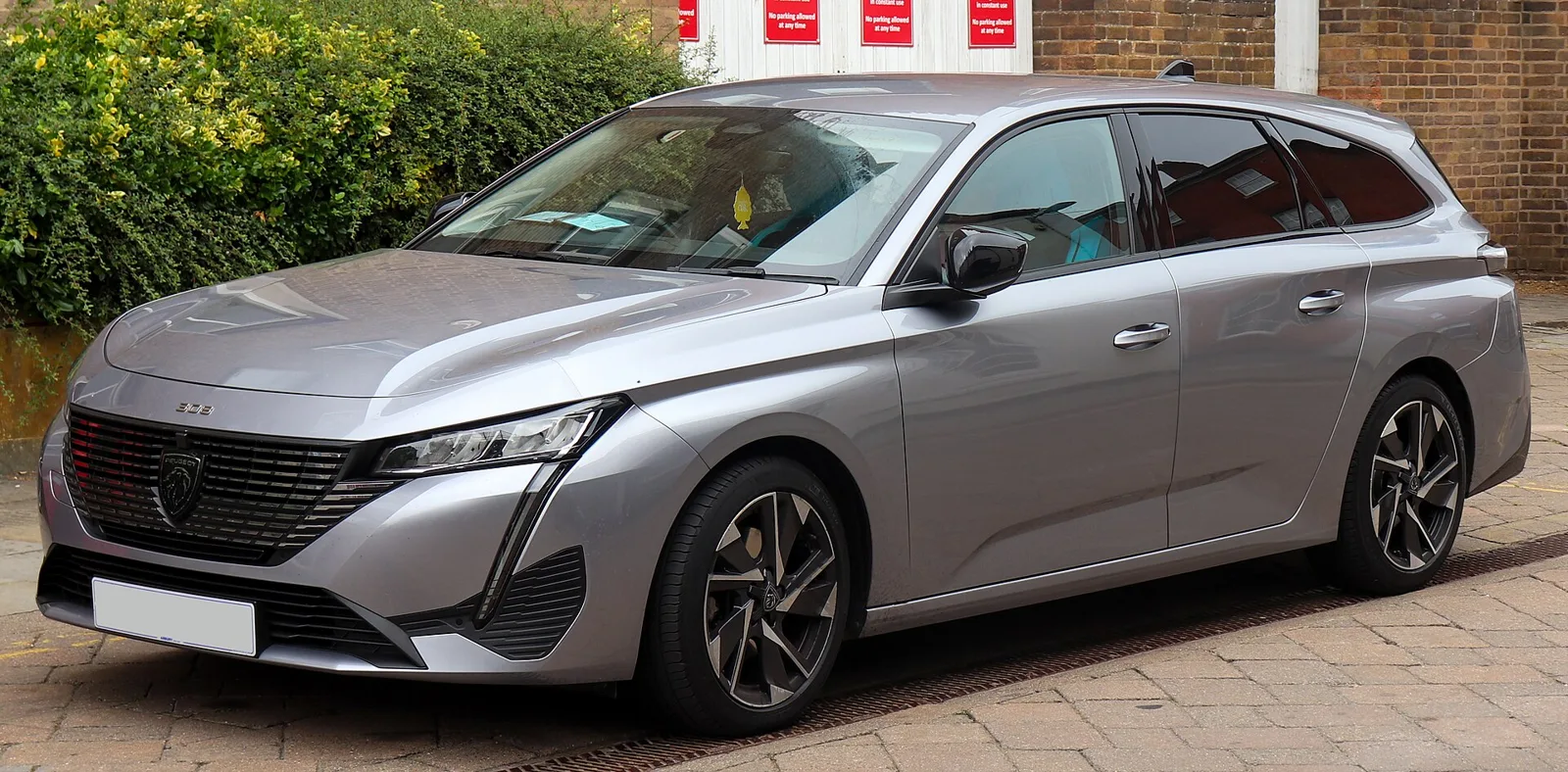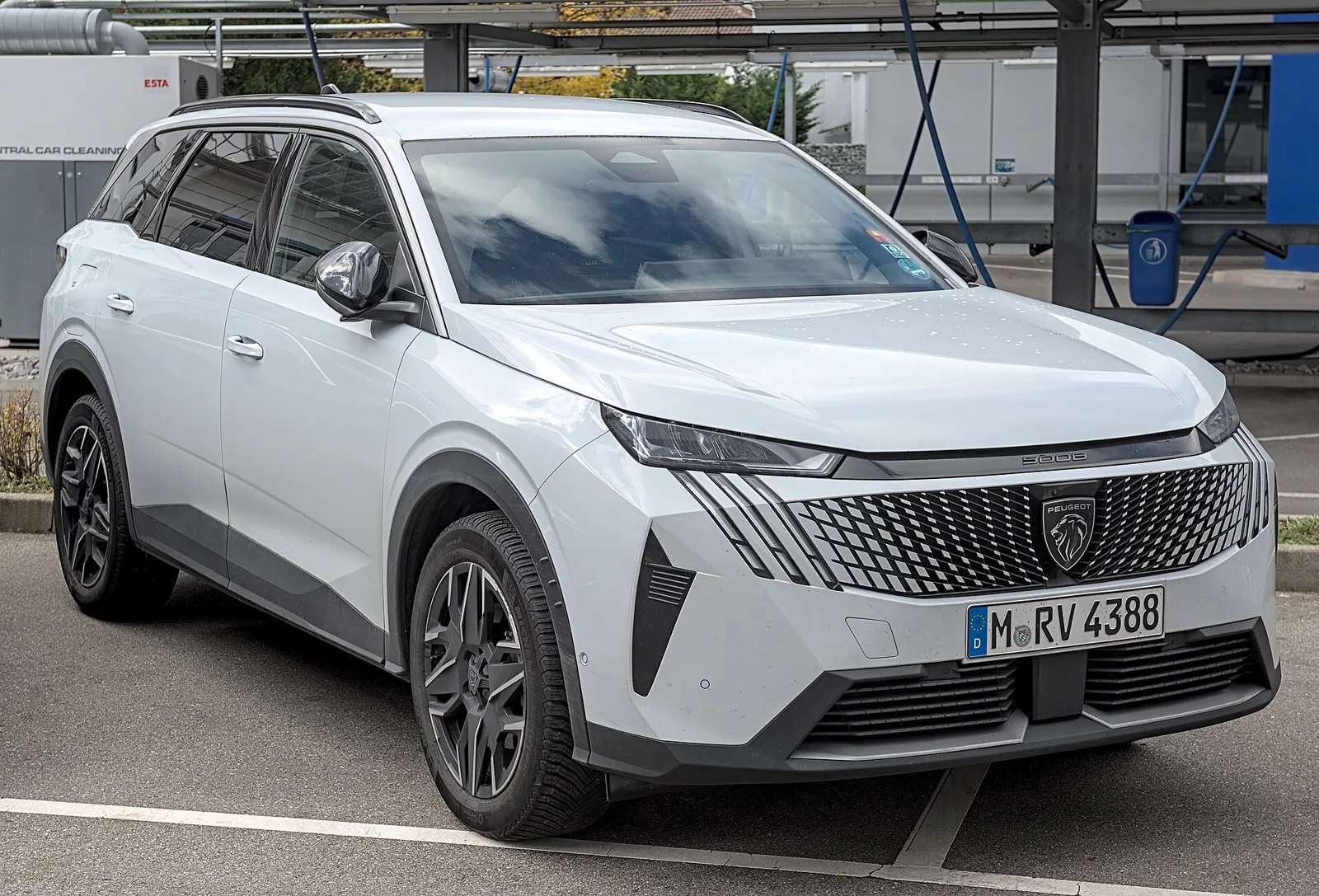
Three generations of the 5008, from its 2009 launch to the STLA Medium car of 2024, set beside the 2022 Peugeot 408 and what each is built to do.
The Peugeot 5008 began in 2009 as a compact MPV and became a seven-seat SUV in 2017, with a third generation arriving in 2024 as a longer 3008. The 408, unveiled in 2022, is a coupe-style crossover on the EMP2 platform, placed between the 308 and the 3008.
The Peugeot 5008 started life as a people carrier whose fans nicknamed it the Space Wagon. By 2024 it was a stretched version of the 3008 SUV, built in a single French plant. The badge stayed the same and the job did not change much, but the kind of car underneath it was rewritten twice.
The 408 is a different story. Peugeot unveiled it in 2022 as a crossover that borrows from SUVs, hatchbacks and saloons, and it slots into a gap in the range rather than replacing anything.
Peugeot 5008 history: from compact MPV to SUV
Peugeot has produced the 5008 since 2009. For its first generation it was a compact MPV, a class of tall, practical family cars built around interior space. From 2017 onwards it has been classed as a mid-size SUV instead. Buyers can choose five or seven seats, and the engines on offer are the same ones fitted to the 3008, the car it has always been closely related to. That family tie is the key to understanding every generation: each 5008 has been built on the foundations of a 3008, then given more length and more seats.
The 5008 swapped MPV for SUV in 2017 without changing its job: carry the family and their luggage.
First generation (T87): the Space Wagon
The first 5008 was unveiled in July 2009 and went on sale in November. The launch happened as Gilles Vidal was promoted to design director at Peugeot, and his influence was already visible in the firm's cars, hinting at a livelier approach to styling. Underneath, the car used the same basic structure and mechanical parts as the first 3008.
Reviewers liked it. What Car? named it 2010 MPV of the Year, and owners formed a loyal following that uses the affectionate name Space Wagon, a reference to the roomy cabin and the futuristic look.
A facelift in October 2013 refreshed the engine range, bringing in the three-cylinder PureTech petrol engine alongside newer BlueHDi diesels.
Second generation (P87): a seven-seat 3008
The second generation changed class. Peugeot showed it to the press on 7 September 2016, ahead of a public showing at the 2016 Paris Motor Show, a few months before the 3008 it was based on reached showrooms in spring 2017. Where the earlier car was a pure MPV, this one followed the sales trend and became an SUV. In effect it is a stretched 3008: the wheelbase is 165 mm longer and the weight about 50 kg higher, and a different grille and front bumper tell the two apart. A chrome arch runs along the roof to the bottom of the rear window.
Peugeot 5008 7 seater: how the seats work
The wheelbase of 2.84 m made seven seats possible, set out in three rows. In the front row the passenger seat can be folded flat to carry long objects. The second row has three independent seats that slide, recline and fold away. The third row has two further seats, each of which folds or unfolds on its own. Splitting the rows into separate seats rather than a bench lets the owner trade passenger room for luggage space in many combinations.
The dashboard uses the same iCockpit design as the smaller 3008, with an 8-inch touchscreen and an optional 12.3-inch digital panel that sits in the driver's line of sight, in place of conventional dials.
Where it was built
In France the second-generation car is assembled at the PSA works in Rennes. In China the Dongfeng PSA factory at Chengdu builds it next to the 3008 II, which goes by 4008 there, and the Citroen C5 Aircross. The trio use one platform, one set of engines and one transmission.
Facelift and hybrid
Peugeot revealed the facelift in September 2020. It adopted the brand's newer design language, already seen on the 3008 and 308, with new headlights, tail-lights and bumpers, new colours and models and updated technology. In February 2023 the 5008 Hybrid arrived. Its mild hybrid system, which lets a small electric motor assist the engine, cuts fuel consumption by as much as 15% against the petrol equivalent, according to Peugeot.
Third generation (P67): a longer 3008 on STLA Medium
Peugeot introduced the third-generation 5008 on 20 March 2024, with production starting later that year. As before, the 5008 is the longer sibling of the 3008, and both ride on the STLA Medium platform. Every car is built at the PSA works in Sochaux. The electric motors come from the Stellantis-Nidec joint venture in Tremery, and the ACC batteries from a gigafactory in Douvrin, both in France. A platform is simply the set of underpinnings a manufacturer reuses across several models, and STLA Medium is the one Stellantis chose for this size of car.
The design keeps the boxy outline of the old car to protect interior space and adds a sloping rear window. A new lighting signature called the Claw Effect uses Peugeot's Pixel LED technology, and the grille blends into the body colour. Peugeot took what it calls a sustainable approach to the styling: fewer decorative inserts, and body-coloured trim where chrome used to be.
Inside is the third-generation i-Cockpit. A floating 21 in (53 cm) screen sits on top of the dashboard. Ten customisable touchscreen buttons called iToggles sit in the centre, and a small steering wheel carries buttons that only activate when the driver presses them. Euro NCAP results are shared with the Opel Grandland and Peugeot 3008.
How the 5008's engines changed over time
Because the 5008 shares its engine range with the 3008, its powertrain story follows the 3008's. The 2013 facelift of the first generation was the point where the three-cylinder PureTech petrol engine and BlueHDi diesels entered the line-up. The second generation then ran through the 2020 facelift before adding a mild hybrid in February 2023, in which a small electric motor assists the combustion engine to save fuel, by up to 15% according to Peugeot. The third generation goes a step further in its supply chain: electric motors from the Stellantis-Nidec joint venture and ACC batteries, all produced in France, sit alongside the car's only assembly plant at Sochaux.
Peugeot 5008 generations compared
| Generation | Unveiled | Class | Related to | Notable detail |
|---|---|---|---|---|
| First (T87) | July 2009 | Compact MPV | First-generation 3008 | What Car? 2010 MPV of the Year |
| Second (P87) | 7 September 2016 | SUV | 3008 (wheelbase 165 mm longer) | Seven seats in three rows, 2.84 m wheelbase |
| Third (P67) | 20 March 2024 | SUV | 3008 on STLA Medium | 21 in floating screen, built at Sochaux |
Peugeot 408 crossover: a coupe-style blend
Peugeot unveiled the 408 in June 2022 and first showed it publicly at that year's Paris Motor Show. It is a C-segment crossover that slots between the 308 and the 3008 or 508, and in China it is sold as the 408 X. Its underpinnings are EMP2, a platform it shares closely with the third-generation 308. The name can mislead, because the crossover has no mechanical link to the Chinese-market 408 saloon, a car derived from the previous 308.
According to Peugeot, the 408 blends SUVs, hatchbacks and saloons. It has also been described as a coupe crossover. The idea was radical enough that PSA Group's development took seven years under project manager Aurelie Bresson, and the car was codenamed P54. The design drew on an internal concept car known as the 2015 Advanced Design manifesto, and the dichroic paintwork, whose shade shifts with the angle of the light, was inspired by the 2017 Peugeot Instinct concept.
A crossover, in plain terms, is a car that borrows the raised stance of an SUV but keeps the proportions of something lower. The 408 pushes that idea furthest at the sloping, coupe-like end. In China the name 408 X exists for a practical reason: it separates the crossover from the older 408 saloon, which is a different car altogether.
Peugeot 408 vs 3008 and its cousins
The 408 sits beside the 3008 in the range rather than replacing it, and it is closer in character to the 308. Its headlights, tail-lights and dashboard design come from the third-generation 308, developed in parallel, while the long-wheelbase EMP2 V3 platform and the overall height are shared with the Citroen C5 X. Because of its body shape the 408 has a drag coefficient of 0.28, on a par with traditional saloons, and a low figure like that means the body slips through the air with less effort, which helps efficiency.
Engines and gearbox
The launch plan offered three powertrains much like the 308's. The entry point is a 1.2-litre turbocharged three-cylinder PureTech petrol making 130 PS (128 hp; 96 kW). Above it come two plug-in hybrids, which pair a petrol engine with a battery that can be charged from the mains: one with a combined 180 PS (178 hp; 132 kW) and one with 225 PS (222 hp; 165 kW). Every version has an 8-speed automatic, and no manual is offered. Markets outside Europe also get a 215 hp (160 kW) THP petrol.
Production and special editions
The 408 has been built in Mulhouse, France, since 2022 and at Chengdu, China, since January 2023. Since 2024 Peugeot has also put cars together from kits shipped in partly assembled, a process known as SKD, at its plant in Kedah, Malaysia. They are sold there and exported to Thailand from 2024, Cambodia from 2025 and Taiwan from 2026. Peugeot's UK division produced a limited First Edition of 50 cars, based on the GT trim.
Choosing between them
The two cars suit different buyers. The 5008 is the one for people who need room: a wheelbase of 2.84 m in its second generation, three rows, and seats that can be rearranged one by one. The 408 is the one for drivers who want a lower, coupe-like roofline from a car that still counts as a crossover, and its drag coefficient of 0.28 puts it on a par with traditional saloons.
Both are closely tied to a smaller Peugeot. A buyer comparing the 5008 with the 3008 is looking at the same car in two lengths. A buyer comparing the 408 with the 3008 is weighing two cars that Peugeot places side by side, the 408 slotting between the 308 and the 3008 or 508. The 408 is automatic-only, which will matter to anyone who prefers a manual, and Peugeot says the mild hybrid system on the 5008 Hybrid cuts fuel use by as much as 15%.
The 408 facelift and electric plans
Peugeot said the 408's petrol engine would be replaced by a mild hybrid unit in late 2023, with a battery electric model called the e-408 to follow. A battery electric version was officially announced for 2024. The facelifted 408 was unveiled on 9 January 2026.
For the 5008, the third generation is the current car. It is built only at Sochaux, and its Euro NCAP rating is shared with its Opel and Peugeot siblings.