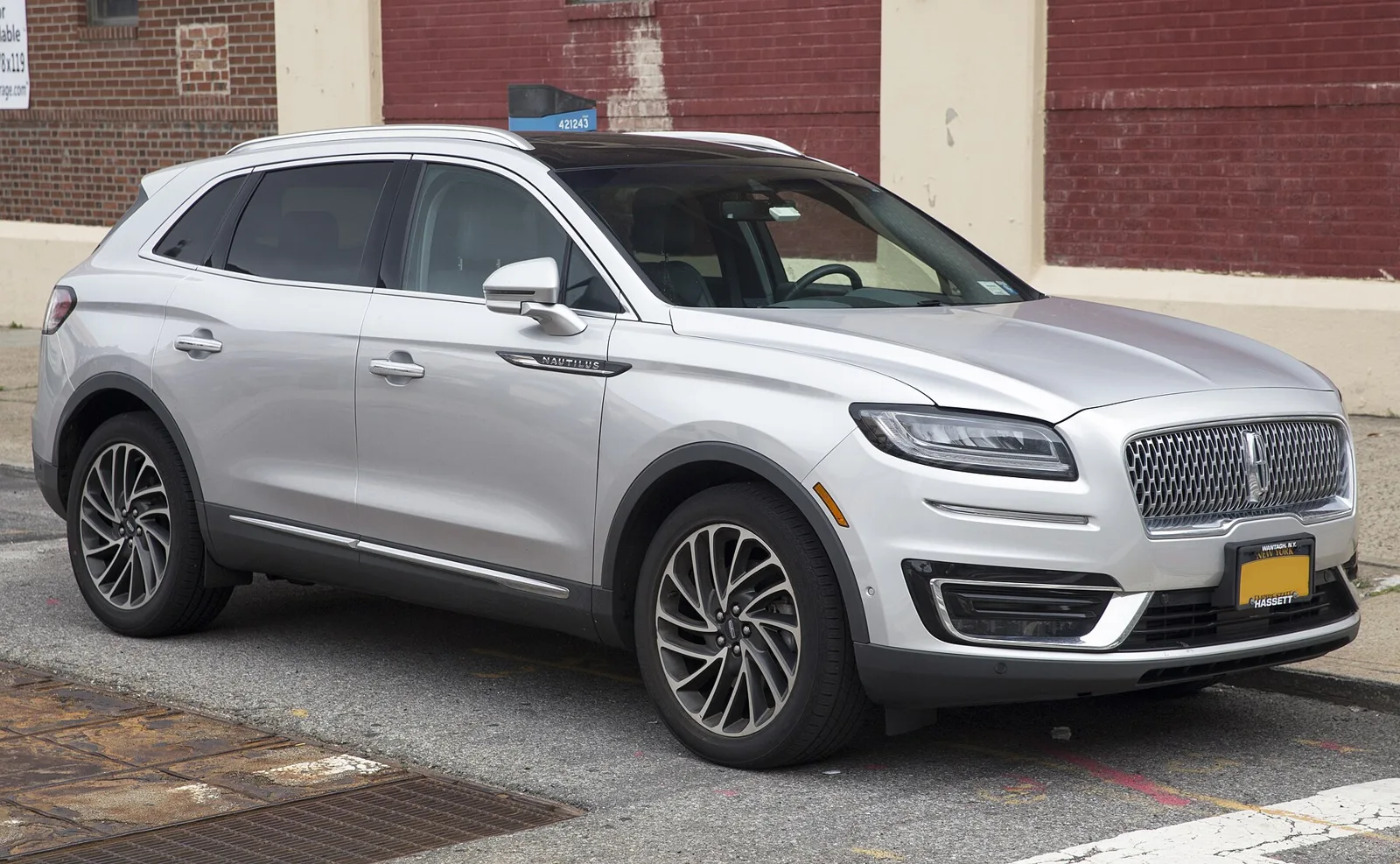
A lawsuit over two letters, a three-row crossover related to the Ford Flex, and a 48-inch dashboard display: Lincoln's SUV line before and after it dropped the MK badges.
The Lincoln MKX was the brand's first crossover SUV, introduced in late 2006 as a rebadged Ford Edge. Lincoln renamed it the Nautilus for 2019 as it dropped MK names, while the MKT was a three-row crossover sold from 2010 to 2019 and the Corsair replaced the MKC from 2019.
Honda sued Ford in January 2006 over a pair of letters. Lincoln was about to launch its first crossover SUV under the name MKX, and Acura, Honda's luxury brand, already sold a competing crossover called the MDX. The case settled out of court, and the MKX went on sale anyway. Twelve years later Lincoln abandoned the whole system of MK names, and the MKX became the Nautilus.
That change splits Lincoln's crossovers into two eras: the letters of the MKX and MKT, and the names of the Nautilus and Corsair.
The Lincoln MKX: Lincoln's first crossover
Over two generations the Lincoln MKX, a mid-size luxury crossover, was a Ford Edge with Lincoln styling. The X stands for crossover, and it was the first crossover Lincoln offered. Lincoln first showed the idea as an Aviator concept in 2004, at the Detroit auto show, a smaller, more car-like vehicle than the production model, with a 245 hp (183 kW) V6 and a panoramic sunroof. When the production car appeared, management suggested pronouncing the name "mark ex" during the 2006 show season, then changed to the phonetic M-K-X.
MKX first generation: 2007 to 2015
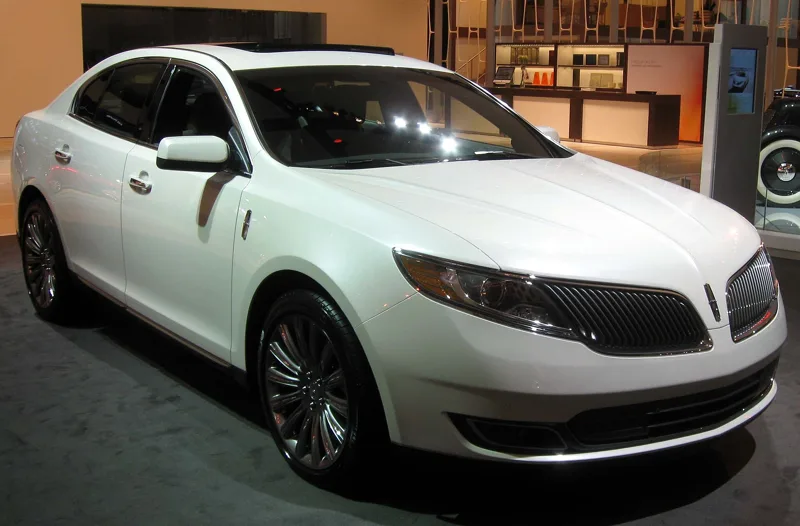
The first MKX debuted in December 2006 and was built from 2007 to 2015 on the CD3 platform. Oakville Assembly in Ontario, Canada, made it beside the Edge, the Flex and the MKT. Its front end had a chrome grille and projector headlights, with an optional adaptive system that pivoted the beams with the steering. In the rear were dual chrome exhaust tips and LED brake lights with a light bar across the liftgate. The optional Panoramic Vista Roof, the production version of the concept's glass roof, combined a powered front sunroof, a fixed rear moonroof and two powered sunshades.
Underneath it was a unibody with four-wheel independent suspension, MacPherson struts at the front, a four-link rear and anti-lock disc brakes all round. Front-wheel drive was standard and all-wheel drive optional. The only engine was a 3.7-litre Duratec V6 with a six-speed automatic, producing 265 hp (198 kW) at 6,250 rpm and 250 lb ft of torque, a clear improvement on the concept's output. Curb weight was 4,220 lb (1,910 kg) in front-drive form and 4,420 lb (2,000 kg) with all-wheel drive.
For 2008 Lincoln added badges near the front doors, Ford Sync, Limited Edition packages with chrome 20-inch wheels, and voice-controlled DVD navigation. A refresh for 2011 brought a new interior, a front end resembling the 2010 to 2012 MKZ, a new rear end and a retuned 3.7 V6 with 305 hp (227 kW) and 280 lb ft. It also marked the debut of MyLincoln Touch.
MKX second generation: 2016 to 2018
The second-generation MKX appeared as a concept at the 2014 Beijing Auto Show, the production version followed in Detroit at the 2015 show, and sales began in the autumn of 2015 for the 2016 model year. The standard 3.7-litre V6 made 303 hp (226 kW), and an optional EcoBoost V6 made 335 hp (250 kW) and 380 lb ft. Trims were Premiere, Select, Reserve and the top Black Label, with appearance themes called Thoroughbred, Modern Heritage and Indulgence.
The gear selector became a row of buttons beside the touchscreen, labelled P, R, N, D and S, echoing an idea from the late 1950s: Mercury's Multi-Drive, Chrysler's push-button TorqueFlite and Packard's Ultramatic. The S button put the adaptive dampers, steering and shift points into Sport mode. The MKX gave way to the Nautilus in a mid-cycle revision announced in November 2017 for the 2019 model year.
Honda sued Ford in January 2006 because the MKX name looked too much like Acura's MDX.
The Lincoln MKT: a three-row crossover on a Flex
The Lincoln MKT was a full-size luxury crossover with three rows of seats, sold over a single generation from 2010 to 2019. It sat between the MKX and the Navigator and used Ford's D4 chassis, shared with the Ford Flex and with the Explorer from 2011 to 2019. The MKT had no predecessor. Lincoln developed it to take on the R-Class from Mercedes-Benz, the Audi Q7 and Acura's MDX, and aimed to make it one of the largest and fastest crossovers in its price range. Ford of Canada built it at Oakville, with production starting in July 2009 for the 2010 model year.
The chassis is a variant of Ford's Volvo-derived D3 platform. With a 120.7-inch wheelbase, the MKT had the longest wheelbase of any D4 vehicle and the third-longest of any Lincoln, behind only the Navigator and Navigator L. It shared no body panels with the Flex, and it was mechanically related to the Explorer, which kept more off-road ability.
MKT engines, body and trims
The standard engine was a 3.7-litre V6 making 268 hp from 2010 to 2012 and 303 hp after 2013. A 3.5-litre twin-turbocharged V6 was optional, at 355 hp at first and 365 hp from 2013. Both used a Ford six-speed automatic. All-wheel drive was optional and was standard with the 3.5. The MKT used electric power steering combined with ultrasonic sensors in a hands-off Active Park Assist system. For 2019 Lincoln dropped the 3.7 and left the EcoBoost as the only engine.
Changes from the 2008 concept were small: larger rear quarter windows, wraparound headlamps and a revised lower grille. The vertically slatted split grille came from the 2007 MKR concept, and the Lincoln star emblem doubled as fender vents. To save weight, the liftgate had a cast-magnesium inner skin under a stamped-aluminium outer skin, and magnesium also replaced steel in the radiator support and seat frames. Seating was seven-passenger (2-3-2) as standard, with an optional six-passenger (2-2-2) layout that swapped the second-row bench for bucket seats and a long console.
The grille was redesigned in 2013, Sync 3 replaced MyLincoln Touch in 2016, and a horizontal grille arrived in 2017. Until 2016 the MKT came without named trims, with cars identified by engine and drivetrain. For 2017 it got Premiere and Reserve grades like the rest of the range.
The MKT as limousine
In October 2010 Ford announced livery and limousine versions of the MKT as possible replacements for the Lincoln Town Car, and in February 2011 it unveiled the MKT Town Car. All-wheel drive was fitted to all limousines, with heavy-duty brakes and suspension, and the third row was removed to give more rear legroom and luggage space. A limousine could be stretched up to 120 inches, as the old Town Car's could, and a conversion to a hearse was possible through Ford's Quality Vehicle Modifier programme. A 2.0-litre turbo four-cylinder was available on the Town Car by special order from 2013.
After 2019 Ford stopped using its D3 and D4 chassis, so the MKT ended with its counterparts and was not directly replaced. Lincoln's website says it was discontinued for the 2020 model year.
The Lincoln Nautilus: the MKX renamed
The Lincoln Nautilus is a mid-size luxury crossover marketed over two generations. The name comes from the ancient Greek nautes, meaning sailor. It first appeared as a mid-cycle update of the MKX, released in November 2017 for the 2019 model year, taking the styling of the new Continental and Navigator with a large rectangular grille and a bigger Lincoln star. It sat between the Aviator and the MKC.
A 2.0-litre EcoBoost four-cylinder with 245 hp (183 kW) was standard, and a 2.7-litre EcoBoost V6 with 335 hp (250 kW) was optional, both with start-stop and a new eight-speed automatic. For 2021 it received a new interior like the Navigator, Aviator and Corsair, with a 13.2-inch touchscreen and Ford's SYNC 4. Oakville built it, and Changan Ford did as well in Hangzhou, China, from 2021 to 2023.
Nautilus second generation: built in China
The second-generation Nautilus (CDX707) was released in China in 2023, and Lincoln showed the North American version on 17 April 2023; it reached dealers early in 2024, shipped from China. The Gulf version launched on 12 February 2024. Only Changan Ford builds it, because Ford was retooling Oakville to make electric vehicles. It has been Lincoln's best-selling model since 2024.
The interior has a 48-inch display mounted high on the dash, made up of two 24-inch screens that serve as the instrument cluster and part of the infotainment, controlled from an 11.1-inch touchscreen below where the driver can drag and drop widgets. It was the first car with the Ford/Lincoln Digital Experience, which is based on Android Automotive OS. All Nautilus models have all-wheel drive and transverse engines. The standard 2.0-litre turbo four makes 250 hp (190 kW) and 280 lb ft with an eight-speed automatic, and the hybrid pairs the engine with a 140 kW motor for a total of 285 hp (213 kW). EPA ratings are 21, 29 and 24 mpg US for the petrol car (city, highway, combined) and 30, 31 and 30 for the hybrid. The 2024 Nautilus earned an IIHS Top Safety Pick+.
The 2027 Nautilus, facelifted, was unveiled on 13 August 2026, with a new front fascia that drops the continuous light bar, a rear signature of two light bars, and new wheels, colours and interior themes.
The Lincoln Corsair: the compact one
Since 2019 Lincoln has sold the Corsair, a compact luxury crossover built by Ford, in place of the MKC. It was Lincoln's best-selling model through 2023. New York hosted its 17 April 2019 debut, and it rides on the fourth-generation Ford Escape's underpinnings. Edsel and British Ford had both used the Corsair name before. Sales began in late 2019 in Standard and Reserve form, and the plug-in hybrid Grand Touring followed in 2020. Chinese deliveries began in May 2020, under a name that means buccaneer.
The interior has an 8-inch display in the instrument cluster and an 8-inch screen for Lincoln Sync 3, with the Co-Pilot360 driver-assistance suite as standard. Options include a 12.3-inch digital cluster, 24-way power seats called Perfect Position, a 14-speaker Revel audio system and a head-up display, and the Co-Pilot360 Plus package adds adaptive cruise, self-parking and a surround-view camera.
Corsair powertrains
The base engine is a 2.0-litre turbo four with 250 hp (186 kW) and 275 lb ft, driving the front or all four wheels through an eight-speed automatic. A 2.3-litre turbo four with 295 hp (220 kW) and 310 lb ft was offered with all-wheel drive only. The plug-in hybrid combines a 2.5-litre Atkinson-cycle four with 163 hp (122 kW), a 96 kW front motor and a 50 kW rear motor that drives the rear wheels on its own, for a total of 266 hp (198 kW). Its 14.4 kWh battery gives 28 miles (45 km) of electric range on the EPA cycle.
Corsair facelifts
A 2023 facelift, revealed on 12 September 2022, brought a larger grille, LED running lights, a 13.2-inch Sync 4 touchscreen that took over the climate controls, a standard 12.3-inch digital cluster and the ActiveGlide hands-free highway system. Lincoln dropped the 2.3-litre engine, and the Standard trim became Premiere. The Chinese version gained a 27-inch panoramic display across the dashboard.
The second facelift, unveiled on 26 August 2026 for the 2027 model year, gives the Corsair front and rear styling resembling the pre-facelift Nautilus and the updated Aviator. It has one powertrain across the range: a 2.0-litre four-cylinder with two electric motors, producing 305 hp (227 kW). Unlike the older plug-in, it has no pure electric range. Just two trims survive, Premiere and Reserve, and every car is imported from Chongqing, China. Louisville Assembly stopped building the Corsair, along with the Ford Escape, in December 2025 to make way for a midsize electric pickup planned for 2027.
Lincoln crossover naming, before and after
| Model | Years | Size | Shared with | What happened |
|---|---|---|---|---|
| MKX | 2007 to 2018 | Mid-size | Ford Edge | Renamed Nautilus for 2019 |
| MKT | 2010 to 2019 | Full-size, three rows | Ford Flex, Explorer | Discontinued, no direct replacement |
| Nautilus | 2019 onward | Mid-size | Ford Edge, then Changan Ford in China | Second generation built only in China |
| Corsair | 2019 onward | Compact | Ford Escape | Replaced the MKC; 2027 facelift is hybrid-only |
What changes for the Nautilus and Corsair by 2030?
On 13 August 2026 Ford announced that it will discontinue importing the Chinese-made Nautilus for the United States by 2030 and shift production to the United States. The 2027 Nautilus and Corsair facelifts have both been unveiled. Ford has said the Louisville plant that built the Corsair will make a midsize electric pickup from 2027.
What this means if you drive or buy one
For a used buyer, the MKX and the Nautilus are the same car family under two names, and the Edge connection means shared mechanical parts. The first-generation MKX carried one engine, while the second added a 335 hp EcoBoost V6. The MKT is the one for buyers who need a third row, and the 3.5-litre EcoBoost version brought standard all-wheel drive. The Corsair is the plug-in route, with 28 miles of electric range in its first form, but the 2027 model drops that range in favour of a conventional hybrid. A new Nautilus bought in the US comes from China until the 2030 shift to American production announced by Ford.