A people-carrier born in a Volkswagen joint venture, a sportier sibling that won European Car of the Year, and an American crossover that sold less than half its target.
The Ford Galaxy and S-Max were seven-seat people-carriers built for Europe, the Galaxy from 1995 and the S-Max from 2006, and both ended in April 2023. The Ford Flex was an American-market crossover sold for the 2009 to 2019 model years. Each was a large three-row family vehicle.
In 1999 a Top Gear magazine survey named the Ford Galaxy the least satisfying car in Britain. In the same stretch it was the best-selling people-carrier in the country: a company spokesman said 12,233 people had bought one in the previous year, twice the share of its nearest rival. The contradiction suits a car that was never quite Ford's own. The first Galaxy was built in Portugal, sold in near-identical form by Volkswagen and SEAT, and ran engines designed by the Volkswagen Group.
That is one half of the story of Ford's large family cars. The other half crosses the Atlantic. While the Galaxy and its sportier sibling the S-Max served Europe, the Ford Flex gave American and Canadian families a three-row alternative to the minivan. Put together, the three show two very different answers to the same question: how do you carry seven people in comfort without making the car feel like a van?
What is the Ford Galaxy?
The Ford Galaxy is a seven-seater built by Ford of Europe from June 1995 to April 2023. The motor industry classes it as a large multi-purpose vehicle, or MPV, and it was the first Ford-brand MPV made and sold outside North America. Its platform was shared with the Mondeo, and in the Transit family of vans and people-carriers it slotted between the Tourneo Connect and the Custom.
One design choice set it apart from the American people-carriers Europe had seen before. The Ford Aerostar and Chrysler Voyager, both imported, had van-style bodies. The Galaxy had four conventional saloon-style doors, the same approach as the Renault Espace.
One was a Volkswagen in Ford clothes, one was the sporty one, and one was an American station wagon that refused to look like a minivan.
Ford Galaxy first generation: a Volkswagen underneath
The original Galaxy was designed as a joint venture between Ford and the Volkswagen Group. It was assembled at the AutoEuropa plant in Palmela, Portugal, and the same vehicle was badge-engineered three ways: as the Ford Galaxy, the Volkswagen Sharan and the SEAT Alhambra. Production began in May 1995, and June 1995 is also given as the start of the Galaxy's run.
Most of the mechanical parts came from Volkswagen. The headline engine was the 2.8-litre VR6 petrol borrowed from the top Golf models, and the diesel was Volkswagen's 1.9-litre turbo direct-injection unit. Only the 2.0-litre four-cylinder petrol was a Ford design, derived from the company's I4 DOHC engine. A 2.3-litre 16-valve version followed, first seen in the facelifted Scorpio; in the Galaxy it was mounted sideways, where the Scorpio had it lengthways.
Ford still put its own name on the lot. Every Volkswagen-sourced engine wore Ford badges on its rocker covers, even though the designs were Volkswagen's. The automatic gearboxes were Volkswagen units, and the manuals were reworked versions of Ford's own five-speed box. The VR6 could also be had with four-wheel drive, an option that did not return on the next generation.
Trims, flops and facelifts
At launch in 1995 there were two trim levels, Aspen and GLX, with the Ghia arriving a few months later. A 4x4 version appeared in 1996. In early 1997 came the Ultima, aimed above the Ghia with six leather captain's chairs, a front passenger airbag and traction control. It never sold well, and only around 125 were on the road at its peak. The LX and Zetec trims replaced Aspen and GLX in 1999.
A facelift in August 2000 brought New Edge styling and a new dashboard. Despite its name, the Zetec was not sold with a Zetec engine; it used the Volkswagen-supplied 1.9 TDI, with Ford's own 2.3 petrol alongside. A very minor update in 2004 added new taillights and a lower front grille.
Ford Galaxy second generation: all Ford, and bigger
The second Galaxy was shown at the 2006 Geneva Motor Show and went on sale in May 2006, alongside the S-Max. It was larger than the car it replaced, a four-pillar design of Ford's own with no Volkswagen content at all. The previous year Ford had sold its AutoEuropa stake back to the Volkswagen Group, and production moved to a newly equipped plant in Genk, Belgium, where the Mondeo was also assembled.
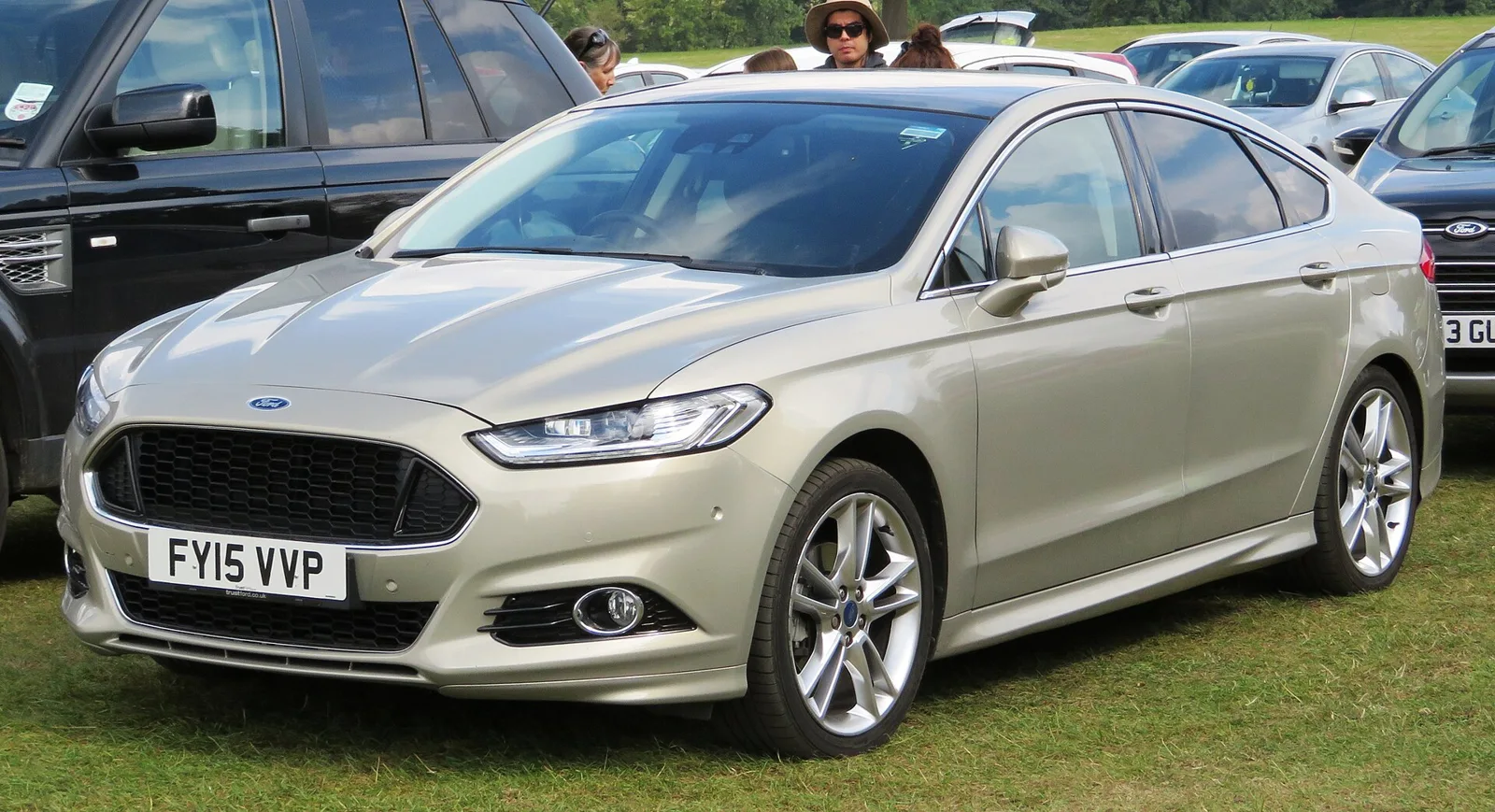
The S-Max took the sporting brief, so Ford could let the Galaxy grow in every dimension without losing sales in a market where size matters. The styling carried only some elements of Ford's Kinetic Design language: a trapezoidal grille, big wheelarches and angular headlights. There was no spare wheel. In its place Ford supplied an aerosol foam sealant to seal a puncture until a new tyre could be bought.
Only Ford engines were used now. Diesels came from the Duratorq family: 1.8-litre units at 100 PS (74 kW; 99 bhp) and 125 PS (92 kW; 123 bhp), 2.0 TDCi versions and a 2.2 TDCi for those wanting more. The petrol choices were a 160 PS 1.6-litre EcoBoost with stop-start and a 2.0-litre 203 PS EcoBoost. The Independent's Jamie Merrill criticised the smaller of the two, writing that it lacked power and belonged in smaller cars.
British trims were Edge, Zetec and Ghia until February 2008, when Titanium was added as it was across the Focus, C-MAX, Kuga, Mondeo and S-MAX ranges. The same month Ford announced a 175 PS 2.2 TDCi, a joint design with PSA. By November 2011 the British line-up was Zetec, Titanium and Titanium X.
The big selling point, shared with the S-Max, was the FoldFlatSystem, which tucks the second- and third-row seats into the floor. The trade-off is a reduction in load-carrying capacity. Viewers of the British television series Outnumbered will know the car well, because it replaced the Vauxhall Zafira as the family's vehicle in later series. What Car? gave the 2012 Galaxy four stars out of five and found it more fun to drive than most MPVs, while Top Gear scored it 7/10.
Ford S-Max: the sporty one
The S-Max is a mid-size MPV made by Ford Europe for the European market, and Ford also calls it a sports activity vehicle. It was introduced at the 2006 Geneva Motor Show and reached showrooms in May 2006 beside the new Galaxy. The brief was to be as sporty as a saloon and as spacious as an MPV, with ideas drawn from the seven-seat Galaxy and the compact C-Max.
It worked. On 13 November 2006 the S-Max was voted European Car of the Year 2007. Ford had planned to sell it in Japan under what was then its subsidiary brand Mazda, but the plan ceased to be viable once the two companies split.
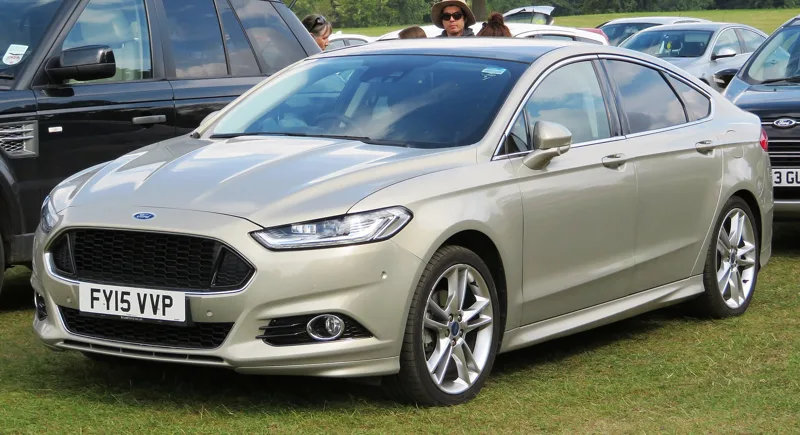
The S-Max was the first Ford to use Kinetic Design, with angular headlights, twin trapezoidal grilles and large wheel arches. Standard equipment included heated front and rear windscreens, parking sensors, an auxiliary input and dual-zone climate control. Its second row consisted of three individual seats, each with ISOFIX child-seat anchorages. In English-speaking markets the choice was Edge, Zetec or Titanium, and Ford said that around sixty per cent of buyers picked the Titanium. Continental Europe had Trend, Titanium and the top Titanium S.
Engines and equipment
The first-generation S-Max used Duratorq diesel or Duratec petrol engines with a five- or six-speed manual, and a six-speed automatic as an option. In March 2008 a 175 PS 2.2-litre TDCi joined the Titanium range, taking the car from 0 to 62 mph in 9.0 seconds. Six months later the popular 140 PS 2.0 TDCi manual was offered with CO2 emissions of 159 g/km. By 2012 the range stretched from a 115 PS 1.6 TDCi to a 200 PS 2.2 TDCi, plus petrol EcoBoost engines up to 240 PS.
The S-Max Trend, launched in China in 2010, was essentially a standard S-Max without the back row of seats, designed to be cheaper and offer more storage.
Safety and television verdicts
Ford made no claim of breakthrough safety technology for the S-Max, but the Euro NCAP rating was five stars and 36 points, the best in its class. Knee and thorax airbags, neck protection, pre-tensioners and load limiters were part of the package, and anti-lock brakes, electronic brakeforce distribution and stability control were standard.
In a Top Gear test, James May and Richard Hammond set a high-performance S-Max against a Vauxhall Zafira and a Mercedes B200. The S-Max was the cheapest of the three yet was judged to have the best interior and exterior, the most comfort and the most practicality, and the presenters called it the best value for money.
Ford Galaxy vs S-Max: the third generation
The second-generation S-Max, codenamed CD539, was first shown at the 2014 Paris Motor Show and entered production in late 2015. The Galaxy, codenamed CD390, followed and went on sale in mid-2015. They shared engines with each other, the Mondeo and the Edge.
There was one diesel in four states of tune and two petrols. The petrol options were a 1.5-litre SCTi EcoBoost with 160 hp and a 2.0-litre SCTi with 240 hp; in the Galaxy the larger one could only be had with the Powershift automatic. Ford expected only two per cent of United Kingdom sales to be petrol. Every diesel averaged more than 50 mpg, and the 2.0 TDCi Duratorq 120 was the thriftiest. The 180 version of the 2.0 TDCi could also be had with all-wheel drive, and the top Bi-Turbo 2.0 TDCi 210 came only with the Powershift and reached 60 mph in under nine seconds.
| Model | Market | Body | On sale | Where it ended |
|---|---|---|---|---|
| Ford Galaxy | Europe | Seven-seat large MPV | 1995 to April 2023 | 2.5-litre hybrid only, from late 2021 |
| Ford S-Max | Europe | Mid-size MPV | May 2006 to April 2023 | 2.5-litre hybrid, from 2021 |
| Ford Flex | United States, Canada, Mexico, Middle East | Full-size crossover SUV | 2009 to 2019 model years | Minor changes only in 2019 |
Ford Flex: the American take
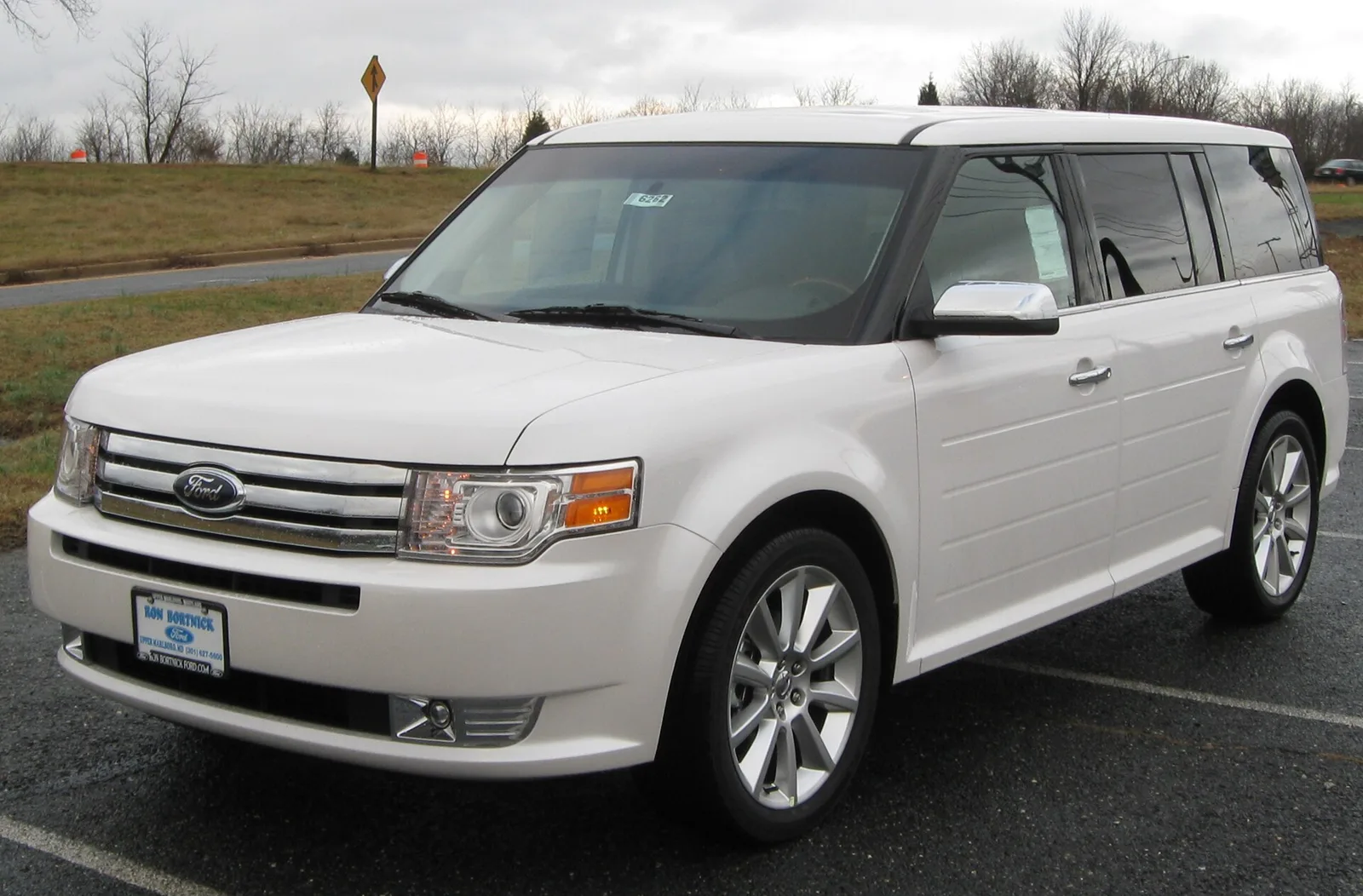
The Ford Flex is a full-size crossover SUV that ran for a single generation across the 2009 to 2019 model years, with production starting in 2008. It followed the Taurus X. Its story starts with a concept, the Ford Fairlane, shown at the 2005 Chicago Auto Show: a three-row MPV on the mid-size CD3 platform, with rear-hinged rear doors chosen to show off the interior on a show stand. With the doors shut it looked something like a production minivan.
Approved for 2009 production, it was renamed the Flex and grew considerably, moving to the full-size D4 platform. It took over from the Freestar minivan, but Ford dropped sliding doors for conventional front-hinged ones, in the manner of a station wagon. Peter Horbury, a former Volvo designer, styled it with horizontal grooves in the doors and tailgate that recalled classic wood-panelled estates. Car Design News said the styling nodded to an earlier era without leaning on obvious retro cues.
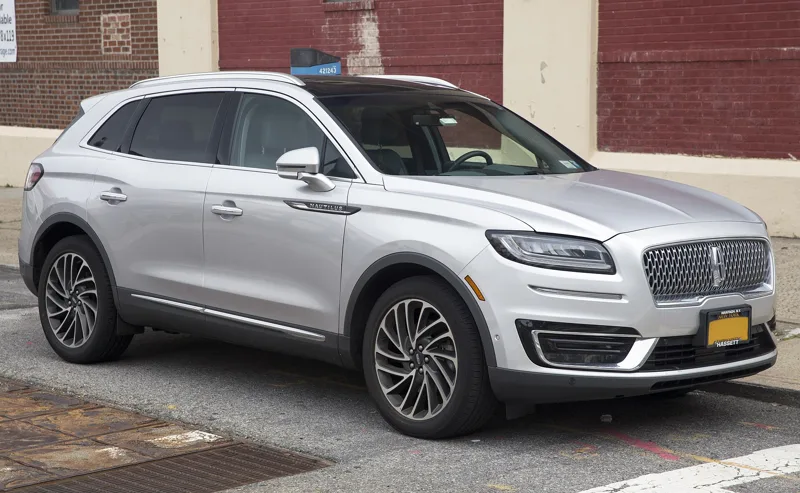
The D4 is a version of the D3 architecture, re-engineered to cope with several wheelbases, and it was shared with the 2011 to 2019 Explorer and with the Lincoln MKT, which is a rebadged Flex. From June 2008 until it was discontinued in 2019 the Flex was built by Ford Canada at Oakville Assembly in Ontario, next to the Edge and the Lincoln MKX, which is today the Lincoln Nautilus. It was sold in the United States, Canada, Mexico and the Middle East, and production reached just over 300,000.
Powertrains
Front-wheel drive was standard and all-wheel drive optional, with independent rear suspension and Ford's AdvanceTrac stability system. Two 3.5-litre V6 engines were offered, both with a six-speed automatic. The standard naturally aspirated Duratec V6 started at 262 hp (195 kW) and rose to 287 hp (214 kW) for 2013. The optional twin-turbo EcoBoost, available on all-wheel-drive cars, made 355 hp (265 kW), increased to 365 hp (272 kW) for 2013. A properly equipped Flex could tow 4,500 lb (2,040 kg), and the all-wheel-drive system could send up to 100 per cent of the torque to the front or rear axle as needed.
Trims through the years
At the 2009 launch there were three grades: the base SE, the mid-level SEL and the top Limited, in six- or seven-seat layouts, the latter with a second-row bench. The EcoBoost engine arrived in 2010 on SEL and Limited models, which had all-wheel drive as standard. US reverse cameras were restricted to the Limited, and for 2012 an automatic parking system became optional on upper trims.
The SE came only with front-wheel drive and seventeen-inch wheels. The SEL moved up to eighteen-inch wheels and Ford SYNC, and the Limited added nineteen-inch chrome wheels, navigation, leather, heated and ventilated front seats, a panoramic moonroof and a Sony audio system. For 2011 and 2012 there was also a Titanium trim, a Limited with blacked-out lights, grille and trim, sold only in black, white, red and silver.
The mid-life facelift for the 2013 model year was introduced at the 2011 Los Angeles Auto Show. Roofline and doors stayed, but the front and rear were revised, with the model name spelled across the bonnet instead of a Ford badge in the grille and a smaller Ford emblem on the tailgate. Inside came a new dashboard, a three-spoke steering wheel and paddle shifters in place of the old buttons on the gear selector.
Why the Ford Flex was discontinued
Critics liked the Flex. In 2010 US News ranked it the third-best affordable mid- or full-size SUV, behind the Buick Enclave and Chevrolet Traverse. Consumer Reports placed the EcoBoost version first among affordable large SUVs, called the Flex the most reliable large SUV and Ford's most reliable vehicle, and found that owners of the all-wheel-drive version were the most likely among large SUV owners to buy the same vehicle again.
Sales did not follow. Ford had expected to sell 100,000 a year, but in 2009 it managed 38,717, less than half of that target. Ford did try some unusual marketing along the way, working with Esquire magazine on a cover that used E Ink.
When and why did Ford end the Galaxy and S-Max?
In late 2021 Ford stopped selling the Galaxy with petrol and diesel engines and offered only a 2.5-litre hybrid Duratec with 190 PS and a Durashift CVT. The S-Max went the same way: in 2019 it lost its petrol engines, leaving only the 2.0-litre EcoBlue diesel, and in 2021 all combustion-only options gave way to a 2.5-litre petrol hybrid with 190 PS (140 kW; 187 bhp).
Ford announced in January 2022 that it would discontinue the Galaxy after 27 years, stopping orders for new cars in favour of delivering those already booked. Both cars ended in April 2023. The two are not described the same way: the Galaxy is said to have a direct successor in the Ford Tourneo Courier, while the S-Max is said to have had none. Ford's reason for ending the S-Max was sharply declining sales in the MPV segment and a shift towards crossovers, SUVs and electrified vehicles.
What this means if you drive or buy one
For anyone shopping among used examples, the generations matter more than the badges. A first-generation Galaxy has Volkswagen engines and gearboxes, and its VR6 petrol could be ordered with four-wheel drive. A second-generation Galaxy has no spare wheel, so owners rely on the sealant kit. The S-Max, with its five-star Euro NCAP rating and three individual ISOFIX seats in the second row, suits families with child seats, though its third row has child seats only.
On the Flex side, all-wheel drive and the EcoBoost engine make a pair: the twin-turbo V6 was offered only with all-wheel drive. If towing is a priority, 4,500 lb (2,040 kg) was the rating for properly equipped cars. Cars from 2013 onward added paddle shifters and a new dashboard.