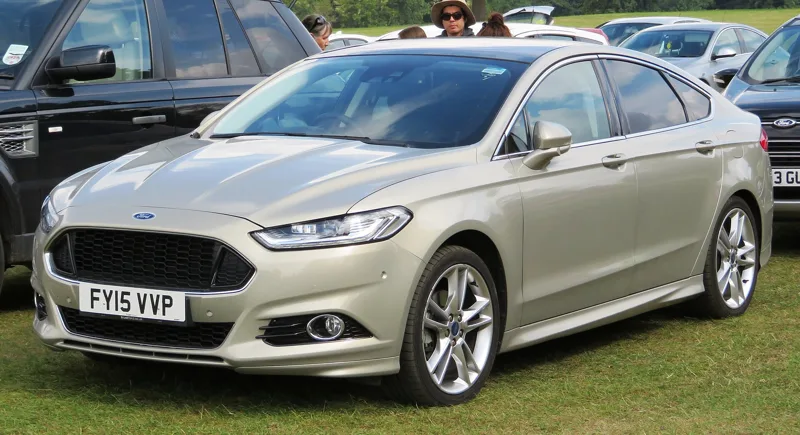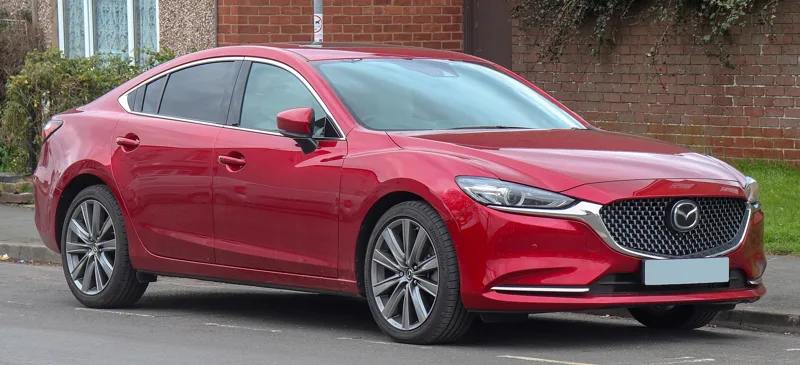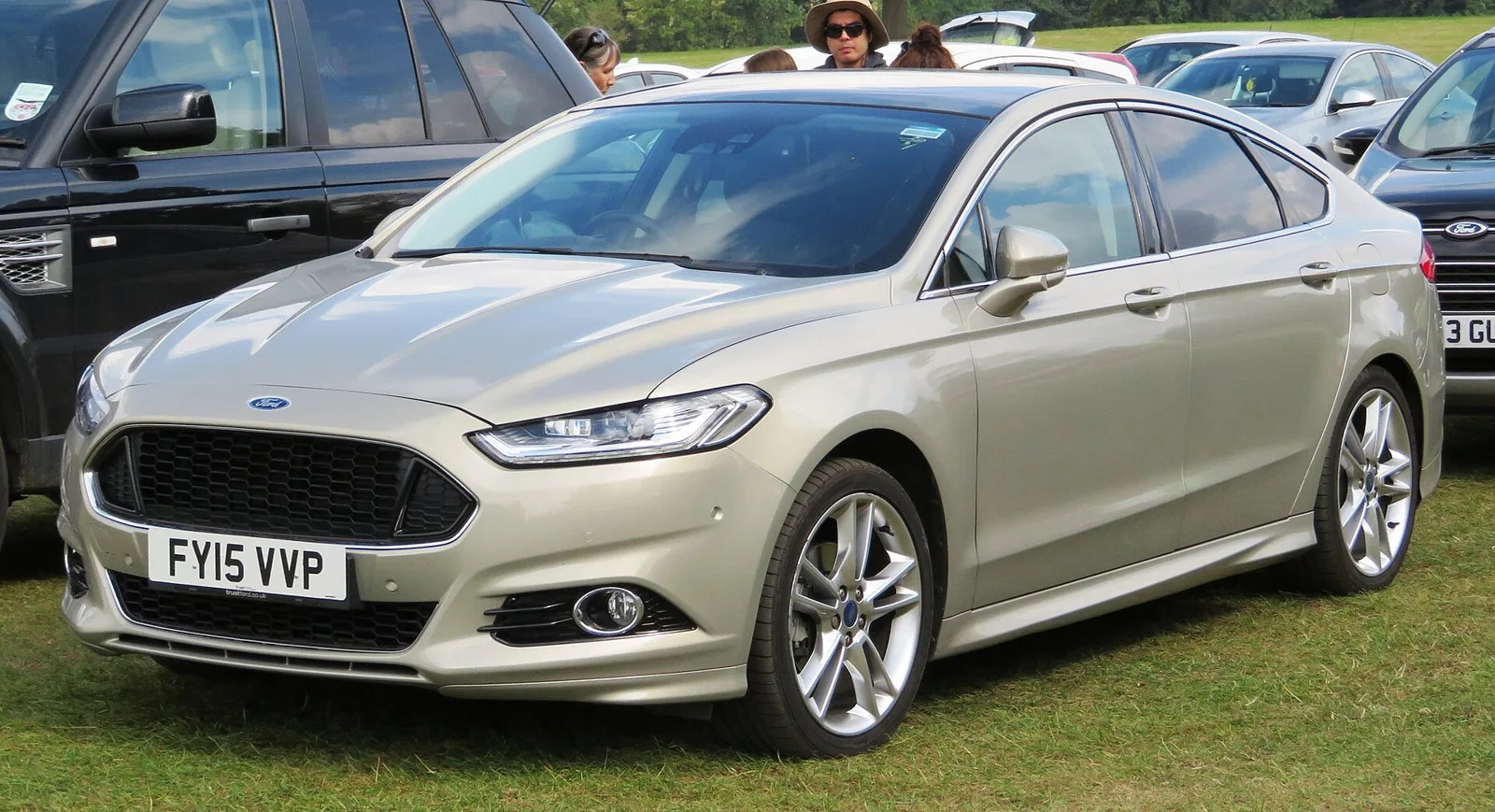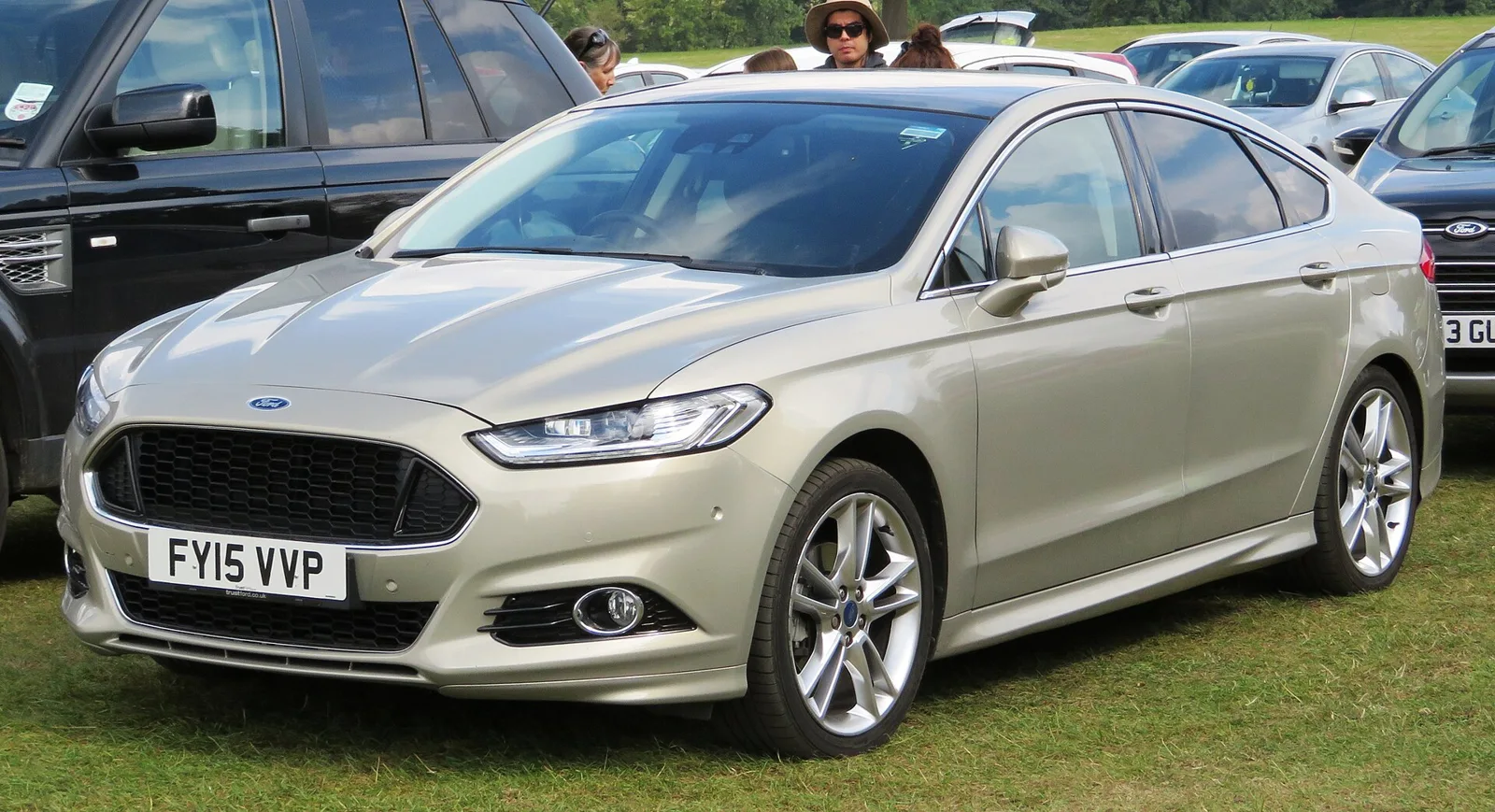
A Fusion-derived Ford with five-star safety results against a Mazda that ran from 2002 to 2024 on sedan, hatchback and wagon bodies.
Sold across Europe, Australia and China, the Mondeo was built from 2013 to 2022 as a rebadged Fusion. Mazda's rival, the Mazda6, ran from 2002 to 2024 on sedan, hatchback and wagon bodies.
The fourth-generation Ford Mondeo and the Mazda6 were both mid-size cars sold across Europe, Australia and China, and both ended up on the road with a clear identity. The Mondeo was a Ford built on the Fusion's American bones, with five-star safety results and a choice of liftback, estate and sedan bodies. The Mazda6 was a Japanese mid-size car that ran from 2002 to 2024 on a single family of sedan, hatchback and wagon bodies.
How long did each car last, and when did it arrive?
The Mazda6 arrived in Japan as the Atenza in May 2002 and was produced until 2024. The fourth-generation Mondeo was built from 2013 to 2022, and it reached Europe in October 2014 after its launch was delayed for quality reasons.
The Mondeo nameplate was retired in Europe in March 2022, after 30 years of production. As of late 2023 the Mk5 Mondeo was sold only in China and the Middle East, because Ford Europe had turned towards crossover SUVs.
The Mazda6 had a long run, and its name had a Japanese history of its own. It was known as the Mazda Atenza in Japan until 2019, a name derived from the Italian word attenzione.
A Fusion-derived Ford with five-star safety against a Mazda that kept one family of bodies from 2002 to 2024.
Where did the fourth-generation Mondeo come from?
The Mondeo was revealed at the 2012 North American International Auto Show as a rebadged version of the American-market Fusion. Ford sold it in Europe, Latin America, China and Australia, and it was the flagship of Ford's Chinese line-up at launch.
Ford confirmed the product details at the 2012 Paris Motor Show, then delayed the European launch from early summer 2013 to late autumn 2014. The reason given was quality issues in ramping up production, and the delay was later described as at least a year because of the closure of the Genk plant.
The Genk plant in Belgium had built earlier European Mondeos, and it was shut after 50 years and 14 million vehicles. Ford moved production to Valencia in Spain, and the fourth-generation Mondeo finally appeared in Europe in October 2014. The company said the move had required significant development and reinvestment at Valencia.
How did the Mazda6 first go on sale?
The first Mazda6 replaced the long-produced Capella and 626 and was sold as the Atenza in Japan from May 2002. It was marketed as the first of Mazda's Stylish, Insightful and Spirited design models, followed by the Mazda2 and the MX-5 among others.
The lineup was a four-door sedan, a four-door hatchback and a five-door wagon. In North America these were the Sport Sedan, the 5-Door and the Sport Wagon, and the car was sold there as a 2003 model. Canada followed a year later, as a 2004 model.
Mazda's MZR engines covered 1.8-litre, 2.0-litre and 2.3-litre sizes. The US also had a 3.0-litre Duratec 30 V6, and European and Australian versions had a four-cylinder turbodiesel with a six-speed manual that produced much more torque than the V6.
What engineering sat behind each car?
The Mondeo was based on a new iteration of Ford's C/D platform, which it shared with the Galaxy and S-Max large MPVs. Ford said the clean-sheet architecture could be adapted to large passenger cars and SUVs, and it was designed as a transverse engine, front-wheel or all-wheel drive car rather than a rear-drive one.
Its body was built with high-strength steel, with about 61 per cent of the structure in those grades. The use of hydro-formed steel in the pillars and roof rails meant the body was 115 kg (254 lb) lighter than the previous model, and Ford put 90 kg (200 lb) of the saving into safety, comfort and convenience.
The Mondeo used front MacPherson struts and a multi-link rear suspension, with electric power steering. Ford added an integral link rear for this generation, a 10 per cent stiffer body structure and a torque-vectoring system for better handling.
The Mazda6 used a chassis that Ford also utilised as its CD3 platform. The second generation, which premiered at the 2007 Frankfurt Motor Show, kept the sedan, hatchback and wagon bodies and improved the electrically assisted steering, which journalists praised for giving more feedback.
How did the two cars compare on boot space?
The Mondeo liftback had a boot of 541 litres (19.1 cu ft) with the seats up, growing to 1,437 litres (50.7 cu ft) with them down. The station wagon had 1,605 litres (56.7 cu ft) with the seats down, about 170 litres more than the liftback, while the sedan had 500 litres (18 cu ft) with the seats up.
The hybrid liftback managed only 383 litres (13.5 cu ft), and its battery pack meant the rear seats could not be folded at all. The hybrid sedan's boot opened from below the rear window, which gave a narrower opening that made larger objects harder to fit.
Mazda's claim for its second-generation hatchback was that its boot, with the rear seats folded, beat the Mondeo and the Opel/Vauxhall Insignia hatchback by 200 litres. Mazda's figures are a manufacturer's claim, so the comparison is only as good as the test behind it.
What did the Mondeo's interior and infotainment offer?
The Mondeo's first infotainment system, SYNC2, offered navigation, traffic alerts, in-car climate controls with heated seat levels, and an in-car Wi-Fi hotspot. From the second quarter of 2017 every Mondeo received SYNC3, with Apple CarPlay, Android Auto and Applink through a USB socket.
SYNC3 was controlled through an 8.0-inch touchscreen, so the driver could operate the phone without picking it up. The Vignale trim, in some countries, added an active noise-cancelling system.
Carwow's Mat Watson said the quality was good, but that the infotainment could not match a Volkswagen Passat. That is a fair marker of where the Mondeo sat against its European rivals on the screen.
How did the Mondeo perform in Euro NCAP tests?
The Mondeo earned the maximum five stars from Euro NCAP, which made it one of the safest family vehicles that body rated. The 2014 test used a 1,634 kg (3,602 lb) 2.0-litre diesel Trend estate, and the 2019 test used a 1,852 kg (4,083 lb) 2.0-litre diesel Titanium estate. Both earned five stars.
The 2014 car had driver and passenger, rear and knee airbags, side head and chest airbags, belt pretensioners, load limiters and a seatbelt reminder. The facelift added lane departure warning and traffic sign recognition across the range, along with tyre pressure monitors, cruise control, electronic stability control and front and rear parking sensors.
The Driver Assistance Pack added an automatic parking aid, blind spot monitors and a rear-view camera, and all Mondeos carried Auto Start-Stop, which switched the engine off while the car was stationary. The Mazda6 has no crash rating in this comparison, so the Mondeo's record is the one that can be set down in numbers.
Which Mondeo trims did UK buyers choose from?
The UK line-up had six trim levels, from Style and Zetec through ST-Line, Titanium and Titanium X to the Vignale. The Vignale was aimed at the Audi A4, the BMW 3 Series and the Mercedes-Benz C-Class, with large alloys, chrome door handles and quilted leather seats.
Style brought an 8-inch colour touchscreen, 16-inch alloys, DAB radio, dual-zone climate control and cruise control. Zetec added power-folding mirrors, a heated windscreen and height and lumbar adjustment for the driver's seat, while ST-Line brought a sporty body kit, a black honeycomb grille and 18 or 19-inch alloys.
Titanium added 17-inch alloys, sporty seats, standard satellite navigation, automatic lights and wipers, and traffic sign recognition with lane-keeping assistance. The Mondeo came in ten colours across the range.
How did the Mazdaspeed6 change the Mazda6?
The 2006 Mazdaspeed6, known in Japan as the Mazdaspeed Atenza, was a high-performance version of the first-generation car. It used a turbocharged 2.3-litre MZR four producing 272 PS (200 kW) in its original form, and the European version was detuned to 260 PS (191 kW) to meet tighter emissions rules.
The North American version made 274 hp (204 kW), revised to 270 hp (201 kW) for 2007, and every version had 280 lb-ft (380 N-m) of torque. It came with all-wheel drive using Mazda's Active Torque Split system, which could route torque anywhere from 100/0 to 50/50 front to rear, and a six-speed manual.
The Mazdaspeed6 came in two North American trims. The Sport had cloth seats and standard keyless entry, while the Grand Touring added leather, keyless ignition and optional DVD navigation. A 200 W Bose stereo with seven speakers and a 9-inch subwoofer was standard, and the car was noted for impressive power and handling.
What changed when the Mazda6 went to North America?
The North American Mazda6 was redesigned for the 2009 model year, and the wagon and hatchback were dropped there. The car was widened and lengthened, with larger engines, including a 2.5-litre four and the 3.7-litre V6 also used in the CX-9.
Motor Trend recorded 6.1 seconds to 60 mph for the V6 car. Mazda said the North American car still drove more sportily than rival Honda Accords, Toyota Camrys and Chevrolet Malibus, despite its increased size.
The car also had recall trouble. In March 2011 about 50,000 Mazda6s from the 2009 and 2010 model years were recalled in the US, with another 15,000 in Canada, Mexico and Puerto Rico, because spiders had built nests in the fuel line. Mazda reissued the recall in April 2014 for 2010 to 2013 cars with 2.5-litre engines.
Production for North America moved away from the Flat Rock plant. The last Mazda6 rolled off the Flat Rock line on 24 August 2012, which ended the joint venture between Mazda and Ford that had lasted two decades, and production moved back to Hofu in Japan.
How did the third-generation Mazda6 arrive?
The third-generation Mazda6 sedan was unveiled at the Moscow International Automobile Salon on 29 August 2012, and the station wagon followed at the 2012 Paris Motor Show. It was offered only as a four-door sedan or a five-door wagon, and its design was previewed by the Takeri and Shinari concepts.
The third generation was a finalist in the 2013 World Design of the Year. The first generation had the stronger awards record.
What awards did the Mazda6 win?
The Mazda6 placed second in the 2003 European Car of the Year awards and made Car and Driver's Ten Best list for 2003. The Sport Wagon won Canadian Car of the Year's best new station wagon award, and the Sport sedan won the family car award for 2005.
In Australia the Mazda6 won the best mid-size car title in 2002 and 2003, and it came second in 2004 behind the Subaru Liberty. The second-generation car won What Car?'s Family Car of the Year award in 2010, and MotorWeek named the Mazda6 its Best Family Sedan in 2009.
Critics praised the Mazda6's edgy design, communicative steering and tight suspension. They also criticised its passenger space, which was smaller than that of its North American midsize rivals because it was designed as a world car for Europe and Japan.
Specifications side by side
| Specification | Ford Mondeo (fourth generation) | Mazda6 |
|---|---|---|
| Years built | 2013 to 2022 | 2002 to 2024; generations from 2002, 2007 and 2012 |
| Launch | Revealed at the 2012 Detroit show; Europe from October 2014 | Japan from May 2002 as the Atenza |
| Platform | Ford C/D platform, 2,850 mm (112 in) wheelbase | First-generation chassis, which Ford also used as CD3 for the second generation |
| Body styles | Liftback, estate and sedan | Sedan, hatchback and wagon; North American sedan only from 2009 |
| Engines | Four-cylinder petrol and diesel, plus hybrid | 1.8, 2.0 and 2.3-litre MZR; 3.0-litre V6 in the US; 2.5-litre four and 3.7-litre V6 in North America from 2009 |
| Performance version | Not given | Mazdaspeed6, 270 hp (201 kW) in North America from 2007 |
| Drag coefficient | 0.27 Cd | Not given |
| Boot space | Liftback 541 litres seats up, 1,437 litres seats down; station wagon 1,605 litres seats down | Second-generation hatchback, which Mazda said had 200 litres more than the Mondeo with the rear seats folded |
| Crash rating | Euro NCAP five stars in 2014 and 2019 | Not given |
| Infotainment | SYNC3 with Apple CarPlay and Android Auto, 8.0-inch touchscreen | Not given |
| Build location | Valencia, Spain | Hofu, Japan; Flat Rock, Michigan until 2012; Changchun, China |
| Recall | Not given | About 50,000 US cars in 2011 over fuel-line spiders |
| Motorsport | Not given | Manufacturers title in Touring Car class in 2007 |
Which car suits which buyer?
A buyer in Europe, Australia or China who wanted a Fusion-derived mid-size car with five-star safety results and several body styles would look at the Mondeo. The Vignale and the ST-Line gave that buyer a clear step up.
A buyer who wanted a sedan, hatchback or wagon with turbodiesel or high-performance options, and who did not mind a smaller rear cabin, would look at the Mazda6. The Mazdaspeed6 showed how far that car could be pushed.
Motorsport adds a further line. The Mazda6 won its manufacturers championship in the Touring Car class in 2007, took second place in 2009 behind Acura, and gave its name to a NASCAR Corona Series stock car. The Mondeo has no equivalent racing record in these figures.