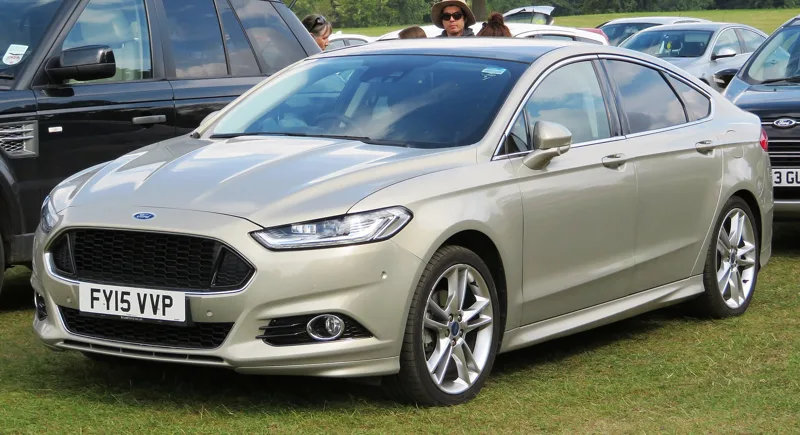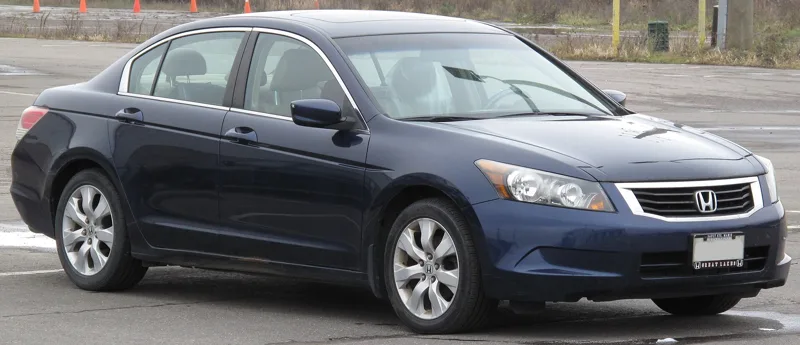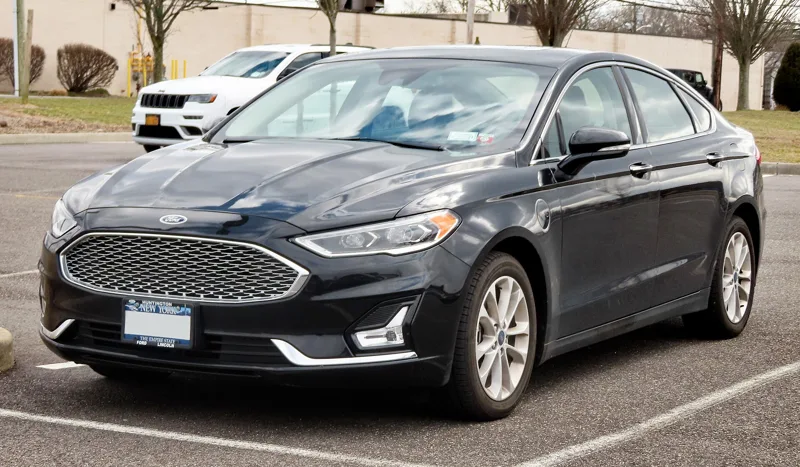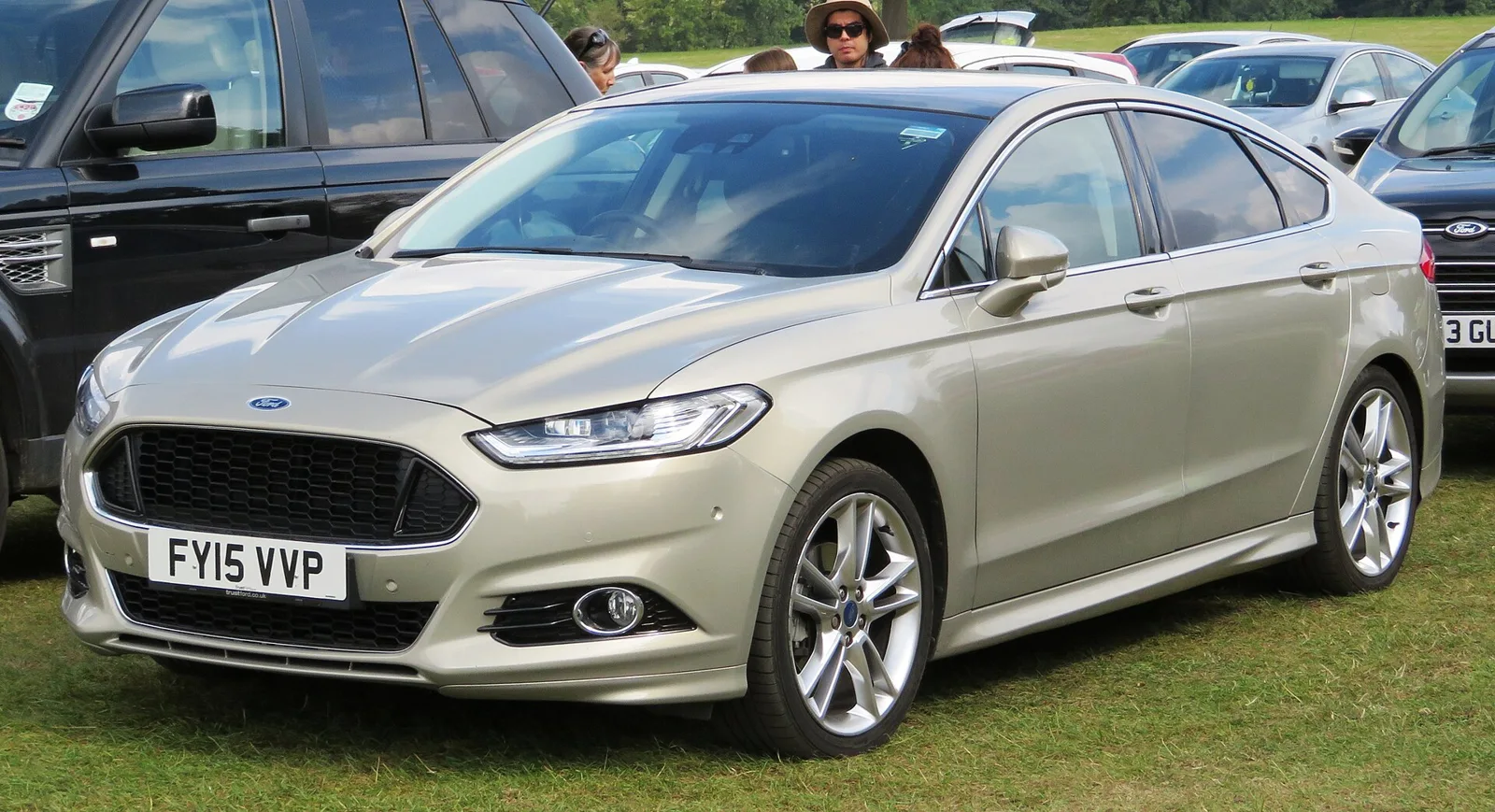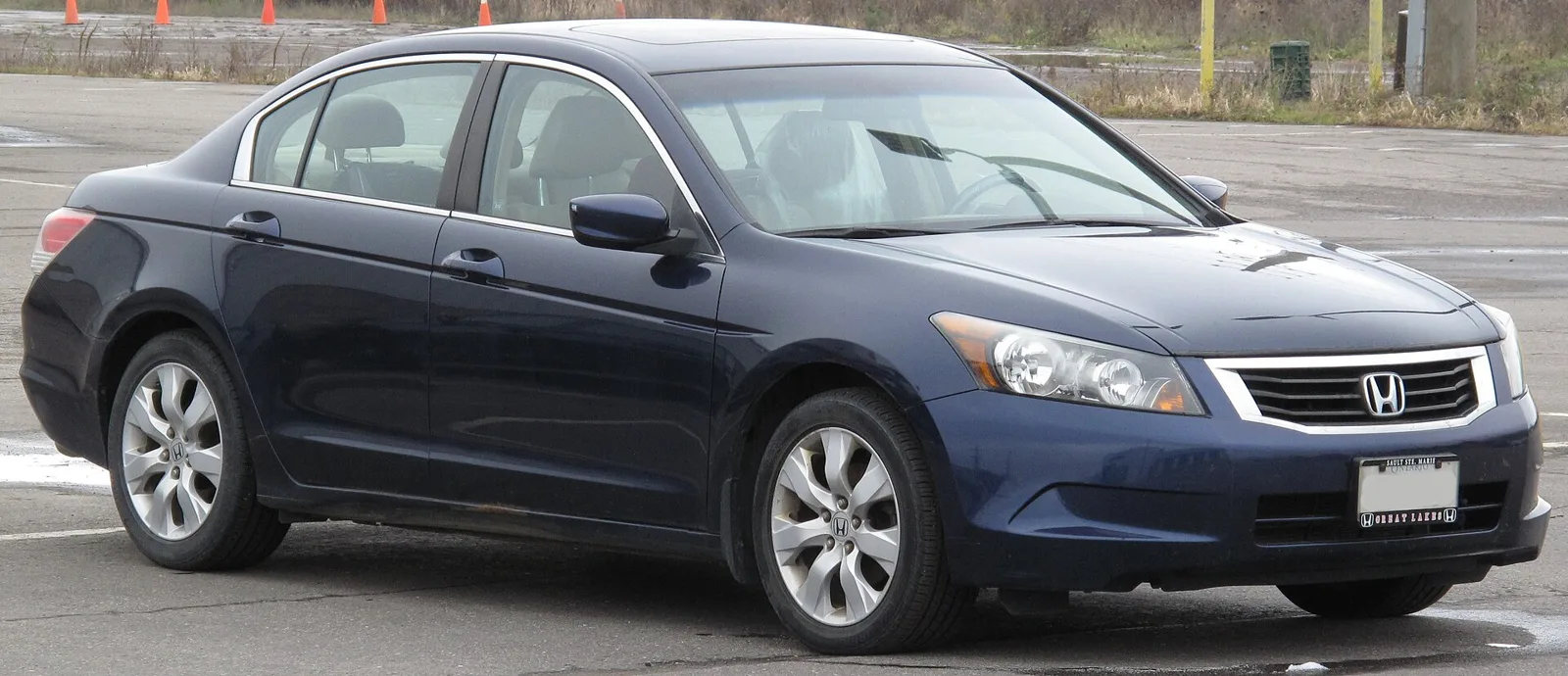
Two North American mid-size sedans from the late 2000s, one with the larger cabin and a long safety record, the other with a sportier shape and a recall history of its own.
The eighth-generation Honda Accord, introduced in August 2007, was 4 inches longer and 3 inches wider than before. The second-generation Mazda6, redesigned for 2009, was sold only as a sedan in the US, with a 2.5-litre four and a 3.7-litre V6 on offer.
The eighth-generation Honda Accord and the second-generation Mazda6 went head to head as mid-size sedans in North America in the late 2000s. The Accord grew for 2008 and came with a long safety record, while the Mazda6 was widened and lengthened for 2009 and sold as a sedan only in the US. Both carried recall stories that buyers should understand before choosing one.
Why were the Accord and Mazda6 compared?
Both were mid-size family sedans sold in volume in the same showrooms, and both were built to compete with the strongest sellers in their class.
The Accord's North American version was introduced in August 2007 for the 2008 model year. Sedan sales began on 12 September 2007 and coupe sales on 20 September 2007, with the coupe's concept shown at the 2007 North American International Auto Show.
The Mazda6 had a longer history. Its first generation launched in Japan as the Atenza in May 2002, and the second generation premiered at the 2007 Frankfurt Motor Show before its North American version reached dealers for the 2009 model year.
A roomier, safer-scoring Accord met a Mazda6 that looked and drove like a sporting sedan, with recall stories on both sides.
How big were the two cars?
The 2008 Accord was 4 inches (102 mm) longer and 3 inches (76 mm) wider than the car it replaced. That growth enlarged the interior, and EPA rated the sedan's combined interior space at 120 cubic feet (3.4 m3), a near-executive figure.
The Accord coupe was classed as a mid-size car by EPA, with 105 cubic feet (3.0 m3) of combined interior space. Honda dropped the hybrid for the new generation, saying its hybrid system worked better on smaller cars.
The North American Mazda6 was widened and lengthened from the version sold elsewhere, and it used larger engines. Reviewers noted its coupe-like roofline and sportier style, and the hatchback and wagon were dropped in North America for 2009.
The first-generation Mazda6 had been criticised for less passenger space than its North American rivals, because it was designed as a world car for Europe and Japan. The second-generation North American car set out to address that size gap, and it was built on a modified version of the chassis that Ford used as its CD3 platform.
Which had the more efficient engines?
The Accord's LX used a 2.4-litre i-VTEC four making 177 hp, and the EX used a more powerful version with 190 hp. The V6 was a 3.5-litre i-VTEC with Variable Cylinder Management, which made 268 hp and shut off two or three cylinders in light driving.
Honda said the V6's VCM system lifted highway economy, and engines without VCM lost about 4 mpg on the highway. The 2011 facelift, with new aerodynamics and a reworked five-speed automatic, lifted the Accord to 23 mpg in the city and 34 mpg on the highway.
The Mazda6 gained a new 2.5-litre four-cylinder in North America, alongside the 3.7-litre V6 that was also used in the CX-9. Motor Trend recorded 0 to 60 mph in 6.1 seconds for the Mazda6 V6.
The first-generation Mazda6 also produced a hot version, the 2006 Mazdaspeed6, with a turbocharged 2.3-litre MZR four making 272 PS (200 kW) and 280 lb-ft (380 N-m) of torque. It used Mazda's Active Torque Split all-wheel drive, which could route torque from 100/0 to 50/50 front to rear, and it was never sold in North America as a second-generation car.
The Accord's emissions story also needs a caveat. Its PZEV versions, which used a second exhaust valve mode below 2,500 rpm, were offered for four-cylinder and V6 VCM cars with the five-speed automatic, but only in 15 states.
How did the Accord change for 2011 and by trim?
The 2011 facelift gave both the sedan and coupe new front fascias and updated tail lamps, and the sedan picked up reflective strips seen on the Japanese Inspire. Inside, the EX-L V6 coupe gained steering-wheel paddle shifters, USB connectivity came to all coupes and to EX and EX-L sedans, and a rearview camera became standard with navigation.
The United States received every Canadian trim plus an LX-P sedan with illuminated power window switches, an 8-way power driver's seat, a security alarm and 16-inch alloy wheels. The LX-S coupe replaced the 177 hp engine with the 190 hp unit and added 17-inch wheels and a six-disc CD changer.
A new SE trim was slotted between the LX-P and the EX in the US, with leather upholstery. The EX-L V6 gained memory seats, and every model received new cloth seats and minor instrument panel changes.
Specifications side by side
| Specification | Honda Accord (eighth generation) | Mazda6 (second generation, North America) |
|---|---|---|
| North American launch | August 2007 for the 2008 model year | 2009 model year, redesign from the Frankfurt premiere in 2007 |
| Body styles | Sedan and coupe | Sedan only in the US; hatchback and wagon dropped |
| Four-cylinder | 2.4-litre i-VTEC, 177 hp (LX); 190 hp (EX) | New 2.5-litre four-cylinder |
| V6 | 3.5-litre i-VTEC with VCM, 268 hp | 3.7-litre V6, also used in the CX-9 |
| 0 to 60 mph | Not given | 6.1 seconds for the V6, per Motor Trend |
| Highway economy | 34 mpg after the 2011 facelift | Not given |
| Interior space | 120 cubic feet (3.4 m3) for the sedan | Not given |
| IIHS | Top Safety Pick; lost for roof strength; regained for 2012 | Not given |
| Major recalls | Airbag software recall of 300,000 cars in October 2015 | Spider recall of about 50,000 US cars in March 2011 |
| Assembly | Marysville, Ohio; Lincoln, Alabama from mid-2009 | Flat Rock, Michigan until August 2012; then Hofu, Japan |
How did the two cars look and feel?
Some reviewers likened the Accord's styling to BMW's 3 Series and 5 Series, and the styling has been called Germanic in look.
The Mazda6 was praised by reviewers for its electrically assisted steering, which gave more feedback than the previous generation. Mazda said the car remained sportier to drive than rival Accords, Camrys and Malibus, even after its growth in size.
How did the two cars fare in safety tests?
The Accord carried stability and traction control, anti-lock brakes with brake assist, active front head restraints and dual-chamber side airbags as standard for 2008. It was the first mid-size car in its class to include those systems as standard across the line-up.
The Accord sedan earned Good ratings in 13 of 14 IIHS categories and received the Top Safety Pick award. Its only Acceptable score came in the side-impact structure category, and it lost the award after an Acceptable roof strength result, and it regained it for 2012 models with a Good score in the roof test.
An IIHS study of fatalities found the Accord had the lowest rate in the non-luxury midsize sedan class, and only the Saab 9-3 among luxury midsize sedans had a lower rate.
The first-generation Mazda6 won Wheels magazine's Active Safety Program award in July 2005.
What recalls and lawsuits hit each brand?
In September 2009 a class action was filed over the brake system of certain 2008 to 2010 Accords, alleging that excessive force on the rear wheels wore out rear pads every 15,000 to 20,000 miles. Honda agreed a preliminary settlement in April 2010 and paid owners part of their brake repair costs, plus up to $150 for redesigned pads.
Some 2008 and 2009 Accords suffered sudden side curtain airbag deployments, which Honda initially refused to cover under warranty. At least 14 injuries were reported, and in October 2015 Honda agreed to recall 300,000 Accords after finding the deployments were caused by a software problem in the airbag control unit.
The Mazda6 was recalled in the US on 3 March 2011 for about 50,000 cars from the 2009 and 2010 model years, after spiders built nests in the fuel line. Another 15,000 cars in Canada, Mexico and Puerto Rico were covered too.
Mazda reissued the spider recall on 5 April 2014 for 2010 to 2013 Mazda6 models with 2.5-litre engines. In China, more than 680,000 Mazdas, including Mazda6 models made between 2008 and 2016, were recalled over faulty airbags.
Where were the two cars built?
The Accord's four-cylinder and V6 models were first assembled at Honda's Marysville Auto Plant in Ohio, which became the sole global source of the eighth-generation coupe. From mid-2009 most V6 sedan production moved to Lincoln, Alabama, and Anna, Ohio, built the four-cylinder engines.
Outside North America the Accord was sold as the Inspire in Japan, where a right-hand-drive version of the American car was built. In South Korea the model's success helped Honda pass BMW, Mercedes-Benz and Lexus to become the number one import brand, as its sales surged 95% in the first seven months of the year.
Mazda's second-generation North American car was built at Flat Rock, Michigan, until the plant closed. The last Mazda6 left the Flat Rock line on 24 August 2012, and production returned to the Hofu factory in Japan, ending the joint venture with Ford.
How did critics judge the two sedans?
Car and Driver placed the 2008 Accord EX first in its March 2008 test of four-cylinder mid-size sedans, which included the Camry, Altima, Malibu, Sonata, Avenger and Fusion. Edmunds' InsideLine placed the LX-P and EX-L V6 Navi first in its own comparison, praising the car's performance, build quality and handling.
Motor Trend was less impressed, criticising the Accord for being too heavy and less nimble than its predecessor.
The Mazda6 won What Car?'s 2010 Family Car of the Year award and MotorWeek's 2009 Best Family Sedan title. Its motorsport record was also strong, with Mazda winning its first manufacturers' championship in the Touring Car class in 2007.
The first-generation Mazda6 had earlier honours. It finished second in the 2003 European Car of the Year awards and made Car and Driver's Ten Best list for 2003, while its Sport Wagon won the Canadian Car of the Year Best New Station Wagon award. In Australia it won the Best Mid-size Car title in 2002 and 2003. Its liftback styling was seen as a clever disguise for a four-door saloon, because North Americans generally preferred trunks to hatches, and the estate had an early demise, while the hatchback sold reasonably well in Canada, especially in Quebec.
Which car suits which buyer?
On the figures, the Accord suits a buyer who wants more interior space, a long safety record and a V6 with cylinder management. The Mazda6 suits a buyer who wants a sportier shape, a choice of four-cylinder or V6 power and a sedan that drives more sportily.
Buyers should check recall status before buying either car. The Accord's brake and airbag campaigns and the Mazda6's spider and airbag recalls each touched large numbers of cars, and the remedies differed.
Neither car is the clear winner. The Accord has the bigger cabin and the stronger IIHS record, while the Mazda6 offers the more driver-focused styling and a V6 that reached 60 mph in 6.1 seconds. The choice rests on whether a buyer values space and a safety record or handling and shape.