A saloon renamed for Sweden, a four-wheel-drive estate, a Car of the Year pair and a Turkish world car: how five Fiats filled the family-car slot.
The Fiat Regata, Tempra, Bravo and Brava, and Linea were Fiat family cars built between 1983 and 2018. The Regata came from the Ritmo, the Tempra shared a platform with the Lancia Dedra, the Bravo and Brava were a hatchback and fastback pair, and the Linea was a Grande Punto-based sedan.
Fiat once had to rename its own saloon in Sweden because the Italian word on the boot lid sounded uncomfortably like an insult. The car was the Regata, launched in 1983, and the Swedish market got it as the Regatta instead. That oddity is a fair clue to how Fiat worked for the next three decades: one platform, several bodies, and a different name or engine wherever a market needed it. The Regata, Tempra, Bravo, Brava and Linea each filled a family-car slot in that way, and each ended up being built far from Turin.
What was the Fiat Regata?
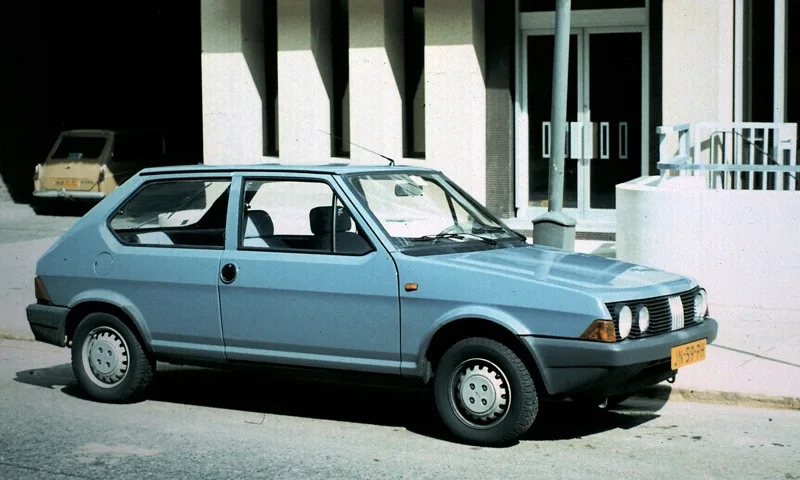
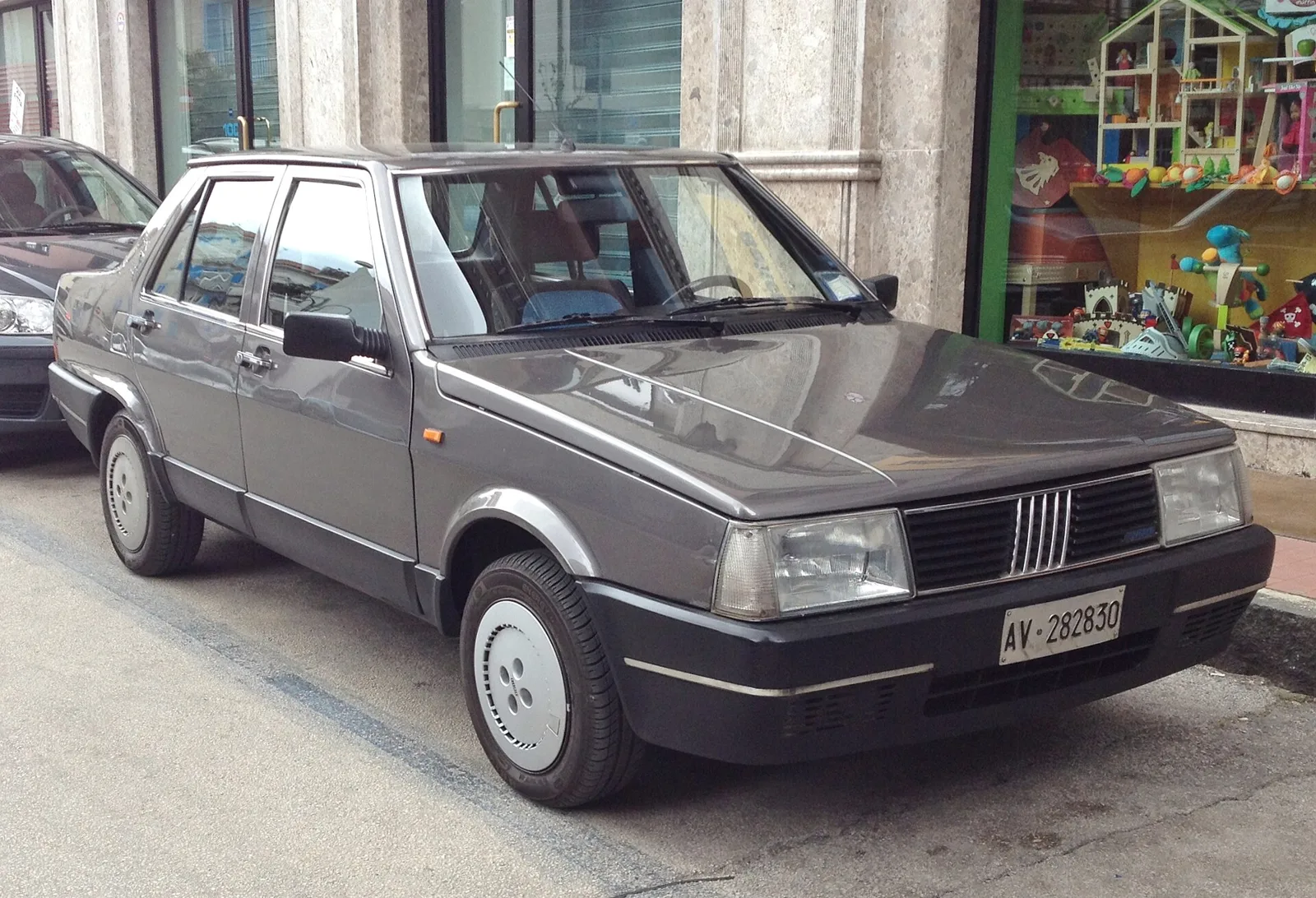
Fiat built the Regata from 1983 until 1990 as the sedan and station wagon version of the Ritmo hatchback. Frankfurt hosted its September 1983 unveiling, and it grew from the pre-facelift Ritmo, the car sold in Britain and America as the Fiat Strada. Almost all of the mechanical parts carried over, though the wheelbase was stretched slightly. Fiat aimed higher on price and trim, following a trend among European makers who pushed the saloon versions of small hatchbacks upmarket, as the Ford Orion and Volkswagen Jetta did. Spain's SEAT made a similar saloon on Ritmo underpinnings, the Malaga, but the two cars were developed separately.
Styling was a conventional four-door, three-box shape that looked little like the first Ritmo, although it hinted at the 1982 facelift of that car. Regatta was also the name across South American markets, except Venezuela.
Regata engines and the early computer
Three petrol engines and two diesels were offered. The petrols were a 1301 cc four at 68 hp (50 kW), sold as the Regata 70, and a 1498 cc four at 82 hp (60 kW), the Regata 85, both single overhead cam. At the top sat a twin-cam 1585 cc four at 100 hp (74 kW), the Regata 100. The diesels were a 1714 cc four at 58 hp (43 kW), the Regata D, and from 1984 a 1929 cc version at 65 hp (48 kW), the DS. After fourteen months, about thirty per cent of Regatas built were diesels.
The 100 came with what Fiat called a check panel, an early onboard computer reporting fuel consumption, average speed, range and the best gear to be in. An economy model called the ES, for Energy Saving, went further. It had an early start-stop system that shut the engine off at idle, a 1301 cc engine tuned to 65 hp (48 kW) with higher compression and different valve timing, electronic ignition and aerodynamic tweaks. Apart from the cheapest versions, a five-speed manual was standard.
Weekend and Marengo
The Regata Weekend estate arrived in November 1984 with every saloon engine, though no automatic was offered. It replaced the 131 Panorama, which had stayed on sale beside the Regata. Its party trick was a folding rear bumper that eased loading and doubled as a seat strong enough for 150 kg (330 lb). A two-seater glazed van called the Marengo, sold only with the larger diesel, first appeared in Brussels at a commercial vehicle show in early 1985.
Updates, Argentina and the end
An April 1986 update changed many small details: new doors with a different window line, plus fresh door handles, grille, bumpers and wheel trims. Reshaped rain gutters helped cut the drag figure from Cd 0.37 to 0.35. Fuel injection transformed the 1585 cc engine into the 100S i.e., which became the 90 i.e. when fitted with a catalytic converter, while a catalysed, injected 1498 cc engine powered the 75 i.e. The diesel range gained the 80 hp (59 kW) Regata Turbo DS, while the 1714 cc unit shrank to 1697 cc yet gained power to 60 hp (44 kW). The Regata ended in Europe in February 1990, when the Tempra arrived.
Argentina kept it going. Sevel started building the car in 1985 and continued until 1995, with 56,789 made and limited exports to places such as Venezuela and Chile. There the Regatta was seen as somewhat upmarket, unlike in Europe. A November 1987 facelift brought the 2000 Twincam, which took the Croma's two-litre twin-cam engine with ten more horsepower than the 100S, plus a rear spoiler. Fiat claimed a top speed of 182 km/h (113 mph) and a 9.8 second sprint to 100 km/h. By the 1990 model year the Tipo's 1581 cc unit at 87 hp (64 kW) took over, and the Tempra replaced the car in Latin America in 1995.
One platform, several bodies, and a different name or engine wherever a market needed it.
What was the Fiat Tempra?
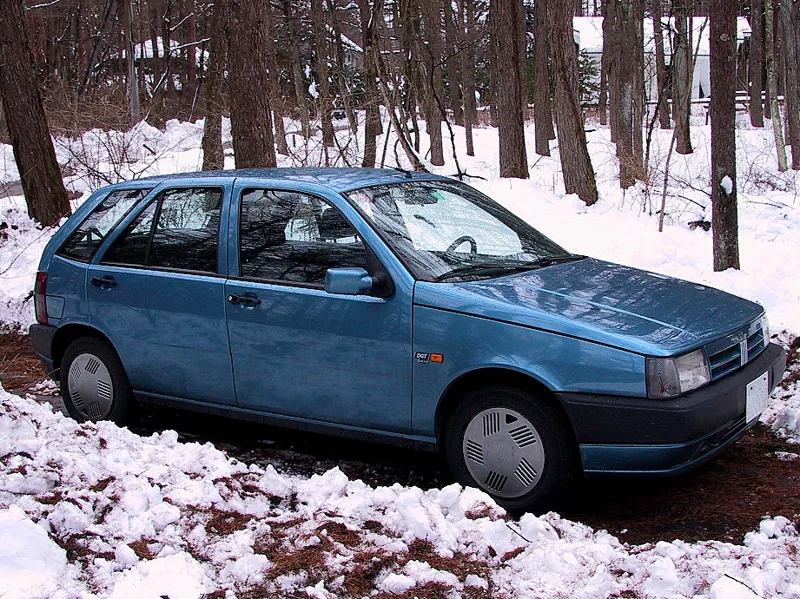
The Tempra, Type 159, was a small family car built in Italy from 1990 to 1996 as the Regata's replacement. Inside Fiat the project was called Tipo 3, sitting between the Tipo, which was project Tipo 2, and the larger Croma, project Tipo 4. Its Type Three platform also underpinned the Lancia Dedra and the Alfa Romeo 155, and it won the 1991 Semperit Irish Car of the Year title in Ireland.
Newspapers first showed the saloon in November 1989, and Fiat introduced it at the March 1990 Geneva Motor Show. The Tempra SW estate followed two months later in Turin. Early engines were 1.4, 1.6 and 1.8 petrols plus normally aspirated and turbocharged 1.9 litre diesels. Because of new European emission rules, the carburettor 1.4 and 1.6 models were dropped after 1992, and from 1993 every Tempra had a catalytic converter and electronic fuel injection.
Tempra gearboxes and four-wheel drive
A five-speed manual was standard. The option list included a continuously variable transmission, called Selecta, which Fiat said was a first on a midsize saloon. It had already appeared on the Uno, Panda, Ritmo and Tipo, and on the Tempra it came only with the 1.6 litre engine. From July 1991 the 2.0 litre SX could be had with a four-speed automatic. In March 1992 at Geneva, Fiat showed a permanent four-wheel-drive version, offered only as a two-litre station wagon, with a slight front bias of 56/44 per cent.
Over six years the car changed little. An April 1993 facelift brought a new grille, light styling changes and more trim levels. The doors and other main parts came from the Tipo, while the Lancia Dedra was its closest relative, sharing all mechanical components.
Trims and the Marengo van
Two trims existed in the early years, the standard S and the SX. The SX was well equipped for a cheap car: power windows and locks, an adjustable steering wheel, fog lights, bumpers painted in the body colour, velvet seats and a digital dashboard. Anti-lock brakes, alloy wheels, a sunroof and electronic climate control were optional. After the 1993 facelift the range ran from L, which in Britain came only with the 1.4, through S and SX to the top SLX, offered in Britain only with 1.8 and 2.0 litre engines.
Italy also had a panel-van Tempra called the Marengo, a name used before on the Regata van and later on the Marea Wagon. It was a stripped station wagon, with dark tinted rear glass, an empty load bay where the rear seats had been and, usually, a naturally aspirated diesel.
Where else was the Tempra built?
Brazil produced it from 1991 to 1998 for Latin American markets, after its introduction in Aruba in September 1991. Brazil alone received a two-door coupe, built from September 1992, with versions for any engine through 1994. A 2.0 litre turbo followed as the Tempra Turbo in two-door form from 1994 to 1995, and as the four-door Turbo Stile from 1996 to 1997. That engine made 165 PS (121 kW; 163 hp), and magazine tests of the two-door car in 1994 recorded 8.2 seconds to 100 km/h and 213 km/h (132 mph). It was only the second turbocharged series-production car in Brazil, after the Uno Turbo of the same year. In total Brazil built 204,795 Tempras in eight years. A Brazilian-built 16-valve Tempra also served as the Formula One safety car in 1993, most notably at the Brazilian Grand Prix.
Turkey's Tofas built the car from November 1990 until 1999, making 129,590. Its one-millionth car, of any model, was a Tempra 2.0 i.e. 16V. The Turkish 16-valve car, with a 148 PS (109 kW) engine, never went on sale in the rest of Europe. Mekong Auto in Vietnam assembled Tempras from kits until 2000.
Faults and strengths
The Italian magazine Quattroruote reported several faults. Water leaked in through the windscreen seals from 1990 to 1992 until the factory used more sealant. The 1,581 cc engine, shared with the Tipo and Panda, drank oil, and the problem disappeared with the new 1.6 litre unit. From 1994 some cars suffered electronic gremlins in the control unit, code key and wiring. A design flaw was also noted: the rear window was small and steeply raked and the tail tall, so rear visibility was poor. The 155 and Dedra shared the issue, and it was one reason the estate sold better than the saloon, especially in Britain.
The car had real strengths. A 55 kW 1.6 saloon managed an average range of about 920 km (572 mi) at 7.1 L/100 km, and 6.1 L/100 km at 90 km/h, rising to 8.6 L/100 km at 130 km/h. A drag coefficient of Cx 0.297 helped, and only 17.2 PS was lost to drag at 100 km/h, the best among its rivals. Tanks held 65 litres in the saloon and 70 L in the wagon. The galvanized structure resisted rust, the mechanics were seen as strong and reliable, and the cabin was comfortable for five on long trips.
European production stopped in August 1996, Brazilian in 1998. The Marea replaced it, built on the platform of the Bravo and Brava.
Fiat Bravo and Brava: two cars from one design
Type 182, the Fiat Bravo and Brava, ran from 1995 to 2003, or 2001 in Europe. In effect they were one car in two bodies: the Bravo a three-door hatchback, the Brava a five-door fastback. Fiat revived the Bravo name in January 2007 for an all-new five-door car replacing the Stilo. Americans had met the Brava name before, on the Fiat 131 of the 1980s.
They replaced the successful but ageing Tipo. In character they differed: the Bravo chassis was tuned for sharper handling, the Brava for comfort, and each had its own interior trim and many unique colours. Both earned two stars in Euro NCAP testing. They also won the European Car of the Year title on launch. The Italian advertising line said "La Scelta", or The Choice, a reminder that buyers could pick the sporty three-door or the practical five-door.
Bravo and Brava engines
Every engine was new. The base car used a 1.4 L 12-valve engine of 80 PS (59 kW). Above it came a 103 PS (76 kW) 1.6 L 16-valve, a 113 PS (83 kW) 1.8 L 16-valve and, in the HGT, a 2.0 L 20-valve five-cylinder with 147 PS (108 kW) and a top speed of 213 km/h. In 1999 the 155 HGT replaced the older version with 155 PS (114 kW). Two 1.9 L four-cylinder turbodiesels gave 75 PS (55 kW) and 100 PS (74 kW).
Peter Davis, then director of Fiat's Styling Center, said work began straight after the Coupe and the Barchetta, with a wish to break the rules. Jeremy Clarkson reviewed the pair on Top Gear in 1995, praising the looks, the rigid feel without squeaks and the quality of the switches.
Cousins, facelift and special editions
The platform spawned the Marea, a saloon and estate from 1996 that targeted Ford Mondeo and Opel and Vauxhall Vectra buyers and was praised for its big boot. In 1998 it also gave rise to the Multipla, a six-seat compact people carrier. A mild makeover came in 1999: the 1.4 gave way to the 1.2 16-valve from the Punto, the HGT gained variable valve timing and an intake system that lifted power from 147 to 155 PS, the dashboard was redesigned and the climate unit was swapped for the automatic one from the Fiat Coupe. The old turbodiesel was replaced by 1.9 JTD units rated at 105 PS (77 kW). The pair were discontinued in 2001 in favour of the Stilo.
Fiat made many special editions. The 1997 Anniversaire, limited to 1,100 pieces, marked the pair's 1996 Car of the Year win. Others included the Evening Vale, Formula, Suite, Trofeo and Yellow, ending with the Steel, a farewell edition in October 2001 for Western Europe. Fiat also offered Abarth accessories for the Bravo from the end of 1999, with more aggressive wheels and a bodykit; performance matched the 2.0 HGT. It was built from 2000 to 2002. Brazil produced the Brava from September 1999 to 2003, with the 106 PS (78 kW) 1.6 16v and a 1.8 16v HGT in 127 PS (93 kW) and 132 PS (97 kW) forms.
What was the Fiat Linea?
The Linea, Type 323, was a compact sedan built from 2006 to 2018 and released on 26 March 2007 from the Tofas factory in Bursa, Turkey, and pitched as a world car for developing countries. It was based on the Grande Punto. Fiat Style Centre designed it, Tofas, the joint venture between Fiat Group and Koc Holding, co-developed it with Fiat do Brasil, and Turkish production ended in 2016.
Its wheelbase of 2,603 mm (102.5 in) and length of 4,560 mm (179.5 in) were 100 mm (3.9 in) and 500 mm (19.7 in) longer than the Grande Punto's, and only 111 mm (4.4 in) shorter than the Viaggio, a C-segment compact sedan.
The Linea in Turkey, Brazil and India
The Turkish launch offered a 1.4 Fire petrol and a 1.3 Multijet diesel, with a 120 PS 1.4 TurboJet and a 105 PS 1.6 diesel to follow. The Bursa plant mostly served the local market, while finished cars went to the European Union and kits to Russia, for the Fiat-Sollers joint venture's plant in Tatarstan.
Brazil received the Linea in September 2008 with a 1.9 L 16v Torque engine of 132 PS (97 kW; 130 hp) that ran on petrol or ethanol, and a petrol-only 1.4 T-Jet of 152 PS (112 kW; 150 hp), the same engine as the Grande Punto Abarth. For the 2011 model year Fiat replaced the Torque unit with a 1.8 16v E.torQ flex-fuel engine, derived from the older 1.6 Tritec that also powered the Mini Cooper and Chrysler PT Cruiser. Capacity rose from 1598 cc to 1747 cc, and torque from 183 N-m to 185 N-m, though performance barely changed. Fiat used E.torQ alone in Latin America as a strategic choice.
India got the car in January 2009 with a 90 PS (66 kW; 89 hp) 1.4 Fire petrol and a 93 PS (68 kW; 92 hp) 1.3 Multijet diesel, and 65% of the parts were Indian-made. A 1.4 T-Jet with 114 PS (84 kW; 112 hp) arrived on 8 October 2010. That version made 207 N-m of torque at 2,200 rpm, needed 10.2 seconds to reach 100 km/h and topped out at 200 km/h (124 mph). The Indian T-Jet had 16-inch alloy wheels, 185 mm (7.3 in) of ground clearance and Italian leather seats. The car marked Fiat's comeback in the country. South Africa received it in September 2009.
The Linea sat in the upper B segment in Brazil and India, against the likes of the Honda City, Ford Fiesta and Hyundai Accent or Verna, along with the Toyota Yaris sedan and Citroen C-Elysee. In Brazil it also aimed at the market leaders, the Honda Civic and Toyota Corolla, and Fiat created the L'Unico Club for owners, with exclusive phone lines, event invitations, collect-and-deliver servicing and a three-year warranty, the longest of any Fiat in Brazil. In India it came with Fiat First, a roadside assistance programme launched on 15 October 2009.
Cabin technology included a hands-free phone system, Blue&Me, which could read text messages aloud. In Brazil an optional version, Blue&Me Nav, added navigation, making the Linea the first car there with an integrated GPS system.
Fiat's family cars side by side
| Model | Built | Based on | Notable engine or feature | Where else it was built |
|---|---|---|---|---|
| Regata | 1983 to 1990 | Ritmo | 1585 cc twin-cam, 100 hp (74 kW) | Argentina, to 1995 |
| Tempra | 1990 to 1996 | Type Three platform, with Lancia Dedra and Alfa Romeo 155 | Permanent four-wheel drive; Selecta CVT | Brazil, Turkey, Vietnam |
| Bravo and Brava | 1995 to 2003 (2001 in Europe) | Replacement for the Tipo | 2.0 L 20-valve five-cylinder, 155 PS (114 kW) from 1999 | Brazil (Brava) |
| Linea | 2006 to 2018 | Grande Punto | 1.4 T-Jet, 152 PS (112 kW) in Brazil | Turkey, India, Russia (kits) |