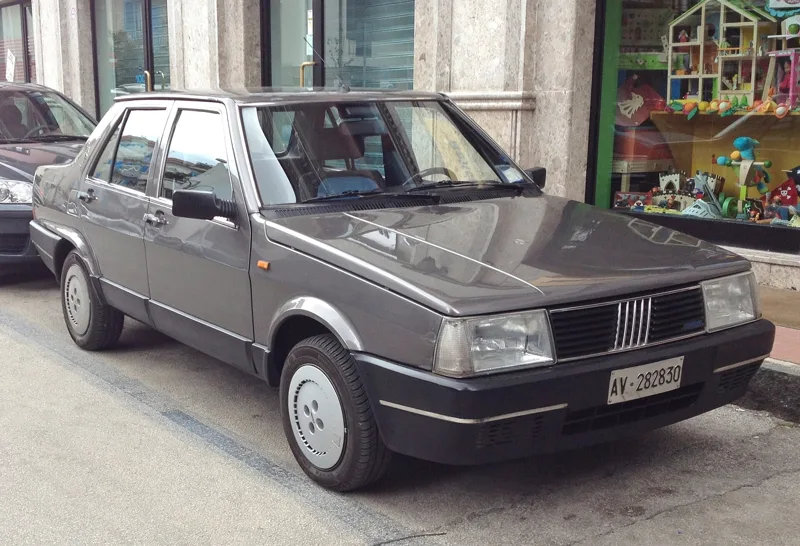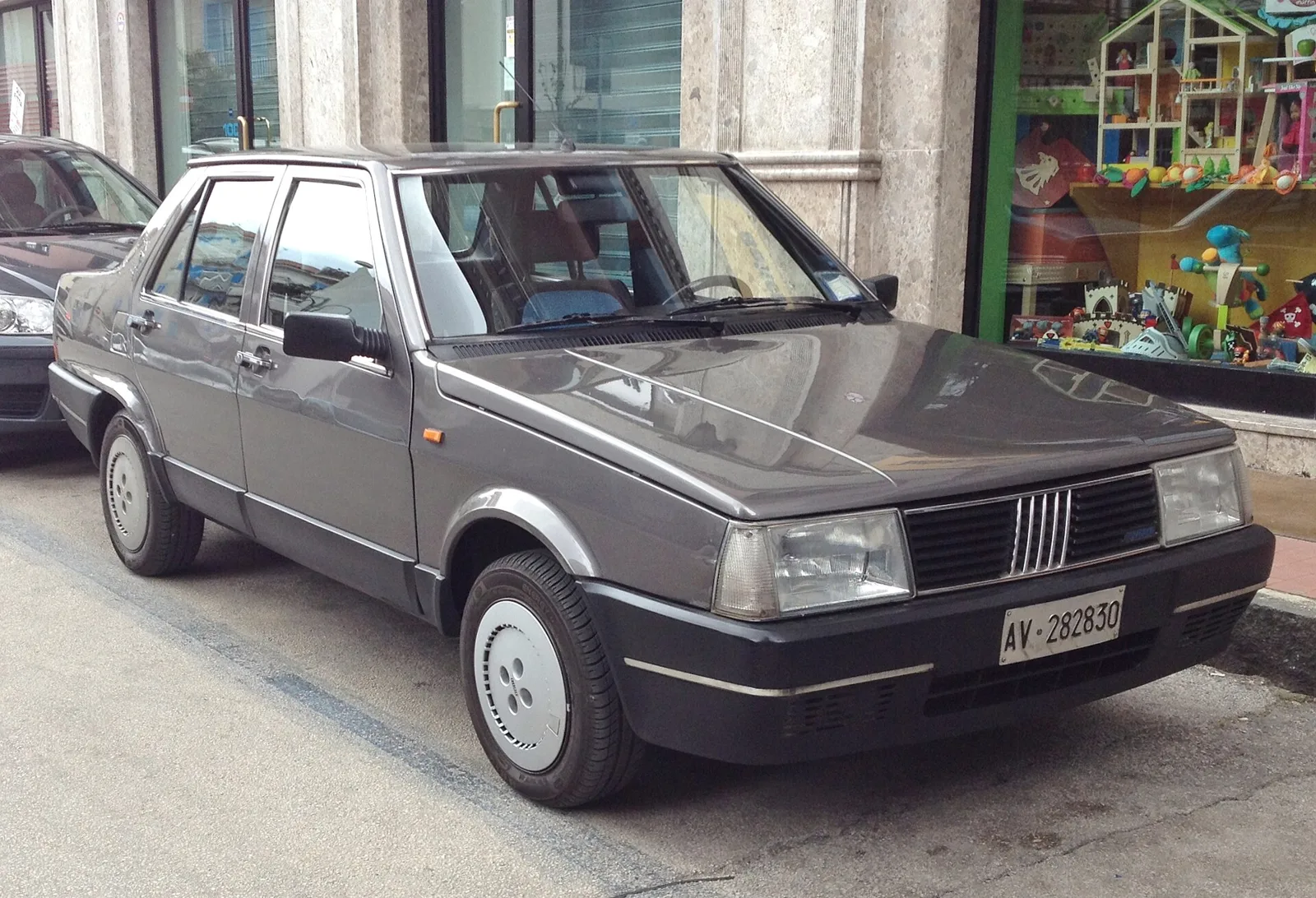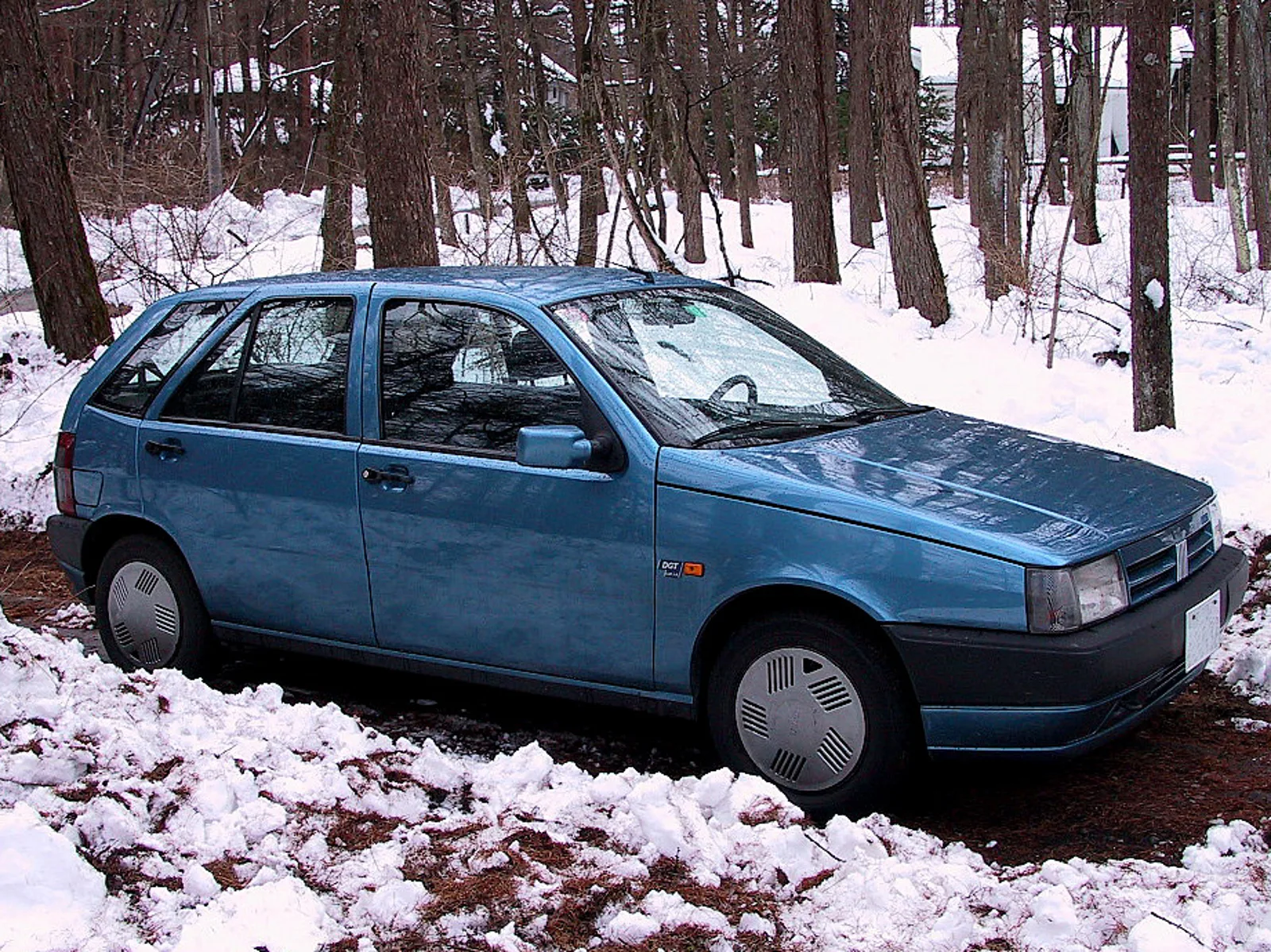
Fiat's boxy, rust-resistant Tipo and Renault's Giugiaro-styled 19 arrived in 1988 with very different engineering priorities and very different fates.
The Fiat Tipo was a boxy compact that Fiat built from 1988 to 1995, and it was a 1989 European Car of the Year. The Renault 19 was a small family car built by Renault from 1988 to 1996, styled by Giugiaro and sold as a hatchback, saloon and convertible.
The Fiat Tipo and the Renault 19 were both family hatchbacks that reached showrooms in 1988, and both were meant to replace ageing models. The Tipo was a boxy car built largely from galvanised panels, while the 19 was a Giugiaro design that leaned on comfort and handling. Set side by side, they show two European makers taking very different routes to a similar market.
When did the Tipo and the 19 reach the market?
The Tipo was unveiled in January 1988 and went on sale across Europe that June, with right-hand drive cars reaching Britain from 16 July. The Renault 19 was presented in June 1988, with French sales starting that September and right-hand drive versions for Britain following in February 1989.
The 19 replaced the Renault 9 and 11, which had both grown outdated by the end of the 1980s. Its arrival gave Renault a more modern family car in a sector where its rivals were already moving forward.
The Tipo was designed by the I.DE.A Institute, and its body was built largely from galvanised panels to resist rust. Its platform was new and later also served Alfa Romeo and Lancia models.
A boxy, rust-resistant Italian packager against a Giugiaro-styled French hatchback built for comfort and handling.
How did the two cars look and pack space?
The Tipo's boxy styling gave it packaging that was unusually generous for its size. Its rear passenger room was greater than that of a rear-drive Ford Sierra, yet the car was about the size of a Ford Escort.
The 19 took a more conservative approach. Its exterior was muted and similar in spirit to the earlier Renault 9 and 11, but its interior was praised for comfort, handling and better quality than previous Renaults.
The 19 Chamade saloon followed in 1989 to distinguish the saloon from the hatchback. Many markets dropped the Chamade badge after the 1992 facelift, and some used a Europa tag instead.
What engines did each car offer?
The Tipo covered 58 to 148 PS across petrol and diesel engines, from a 1.1 base unit to the 2.0 Sedicivalvole. The base 1.1 was widely regarded as underpowered, while the 2.0 used a Lancia Thema engine in a much smaller bodyshell and reached a top speed of around 130 mph (210 km/h).
The 19 used Renault's Energy engines, and the 16S arrived in autumn 1990 with a 16-valve unit. Renault claimed 8.2 seconds to 100 km/h for the non-catalysed 140 PS car, while the catalysed version made 137 PS and reached 215 km/h (134 mph).
A turbocharged diesel joined the 19 in early 1992, and a four-speed automatic became available on the fuel-injected top versions from autumn 1990. Those options gave the 19 a broader range than the Tipo's early line-up.
How did the two cars win awards?
The Tipo won the 1989 European Car of the Year title, and it also took the 1989 Semperit Irish Car of the Year award. Its success came early in its life, when the car was still new to buyers across the continent.
The 19 earned honours of its own, taking Car of the Year in Spain and Germany in 1989, in Ireland in 1990 and in Argentina in 1993. Those national awards showed how well the car was received in several markets.
In West Germany the 19 was the best-selling imported car in 1990, and it held that position in reunited Germany from 1991 to 1994. Few French cars had found that kind of success in the German market.
How did sales develop in Britain and Brazil?
The Tipo entered Britain in a favourable market, since none of the big three carmakers had launched an all-new car of its size for some years. Within about three years, however, Ford, Vauxhall and Austin Rover had new rivals of their own, and the Tipo's sales slipped.
In Brazil the imported Tipo was the best-selling import car in 1994 and 1995, and it reached fifth place in overall sales in 1995. Numerous fires in Italian-made Tipos from June 1995 then damaged the car's reputation severely.
Local production in Brazil began in December 1995, but the locally built car was more expensive and sales in 1996 dropped by 83 percent. Fiat announced in March 1997 that production would cease, while the Tempra stayed in production until 1999.
What came after each car?
The Tipo's Italian production ended in the summer of 1995, when the three-door Bravo and five-door Brava replaced it. The Tempra saloon and estate were replaced by the Marea in 1996, which disappointed in most markets.
The 19 was sold in most of Europe until 1996, and its platform and running gear carried over into the first generation Renault Megane, which lasted for seven years. The 19 also remained in production in Turkey and Argentina until 2000.
The Tipo platform spawned several derivatives, including the Yugo Sana, the Lancia Dedra and the Alfa Romeo 155. That breadth of use made the platform one of the more successful Fiat engineering investments of its era.
How do the two cars compare side by side?
| Feature | Fiat Tipo | Renault 19 |
|---|---|---|
| Launch | Unveiled January 1988; Europe June 1988 | Presented June 1988; French sales from September 1988 |
| Body styles | Five-door hatchback, three-door added 1993 | Three- and five-door hatchback, Chamade saloon, Karmann convertible |
| Design | I.DE.A Institute; galvanised panels | Giorgetto Giugiaro |
| Engines | 58 to 148 PS; 2.0 Sedicivalvole | Energy 1.4 and 1.7 litre petrol; 16S with 16 valves |
| Top speed, sporting | About 130 mph (210 km/h) | 215 km/h (134 mph), catalysed 16S |
| Awards | European Car of the Year, 1989 | Car of the Year in Spain and Germany, 1989 |
| Production ended | Italy 1995; Brazil 1997 | Most of Europe 1996; Turkey and Argentina to 2000 |
| Successor | Bravo and Brava (1995) | Megane (1996) |
Tipo buyers also had a tidy range of trims, from the base car to the sporty 16v, which helped the model reach a broad audience across Europe.
Which buyer suits each car?
On the facts given, the Tipo suits a buyer who valued roomy packaging and a rust-resistant body, while the 19 suits a buyer who wanted comfort, handling and a choice of engines. Each car answered a different set of priorities.
Tipo buyers could choose a 2.0 Sedicivalvole with real performance, though the 1.1 base engine was underpowered. The digital dashboard on higher-end models proved controversial and unreliable, which tempered the car's appeal.
19 buyers got a more conservative look and a better reputation for interior comfort, with the 16S as the sporting option. The car's wide range of engines and body styles gave buyers more to choose from over its life.
Neither car is shown to be better overall, and no combined production total is given for the Renault 19. The choice depends on whether a buyer wants a boxy Italian packager or a comfortable French hatchback.