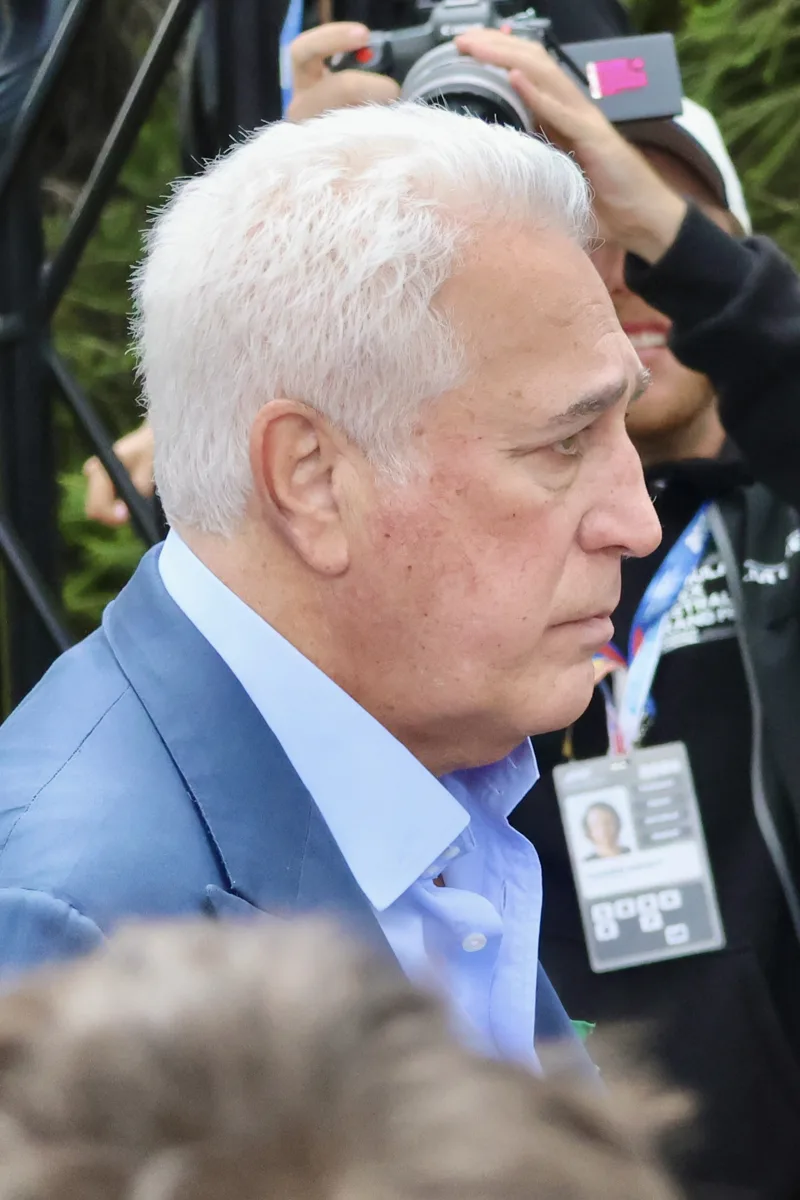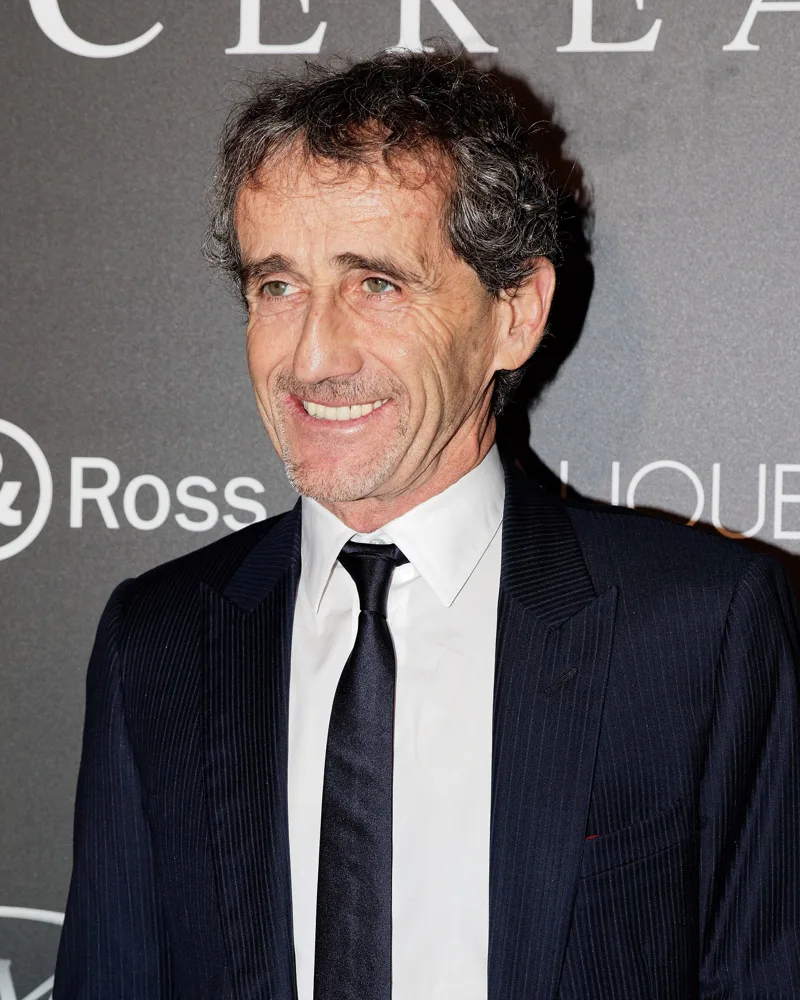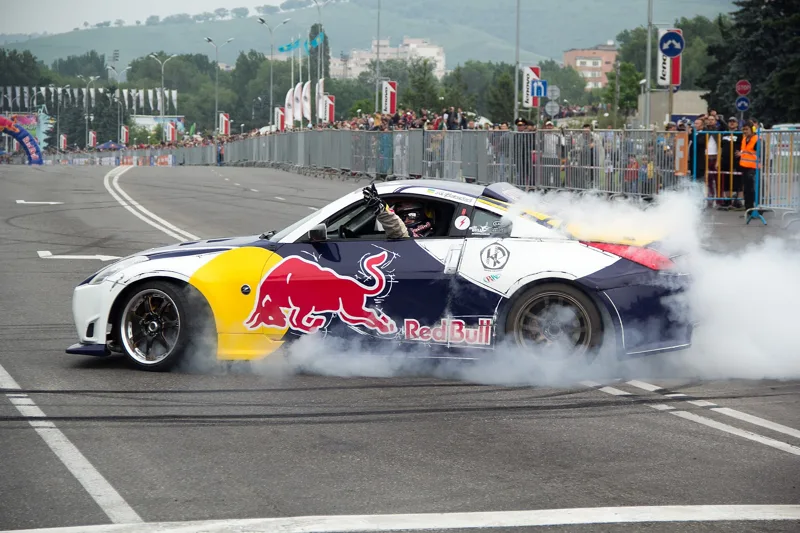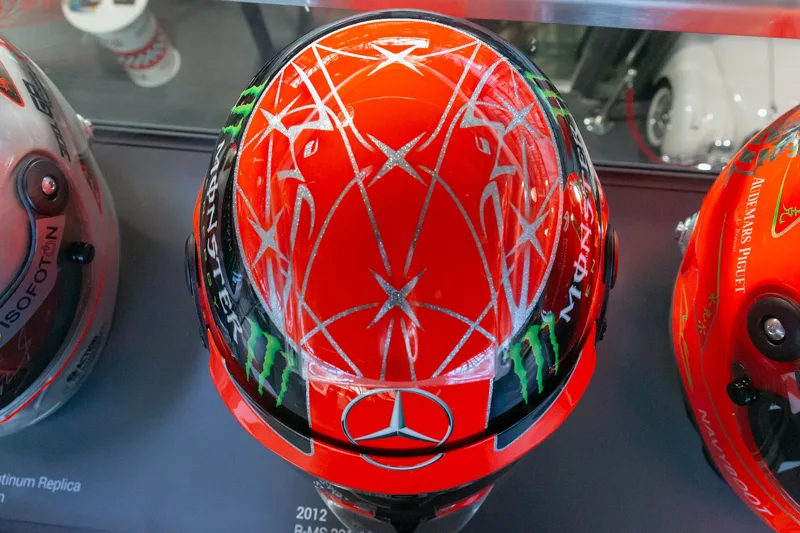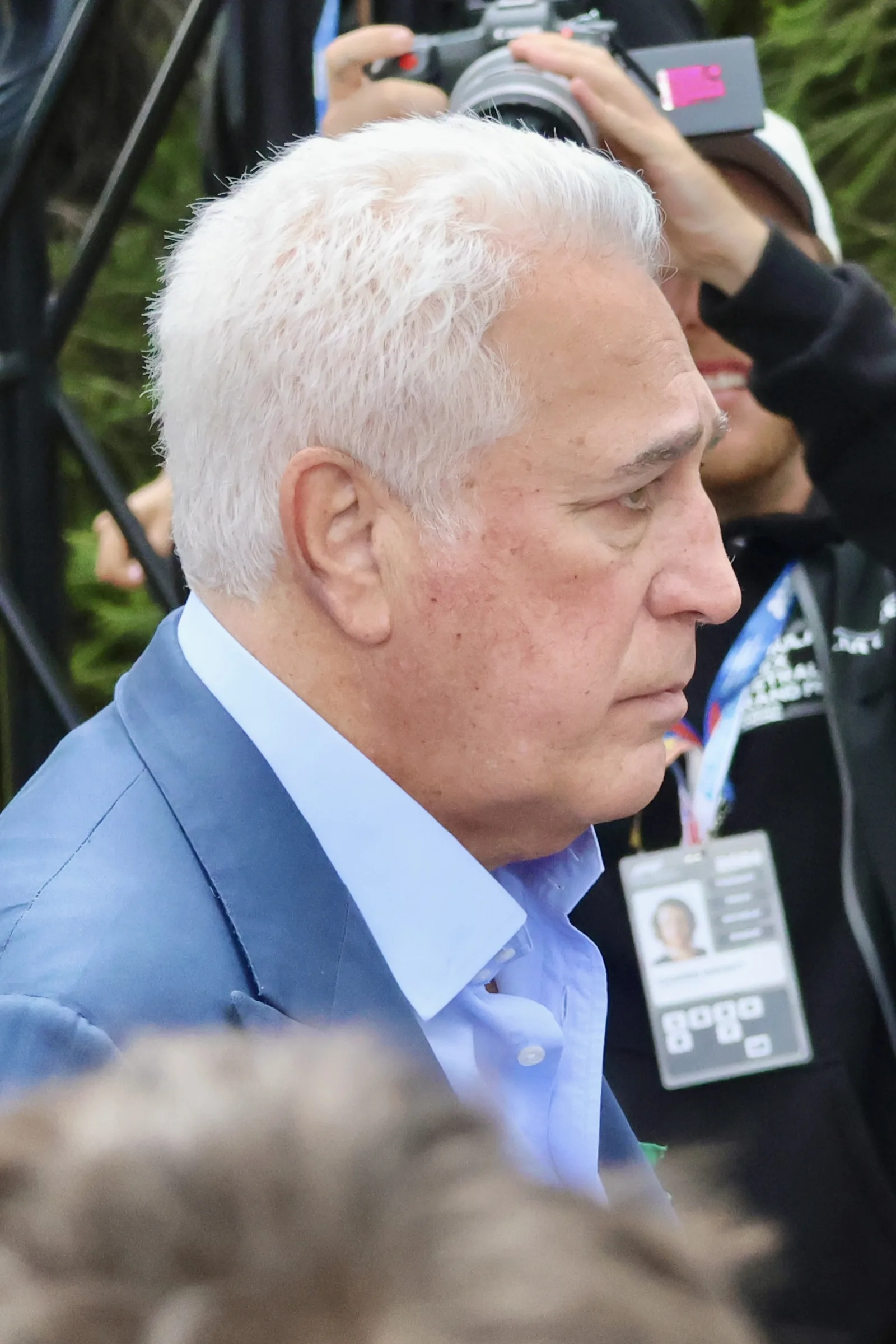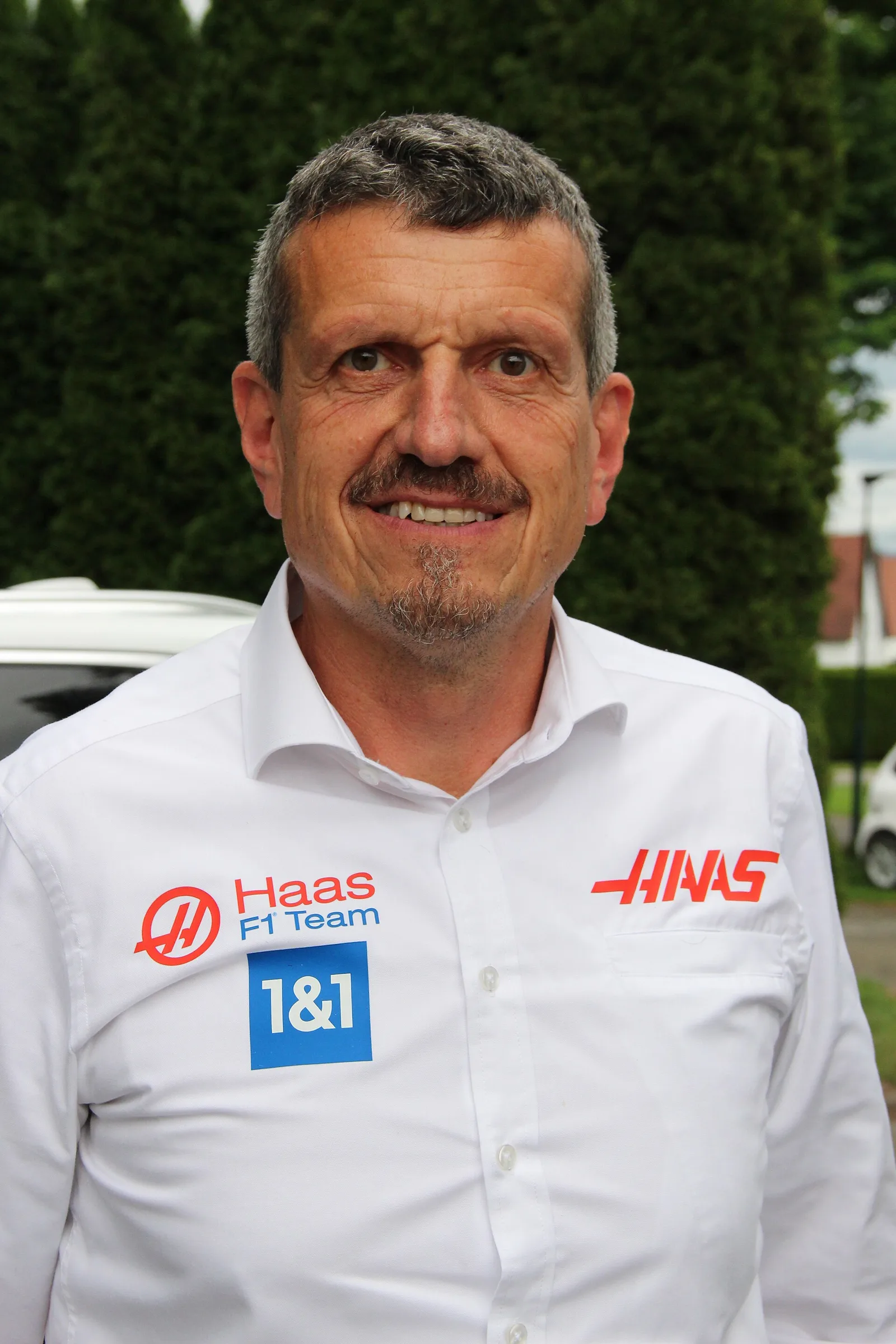
A team principal who built McLaren, an engineer who turned a cast-off Honda into world champions, a rally mechanic who launched an American team and the dealmaker behind the Paddock Club.
Ron Dennis led McLaren as team principal from 1981 to 2009, Ross Brawn masterminded titles at Benetton, Ferrari and Brawn GP, Guenther Steiner launched Haas F1 and led it from 2016 to 2023, and Paddy McNally founded Allsport Management, which ran advertising and the Paddock Club.
In March 2009 a Formula One team that its own manufacturer had abandoned was bought outright, renamed after the man who ran it, and went on to win both world championships in the same season. The deal was completed on 5 March, and the man at the centre of it was Ross Brawn.
Brawn is one of four people whose careers cover very different corners of the sport. Ron Dennis built McLaren from the team principal's chair. Guenther Steiner came up through rallying before Jaguar, Red Bull and finally his own American team. Paddy McNally sold the trackside advertising and ran the hospitality at grands prix. Between them they explain how a grand prix team is built, run, sold and watched.
Ron Dennis and the rebuilding of McLaren
Ron Dennis grew up in Woking and in 1966, aged 18, started as a mechanic at Cooper, where the lead driver was Jochen Rindt. He followed Rindt to Brabham in 1968 and stayed on with Sir Jack Brabham himself when Rindt left for Lotus a year later.
Brabham retired in 1971, and that was the cue for Dennis and a colleague, Neil Trundle, to run a team of their own. Rondel Racing began in Woking with little money and was winning in Formula Two by the middle of the 1970s, but an F1 car planned for 1974 died when the energy crisis damaged its sponsor's backing, and its other backers took the team over as Token Racing. Dennis simply started again. He founded Project Three in 1975 and Project Four Racing in 1976, and won championships in Formula 2 and Formula 3 in 1979 and 1980 with Philip Morris backing.
The way back into Formula One was a reverse takeover. McLaren's form had slumped badly, which led the Philip Morris executive John Hogan to start moves for Project Four to take the team over. The outfit became McLaren International with Dennis in control, and he hired the designer John Barnard to start work on a carbon fibre composite chassis, the MP4/1. The MP4 name began as Marlboro Project Four. When the title sponsor changed after 1997 the letters stayed, with the M now standing for McLaren, and the numbering lasted until 2017, when MCL replaced it after Dennis had gone.
From also-ran to front-runner
Dennis arrived at McLaren in September 1980. The team had not won a grand prix since James Hunt's victory in 1977. In 1981 he and his partners bought out the previous shareholders, Teddy Mayer and Tyler Alexander, and two years later Mansour Ojjeh joined as a partner. Ojjeh paid for Porsche-built turbo engines that carried the name of his company, TAG, and ended up with 60 percent of the shares.
Dennis also talked the retired Niki Lauda into a comeback for 1982. Alain Prost, sacked by Renault after criticising the team in public, replaced John Watson for 1984, and the Lauda-Prost pairing delivered. The Barnard-designed MP4/2 won 12 of 16 races, and Lauda took the drivers' crown by half a point from his team-mate. Prost won his first title in 1985 and a second in 1986.
By 1987 the TAG engine had lost its edge, so Dennis went after Honda, then supplying Williams and Lotus. Honda's unhappiness with Williams helped him, and so did Ayrton Senna, who had grown close to Honda at Lotus. Senna's three-year McLaren deal, starting in 1988, was announced midway through 1987.
The result was the most dominant season in the book. In 1988 McLaren won 15 of the 16 races and took 15 of the 16 pole positions. It scored a then-record 199 points, 134 clear of second-placed Ferrari. Senna took his first title, three points clear of Prost, with eight victories to the Frenchman's seven.
Managing two such drivers was a job in itself. Early in the 1988 Portuguese Grand Prix, Senna almost pushed Prost into the pit wall. In 1989 at San Marino, the pair agreed that the leader into the opening corner would be left alone; Senna outbraked Prost at Tosa anyway, and Hogan, who had been with the drivers when they made the pact, supported Prost's version. After winning at Monza, Prost dropped his trophy down to the Tifosi, and Dennis flung the constructors' trophy at his feet. It broke a Dennis rule that McLaren owns every trophy the team and its drivers win, with replicas available for the drivers. At the Japanese Grand Prix the "cold war" ended with the collision that took Prost out, got Senna disqualified and handed Prost his third title.
The Mercedes years
Senna won back-to-back titles in 1990 and 1991, but the following years were leaner. Honda power went in 1993, and Dennis had to haggle with Ford for a competitive supply before a disappointing partnership with Peugeot in 1994. In October 1994 he agreed terms with Mercedes-Benz for supply from 1995, a link that survived until 2014.
The first seasons were awkward. Nigel Mansell, brought in for 1995, did not even fit the car, so Mark Blundell stood in. Mika Hakkinen took on the leadership of the team, then was badly hurt in a crash at the close of 1995, though he made a full recovery. In 1996 Dennis approached Williams's star designer Adrian Newey, who agreed to become technical director, and in 1998 McLaren won both championships with Hakkinen. A second drivers' title followed in 1999, although Ferrari took the constructors' prize.
Dennis founded McLaren Cars in 1985, and the business later became McLaren Automotive, which he is credited with founding in 2010. Its flagship models include the McLaren F1 (1992), the SLR built with Mercedes-Benz (2003) and the P1 (2013).
Between them they explain how a grand prix team is built, run, sold and watched.
Ross Brawn: the strategist behind Schumacher's titles
Ross Brawn's route into motor racing was through a machine shop. Born in Ashton-under-Lyne in 1954, he joined the United Kingdom Atomic Energy Authority at Harwell as an apprentice in 1971, qualifying as an instrument mechanic. Frank Williams, whose team was based in Reading, advertised for a milling machinist, one of the skills Harwell had taught him.
His first motorsport job was at March Engineering in Bicester in 1976, and Frank Williams hired him in 1978. He rose through research and development with Frank Dernie to work as an aerodynamicist in the wind tunnel. After spells at the Haas Lola team, where Alan Jones and Patrick Tambay drove cars that much of the paddock rated the best-handling on the grid, and at Arrows, he joined the Jaguar sportscar division as lead designer of the XJR-14, which won the 1991 World Sportscar Championship.
Benetton and Ferrari
Brawn returned to Formula One in 1991 as technical director of Benetton. The team won consecutive drivers' titles in 1994 and 1995 with Michael Schumacher, and the constructors' title in 1995. Rory Byrne designed the car, but the specialist press gave Brawn much of the credit, especially for race strategy. He also persuaded Dernie to join Benetton.
He followed Schumacher to Ferrari in late 1996. Williams were the class of the field in 1997 and McLaren in the years after, yet Brawn's strategy kept Ferrari in the fight. In 1999 the team won the constructors' championship, the first of six in a row, and Schumacher took five consecutive drivers' titles from 2000 to 2004. Many label Brawn a vital part of a Ferrari "dream team" with Schumacher, Todt and Byrne. On 26 October 2006 Ferrari announced that Brawn was leaving.
Brawn GP and Mercedes
Brawn became Honda's team principal in November 2007. Honda's withdrawal from the sport, announced in late 2008, left him without a team, although he believed the car would be a winner in 2009. A buy-out of Honda was completed on 5 March 2009, with Brawn holding a controlling 54 percent and chief executive Nick Fry 31 percent. The team entered as Brawn GP, kept Rubens Barrichello and Jenson Button, and took Mercedes-Benz engines.
In Australia, Button qualified on pole with Barrichello second, and they finished in the same order. Over the 17 races Button won six and Barrichello two, with the team finishing first and second four times and making the podium in eleven races. Brawn GP clinched the constructors' title, and Button the drivers' title, at the Brazilian Grand Prix. Brawn was appointed OBE in the 2010 New Year Honours.
Daimler AG, the parent company of Mercedes-Benz, bought the team in November 2009, and Brawn stayed as team principal. Schumacher said that Brawn was the main reason he ended his retirement to drive for Mercedes.
The start was slow. Nico Rosberg gave the team its first podium with third in Malaysia in 2010, and the first win came on 15 April 2012, when Rosberg took the Chinese Grand Prix. Lewis Hamilton arrived for 2013, a season in which Rosberg won at Monaco but a tyre test for Pirelli in a current car led the FIA to reprimand Mercedes and ban the team from a young drivers' test, with no points lost. Mercedes finished second in the constructors' championship, and in late 2013 the BBC reported that Brawn would leave after a disagreement about his role.
After the pit wall
Brawn announced his retirement on 1 February 2014. His book on strategy, Total Competition, came out in 2016. On 23 January 2017 he took a new post as the Formula One Group's managing director of motor sports and its technical director, and on 28 November 2022 he confirmed his retirement.
Guenther Steiner and the making of Haas F1
Guenther Steiner was born in 1965 in Merano, in South Tyrol, the son of a butcher. He studied engineering without finishing the degree and moved to Belgium, where from 1986 to 1988 he worked as a mechanic for Mazda's rally team. In 1997 he ran Prodrive's Allstar Rally team to the European Rally Championship with Krzysztof Holowczyc, and by 2000 he was director of engineering for the Ford World Rally Team, with Colin McRae and Carlos Sainz driving.
Jaguar and Red Bull
Niki Lauda recruited him to Jaguar Racing in 2001. According to Steiner, Lauda asked whether Ford had any talented people and was pointed to him. He looked after the engineering side at Milton Keynes. In 2002 Eddie Irvine scored only eight points and Pedro de la Rosa none, and Ford dismissed Lauda on 26 November and made 70 team members redundant. On 5 December Jaguar announced that Steiner had been replaced by David Pitchforth, saying he had done nothing wrong. He declined another role and, after a year on garden leave, became technical director at the Opel Performance Center in November 2003.
Red Bull bought Jaguar in November 2004, and Steiner returned as technical operations director, working alongside team principal Christian Horner. When Red Bull hired Adrian Newey from McLaren, owner Dietrich Mateschitz asked Steiner to help set up a NASCAR team instead. He moved to Mooresville, North Carolina, and held the technical director's post at Team Red Bull between April 2006 and April 2008.
The kitchen-table team
Steiner has said the idea for an American F1 team started as a business plan written at his kitchen table as the late-2000s financial crisis hit. Over a meal at a steakhouse he put an idea to Joe Custer and Gene Haas, partners at Stewart-Haas Racing: buy a customer car from an established constructor. Delays in securing approval pushed them to apply as a privateer entry instead, and Steiner says Charlie Whiting, Jean Todt, Stefano Domenicali and Lauda were crucial in winning over Bernie Ecclestone.
Autosport called him "the prime 'doer'". He interviewed every team member and built partnerships with Dallara and Ferrari. He was announced as Haas F1 Team principal on 14 April 2014.
Haas arrived on the grid in 2016 as the first American constructor in F1 for 30 years. At the Australian Grand Prix Romain Grosjean finished sixth, scoring eight points, which made Haas the first team since Toyota in 2002 to score on its debut. By the end of the year the team was eighth in the constructors' standings with 29 points, all of them Grosjean's.
Steiner's blunt manner made him a star of the Netflix series Drive to Survive, and in 2023 he released a book, Surviving to Drive. In January 2024 Haas chose not to renew his contract and replaced him with Ayao Komatsu, the team's trackside engineering director. Legal disputes followed in 2024, including a Haas Automation action over trademark claims in his book that the court dismissed in September. A second book, Unfiltered, appeared in October 2024, followed by a live show touring the United Kingdom from November 2024 to June 2025.
Paddy McNally and the business of the paddock
Paddy McNally was born in Gravesend, Kent, in 1937. He started racing in 1959, mixing sports car, rally and endurance events through the 1960s with several notable wins but no great success, and from 1963 he also wrote about the sport for Autosport. Later he worked from Lausanne as a sponsorship consultant to Marlboro. He briefly managed Niki Lauda's affairs in the mid-1970s and, for Marlboro, looked after James Hunt from 1977 to 1979.
By 1983 he was working with Bernie Ecclestone, and in December of that year he set up Allsport Management SA in Geneva. Together with a related Irish-registered company, Allsopp Parker & Marsh, it owned the advertising rights beside the track at F1 venues and operated the Paddock Club, the hospitality arm of a grand prix weekend. Allsport also managed the podium ceremonies.
McNally sold Allsport to CVC in March 2006 for an undisclosed sum and stayed on as chief executive until he retired in 2011. He is regarded as a principal architect of modern commercial Formula One. The Sunday Times ranked him 20th on its Irish Rich List in 2017, with an estimated fortune of 718 million euros. He died on 22 July 2026, aged 88.
Four Formula One careers side by side
| Name | Born | Best-known role | Period | Headline result |
|---|---|---|---|---|
| Ron Dennis | 1 June 1947 | McLaren team principal, CEO and co-owner | 1981 to 2009 | Seven constructors' titles between 1984 and 1998 |
| Ross Brawn | 23 November 1954 | Technical director, then team principal and co-owner | 1991 to 2013 across four teams | Brawn GP won both 2009 titles |
| Guenther Steiner | 7 April 1965 | Haas team principal | 2016 to 2023 | First American constructor in F1 for 30 years; 29 points in 2016 |
| Paddy McNally | 20 December 1937 | Founder and chief executive of Allsport Management | December 1983 to 2011 | Ran trackside advertising and the Paddock Club |
What the four careers mean for fans and car buyers
Two of these careers reach straight into the showroom. McLaren's road-car arm exists because Dennis founded it, and the F1, the SLR and the P1 are its best-known flagships.
Brawn's mark is on two very different teams. Daimler's purchase of Brawn GP in November 2009 created the Mercedes team that Rosberg and Hamilton drove for, and Brawn's strategic thinking at Benetton and Ferrari earned him credit from the specialist press. Steiner's route into the sport was to build Haas around partnerships with Dallara and Ferrari.
Which of the four is still active in motorsport?
The four stories are at different stages. Brawn confirmed his retirement from Formula One in November 2022, and McNally died in July 2026. Steiner is the one still moving. In September 2025 he led the consortium that bought the Red Bull KTM Tech3 MotoGP team, and he is now its chief executive and owner. The consortium is financed by IKON Capital.