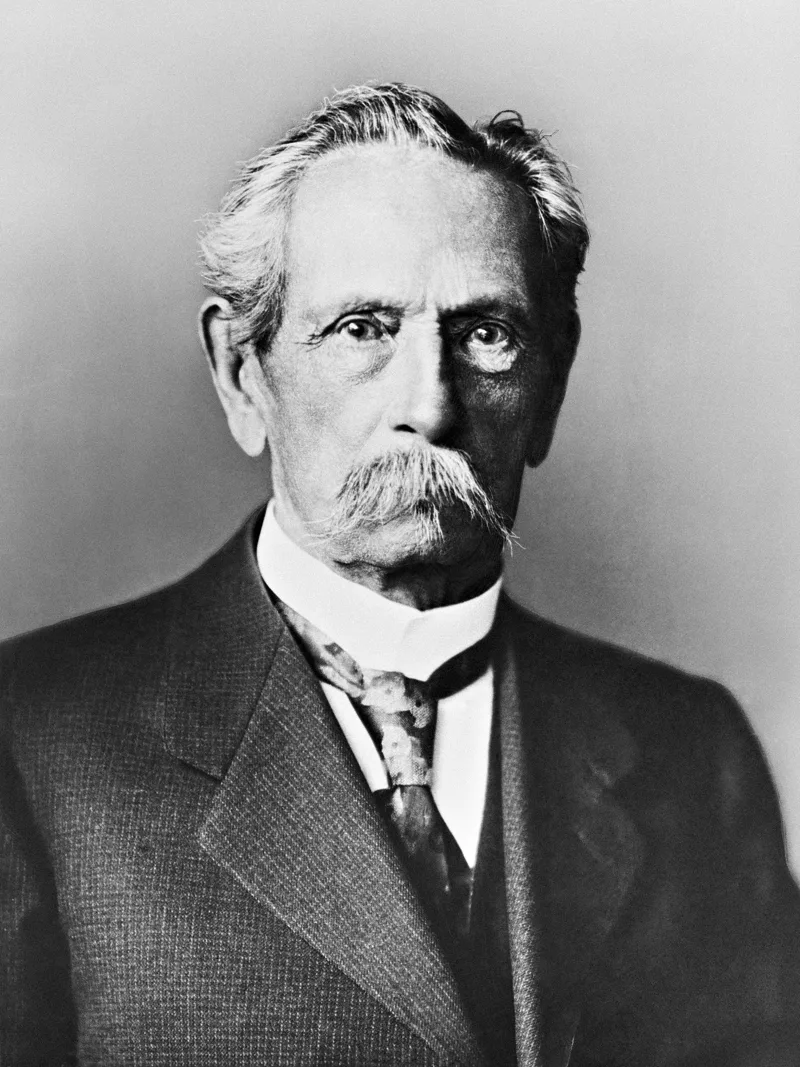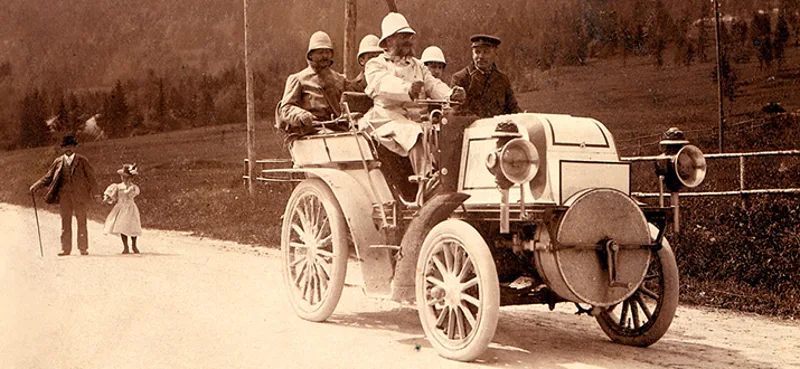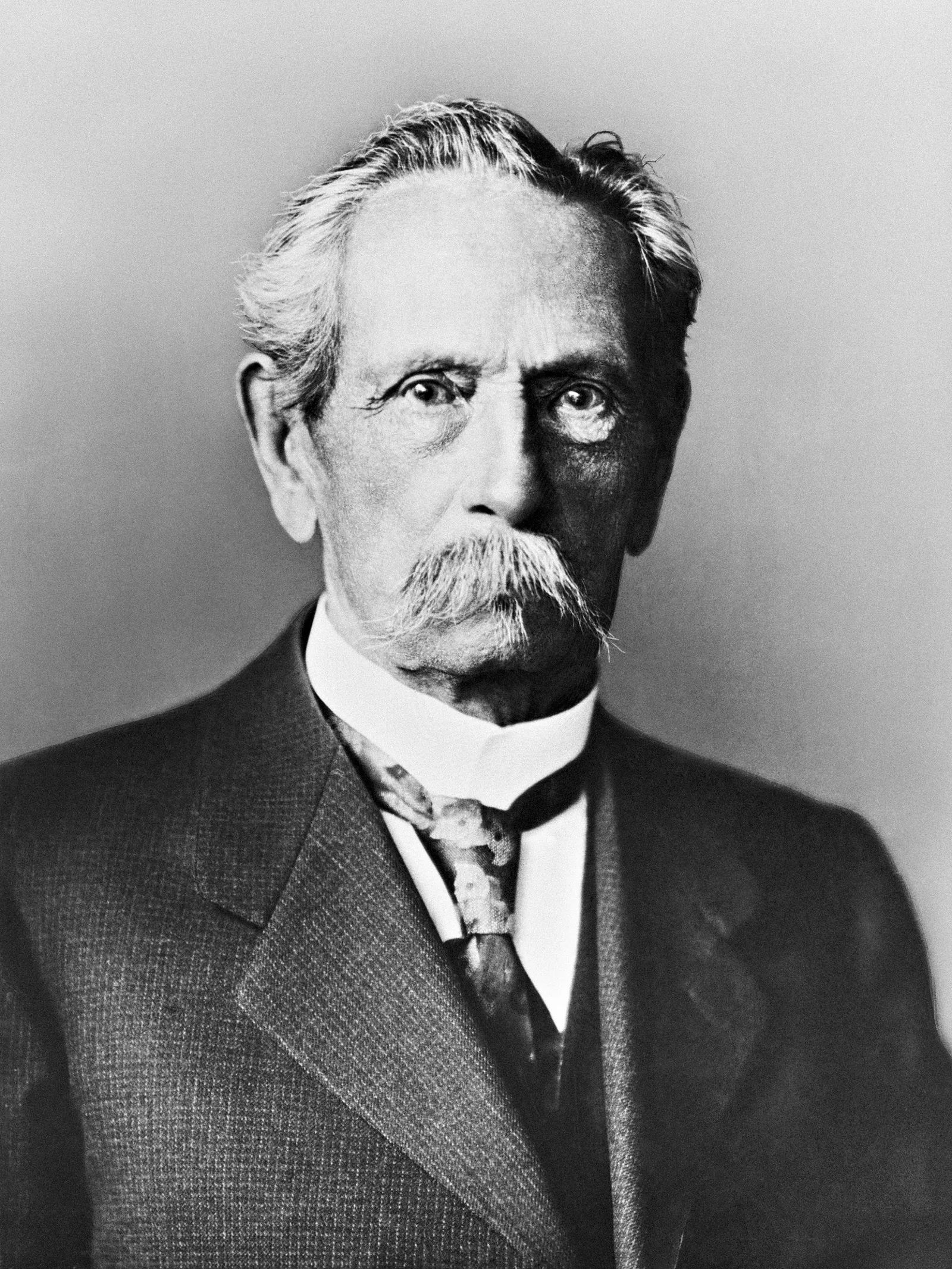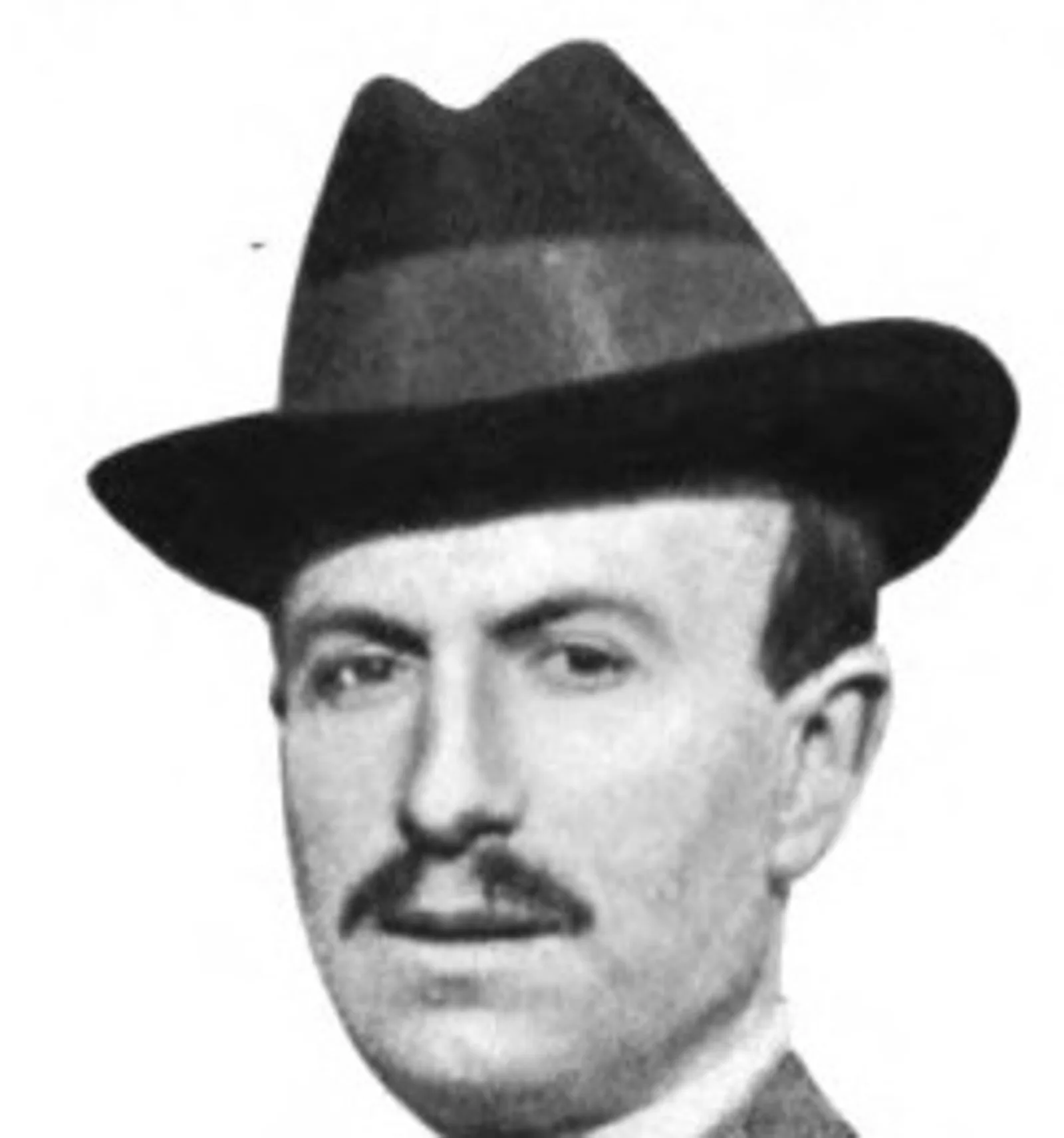
Three men who shaped early motoring: a Hamburg-born engineer, an Austrian consul on the Riviera and a Liverpool cyclist turned racing driver and car dealer.
Frederick Simms introduced the Daimler petrol engine to Britain, and he founded the Royal Automobile Club. Emil Jellinek ordered the Mercedes 35hp in 1900 and named it after his daughter. William Watson won the 1908 Isle of Man Tourist Trophy, then built the largest motor distributor in the north-west of England.
In June 1903 a 50-year-old Austrian consul shaved off his side-whiskers and changed his surname to his daughter's first name. Emil Jellinek had just seen a car he ordered take over the racing world, and the name he gave it, Mercedes, would become among the biggest car brands anywhere. He was one of three men, with Frederick Simms and William Watson, who shaped early motoring from very different directions.
Who were Frederick Simms, Emil Jellinek and William Watson?
Simms was a German-born British engineer who brought Daimler's engine to Britain and founded the Royal Automobile Club. Jellinek was an Austrian businessman and diplomat whose orders to Daimler produced the Mercedes. Watson was a Liverpool cycling champion who won the 1908 Isle of Man Tourist Trophy and built a motor-trade empire.
Jellinek wanted a car for the day after tomorrow, and the name he gave it outlived him.
Frederick Simms, Emil Jellinek and William Watson side by side
| Frederick Simms | Emil Jellinek | William Watson | |
|---|---|---|---|
| Born | 12 August 1863, Hamburg | 6 April 1853, Leipzig | 6 November 1873, Liverpool |
| Died | 22 April 1944 | 21 January 1918 | 5 August 1961 |
| Best known for | Bringing Daimler engines to Britain; founding the RAC and the SMMT | Commissioning the Mercedes 35hp and lending the name | Winning the 1908 Tourist Trophy; building a motor-trade business |
| Link to Daimler | British rights to the engine, from 1890 | Dealer and board member of DMG | Hired out second-hand Daimler cars from 1901 |
| Key year | 1896: Emancipation Day run | 1900: the Mercedes order | 1908: Little Dorrit wins |
How did Emil Jellinek end up selling cars on the Riviera?
By a long detour. Jellinek was born in Leipzig, the son of a rabbi, grew up in Vienna and left several schools early. At 17 he took a railway clerk's job and lost it two years later when managers found he had been staging late-night train races. Diplomatic posts in Morocco and Algeria followed, then insurance, and then Nice.
He sold Algerian tobacco on the side of his consular work, but it was insurance and stock-market dealing that made him rich enough to winter on the Riviera. As Austrian Consul General in Nice he began selling cars, mainly French ones, to the aristocrats who holidayed there. By 1897 he was moving about 140 a year from a mansion called Villa Mercedes, and the car trade now paid better than insurance.
The name came from his daughter Mercedes, born in Baden bei Wien on 16 September 1889. Her name is Spanish for favour or mercy, and Jellinek came to believe it brought luck, so he gave it to his properties as well as his cars. One of his sons likened his superstition to that of the ancient Romans.
What did Jellinek demand from Daimler?
A better car than the one he already owned. In 1896, at 43, he travelled to Cannstatt after spotting a Daimler advertisement, met Gottlieb Daimler and Wilhelm Maybach, and bought an 8 hp Phoenix Double-Phaeton capable of 24 km/h (15 mph). Maybach's four-cylinder engine for it, designed in 1894, was a first for any car.
Jellinek became a distributor, selling 10 cars in 1899 and 29 in 1900. French firms licensed to build Daimler engines, among them Peugeot and Panhard & Levassor, could not supply enough vehicles, and he beat their waiting times. Each March he entered the Riviera speed-week, which ran from a 90 km race at Nice-Castellane to a hill climb at Nice-La Turbie and a concours at Monte Carlo.
Using a pseudonym was normal in racing, so in 1899 he entered under the name Mercedes. The DMG-Phoenix won everything at around 35 km/h (22 mph), yet Jellinek was not satisfied. He bombarded the Stuttgart engineers with complaints, one of them describing their product as a chrysalis when he wanted the butterfly. Daimler was irritated. Maybach listened.
How was the Mercedes 35hp ordered?
On 2 April 1900 Jellinek and DMG agreed a deal worth 550,000 Goldmark, in which Maybach would design a sports car for 36 deliveries before 15 October, plus 36 standard 8 hp cars. Jellinek joined DMG's Board of Management and took exclusive dealerships for France, Austria, Hungary, Belgium and the United States.
The timing was odd. Only days earlier, on 30 March, a DMG engineer named Wilhelm Bauer had died at the Nice-La Turbie hill climb, and the company had decided to give up racing. Jellinek pressed on. His specification asked for a long wheelbase and wide track for stability, a lower centre of gravity, a better placed engine and Bosch electric ignition in place of a glow tube. He wanted, he said, the car of the day after tomorrow.
The name solved a legal headache too. Panhard & Levassor held the Daimler licences in France, so a car called Daimler-Mercedes got round the problem. The first example was handed over at Nice railway station on 22 December 1900, already sold to Baron Henri de Rothschild.
Did the Mercedes live up to the brief?
It did. In 1901 Jellinek won the Nice races again, easily beating rivals in every capacity class and reaching 60 km/h (37 mph). The head of the French Automobile Club, Paul Meyan, declared that the world had entered the Mercedes era, and newspapers around the world echoed the line.
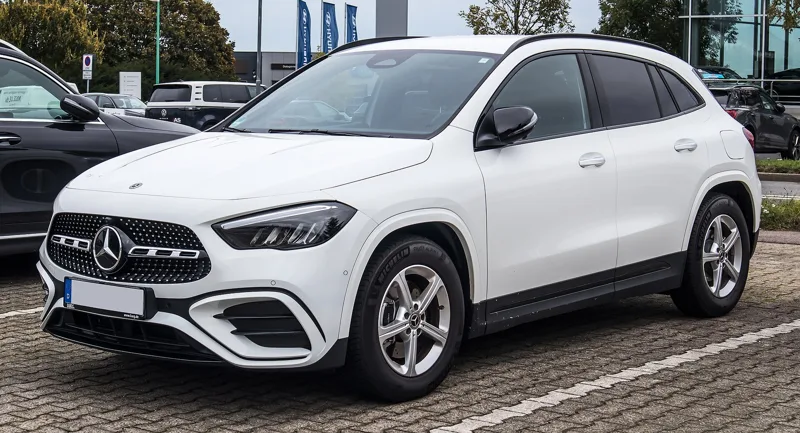
DMG's order book grew until its Stuttgart plant ran full. Staff numbers rose from 340 in 1900 to 2,200 in 1904. The company decided on 23 June 1902 to use Mercedes as the trademark for all its cars and registered it on 26 September. The car is described as the first modern automobile, and the trademark grew into Mercedes-Benz.
Six hundred Mercedes models were sold by 1909, and Jellinek supplied all 150 members of the Automobile Club of Nice. Yet he tired of demanding aristocratic clients and called DMG's technical staff "those donkeys". Maybach left DMG in 1907, and in 1908 the chairman cancelled Jellinek's contract for good.
What happened to Jellinek after the Mercedes boom?
Diplomacy took over. He served as consul general in Nice, Mexico and Monaco, and in 1909, in Monte Carlo, he ended his commercial activities, though he bought a few casinos. His French properties were taxed by the Austrian government just before the First World War, and he spent the war years on the move, accused of spying for Germany and briefly arrested again in Geneva.
Jellinek died in Geneva on 21 January 1918, aged 64. Since 1982 his remains have rested near the tomb of his first wife Rachel in Nice. In 1926, eight years after his death, DMG merged with Benz to form Daimler-Benz, and its cars were called Mercedes-Benz. Daimler-Benz bought Chrysler in 1998 and traded as DaimlerChrysler until August 2007. Today the firm is the Mercedes-Benz Group.
Who was Frederick Simms and what did he bring to Britain?
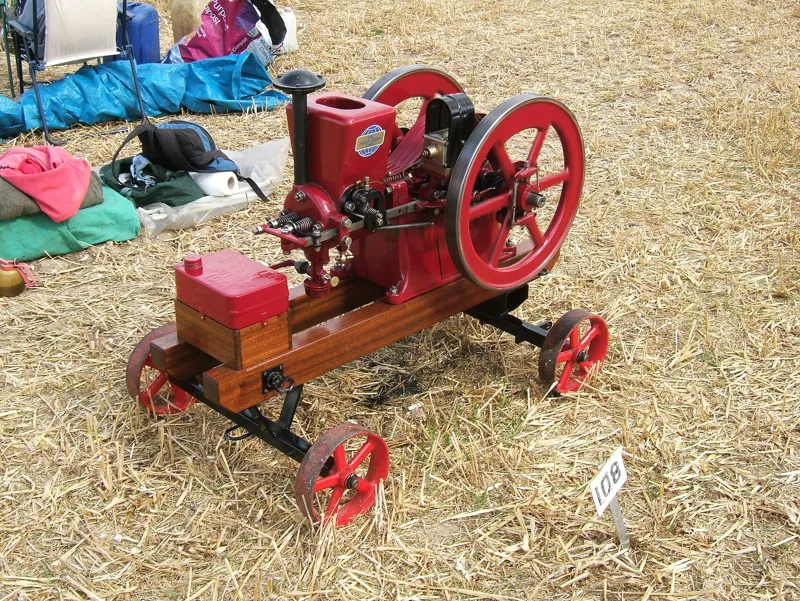
Simms, born in Hamburg in 1863 of an old Warwickshire family, was a mechanical engineer and prolific inventor who coined the words "petrol" and "motorcar". In 1889 he befriended Daimler, and in 1890 he bought the rights to Daimler's high-speed petrol engine for the British Empire, excluding Canada.
The engines went first into motor launches, which Simms demonstrated on the Thames in May 1891. In May 1893 he formed The Daimler Motor Syndicate Limited, possibly Britain's first motor company. After Daimler-powered Peugeots and Panhards did well in the 1894 Paris-Rouen trials, he decided to open a car factory, and in June 1895 he and Evelyn Ellis imported one of the first petrol cars to reach the country.
Harry Lawson bought the Syndicate in early 1896. Simms became a director of Stuttgart's Daimler Motoren Gesellschaft that year but, perhaps wisely, stayed off the board of Lawson's British company, remaining its consulting engineer.
What was the Emancipation Day run?
On 14 November 1896 Simms and Daimler joined a procession from London to Brighton, organised with Lawson, to celebrate the end of the speed limit set by the Locomotives Act 1865, which had capped vehicles at 4 mph (6.4 km/h). The London to Brighton Veteran Car Run replays the drive every year.
In 1897 he set up the Automobile Club of Great Britain, which became the RAC, and helped with what became the Royal Aero Club. In 1902 he started the Society of Motor Manufacturers and Traders and was elected its first president. His Motor War Car, ordered in April 1899, was the first armoured car ever built, though Vickers, Sons & Maxim only finished the single prototype in early 1902, after the Second Boer War had ended.
How did Simms and Bosch change ignition?
Simms worked with Robert Bosch on the Simms-Bosch magneto, which let designers time ignition precisely because it turned with the engine. Their first low-tension version fell short, but they went on to build the first practical high-tension magneto. A jointly owned company founded in 1899 foundered in 1906 over personal differences between the partners.
In 1907 Simms started the Simms Magneto Company to build magnetos under Bosch licence, but could not compete on European prices, and it closed in 1913. Even so, he had pushed Bosch's product development and opened the French market for the firm.
Simms Motor Units, founded in 1913, became the principal magneto supplier to the armed forces in the First World War and did so again for aircraft and tanks in the Second. Its East Finchley factory reached 300,000 square feet (28,000 m2). Lucas CAV took the company over in 1968, and the plant closed in 1991 and gave way to housing, with Simms Gardens and Lucas Gardens as reminders.
Earlier, in 1900, Simms had set up Simms Manufacturing Company in Bermondsey. It moved to Welbeck Works in Kilburn in 1902, where it made Simms-Welbeck cars, lorries, marine engines and fire engines until about 1908. He also invented the first rubber bumper.
Who was William Watson, the Liverpool cyclist who won the Tourist Trophy?
Watson, born in Liverpool in 1873, was the youngest child of a milk dealer. He won a scholarship to Liverpool College, worked as a solicitor's clerk and then gave up law for racing bicycles. After becoming 25-mile cycling champion at New Brighton, he opened Watson & Dickinson in 1897, fitted imported De Dion-Bouton petrol engines to tricycles, and by 1900 was selling a two-seater called the W & D Quad.
W Watson & Co came in 1901, and the same year he started a public hire service between Chester and Farndon. Chester's first motor Hackney Carriage licence, among the earliest anywhere in the country, let him run six second-hand chain-driven Daimlers for about a year. Touring parties also hired them from his Liverpool depot for trips as far as Devon and Cornwall. Reliability was poor, as it was for every car of the day.
How did Watson win the 1908 Tourist Trophy?
He bought a car called Little Dorrit from Selwyn Edge in August 1908 and won the Tourist Trophy, known as the Four Inch race, on 24 September. The 34-year-old and his mechanic covered 337 miles in under seven hours at an average of 50 mph, in a 5.8-litre four-cylinder Hutton-Napier.
The Hutton badge existed because Edge was promoting six-cylinder Napiers and did not want his name tied to a four. Watson started from pole. To keep the engine from overheating on the Manx hills he coasted downhill in neutral, which took nerve when only the rear wheels had brakes, and he later said his solid Dunlop tyres, studded with steel, skidded until the studs wore away.
Before the race there had been an outcry that road racing was too dangerous, but it passed without serious casualties. It was Watson's first victory on a racetrack. In 1958, at 83, he drove a lap of honour in Little Dorrit at Goodwood, and the centenary in 2008 brought an exhibition at Ashwell from the Veteran Car Club of Great Britain.
What else did Watson race?
Berliets, mostly. He came third in the 1906 Graphic Trophy on a 40 hp car, took a gold medal in the 1907 Scottish Reliability Trial at 22 mpg, and finished second in that year's Graphic Trophy. In the 1907 Tourist Trophy he ran out of petrol on lap five. He drove for the Vauxhall team from 1912 to 1914, alongside Harry Ferguson, with mixed results.
Vauxhall retirements came from a broken gudgeon pin in the 1912 French Grand Prix, a skid in the 1913 Coupe de l'Auto, a broken crankshaft in the 1914 Tourist Trophy and a carburettor fault in the 1914 French Grand Prix. Closer to home he did better, setting fastest times at Colwyn Bay in 1913 at 64 mph and winning four classes at Storeton in 1920.
How did Watson build the largest motor distributor in the north-west?
He started by importing French cars in 1902, driving the first Georges Richard models from Paris to Dieppe himself, and in 1904 won the Berliet concession for England. He became a Napier agent in 1905, among the earliest Rolls-Royce agents, in 1908, after testing a Silver Ghost, and a Morris agent in 1913.
His four-floor showrooms in Renshaw Street, opened by William Morris, were the largest in northern England. During the First World War his workshops made shell cases and aircraft parts, and afterwards he imported several hundred Essex cars and added Hudson and Dodge franchises. From 1921 he grew in Chester, London and Birkenhead, and in 1930 he added Jaguar.
Watson's firm became a public limited company in 1953 and bought Slack & Mickle in Crewe in 1957. When he died in 1961, aged 87, it was the biggest motor distributor in north-west England, serving 80 dealers and employing 600 people. Oliver Rix Motor Group took it over in the late 1960s.