Two engineers, about 60 miles apart, put petrol engines into vehicles in 1886 and a third designed the engine that gave Mercedes its name. Their firms merged in 1926.
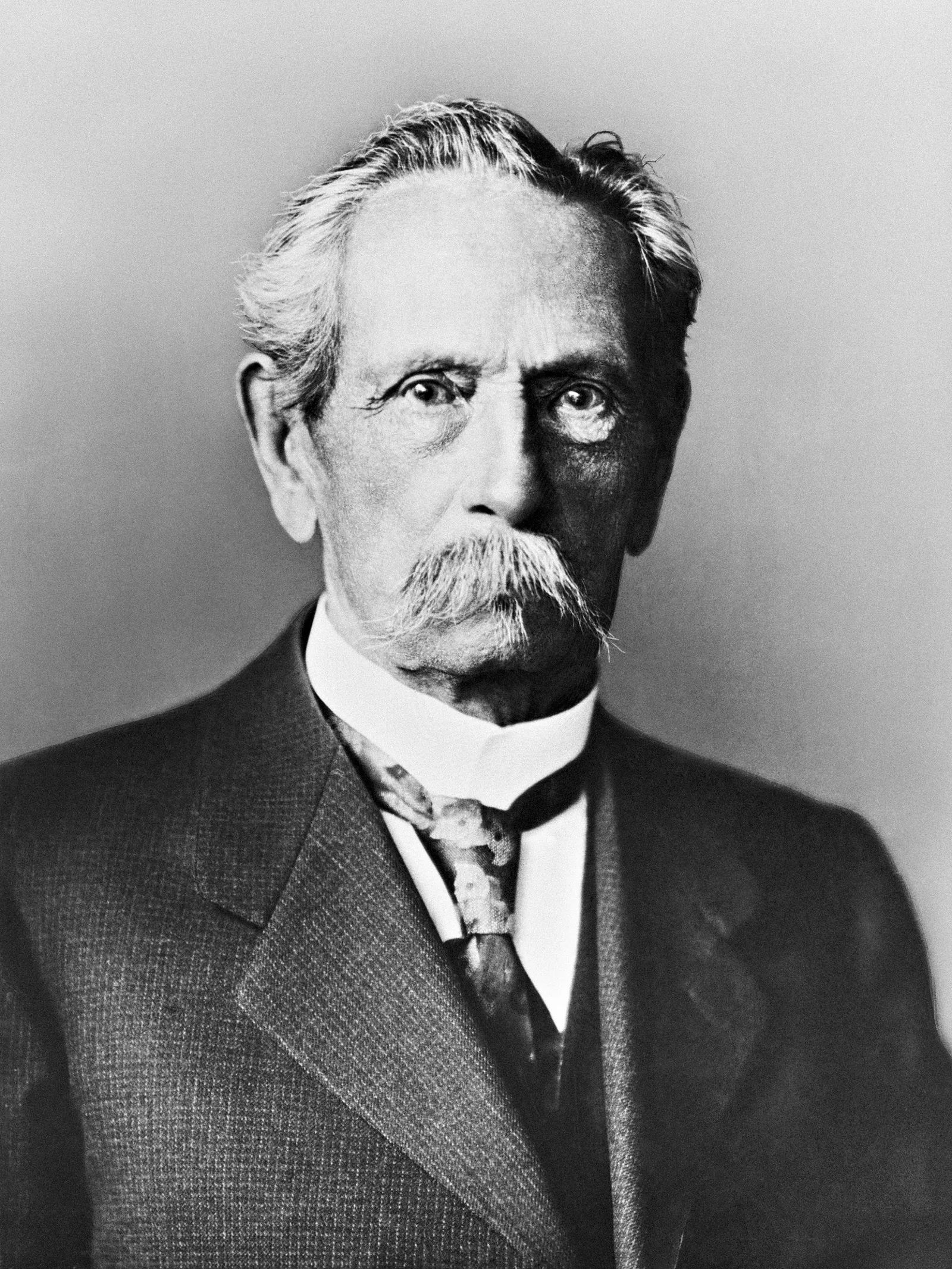
Karl Benz is widely called the father of the car: his Patent-Motorwagen of 1886 was the first practical petrol automobile sold to customers. Gottlieb Daimler and Wilhelm Maybach built a rival four-wheeler the same year and designed the engines behind Mercedes. Benz and Daimler's firms merged in 1926.
Karl Benz in Mannheim and Gottlieb Daimler near Stuttgart each got a petrol-driven vehicle onto the road in 1886, about 60 miles apart, and nothing suggests either man knew of the other. Four decades later their companies merged. Between those two dates a third engineer, Wilhelm Maybach, designed the engine that gave Mercedes its name.
The story below follows all three: who built what, which claims to "first" hold up, and how Benz and Cie and Daimler Motoren Gesellschaft ended up as one firm.
Who invented the car?
Karl Benz holds the title of father of the car, because his Patent-Motorwagen is considered the first practical, modern automobile and the first made in series. His patent claim went in on 29 January 1886. Daimler and Maybach, working independently, fitted a petrol engine to a coach that same year. Which of them counts as first depends on what you ask of the word "car".
Benz's name appears as both Karl and Carl in print. He was born Karl Friedrich Michael Vaillant, took his father's surname after his parents married and was later known as Karl Friedrich Benz.
Two engineers sixty miles apart each got a petrol vehicle moving in 1886, and nothing suggests either knew of the other.
Karl Benz, from a Karlsruhe childhood to his own works
His father, a locomotive driver, died of pneumonia when the boy was two. The family lived in near poverty, yet his mother pushed for a proper education, and at fifteen he sat and passed the mechanical engineering entrance exam at the Karlsruhe polytechnical school. He graduated in 1864, aged nineteen, and then spent seven years moving between employers without settling at any of them.
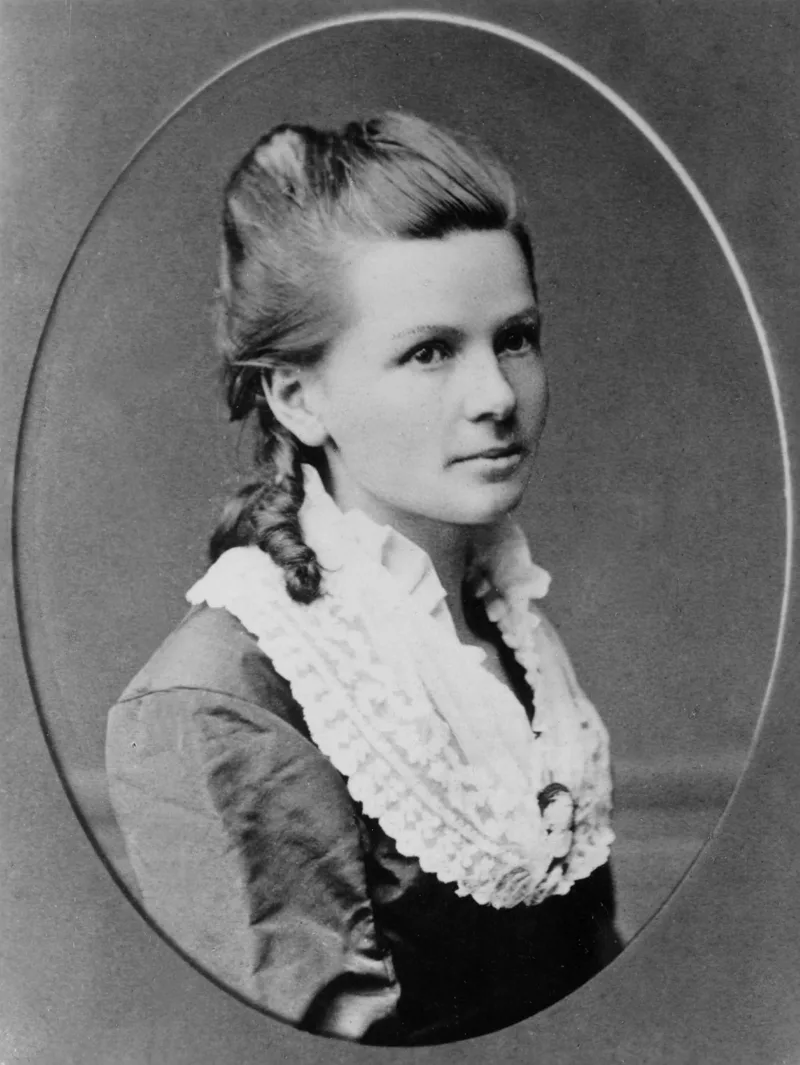
In 1871 he and August Ritter opened a workshop in Mannheim. Ritter proved unreliable and the tools were impounded, until Benz's fiancee, Bertha Ringer, used her dowry to buy Ritter out. They married in July 1872.
Money stayed tight, so from 1878 Benz chased patents. He finished a petrol two-stroke engine on 31 December 1879 and had the patent by June 1880. Along the way he patented a speed regulator, battery-and-spark ignition, the spark plug, a carburettor, a clutch, a gear shift and a water radiator. That is a fair list of the parts any motorist now takes for granted.
Investors were less kind. In 1882 the Mannheim banks demanded incorporation, and Benz ended up with five percent of the shares and little say over products. He left a year later. In 1883 he teamed up with Max Rose and Friedrich Wilhelm Esslinger, who ran a bicycle repair shop, to found Benz and Cie. The firm reached twenty-five employees quickly, and its stationary gas engines paid for the horseless carriage Benz really wanted to build.
How did the Benz Patent-Motorwagen work?
The answer is that it borrowed from the bicycle. Benz gave the car wire wheels, not the wooden ones of a carriage, and set a four-stroke engine he had designed himself between the rear wheels. Ignition came from a coil, and the engine had no radiator; it shed heat by evaporation instead.
Power reached the road by a roundabout route. A belt ran from the engine to a countershaft carrying a differential, and from each side of that shaft a roller chain drove one rear wheel. Those wheels spun freely on the rear axle rather than being fixed to it.
The 1885 version was awkward to steer and hit a wall during a public demonstration. Benz kept at it. He filed his claim for a gas-fuelled "automobile" on 29 January 1886, tried the machine on public roads in early summer and drove it publicly along the Ringstrasse in Mannheim on 3 July 1886. Patent number 37345 followed in November, and the vehicle took its name from the document.
A Model 2 appeared the next year. The definitive Model 3, with wooden wheels, arrived in 1889 and was shown at the Paris Expo. Sales began in late summer 1888, which makes the Motorwagen the first commercially available automobile. The second customer was Emile Roger, a Paris bicycle maker who was already making Benz engines under licence and who sold the cars, many of them built in France, from his Paris showroom. Roughly twenty-five Motorwagens left the works from 1886 to 1893.
What did Bertha Benz do in 1888?
On the morning of 5 August 1888 Bertha Benz took one of the cars, apparently without telling her husband, and drove it 104 km (65 mi) from Mannheim to Pforzheim to see her mother. Her sons Eugen and Richard went with her. It was the first long-distance trip by internal combustion automobile, and it doubled as publicity for the car.
The route was a workshop on wheels. She had to find pharmacies to buy fuel, repaired faults as they came, and after long descents had a shoemaker nail leather onto the brake blocks, which amounts to the first brake lining. She reached Pforzheim at nightfall and announced it to Karl by telegram.
The trip also fixed a weakness. The early 1888 car had two gears and could not manage hills on its own, so Bertha suggested a third. Her route is now the Bertha Benz Memorial Route, approved in 2008 as an industrial heritage route and signposted over 194 km (121 mi) from Mannheim via Heidelberg to Pforzheim and back.
Gottlieb Daimler, from gunsmith to engine builder
Gottlieb Daimler was born in Schorndorf on 17 March 1834, the son of a baker. He trained as a gunsmith and passed his trade examination in 1852 with a pair of engraved double-barrelled pistols, then switched to mechanical engineering. A spell in England between 1861 and 1863, including time at Beyer, Peacock in Manchester, followed his study of steam locomotives, which left him convinced that steam would be superseded and that small, cheap, simple engines had a future.
In 1863 he joined the Bruderhaus Reutlingen as an inspector, and it was there that he met Wilhelm Maybach.
Wilhelm Maybach, the engineer behind the engines
Maybach was born in Heilbronn on 9 February 1846, a carpenter's son. He lost his mother in 1854 and his father in 1856, and a charitable institution at Reutlingen took him in. Its director, Gustav Werner, noticed his technical bent and sent him to the engineering workshop.
By nineteen Maybach was a qualified designer of stationary engines. Daimler, then 29, made him his main assistant, a post Maybach held until Daimler's death in 1900. In the 1890s French admirers called him the "King of Designers".
Daimler, Maybach and the Otto four-stroke
In 1872 Daimler became factory manager at Deutz in Cologne, the largest builder of stationary engines in the world, and brought Maybach along as chief designer. Nicolaus Otto, half-owner of the firm, patented his four-stroke engine in 1877 after 14 years of work. Its four strokes are intake, compression, power and exhaust.
Trouble followed. Daimler wanted engines small enough to put in vehicles and Otto had no such interest, and when Otto excluded him from the patents their relations soured. Daimler was dismissed in 1880 with 112,000 gold marks in shares as compensation. Maybach left soon after to join him. One of Otto's 25 patents on the engine was later overturned, which cleared the way for the pair to build their own.
How did Daimler and Maybach build a fast petrol engine?
In summer 1882 Daimler bought a cottage in Cannstatt with 75,000 gold marks of his compensation, and Maybach followed in September. They extended a glass-fronted summer house in the garden into a workshop. The neighbours grew suspicious and tipped off the police that counterfeiters were at work. When officers got the gardener's key and searched the place, they found only engines.
Two choices set the engine apart. They used a hot-tube ignition because electrical systems of the day acted too slowly. And they ran it on ligroin, a petroleum fraction then sold in pharmacies as a cleaner.
They patented the first ligroin engine on 16 December 1883. It turned at 750 rpm, rising to 900 over the following four years. Typical engines of the day ran at about 120 to 180 rpm, so this one was small, light and quick by comparison.
The grandfather clock engine and the first Reitwagen
By 1885 they had a vertical engine they called the Standuhr, the grandfather clock engine, because Daimler thought it looked like a pendulum clock. It had a big cast-iron flywheel, air cooling and a camshaft to work the exhaust valve, and it ran at 600 rpm. That year they also made a float-fed carburettor to mix evaporated fuel with air.
In November 1885 a smaller version went into a wooden two-wheeler with a pair of outrigger wheels. This was the Reitwagen, the riding car, regarded as the first internal combustion motorcycle. Maybach rode it 3 km from Cannstatt to Untertuerkheim at 12 km/h.
The 1886 coach, the boat and the balloon
On 8 March 1886 Daimler and Maybach had a coach built by Wimpff and Sohn delivered, telling the neighbours it was a birthday present for Mrs Daimler. Maybach supervised the fitting of an enlarged grandfather clock engine and a belt drive, and the coach is said to have been the first four-wheeler to hit 16 km/h (10 mph).
The figures vary. Some put the engine at 1.1 hp and 462 cc with a top speed of 16 km/h (10 mph); others say 1.5 hp and 15 km/h (9.3 mph).
The engine went into other vehicles too. A 4.5 m (15 ft) boat called Neckar made 6 knots, with the date given variously as 1886 and 1887. Early buyers feared a petrol engine might explode, so Daimler hid it under a ceramic cover and described it as "oil-electrical". Fitted to a balloon in place of a hand-cranked drive, it carried the craft over Seelberg on 10 August 1888. Foreign licences were first sold in 1887, and Maybach went to the 1889 Paris Exposition to show the work.
Benz, Daimler and Maybach side by side
| Engineer | Born | Training | First petrol vehicle | Died |
|---|---|---|---|---|
| Karl Benz | 25 November 1844, Karlsruhe | Karlsruhe polytechnical school, graduated 1864 | Patent-Motorwagen, patent application 29 January 1886 | 4 April 1929 |
| Gottlieb Daimler | 17 March 1834, Schorndorf | Gunsmith, then Stuttgart and England | Coach with engine, 8 March 1886 | March 1900 |
| Wilhelm Maybach | 9 February 1846, Heilbronn | Reutlingen institution workshop | Reitwagen, November 1885 | 29 December 1929 |
Daimler Motoren Gesellschaft, licences and the Phoenix engine
In 1889 the pair built the Stahlradwagen, their first car designed from scratch rather than adapted from a carriage. It was shown in Paris in October 1889 and licensed for production in France, not Germany. Licences spread the idea: Panhard and Levassor and Peugeot in France in 1890, Steinway in the United States in 1891, the Daimler Motor Company of Coventry in 1896 and Austro-Daimler in 1899.
Capital was scarce. In 1890 they turned the partnership into Daimler Motoren Gesellschaft, with financiers Max von Duttenhofer and William Lorenz on board. Some German historians called it a pact with the devil. The new chairmen doubted cars would pay and wanted to merge with Deutz, which Daimler opposed. Maybach was rejected for the board and left on 11 February 1891, working from home on money supplied by Daimler. Daimler himself resigned in 1893, returned in 1894, and the company's prestige suffered in between.
The recovery came from the Phoenix engine of 1894, designed by Maybach with Daimler and his son Paul. Its cylinders were cast as a single block, arranged vertically in parallel, with camshaft-operated exhaust valves, a spray-nozzle carburettor Maybach patented in 1893 and an improved belt drive. It was among the earliest four-cylinder automobile engines. British industrialist Frederick Simms bought the rights for 350,000 marks and made Daimler's reinstatement a condition. By 1895 DMG had assembled its 1,000th engine, and Maybach was back as chief engineer. His later patents included a tubular radiator with fan and a honeycomb radiator. Daimler adopted Bosch's electrical ignition in 1897.
How did Benz and Cie become the world's largest car maker?
Benz and Cie grew steadily on the strength of engine sales and the Motorwagen. Staff numbers went from 50 in 1889 to 430 in 1899, and with 572 units made in 1899 it was the biggest car maker anywhere. It became a joint-stock company that year. The new directors, Friedrich von Fischer and Julius Ganss, urged a cheaper car for mass production.
Two models answered. The Victoria, sold from 1893 to 1900, was a two-seater with a 2.2 kW (3.0 hp) engine and a top speed of 18 km/h (11 mph); 85 sold in 1893. The Velo, built from 1894 to 1902 in numbers above 1,200, is regarded by some as the first mass-produced car and reached 19 km/h (12 mph). A Velo took part in the 1894 Paris to Rouen race, where Emile Roger finished 14th over 126 km (78 mi) in 10 hours 01 minutes at an average of 12.7 km/h (7.9 mph).
Benz also built what is described as the first internal-combustion truck and the first motor buses in 1895. In 1896 he patented the first flat engine, whose horizontally opposed pistons cancel each other's motion. The layout survives in Porsche and Subaru engines.
Who built the first Mercedes?
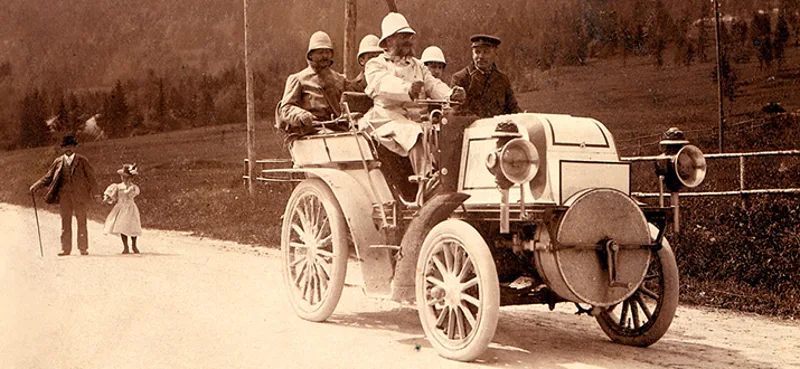
Maybach designed the first Mercedes engine for Emil Jellinek, a successful Austrian dealer who raced on the French Riviera. Between April and October 1900 he created a car inspired by racing, with a long wheelbase, a wide track and a low body, and a 35 hp engine that took it to 75 km/h (47 mph). Jellinek promised to buy 36 cars for 550,000 goldmarks if the result suited him.
The prototype was finished in December 1900, with the first delivery on 22 December. Jellinek asked for the engine to be called Daimler-Mercedes after his daughter, who was ten. The car went on sale in 1902 as the Mercedes 35 hp, and DMG registered the Mercedes trademark in June of that year. High society bought it in numbers and persuaded the directors that cars had a future. A fire destroyed the Cannstatt works in 1902, and the company moved to Stuttgart-Untertuerkheim.
Daimler never saw it. He died in March 1900, of heart disease.
How were the companies related?
Rivalry first. As DMG's Mercedes gained ground, Benz and Cie answered in 1903 with the Parsifal, a vertical twin that reached 60 km/h (37 mph). Then the other directors hired French designers without consulting Benz, and on 24 January 1903 he announced his retirement from design management. He stayed a director. His son Richard returned in 1904 as designer of passenger cars, and sales that year reached 3,480.
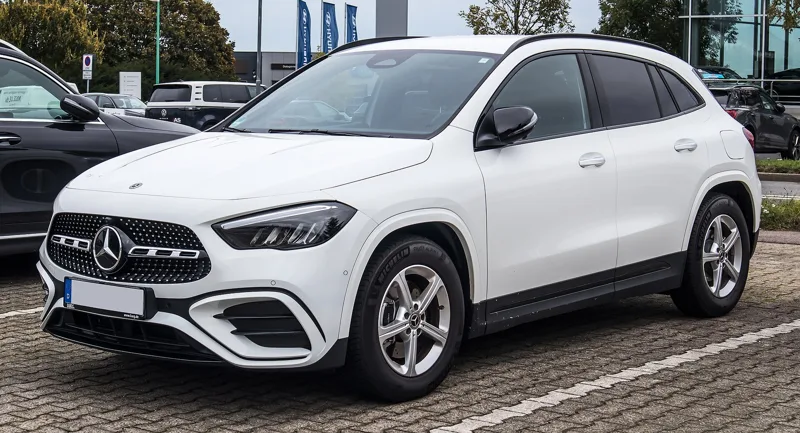
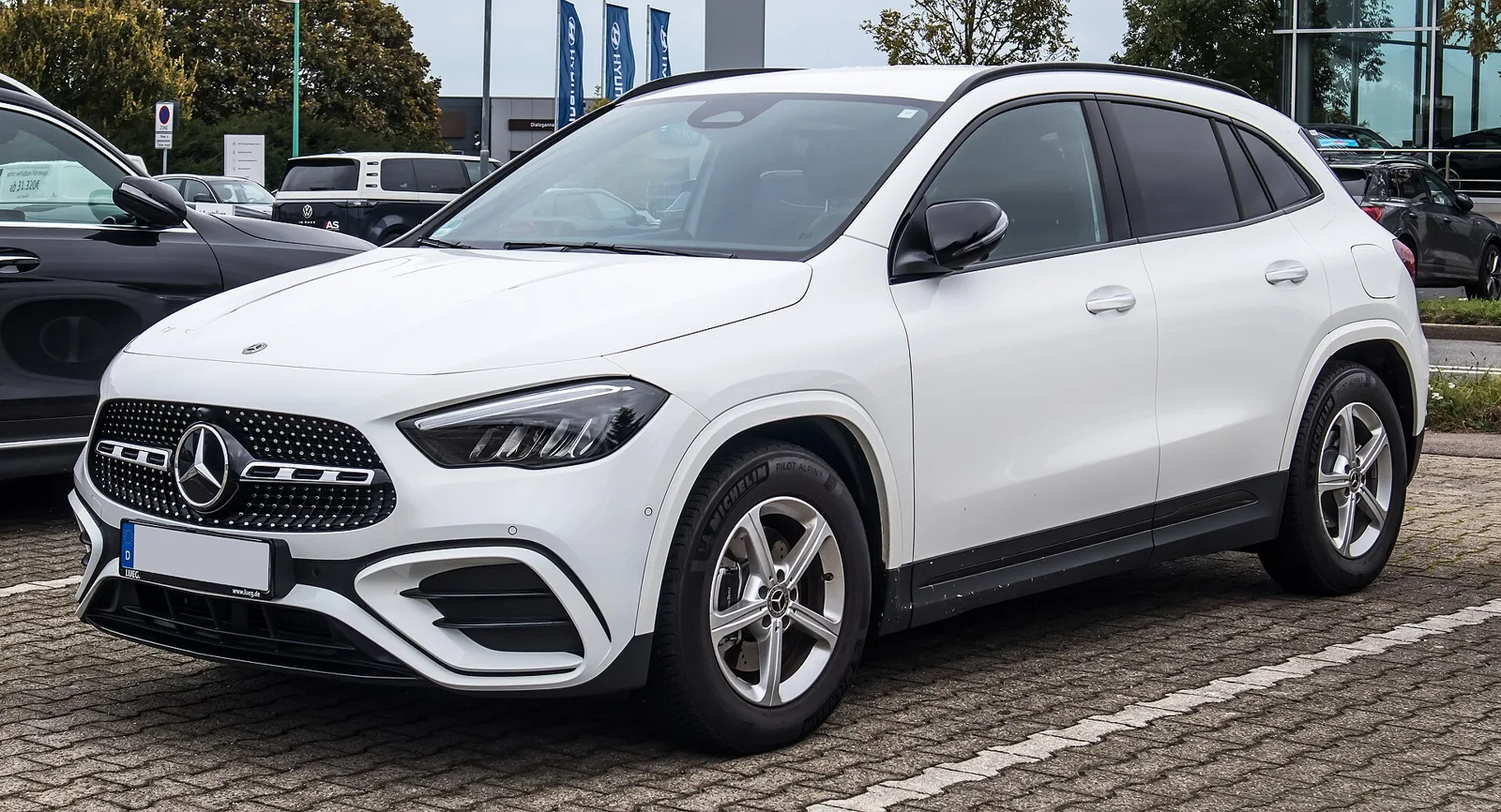
In 1926 the two firms merged to form Daimler-Benz, the maker of Mercedes-Benz among other brands. Benz sat on the board of the new company until he died in 1929.
Where the story goes after 1926
Maybach left DMG in 1907, having fallen out with its chairmen, and in 1909 founded Maybach-Motorenbau with his son Karl to make Zeppelin engines. After the Versailles Treaty of 1919 the firm began building large luxury cars under the Maybach name. Wilhelm died on 29 December 1929 and Karl took over. From around 1936 the company designed and made almost all the engines for German tanks and half-tracks. In the 1960s it came under Daimler-Benz control and was renamed MTU Friedrichshafen.
The Maybach name returned as a luxury marque in 2002 without success. On 25 November 2011 Daimler-Benz announced production under it would stop in 2013, and in 2014 it announced an ultra-luxury S-Class under a new Mercedes-Maybach brand.